Trump administration policies have left many national parks short on staff and money.
How popular is the parks system?
The National Park Service recorded some 323 million visits to its 433 parks, properties, battlefields, and monuments last year. That’s a slight drop from 2024’s all-time high of 332 million, but more than the combined attendance of professional football, baseball, basketball, NASCAR, soccer, and Disney theme parks. Established in 1916, the NPS is today one of America’s most beloved institutions. A 2024 Pew Research Center survey found that 76% of Americans, including overwhelming majorities of both Republicans and Democrats, view it favorably, a higher share than for any other federal agency. But the NPS, which manages more than 85 million acres across the U.S., now faces an uncertain future because of staffing cuts and the reallocation of critical funds by the Trump administration. Author and conservationist Wallace Stegner once declared national parks America’s “best idea,” but the administration “is treating our treasures like anything but,” said John Garder of the nonprofit National Parks Conservation Association (NPCA).
How many national parks workers have been laid off?
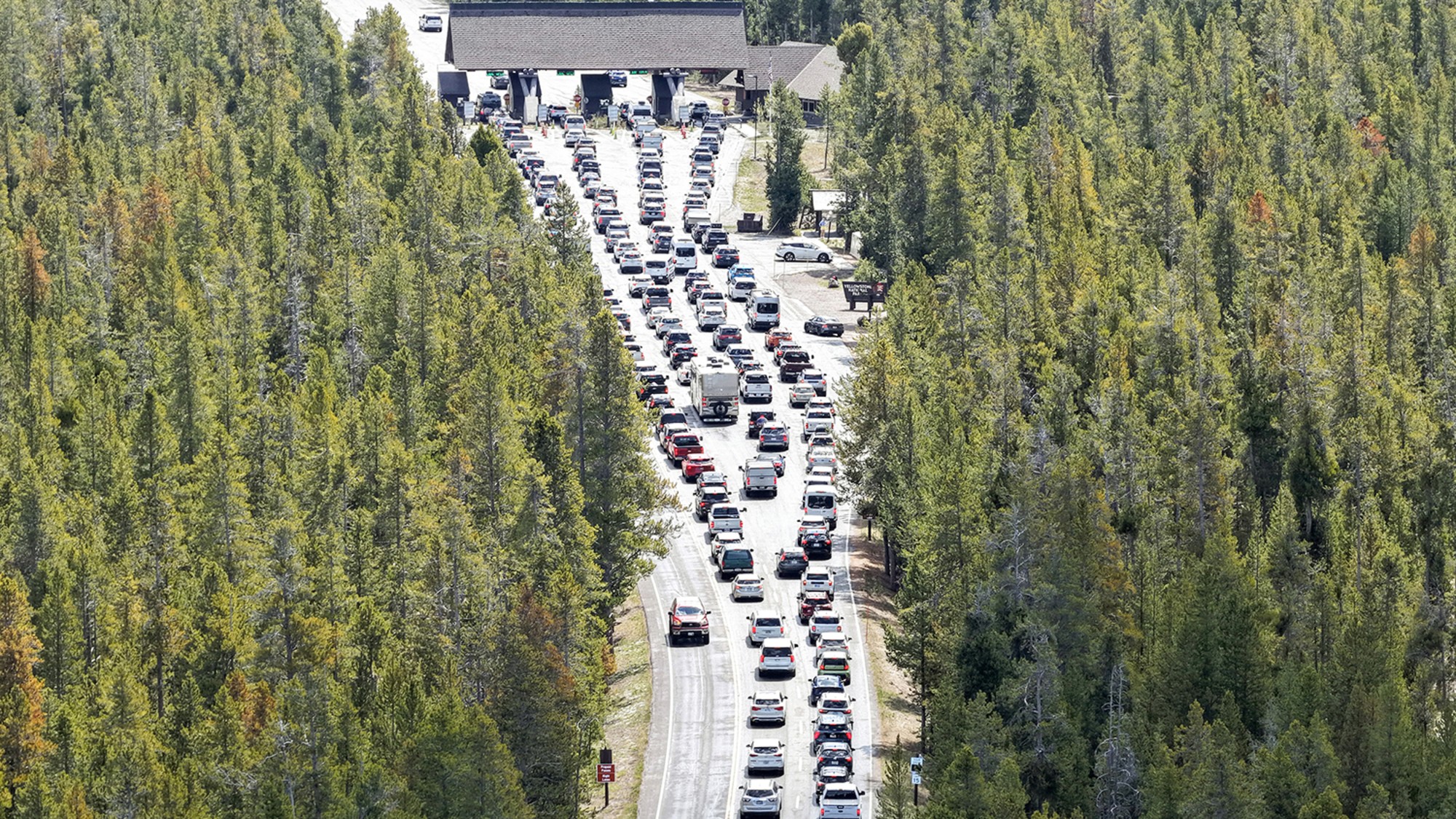
The agency has lost nearly 25% of its permanent workforce—over 4,000 positions—since the start of the second Trump administration, according to the NPCA. About 1,000 parks employees with probationary status were fired in early 2025, while senior staffers have been let go through deferred-resignation and early-retirement programs. Interior Secretary Doug Burgum, who oversees the NPS, said the agency can keep up standards with a reduced workforce by getting staff to focus on hands-on jobs, such as clearing trails. “I want more of that,” he said. “I want less overhead.” Staffers who traditionally work behind the scenes have been pushed into more frontline roles; at Yosemite National Park, a shortage of custodial workers in spring 2025 meant the park’s scientists, IT specialists, and senior management had to take shifts cleaning toilets. Personnel cuts and delays in hiring seasonal workers have caused backups at entry gates, which at some big parks have been exacerbated by the scrapping of timed entry reservation systems. “The traffic reminded me of L.A. at rush hour,” said Sacramento resident Walter Meyer, who visited Yosemite in April.
Are these cuts affecting park safety?
Dive team operations were quietly suspended at southern Nevada’s Lake Mead National Recreation Area in May because of staffing shortages and the need for more training and equipment. The lake has consistently ranked as one of the deadliest sites managed by the NPS, with an average of 20 people dying in the park annually, mostly by drowning; one of the dive team’s responsibilities is recovering the bodies of drowning victims. An NPS employee at Yosemite told The Guardian that a lack of workers last year meant visitors could “wreck the park with no consequence” and get away with doing potentially dangerous things, such as not properly storing their food. “We don’t want bears eating people food because they can get aggressive,” the staffer said. “I worry the park will degrade to the point where safety is a problem.” And the problems faced by national parks have only grown this year, as President Trump redirected funding toward his preferred projects.
How is Trump spending that money?
At least $90 million from visitor entry fees to parks such as Big Bend and Yellowstone has been diverted to Washington, D.C., The Washington Post reported in early June. Much of that cash went toward Trump-requested beautification projects ahead of the country’s 250th birthday celebrations, including $76 million for fountain repairs and for the botched relining of the Lincoln Memorial Reflecting Pool. Entry fees were used to fund a Fourth of July firework display in the capital; it cost $1.6 million, more than five times the bill in past years. NPS also spent $689,232 this spring to rip up the walkway connecting the Oval Office to the White House residence, a 45-second commute. Trump didn’t like the historic beige Tennessee flagstone and has replaced it with polished black African granite carved in Italy. Park advocates say all that cash would have been better spent tackling the NPS’s $24 billion backlog of needed infrastructure repairs and improvements. “That is not how it was designed to work,” said the NPCA’s Ed Stierli. “It shouldn’t just be all at one park at the expense of the entire national park system.”
Are many parks missing out on funding?
More than 900 NPS projects that were slated to be funded this year have yet to receive money. They include a $1.5 million roof replacement at the Yellowstone Center for Resources, which is dealing with water leaks and pest invasions. Guardrails won’t be replaced along a cliff edge deemed a “significant safety hazard for visitors” at Colorado’s Black Canyon of the Gunnison National Park, and crumbling walls along a scenic drive won’t be fixed at Virginia’s Shenandoah National Park. At Crater Lake in Oregon, potholes riddle the main drive and two housing units for employees have been shuttered because of mold.
Is anyone trying to protect the NPS?
Some members of Congress are speaking out, as are NPS staffers. When the Trump administration started shrinking the workforce, a group of off-duty and former employees formed Resistance Rangers to document NPS’s cuts and policy changes, while fired workers flew an upside-down American flag—a distress sign—at Yosemite. Meanwhile, lawmakers in Washington have rejected plans in Trump’s 2027 budget to lay off nearly 3,000 more NPS workers and shrink the agency’s budget from $3.2 billion to $2.2 billion. No lawmaker wants to be responsible for defunding such a beloved agency. Plus, said Sen. Lisa Murkowski (R-Alaska), “I just need to know that I’ve got people out in the park who are keeping the bears at bay.”