The Week The Week
flag of US
US
flag of UK
UK
https://cdn.mos.cms.futurecdn.net/flexiimages/jzblygzdxr1769609154.gif

SUBSCRIBE

Try 6 weeks free

Sign in
  • View Profile
  • Sign out
  • The Explainer
  • Talking Points
  • The Week Recommends
  • Podcasts
  • Newsletters
  • From the Magazine
  • The Week Junior
  • More
    • Politics
    • World News
    • Business
    • Health
    • Science
    • Food & Drink
    • Travel
    • Culture
    • History
    • Personal Finance
    • Puzzles
    • Photos
    • The Blend
    • All Categories
  • Newsletter sign up Newsletter
  • The Week’s Sunday Shortlist
    The gruesome return of a '70s slasher, a sex work comedy, and Ben Lerner's tech meditation

     
    FILM REVIEW

    Faces of Death


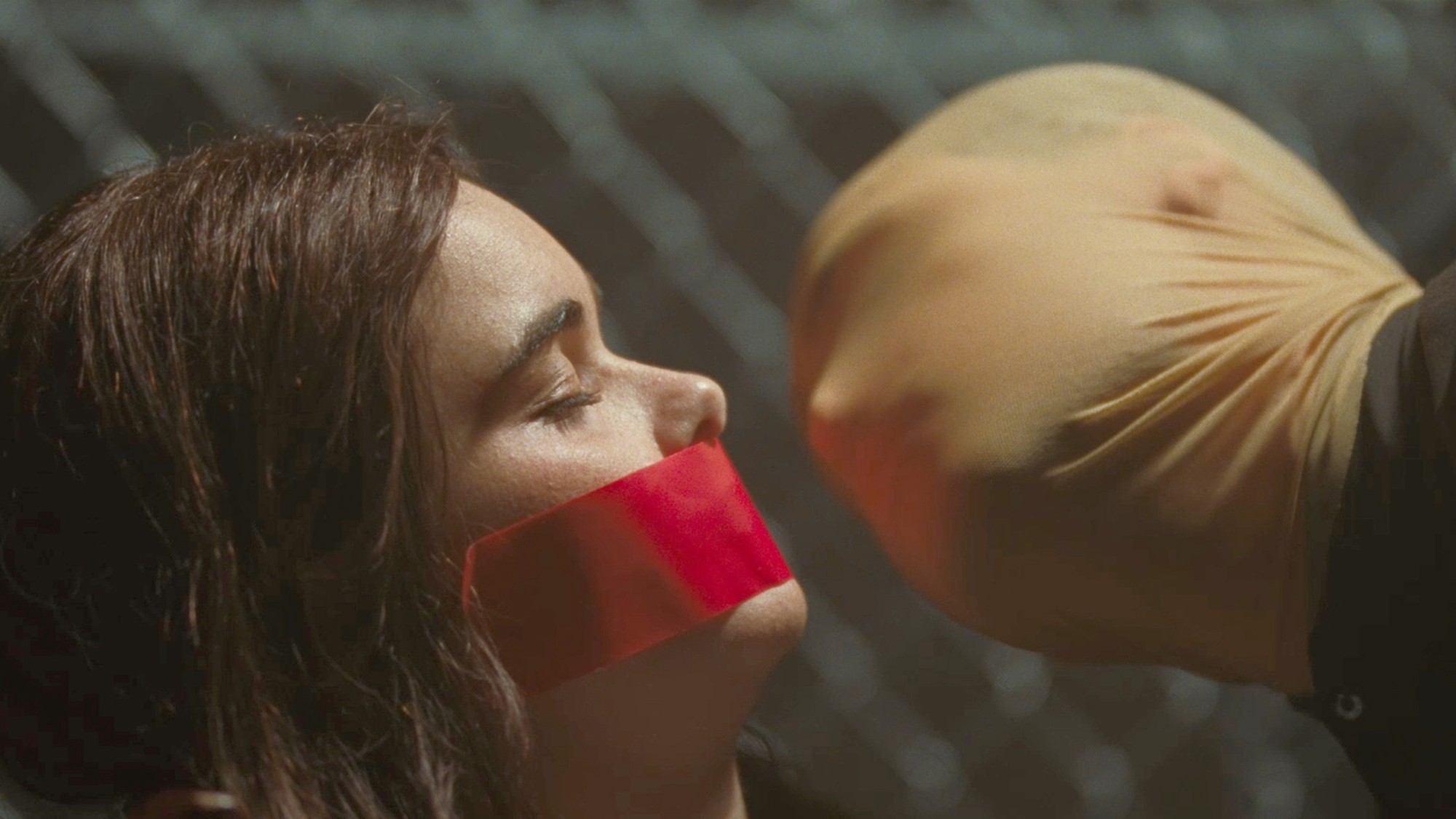
    Though it’s only “a halfway clever retro slasher movie,” the new Faces of Death “actually has something on its mind,” said Owen Gleiberman in Variety. Inspired by a notorious 1978 horror film of the same name, the latest provocation from Daniel Goldhaber, the director of How to Blow Up a Pipeline, imagines a serial killer who’s re-creating the murders depicted by that earlier film and posting them online for viewers’ entertainment. That’s hardly a profound idea, but it’s “part of what gives Faces of Death the interesting texture of an old grindhouse movie; they often had ideas, too.” In the world of this film, “getting away with murder is the easy part,” said David Ehrlich in IndieWire. It’s getting anyone to care that people are dying that’s hard, and that’s the challenge facing an online content moderator, played by Euphoria’s Barbie  Ferreira. She realizes the murders might be real and, once the killer targets her, becomes a final girl who actually seems smart enough to survive. “Tense enough when it wants to be,” this “smart, fun, and deeply unsettling” meditation on the rules of today’s media world even manages to build to “a fantastic cat-and-mouse sequence.” Sure, “it all sounds very impressive and thoughtful,” said Frank Scheck in The Hollywood Reporter. But in the end, this Faces of Death feels to me like “just another horror film,” not a feature that warrants being IFC Films’ widest release ever. Then again, “as the original proved, you can’t go broke underestimating the public’s taste.”


    tv review

    Margo’s Got Money Troubles

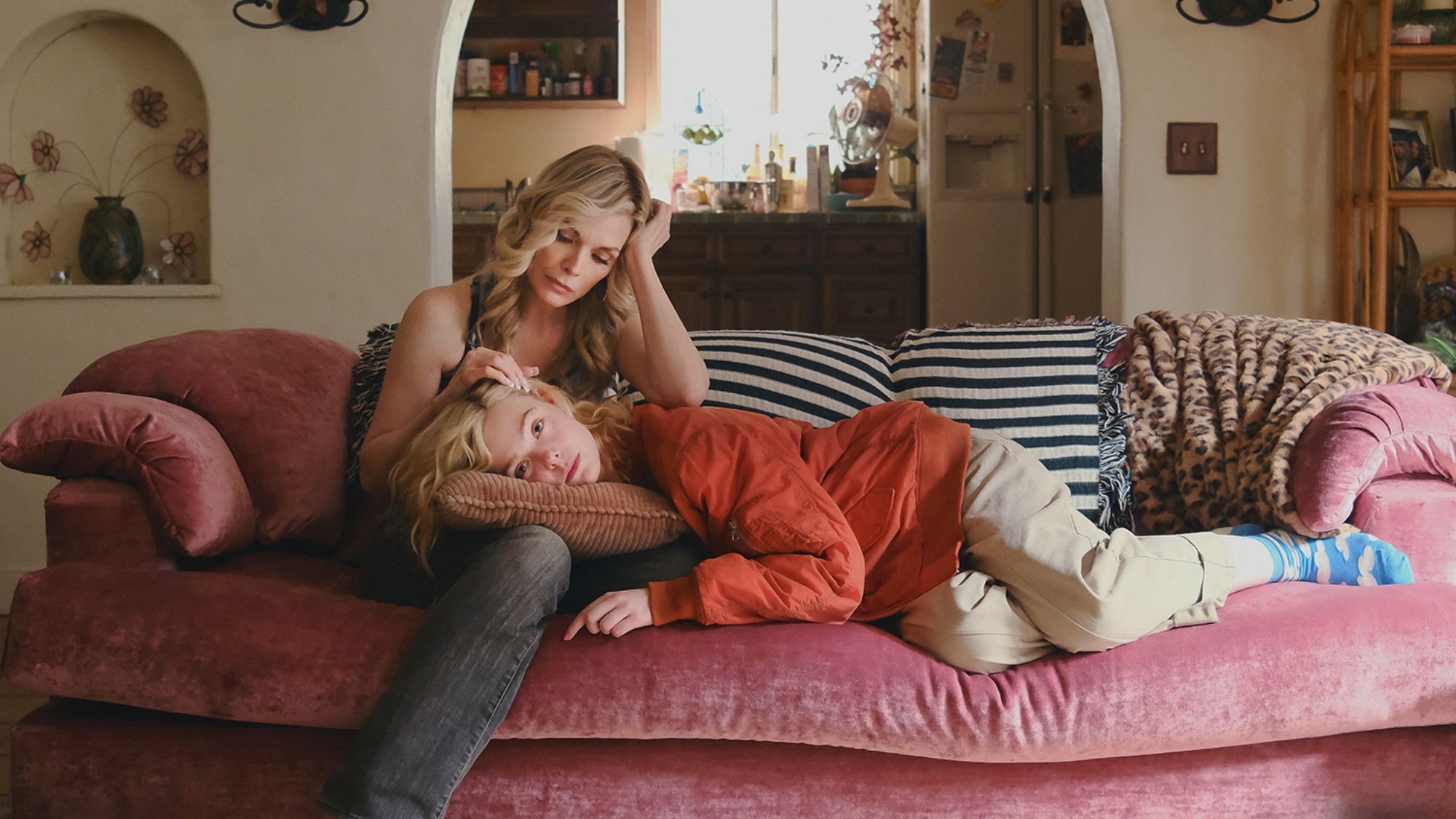
    There are detours in life, and then there are total reroutings. In this new series, Elle Fanning plays Margo, a college student whose promising future is derailed when she learns she’s carrying her English professor’s baby. She quits school and goes it alone, but the bills begin piling up. So what’s the daughter of a former Hooters waitress and a professional wrestler to do? Why, start an alien-themed OnlyFans, of course. Fanning is terrific in David E. Kelley’s adaptation of Rufi Thorpe’s hit 2024 novel, while Michelle Pfeiffer, Nick Offerman, and Nicole Kidman lead the all-star supporting cast. 
    Wednesday, April 15, Apple TV


    FOOD & DRINK

    Pinot noir: Alsace’s red

    Burgundy is France’s pinot noir capital, but pinot noirs from Alsace can be amazing, too, said Edward Deitch in Vinepair. The narrow border region produces pinot noir in a range of styles, though the wines are generally bright, fruit- forward, and unified by their minerality.

    2023 Famille Hugel ‘Classic’ Pinot Noir ($18)
    A great choice for your “house” pinot noir, “this may be one of the best alternatives to hard-to- find good red Burgundy under $20.” It combines “slightly bitter red and black fruit notes, wet-stone minerality, and a touch of vanilla.” 

    2022 Trimbach Pinot Noir  Réserve ($20)
    This widely available and “memorable” wine “has good complexity, with plum and blackberry notes along with hints of cedar.” 

    2023 Domaine Christian Binner ($36)
    For a pinot noir “on the wilder side,” try this bottle. Freshness is its hallmark, with “ripe red and dark fruit notes” enlivened by “a touch of black pepper.”


    BOOK OF THE WEEK

    Transcription

    by Ben Lerner

    “As ever with Ben Lerner’s novels, the plot of Transcription is sparse, propelled mostly by the characters’ winding speech and the narrator’s thoughts,” said Hannah Gold in Harper’s. But even at 144 pages, it’s a “remarkable” book, one that suggests human consciousness, and thus our individual experience of the self, has been forever changed by the phones most of us now carry in our pockets. “The novel is by turns slapstick and sincere in its consideration of digital devices”: It opens with its unnamed Lerner-like narrator accidentally dropping his phone in a sink of water, triggering a foolish bit of subterfuge. When this middle-aged poet meets with his former mentor, a renowned 90-year-old intellectual, for what’s likely to be the older man’s final interview, he pretends that the broken phone is recording, then creates a faked transcript. As events play out, Lerner’s writing “crackles with new insights, images, motifs.”

    “In another writer’s hands, the novel would be a comic tale of comeuppance,” said Sukhdev Sandhu in The Guardian. “Lerner is more ambitious.” The voice of the  German-born mentor, Thomas, unfolds in “layered, associative sentences” that “skip across time and place to riddling, thrilling effect,” and although the narrator is lambasted when, in the novel’s middle section, he reveals at a symposium lecture after Thomas’ death that he reconstructed Thomas’ words. Lerner doesn’t end there. He adds a third section that finds the narrator in dialogue with an old friend, Max, who was also Thomas’ only son. That pair’s conversation touches on technology, parenting, and the Thomas they both knew, and yet the bristling intelligence of their back-and-forth is “at its most gripping when it addresses a seemingly simple issue: how to get a teenage girl to eat.” Max has watched his only daughter waste away, pained that she seems, in his eyes, to be rejecting the life provided to her because that life is a lie. 

    Such ideas “risk becoming arid, and there are certainly times when Lerner overexplains them,” said Sam Sacks in The Wall Street Journal. But “Lerner’s method is to flicker between humor and heartbreak,” and Transcription “mines a lot of humor from the bumbling of its poet-narrator.” Max recalls having his own final interview with Thomas, a remote phone-assisted conversation he recorded while Thomas lay dying in isolation because of Covid restrictions, yet that scene too is “ultimately reconfigured in surprising ways, leaving its meanings bracingly indefinite.” It remains a striking moment, said Alexandra Jacobs in The New York Times. These days, “smartphones have become so integral to our lives that how modern authors incorporate them into regular old paper books has become a kind of steeplechase. Right now Lerner, with his combination of erudition and lightness, is winning.”

     
     
    OBITUARY

    Biruté Galdikas

    The naturalist who lived among the orangutans

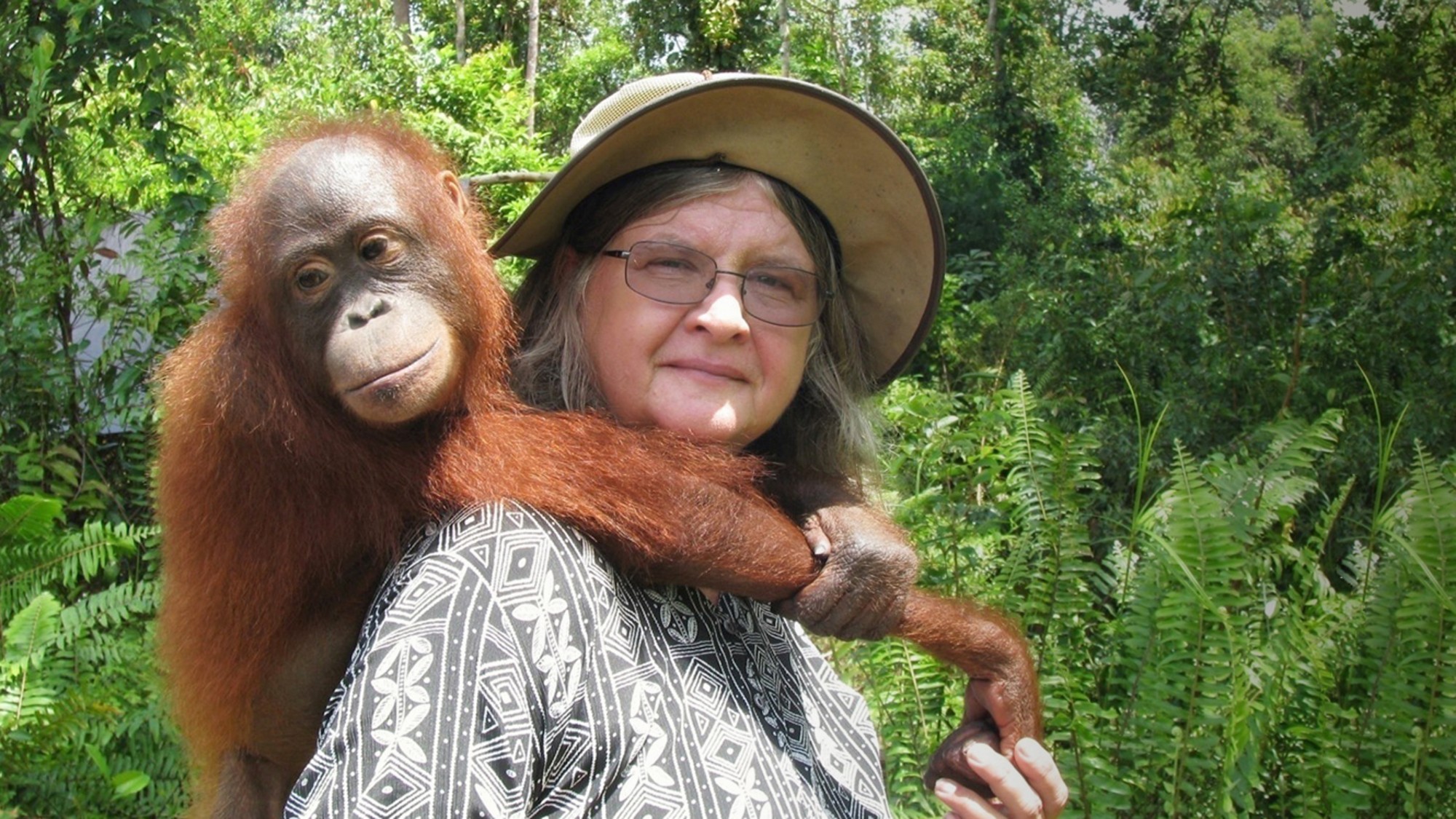
    Biruté Galdikas spent two months in the swamp forests of Borneo, braving fire ants and leeches, venomous snakes and wild pigs, before she spotted her first orangutan. It was 1971, she was 25 years old, and she suddenly had her life’s mission. Over the next 55 years, much of it spent in that same forest, the primatologist became the world’s leading expert on the great ape. She was somewhat less famous than the other two disciples of paleoanthropologist Louis  Leakey— chimpanzee whisperer Jane Goodall and gorilla devotee Dian Fossey—but she was the most academically advanced, and it was Galdikas who set the record of longest continuous study of a wild mammal by a single person. On that first day, when she looked up into the trees and saw a mother with an infant on its shoulder, she realized that the 10 years Leakey had promised to fund her wouldn’t be enough. “I began to think I’d need a lifetime,” she said.

    Born to Lithuanian parents in Germany, Galdikas grew up in Los Angeles reading Curious George books and dreaming “of life as an explorer,” said The New York Times. She earned a Ph.D. in anthropology at UCLA, where she studied under Leakey and learned of the work of Goodall and Fossey. The three women became “like daughters to Leakey, and sisters to one another.” Leakey helped Galdikas launch her research in Borneo, where she chronicled orangutans’ daily lives, their child rearing behaviors, and their shrinking numbers. She rose before dawn to trail the primates until nighttime, often falling asleep in a hammock slung near them in the forest. Her work first found a wide audience in 1975, when National Geographic published a photo of her carrying one young orangutan while holding hands with another.

    “Almost everything Galdikas learned in the 1970s was groundbreaking,” said The Washington Post, including her discoveries of orangutan mating practices. But as her knowledge grew, her focus gradually shifted from science toward conservation. She campaigned to protect orangutans from threats like deforestation for palm oil production and the commercial pet trade. Such work “inevitably carried risks,” said The Telegraph (U.K.), and Galdikas was “threatened, harassed, and reportedly even kidnapped.” Undeterred, she continued visiting Borneo until she was 78, saying she still felt most at home in the jungle. “I was born to study orangutans,” she said, “because they, like me, were of the forest.”


    Sunday Shortlist was written and edited by Susan Caskie, Ryan Devlin, Chris Erikson, Chris Mitchell, Rebecca Nathanson, and Matt Prigge

    Image credits, from top: IFC Films, Apple TV, Getty, Orangutan Foundation International
     

    Recent editions

    • Saturday Wrap

      ‘In America, we don’t have kings’

    • Evening Review

      Irish fuel protests spark chaos

    • Morning Report

      Israel agrees Lebanon talks but continues strikes

    VIEW ALL
    TheWeek
    • About Us
    • Contact Future's experts
    • Terms and Conditions
    • Privacy Policy
    • Cookie Policy
    • Advertise With Us
    • FAQ
    Add as a preferred source on Google Add as a preferred source on Google

    The Week UK is part of Future plc, an international media group and leading digital publisher. Visit our corporate site.

    © Future Publishing Limited Quay House, The Ambury, Bath BA1 1UA. All rights reserved. England and Wales company registration number 2008885.