by Craig Fehrman
“Do we really need another book about the Lewis and Clark expedition?” asked Andrea Wulf in The New York Times. The answer, after reading Craig Fehrman’s new page-turner, is “an emphatic yes.” One reason for its novelty is that, in revisiting Meriwether Lewis and William Clark’s westward trek into the newly purchased Louisiana Territory, Fehrman has shifted focus away from the famous pair, widening the scope to include other members of the so-called Corps of Discovery as well as several Native Americans the 33 men met en route. The result is “a richly woven tapestry of voices” that “reframes this well-known story, revealing it as more complex, and profoundly human.” Because certain members portrayed didn’t leave expansive journals, Fehrman sometimes has to rely on conjecture or push his imaginative reconstruction too far. But that’s a minor complaint. Fehrman’s multifaceted account is “a fantastic achievement.”
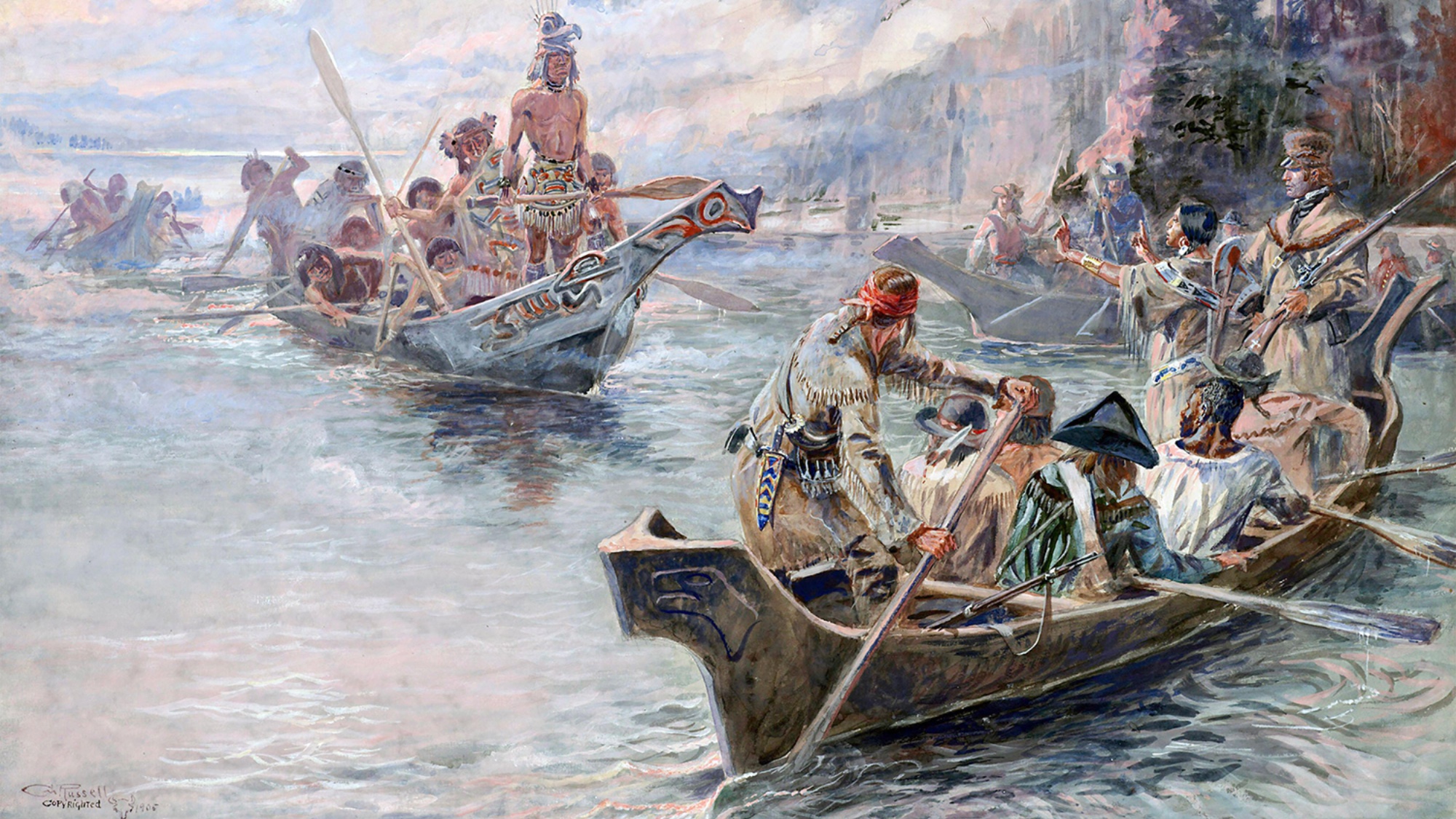
More than 220 years on, “the Lewis and Clark expedition still intrigues,” said Karin Altenberg in The Wall Street Journal. Tasked by President Thomas Jefferson, who had been long obsessed with exploring the West, Lewis and Clark’s team journeyed from St. Louis to the Pacific Ocean and back, with most of the 8,000-mile journey on the Missouri and Columbia rivers. Some members of the party had joined out of patriotic spirit, some for money, and others, including the kidnapped Shoshone teenager Sacagawea, had no choice. “Lewis and Clark had to make sure this diverse, multilingual crew jelled, all the way to the Pacific and back,” and it’s a testament all parties’ desire for peace that the expedition’s many interactions with Indigenous tribes resulted in only one violent death. “Immensely engaging,” The Vast Enterprise gives a well-known story “fresh breadth.”
“This is vivid, character-based history,” said Chris Vognar in The Boston Globe. The chapters rotate between the viewpoints of principal players, among them soldier John Ordway, Lakota and Arikara leaders, Jefferson, and, yes, Lewis and Clark. Fehrman also fleshes out two participants often treated as footnotes. York, an enslaved servant to Clark, was awarded a degree of autonomy during the journey, while Sacagawea, the enslaved wife of interpretor Toussaint Charboneau, is shown to be a valuable collaborator and becomes “a three-dimensional character with her own hopes, dreams, and regrets.” Shuffling between these figures “pays enormous dividends, as Fehrman weaves a tale that uses human stories to go beyond hard facts and calcified myths.” The result is “a ripping good read.” |