The Week The Week
flag of US
US
flag of UK
UK
https://cdn.mos.cms.futurecdn.net/flexiimages/jzblygzdxr1769609154.gif

SUBSCRIBE

Try 6 weeks free

Sign in
  • View Profile
  • Sign out
  • The Explainer
  • Talking Points
  • The Week Recommends
  • Podcasts
  • Newsletters
  • From the Magazine
  • The Week Junior
  • More
    • Politics
    • World News
    • Business
    • Health
    • Science
    • Food & Drink
    • Travel
    • Culture
    • History
    • Personal Finance
    • Puzzles
    • Photos
    • The Blend
    • All Categories
  • Newsletter sign up Newsletter
  • The Week’s Sunday Shortlist
    A daring domestic drama, the Yellowstone universe expands, and a weighty Rolling Stones bio

     
    FILM REVIEW

    Blue Heron

    Think of Blue Heron as “an announcement of a major talent, one who has made the best film of the year to date,” said Brian Tallerico in RogerEbert.com. Sophy Romvari, 35, drew from her own life to pull us into a domestic sphere that’s “mundane on the surface but hides a truly painful family dynamic.” In the late 1990s, Romvari’s stand-in, Sasha, is just 8 when her Hungarian family moves to Vancouver Island and her oldest brother, Jeremy, begins exhibiting troubling behavior. The summer passes until, halfway in, Blue Heron leaps forward 20 years to an adult Sasha making a movie like the one you’re watching, which in turn sets up an ending that “hit me like a punch to the chest.” While storytellers are often tempted to treat remembered traumas “with a gloss of romantic fatalism,” said Alissa Wilkinson in The New York Times, “there’s none of that here—just an aching desire to understand what Jeremy was experiencing and why the parents made the choices they did.” Romvari’s “exquisite” film never pretends that the young Sasha, played by Eylul Guven, could see the entire story unfold; often that first summer on the island “comes in snatches, like a patchwork of dreamy snapshots.” Initially, that childish perspective “may seem frustrating or limiting,” said Scott Tobias in The Reveal, but “it leads to an ingenious conceptual shift later that snaps the whole film into place.” And though Blue Heron’s formal daring might inspire you to focus on the ideas it stirs, “its payoff is as personal and emotional as movies get.” 


    tv review

    Dutton Ranch 

    The explosive expansion of the Yellowstone universe continues, as Kelly Reilly’s Beth Dutton and Cole Hauser’s Rip Wheeler attempt to put down new roots in the Lone Star State. With Montana’s ghosts in their rearview mirror, the couple set out to build a ranch of their own even though doing so will require taking on another landed family run by a ruthless matriarch and bolstered by the power of legacy. Let the battle of South Texas begin. Annette Bening co-stars as rival rancher Beulah Jackson, while Ed Harris plays a steely veterinarian who befriends the newcomers.
    Friday, May 15, Paramount+


    FOOD & DRINK

    Burgundy: Relative bargains

    Today, plenty of Burgundies that were once splurge-worthy are “completely out of reach for all but the wealthiest,” said Eric Asimov in The New York Times. But ordinary wine lovers “can still find a relatively soft introduction to the region and its pleasures.” Good so-called village wines, like these, slip under the $50 mark and should not be underestimated.

    2023 David Trousselle Auxey Duresses ($42)
    This “beautifully proportioned, precisely focused” wine from an up-and-coming producer is “a lovely example of the graceful pleasures of a good red Burgundy.”

    2023 Jean-Philippe Fichet Bourgogne Côte-d’Or ($45)
    Issued by a great but underrated producer, this white Burgundy is “rich and expressive, taut and tense, lightly mineral, and wholly enjoyable.”

    2022 Sylvain Pataille Bourgogne($50)
    This exceptional red is “fresh and juicy, precise and well balanced, with a slightly bitter punctuation point that sets the stage for the next sip.”


    BOOK OF THE WEEK

    The Rolling Stones: The Biography

    by Bob Spitz

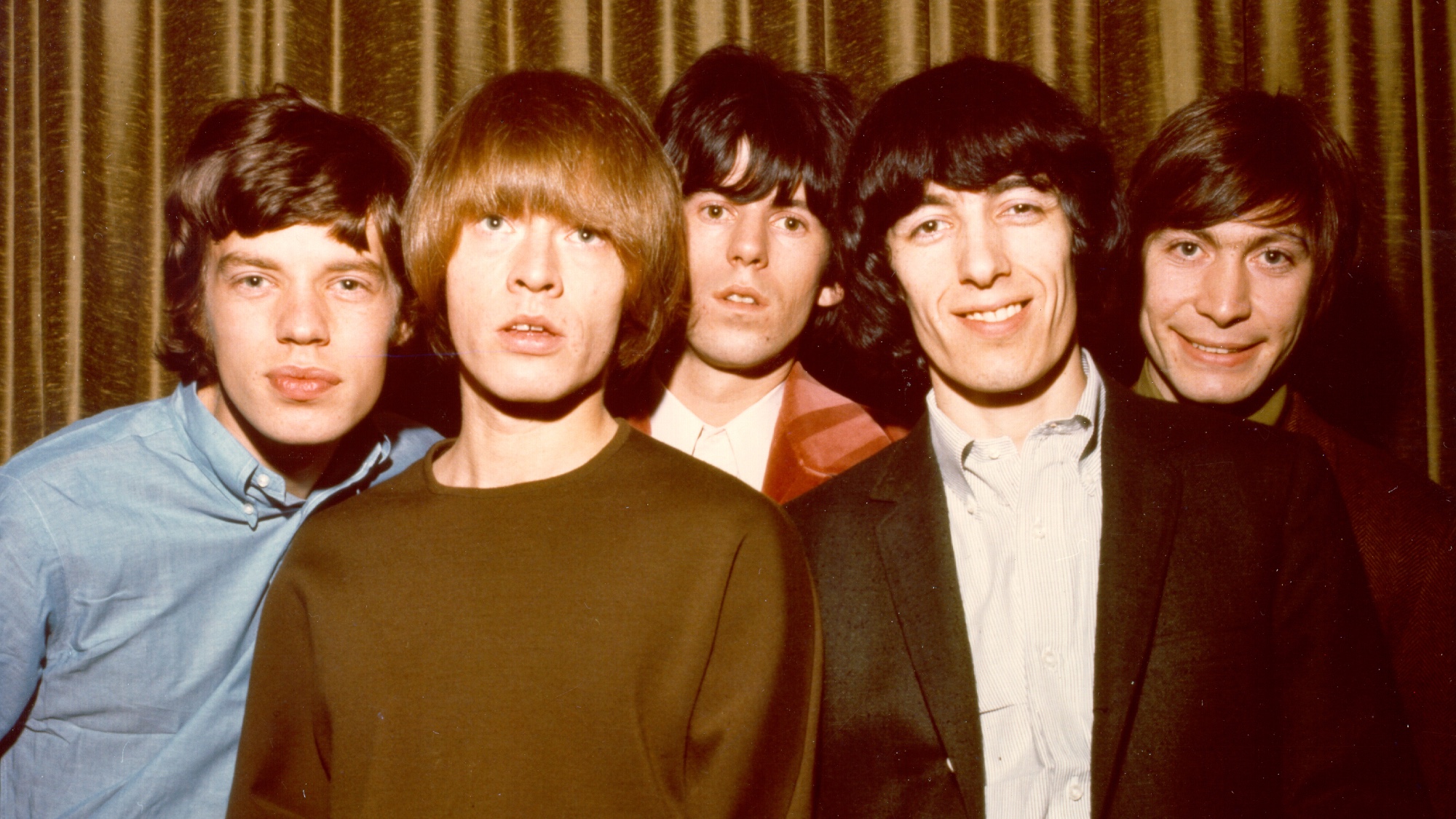
    “Hundreds of books have been written about the Rolling Stones, but few sparkle quite like Bob Spitz’s,” said Marc Ballon in the Los Angeles Times. The author, who has previously written doorstop accounts of the Beatles, Bob Dylan, and Led Zeppelin, tells the band’s story in full. We get the boys’ early days as a blues cover band, creative highs such as Exile on Main St., valleys such as 1986’s Dirty Work, the drug problems, the breakups, the makeups, and the disastrous 1969 concert at Altamont. Though Spitz “unearths little new information, he excels at presenting the Stones in glorious Technicolor” because he “homes in on telling details that give the band’s story a deep richness and poignancy.” The result is a “magisterial” work worthy of its 700 pages. “For anyone who loves or even likes the Stones, it’s indispensable.”

    The tale begins with “one of the great origin stories, ranking up there with Steve Jobs inviting Steve Wozniak over to play with computers,” said David Kirby in The Wall Street Journal. Mick Jagger and Keith Richards were the loosest of acquaintances when they ran into each other as 17-year-olds in 1961, Richards struck by Jagger’s armful of records. Thus was born one of rock’s most dynamic duos, soon to be joined by Brian Jones, Charlie Watts, Bill Wyman, and Ian Stewart, the last a piano player pushed off the band’s official roster because of his looks. Most would make it through several decades together, though Jones was dismissed from the band he co-founded shortly before his 1969 death, to be replaced by Mick Taylor, then Ronnie Wood. Revisiting their collective story with Spitz’s guidance is like seeing a familiar portrait anew. “The faces are the same, but the light is different, and suddenly you see shadows you never noticed, a new determination in one person’s eyes.”

    “There’s a certain swagger in Spitz’s subtitling his chronicle of the band ‘The Biography,’” said Leah Greenblatt in The New York Times. But the author is a credible biographer of record, his takes on the music are “both forensic and poetic,” and “many small revelations and corrections emerge along the way.” His account is “diligent to a fault” as he strings together albums, addictions, court battles, and relationship dramas, and after devoting 600 pages to the ’60s, ’70s, and ’80s, he “suddenly leapfrogs over several decades in the final chapter, as if he just realized that his car is double-parked.” But he’s wise enough to position the Jagger-Richards partnership as the story’s central platonic love and enduring source of tension. And his epilogue, which finds the surviving Stones crushing yet another 2024 tour stop, “feels appropriately celebratory and bittersweet, like an Irish wake without the body.”


     
     
    OBITUARY

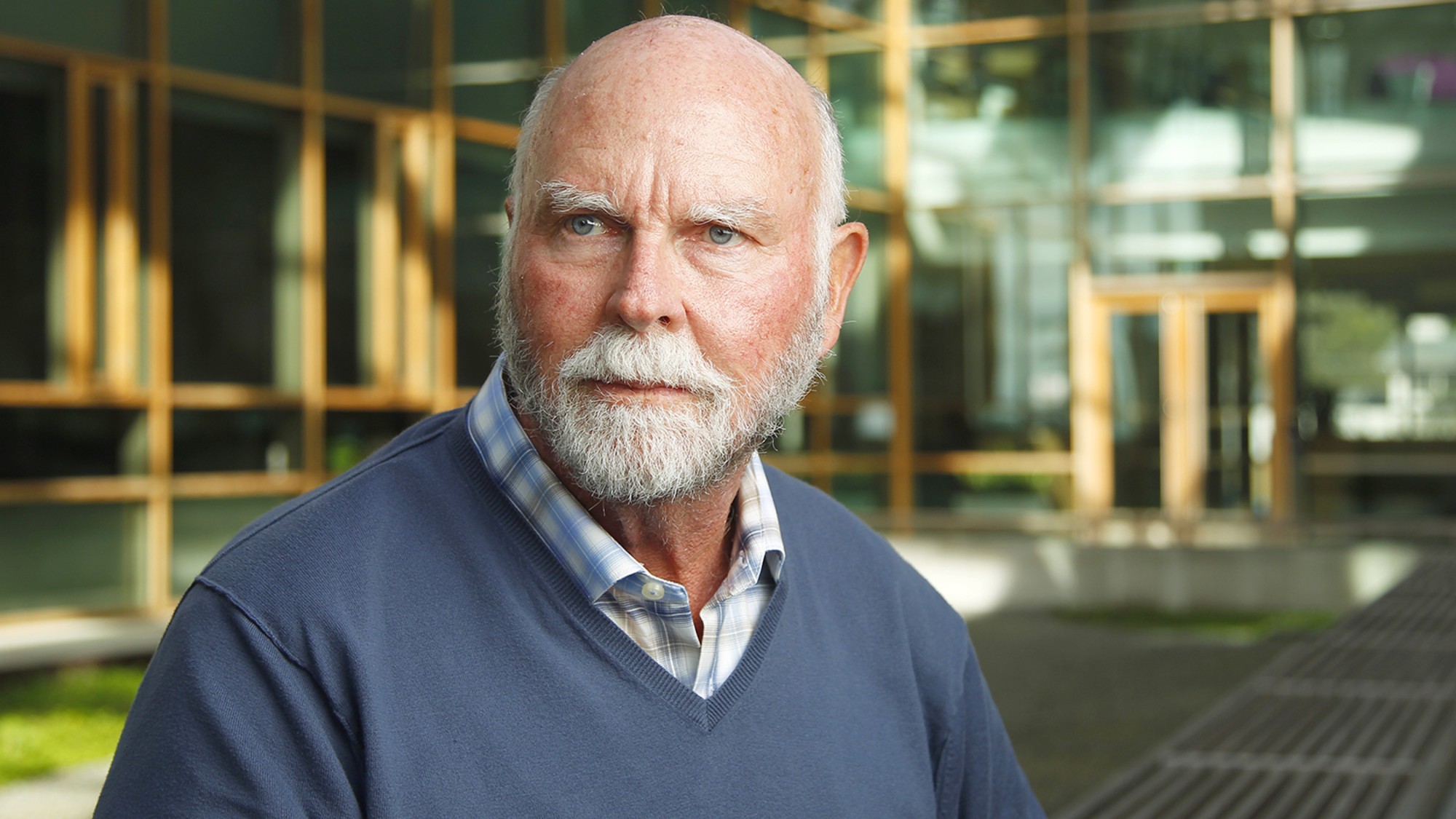
    J. Craig Venter

    The rogue biologist who mapped human DNA

    J. Craig Venter was a scientist of breathtaking ambition, more entrepreneur than lab nerd. During the 1990s push to sequence the human genome, he became convinced that the whole process could be done faster, simpler, and cheaper than the endeavor by the international, publicly funded Human Genome Project (HGP). With $70 million in funding from a biotech entrepreneur, he set about to map it himself using a different method that involved computer algorithms. Traditional researchers disdained Venter’s approach and especially his plans to patent DNA sequences; Nobel-winning geneticist James Watson compared it to “the way Hitler wanted to own the world.” But Venter sped up the decoding process so dramatically that he and his small team finished at about the same time as the HGP with all its thousands of scientists. He went on to make another norm-shattering breakthrough, engineering the first synthetic life form. To those who called him a “maverick,” he said, “I consider it a tremendous badge of honor.”

    Born in Salt Lake City and raised near San Francisco, Venter was “a rebel by nature,” said The New York Times. A champion high-school swimmer but a slacker in school, he spurned a college scholarship to pursue, in his words, “drink, girls, and bodysurfing” until he was drafted. He served in a Vietnam naval hospital, and the “relentless stream of mangled young bodies” spurred him to a medical career. While his “goofing off in school as a youth had left him barely able to spell,” by 1975 he’d earned a doctorate in physiology from UC San Diego. He joined the National Institutes of Health, where he “was quick to appreciate the possibilities” of machine-sequencing DNA. By 1995, he had mapped out the genome of a bacterium known to cause ear infections and believed he could “make a serious contribution” to the HGP.

    Other scientists believed he “had sold his soul to Mammon” by going private, said The Telegraph (U.K.). In fact, Venter’s public announcement that he’d sequenced the genome undermined his company’s plans for patents, and the firm fired him in 2002. “Characteristically, he refused to go quietly,” revealing that the draft genome had primarily used “DNA from his own sperm.” Nor did he stop then, said Stat. He created the first synthetic bacterial cell, sailed the world collecting sea-life DNA, “drove fast cars, drank red wine, and pissed people off.” In his final years, he studied human longevity. “I used to say that 70 is the new 50,” he said in 2024. “Now I say 100 is the new 70.”


    Sunday Shortlist was written and edited by Susan Caskie, Ryan Devlin, Chris Erikson, Chris Mitchell, Matt Prigge, and Hallie Stiller.

    Image credits, from top: Janus Films, Paramount+, Getty (2)
     

    Recent editions

    • Saturday Wrap

      Is Netanyahu’s time finally up?

    • Evening Review

      Labour’s next move

    • Morning Report

      Labour loses first councils as Reform surges

    VIEW ALL
    TheWeek
    • About Us
    • Contact Future's experts
    • Terms and Conditions
    • Privacy Policy
    • Cookie Policy
    • Advertise With Us
    • FAQ
    Add as a preferred source on Google Add as a preferred source on Google

    The Week UK is part of Future plc, an international media group and leading digital publisher. Visit our corporate site.

    © Future Publishing Limited Quay House, The Ambury, Bath BA1 1UA. All rights reserved. England and Wales company registration number 2008885.