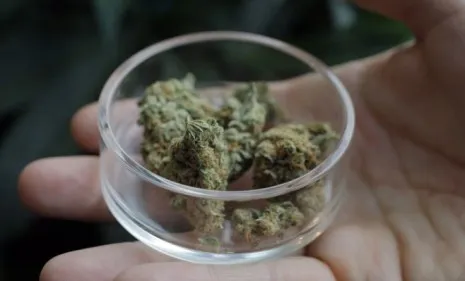
Researchers believe they've found a substance that might help fight cocaine addiction — marijuana. While advocates suggest this is yet another reason medical uses of marijuana should be taken more seriously, doctors from the National Institute on Drug Abuse, which conducted the study, caution that more research is needed. What you need to know:
What exactly did the study find?
The brain has receptors for many drug compounds, including pot compounds such as cannabidiol, which has a synthetic form called JWH133. When scientists gave samples of JWH133 to mice that were trained to be regular users of cocaine, the mice's use of cocaine decreased. The more JWH133 the mice got, the less coke they wanted. "The researchers deduced that the reason the mice dialed back their cocaine habits was that the drug no longer made them feel so good," says Karen Kaplan in the Los Angeles Times.
The Week
Escape your echo chamber. Get the facts behind the news, plus analysis from multiple perspectives.
SUBSCRIBE & SAVE
Sign up for The Week's Free Newsletters
From our morning news briefing to a weekly Good News Newsletter, get the best of The Week delivered directly to your inbox.
From our morning news briefing to a weekly Good News Newsletter, get the best of The Week delivered directly to your inbox.
Latest Videos FromThe Week
How does JWH133 work?
The receptors for drug compounds work by stimulating the brain's reward system. JWH133 apparently eliminates the rewarding effect that comes from taking cocaine. In one experiment, mice given cocaine ran wildly on a treadmill — until they were given JWH133, which dampened cocaine's effects, and caused the mice to run more slowly.
Could this news help coke addicts?
The research is still in its early stage, and studies of human subjects are needed. The next step is to identify side effects, says Dr. Antonello Bonci of the NIDA, as quoted in TIME. Nonetheless, studies of Alzheimer's disease and psychosis have found that JWH133 may have therapeutic uses against those conditions, too: "It's extremely exciting."
Sources: ABC.net.au, LA Times, TIME