Sign up to get Today’s Best Articles in your inbox
Join 350,000+ subscribers and keep yourself informed with a selection of
The Week’s most interesting, enlightening and entertaining stories - plus daily puzzles.
You are now subscribed
Your newsletter sign-up was successful
Want to add more newsletters?
An account already exists for this email address, please log in.
CES 2016: US Marshals raid hoverboard stand
Dramatic swoop on Chinese firm's exhibit follows accusations that their product infringes patents
Two US marshals have raided the stand of a Chinese hoverboard manufacturer at the Consumer Electronics Show in Las Vegas, confiscating the display's one-wheeled self-balancing skateboard and all promotional material. "It was dramatic", says Gizmodo.
"It quickly became clear this wasn't the usual CES publicity stunt", says Bloomberg, adding that representatives from makers Changzhou First International Trade Co. were "stunned".
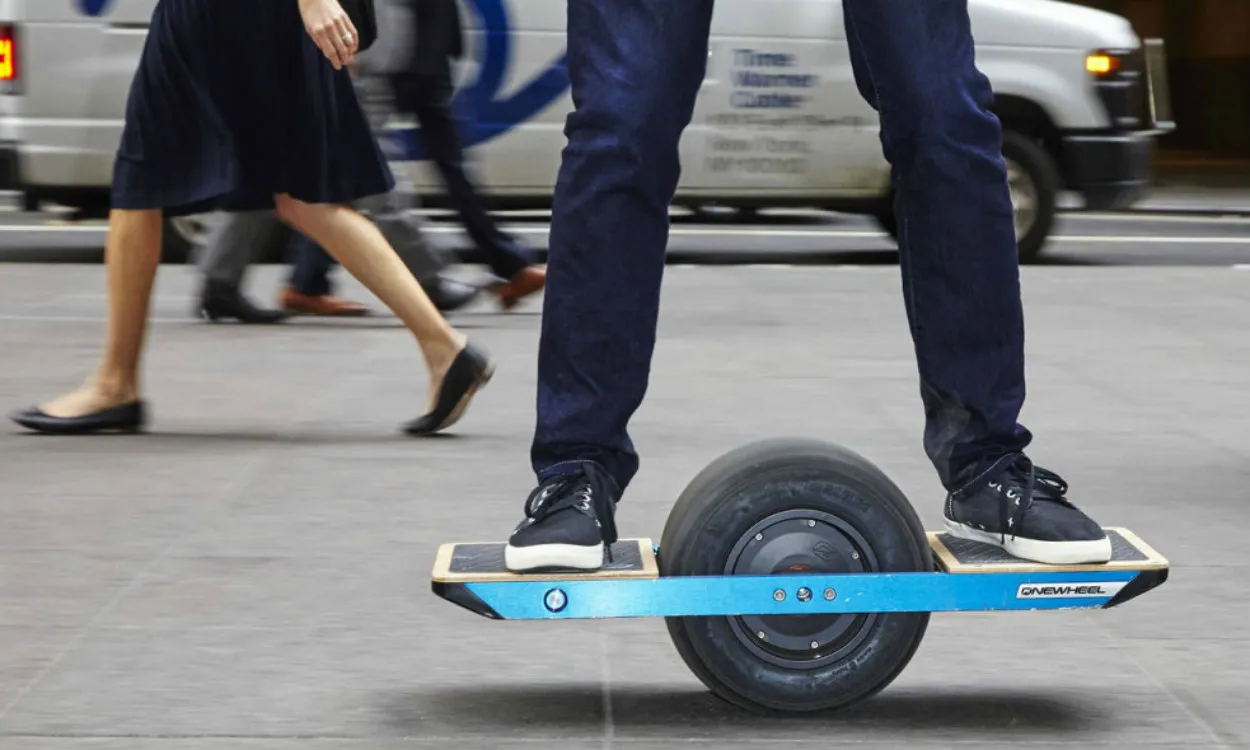
The company has been accused of trademark infringement by Californian-based start-up Future Motion, which says the Chinese-made Trotter electric skateboard is a copy of their own federally and internationally patented design the Onewheel.
The Week
Escape your echo chamber. Get the facts behind the news, plus analysis from multiple perspectives.
Join more than 350,000 subscribers and keep yourself informed with a selection of The Week’s most interesting, enlightening and entertaining stories - plus daily puzzles.
Join more than 350,000 subscribers and keep yourself informed with a selection of The Week’s most interesting, enlightening and entertaining stories - plus daily puzzles.
The case involves two patents: one filed for the design of the Onewheel on 5 January 2016 and another for its self-balancing mechanism, which dates back to April 2014.
"We engaged our IP lawyers because we heard there were going to be knock-offs of the Onewheel product appearing at CES,” designer Kyle Doerkson told Bloomberg.
Prices for the two boards differ greatly - the Trotter reportedly sells for $550 (£376), compared to $1,500 (£1,026) for the Onewheel.
It is not uncommon for copycat devices to be found at the show, says IGN. Any dealer can attend provided they pay the fees for a booth.
Sign up to get Today’s Best Articles in your inbox
A free daily email with the day’s biggest news and analysis – and the best features from TheWeek.com
Speaking to the BBC, Changzhou said it did not believe it had broken the law, claiming it had come up with its design long ago and had hidden it to avoid other Chinese start-ups from copying it.
A spokeswoman for the US Department of Justice told the broadcaster it was not uncommon for marshals to be involved with such cases, but that the circumstances of the raid – in plain view of other exhibitors, attendees, and journalists at the show – was unique.