Sign up to get Today’s Best Articles in your inbox
Join 350,000+ subscribers and keep yourself informed with a selection of
The Week’s most interesting, enlightening and entertaining stories - plus daily puzzles.
You are now subscribed
Your newsletter sign-up was successful
Want to add more newsletters?
An account already exists for this email address, please log in.
What, exactly, is 'feminist porn'?
Toronto just hosted the Feminist Porn Awards, and even female adult-film directors aren't sure if that term is an oxymoron
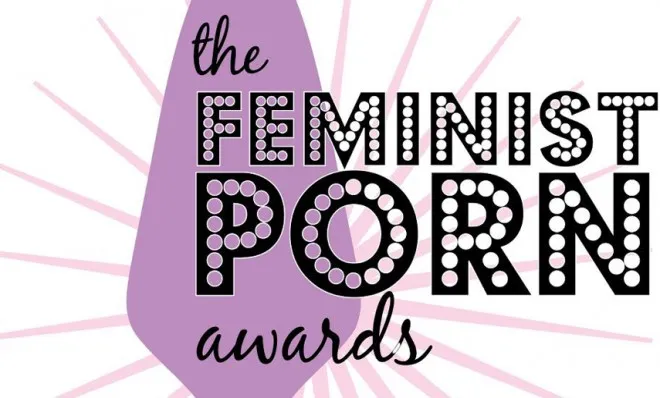
"Feminist porn" is a thing. It's enough of a thing that it has its own awards ceremony, the Good For Her Feminist Porn Awards, which wrapped up this past weekend in Toronto, along with a first-ever Feminist Porn Conference, which focuses on a new scholarly tome, The Feminist Porn Book. Feminist porn is such an established pastime that the Toronto ceremony was the eighth annual Feminist Porn Awards.
But the clarity on this subject sort of stops there. Pornography is comparatively easy to define — "I'll know it when I see it," Justice Potter Stewart famously said of hard-core porn in 1964. But feminism still (or increasingly) means different things to different people. Some feminists consider feminist porn an oxymoron, others just think it's moronic. The Feminist Porn Awards bills itself as the "longest-running celebration of erotica focused on women and marginalized people," for example, while Laura Balbi at Italy's Cinema Fanpagecalls it "the Oscars of women's pleasure" ("gli Oscar per il piacere delle donne").
So, what is feminist porn? First, a bit of history. "There was a time, not too long ago, when the idea of making porn for women was unthinkable," says Tracy Clark-Flory at Salon. Then, beginning in the 1980s, directors like Candida Royalle started proving that men aren't the only ones who watch porn. Over the next few decades, more people began catching on:
The Week
Escape your echo chamber. Get the facts behind the news, plus analysis from multiple perspectives.
Join more than 350,000 subscribers and keep yourself informed with a selection of The Week’s most interesting, enlightening and entertaining stories - plus daily puzzles.
Join more than 350,000 subscribers and keep yourself informed with a selection of The Week’s most interesting, enlightening and entertaining stories - plus daily puzzles.
In the '90s, fresh off the so-called feminist porn wars, the genre of "couples porn" began to boom. That gave the small cadre of female directors of the time opportunities in the mainstream male-dominated industry — and "porn for women" began to seem less of an oxymoron. The next decade brought an explosion of feminist-minded pornographers — from trans performer Buck Angel to actress-turned-director Madison Young — as well as the creation of the Feminist Porn Awards. Since then we've seen the growth of explicit fan fiction — and with it, a greater cultural awareness of female desire for sexual explicitness — which has culminated in the global Fifty Shades of Grey phenomenon. Which brings us to where we are today: We know that an estimated one out of every three porn watchers is a woman. [Salon]
Even today, Clark-Flory acknowledges, what comprises feminist porn isn't "entirely resolved." That's where The Feminist Porn Book comes in. "One of the things we felt really strongly about is that there is no single answer, which I think is appropriate because there is no single response to, 'How do you define feminism?'," one of the book's four editors, Tristan Taormino, tells Clark-Flory. Slightly more helpfully, Taormino — who is also an adult-filmmaker — offers a "broad definition" of feminist porn in the book:
As both an established and emerging genre of pornography, feminist porn uses sexually explicit imagery to contest and complicate dominant representations of gender, sexuality, race, ethnicity, class, ability, age, body type, and other identity markers.... It does not assume a singular female viewer, but acknowledges multiple female (and other) viewers with many different preferences. Feminist porn makers emphasize the importance of their labor practices in production and their treatment of performers/sex workers; in contrast to norms in the mainstream sectors of the adult entertainment industry, they strive to create a fair, safe, ethical, consensual work environment and often create imagery through collaboration with their subjects. Ultimately, feminist porn considers sexual representation — and its production — a site for resistance, intervention, and change. [The Feminist Porn Book]
She explains it a little more colorfully, and less academically, in an interview with Current TV's Joy Behar (watch below). But basically, according to Taormino, feminist porn is typically humane porn that captures more normal-looking women in more normal sexual encounters, with a focus on a woman's sexual pleasure.
Oh, please, says Tanya Gold at Britain's The Guardian. Sometimes "I wonder if third-wave feminism was born in the Playboy Mansion, where it fell out of a cake and opened its mouth." It's bad enough you can't even speak of limiting violent, hard-core porn in polite company, but the icing on the cake is "the current lie" that "watching, or making, pornography is an inherently feminist act."
Don't mess with my masturbatory autonomy, these advocates moan; this is not only convenient for a wander round my sexual consciousness, sister, but civilized. Except this is only naked hyper-capitalism — pornography is written up as just another consumer product, and by women too.... The problem with porn is money. Porn is not the unfettered expression of female sexuality. If you believe this absurdity, which I do not, whenever you suppress porn you suppress women.... Porn is the unfettered expression of money, and therein lies the problem, and the reason why intelligent feminists, when faced with the porn industry, misunderstand where solidarity lies. [The Guardian]
Gold cedes that, yes, "there is good porn," including a handful of artsy feminist pornographers, but not all "so-called feminist porn" is respectful of women, and there's not enough of the "righteous and even lovely" female-oriented porn to outweigh the bad. Ultimately "I fear that 'feminist porn' is less a movement with momentum than a marketing tool that will eventually be stolen by the mainstream, its nemesis."
Sign up to get Today’s Best Articles in your inbox
A free daily email with the day’s biggest news and analysis – and the best features from TheWeek.com
Adult-film director Nica Noelle says at The Huffington Post that she too has a hard time pinning down the term, adding that feminist porn seems to be overlooking another important fact: To the extent that it exists, "'feminist porn' has a dirty little secret." The reason that female porn directors have "ascended and our movies now often dominate sales charts, is largely the support of — brace yourselves — men."
Yes, those same male porn fans we've long vilified and condemned for their interest in porn, those men whom we've recklessly referred to as "perverts" and "scumbags," have secretly, often with a great deal of shame, spent their hard-earned money supporting adult film and keeping all of us "feminist porn directors" working.... It seems that male viewers had been waiting for porn that featured realistic, passionate and — gasp! — emotion-filled sex. Believe it or not, those oft-maligned, "creepy" guys had been quietly waiting for sex scenes that looked natural and comfortable and featured women of all ages and body types.... the ascent of "feminist porn" may not be a testament to a specific gender or its politics but to a shared — dare we say human — appreciation for authentic expressions of our still-mysterious sexuality. [Huffington Post]
These feminist debates over porn have been going on for decades, Taormino tells Salon. But, still, "we're getting somewhere." And much of that has to do with the fact that people are talking about feminist porn and what it means.
In many ways, it feels annoying that we have to rehash some of the stuff from the sex wars of the '80s and '90s, but I don't feel like we're stuck there. I feel a real sense of momentum, and I feel finally like there is a loud response to the resurgence of anti-porn feminists like Gale Dines. Every day, someone writes to me and says, "OK, I just found out there's this thing called feminist porn." That's super-exciting because I feel like it shifts the dialogue.... That, to me, means there's been progress and that we can shift the way that people think about porn — the way that people make it, the way that people consume it, and the way that people relate to it. [Salon]
Peter has worked as a news and culture writer and editor at The Week since the site's launch in 2008. He covers politics, world affairs, religion and cultural currents. His journalism career began as a copy editor at a financial newswire and has included editorial positions at The New York Times Magazine, Facts on File, and Oregon State University.



 talking pointsLivestreaming an execution: cruelty or added deterrent?
 QUOTE OF THE DAY‘You don’t get to take a man from his family. You don’t get to take his very life, his whole future from him, and just walk away from it. Especially when that man is Tupac Shakur.’
 today’s big questionCan a Democrat win the Texas governor’s race?