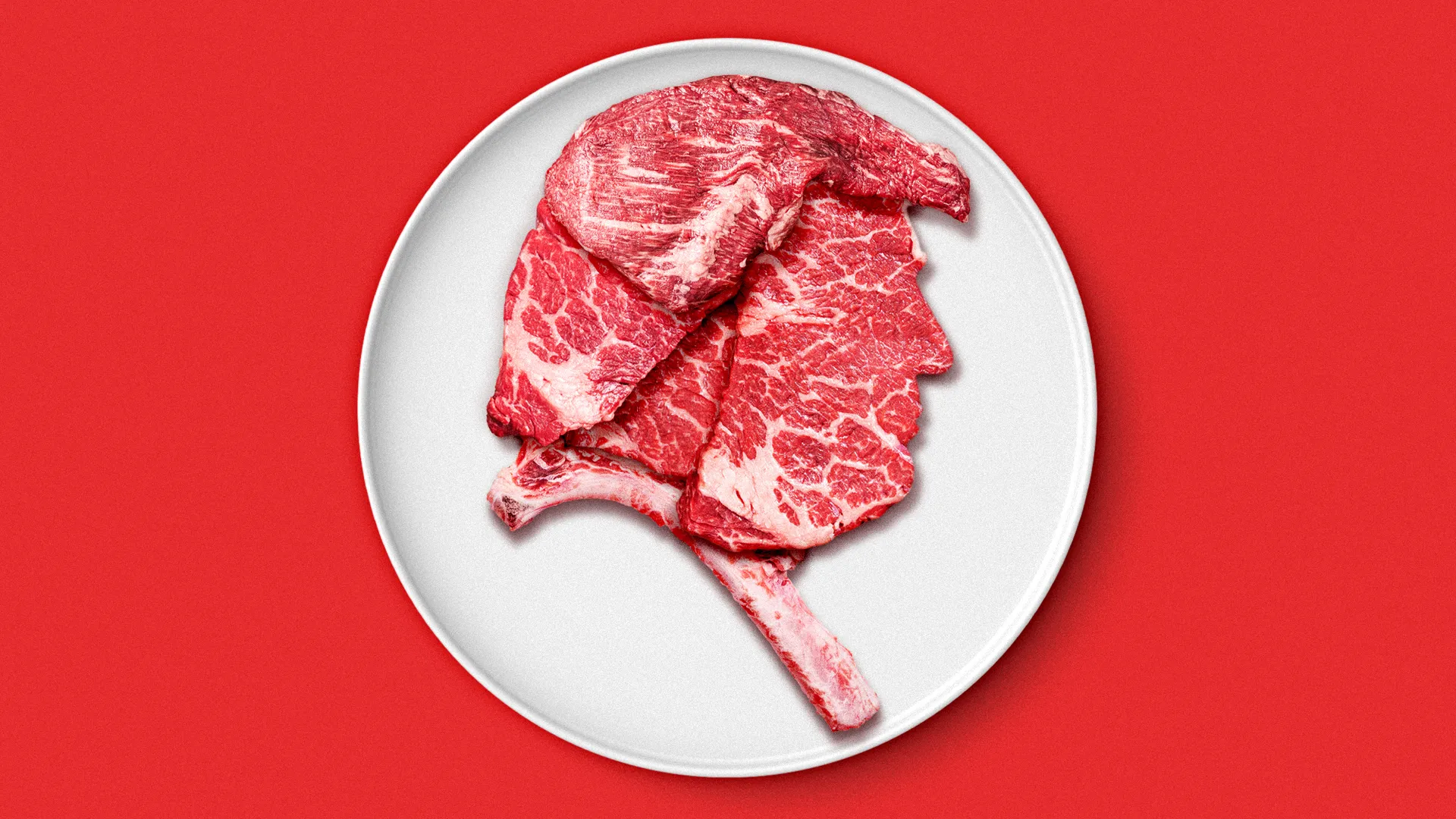
“Where’s the beef?” was a popular catchphrase in the 1980s. These days, it might be replaced with a new question: How much does the beef cost? Hamburger prices are rising, and there could be political fallout for President Donald Trump.
“Record high beef prices” are forcing restaurants to rethink their menus, said The Columbus Dispatch. The Department of Agriculture reported in July that beef is selling for $9.69 a pound — up from $6.09 in the pre-pandemic year of 2019, part of a 35% increase in food costs over the last five years. That puts restaurants “under financial strain,” said Rachel Demers of Ohio-based City Barbecue. Among the reasons for the higher prices: drought, smaller cattle herds and rising consumer demand, said the Dispatch.
The “law of supply and demand” is a factor in rising beef prices, said NPR, but so are political decisions. “Foreign imports are also down” due to Trump’s 76% tariff on imports from Brazil, as well as a federal ban on cattle imports from Mexico due to parasite concerns. “We’ve kind of hit this perfect storm,” said Utah rancher Brady Blackett. Diners are choosing cheaper options. Market analysts are “seeing people opt away from beef,” said Circana’s Chris Dubois.
The Week
Escape your echo chamber. Get the facts behind the news, plus analysis from multiple perspectives.
SUBSCRIBE & SAVE
Sign up for The Week's Free Newsletters
Join more than 350,000 subscribers and keep yourself informed with a selection of The Week’s most interesting, enlightening and entertaining stories - plus daily puzzles.
Join more than 350,000 subscribers and keep yourself informed with a selection of The Week’s most interesting, enlightening and entertaining stories - plus daily puzzles.
Latest Videos FromThe Week US
“Food prices are too damn high,” Matt K. Lewis said at The Hill. Rising costs mean that a family of four “could end up dropping close to $100 for a night out — at McDonald’s.” There might be a variety of reasons for that, but it has not been so long since then-President Joe Biden “got blamed for high food costs” by swing voters who “broke hard for Trump.” The question now is whether anyone will blame Trump or Republicans for this.
The president “promised to lower grocery prices, but they’re higher now,” Rex Huppke said at USA Today. During last year’s presidential campaign, Trump “said he would fix food prices right away” and that he would “wipe out inflation.” Instead, “ground beef prices are up 13%” since last August, while “beef steaks are up more than 16%.” The president, however, is “busy adding tacky gold fixtures to the White House.” If you want lower grocery prices, “there’s no gold here.”
What next?
Cattle ranchers are benefiting from record beef prices, said The Wall Street Journal. Business “hasn’t been this good for cattle ranchers in decades, maybe ever.” That is an exception to overall trends in agriculture. Grain farmers are “projected to lose money this year” and are seeking a bailout from the federal government. But the meat industry is “split on how long the good times for ranchers will last.” Companies like Tyson Foods and JBS expect that cattle supplies “could tick up in 2027 or 2028” and start to rein in prices.
“Americans can’t get enough of the red meat” despite the high prices, said Yahoo Finance. Consumer demand for beef has been “remarkably resilient,” said Virginia Tech agribusiness professor Mario Ortez. The high price of hamburgers has not “stopped the large majority of beef buyers.”