Sign up to get Today’s Best Articles in your inbox
Join 350,000+ subscribers and keep yourself informed with a selection of
The Week’s most interesting, enlightening and entertaining stories - plus daily puzzles.
You are now subscribed
Your newsletter sign-up was successful
Want to add more newsletters?
An account already exists for this email address, please log in.
The ‘nauseating’ horror of AI food slop
Menus with ‘nightmarish’ generated images evoke ‘horror’ but we can’t stop looking
A menu promising a “glistening digital cheesesteak or an eerily geometrical” turkey sandwich “evokes little more than horror in those who behold it”, said the New Yorker. So why are so many restaurants relying on generative AI to create their promotional materials and are these images straying towards false advertising?
‘Nauseating, nightmarish’
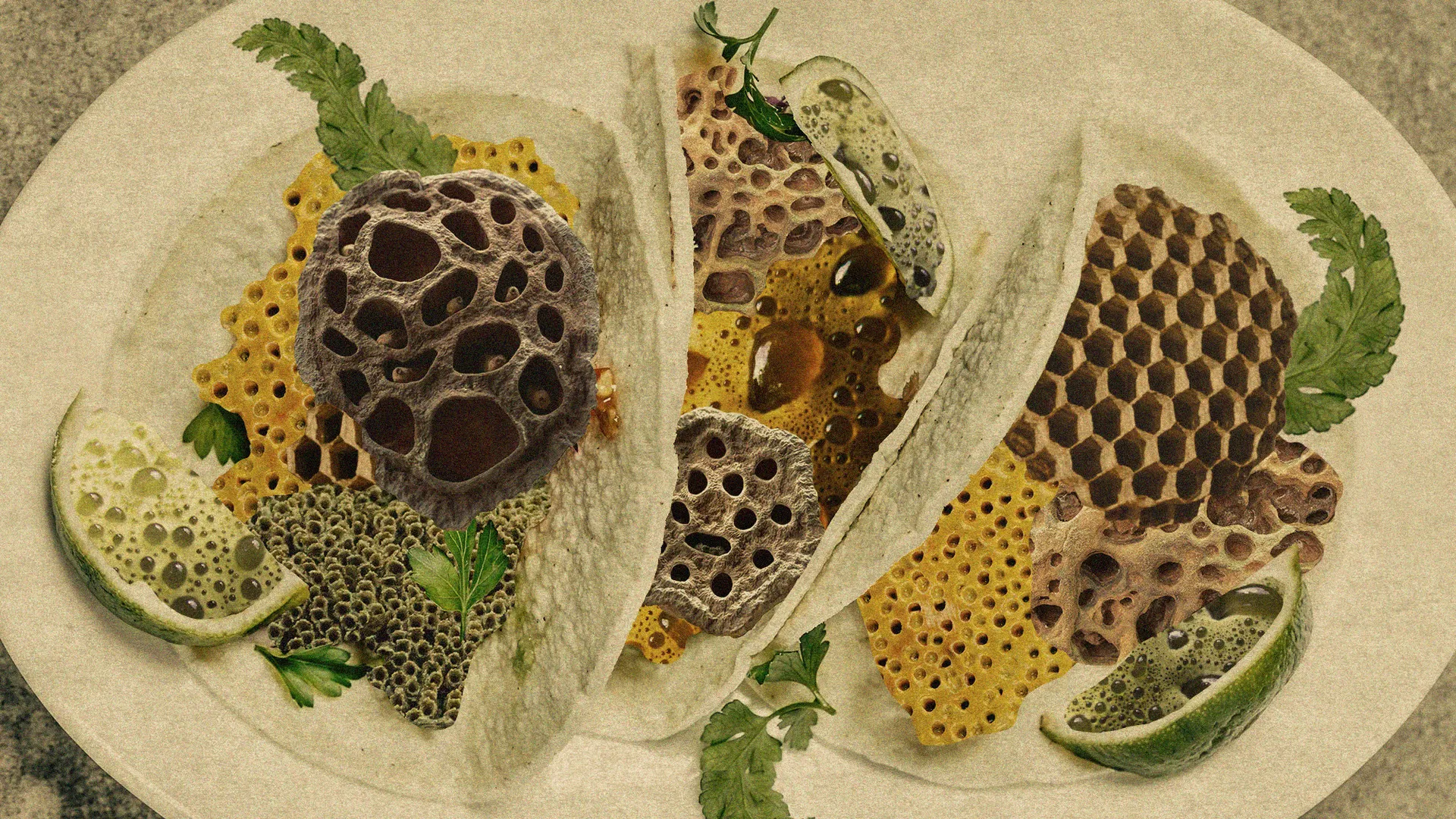
Images of food dishes were once “a thing to be drooled over”, highlighting the “sensual, the luscious, the beautiful”, but now a “nauseating, nightmarish quality defines AI’s insectified interpretation of human cuisine, as if food were just another surrealist goo to stochastically iterate upon”. These fake images “mock life itself”.
The menus might also mock the customers, Adaeze Onejeme, an ad sales worker in Los Angeles, told CNN. “It’s like you don’t even know what you’re going to get” when the actual food arrives, so “at that point, is it false advertising”?
The Week
Escape your echo chamber. Get the facts behind the news, plus analysis from multiple perspectives.
Join more than 350,000 subscribers and keep yourself informed with a selection of The Week’s most interesting, enlightening and entertaining stories - plus daily puzzles.
Join more than 350,000 subscribers and keep yourself informed with a selection of The Week’s most interesting, enlightening and entertaining stories - plus daily puzzles.
The “phenomenon” is seen around the world, said the broadcaster. In Tokyo, sandwiches are advertised with an image in which they seem to be “made of cobwebs”, in Kuala Lumpur, a bowl of spaghetti marinara “looks like perfectly arranged yarn or strings of Play-Doh”, and in Berlin, there is a “plastic-looking quiche with holes or a penne pasta made from rubber”.
‘Low quality, laziness’
These menu images can signify qualities people generally don’t want to associate with food, such as “low quality, laziness or, well, slop”. Some of them are “alienlike catastrophes”.
There’s “an innateness” to how real food looks that “you can feel in your bones”, Emily Hawkes, a professional food photographer, told USA Today. So when you see AI food images “there’s something wrong, and you might not be able to put your finger on it, but you know it when you see it”.
There’s a reason why we can't look away from the pictures, said psychologist Stephanie Sarkis: our brain gets stuck between “approach and avoidance” as it tries to make sense of an image that looks almost real but is clearly fake.
Running a restaurant in 2026 is challenging because of “rising costs and uneven customer traffic”, said CNN. So “as they look to save money wherever possible”, a growing number of restaurant owners are using AI to “assist with marketing”.
Sign up to get Today’s Best Articles in your inbox
A free daily email with the day’s biggest news and analysis – and the best features from TheWeek.com
But if food photography is “cost-prohibitive” for an establishment, there are “other avenues to explore” rather than turning to generative AI, Hawkes told USA Today. She suggests contacting student photographers and offering a free meal in exchange for content, or consulting YouTube tutorials for a DIY approach.
Chas Newkey-Burden has been part of The Week Digital team for more than a decade and a journalist for 25 years, starting out on the irreverent football weekly 90 Minutes, before moving to lifestyle magazines Loaded and Attitude. He was a columnist for The Big Issue and landed a world exclusive with David Beckham that became the weekly magazine’s bestselling issue. He now writes regularly for The Guardian, The Telegraph, The Independent, Metro, FourFourTwo and the i news site. He is also the author of a number of non-fiction books.