The Week The Week
flag of US
US
flag of UK
UK
https://cdn.mos.cms.futurecdn.net/flexiimages/jacafc5zvs1692883516.jpg

SUBSCRIBE & SAVE

Less than $3 per week

Sign in
  • View Profile
  • Sign out
  • The Explainer
  • The Week Recommends
  • Newsletters
  • Cartoons
  • From the Magazine
  • The Week Junior
  • Student Offers
  • More
    • Politics
    • World News
    • Business
    • Health
    • Science
    • Food & Drink
    • Travel
    • Culture
    • History
    • Personal Finance
    • Puzzles
    • Photos
    • The Blend
    • All Categories
  • Newsletter sign up Newsletter
  • The Week Evening Review
    The new search for MH370, events to come in 2026, and downsized resolutions

     
    TODAY’S BIG QUESTION

    Will the mystery of MH370 be solved?

    Nearly 12 years after Malaysia Airlines flight MH370 vanished over the Indian Ocean, a new search for the aircraft has begun. Using state-of-the-art underwater drones, US-based marine robotics company Ocean Infinity is leading an expedition to scour 5,800 sq miles of seabed.

    MH370 departed from Kuala Lumpur on 8 March 2014 with 239 people on board but, 40 minutes into what should have been a six-hour flight to Beijing, the Boeing 777 disappeared from civilian radar. Subsequent military radar data showed it veering thousands of miles off course, heading towards the southern Indian Ocean. An extensive international search effort failed to find the wreckage or bodies.

    What did the commentators say?
    This “renewed quest to find the doomed airliner” could “potentially solve the world’s greatest aviation mystery”, said Bernard Lagan in The Times. While parts of the area have been searched before, Ocean Infinity’s new drones are better equipped to explore the “rugged undersea mountains and canyons” that could not previously be accessed. “With the new technology and the way that they are looking at it, there’s a very good chance they will find it,” Charitha Pattiaratchi, a professor of oceanography at the University of Western Australia, told the paper.

    The company, which is working on a “no find, no fee” basis for the Malaysian government, has “autonomous underwater vehicles” that can dive to nearly 19,700ft and operate for days without surfacing, said Sujita Sinha on Interesting Engineering. Using side sonar, ultrasound imaging and magnetometers, they can produce detailed 3D maps of the seabed, and detect metallic objects buried under sediment.

    The “on-off search” for MH370 has “already become the most expensive hunt in aviation history”, said Ben Farmer in The Telegraph. Yet after more than a decade, there is “little to show for it”. The new search area, however, has been scoped out using updated satellite analysis, refined drift modelling and expert input.

    What next?
    The search is scheduled to last up to 55 days and Ocean Infinity reportedly stands to earn $70 million if significant wreckage is found.

    Relatives of the MH370 passengers – from China, Australia and Europe – have long fought to “keep the hunt alive”, and are watching the new developments closely, said Iman Muttaqin Yusof in the South China Morning Post. They argue “that closure matters, not only for the dead but for global aviation safety”.


    THE EXPLAINER

    Predictions for 2026

    As 2025 comes to an end, here’s what you can expect to read in the year ahead.

    British politics
    Local and devolved elections in May are being seen as a make-or-break moment for Keir Starmer. His party is being squeezed from the right by Reform and from the left by a revived Green Party. For the first time in a century, Labour also risks losing control of its Welsh heartland.

    US politics
    Donald Trump will be making the most of hosting the men’s football World Cup and the G20 summit next year. But midterm elections are looking pretty bleak for the incumbent Republicans. With Trump’s approval ratings continuing to fall, Democrats have opened up a double-digit lead in voting intention for the congressional races in November.

    Other elections
    In Europe, all eyes will be on the Hungarian parliamentary election in April, where Viktor Orbán’s 16-year rule could end. Elsewhere, there’s a “greater likelihood of victories by the centre-right/right-wing opposition” in Brazil, Colombia and Peru, according to global research firm BMI, “while Israel could also see a political shift”.

    Economics
    Following a bumpy year in which Trump’s tariff war played havoc with trade but markets continued to post record returns driven by AI investment, the outlook for the global economy in 2026 remains “dim”. That is the assessment of the IMF’s latest World Economic Outlook. “Don’t count on the AI bubble popping immediately – but don’t count it out, either,” said Mashable. Interest rates (in the US, UK and elsewhere) are expected to continue to fall, however. 

    Conflicts and wars
    Despite peace talks, the Ukraine war continues to rage into 2026. Other conflict hotspots include India and Pakistan, after a deadly skirmish in 2025, Congo and Rwanda, and the ongoing civil war in Sudan. Tensions are also mounting between China and Taiwan. Trump continues to threaten conflict with Venezuela but, if he is persuaded to back down, manages to maintain the Gaza ceasefire and negotiates an end to the war in Ukraine, he could be in the running for next year’s Nobel Peace Prize.

    Out of this world
    A little further from home, the Nasa-led Artemis II mission will attempt the first manned orbit of the Moon in over half a century. On the 10-day flight, the four-person crew “won’t land on the lunar surface”, said the BBC, but they will travel 5,000 nautical miles beyond the Moon and “further into space than any human has gone before”.


    QUOTE OF THE DAY

    “One is offering you a unicorn, the other’s peddling hatred, and we need to expose that.”

    Joe Dromey, general secretary of the Fabian Society, Labour’s internal think tank, says his party must take on the “twin populisms” of Green Party leader Zack Polanski and Reform UK leader Nigel Farage in 2026.


    Poll watch

    Only 2% of Brits know the full lyrics of “Auld Lang Syne”, according to a YouGov survey of 6,285 adults. Nearly a quarter (23%) don’t know any of the words of the popular New Year’s Eve song, while 76% know some of them but not the full five verses.


    IN THE SPOTLIGHT

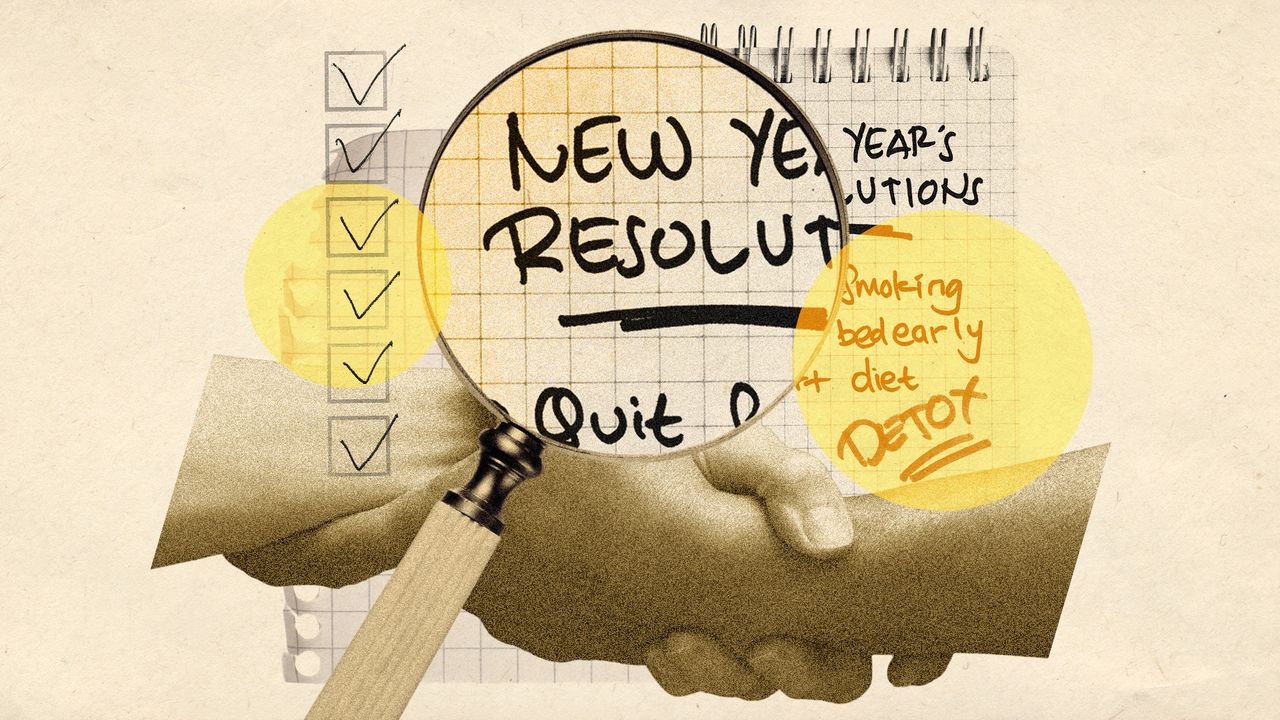
    Micro-resolutions: shrinking goals for the new year

    Most of us start each new year with grand ambitions to change our life for the better – only to abandon our well-intentioned resolutions within a few weeks.

    According to a YouGov poll from last year, 17% of Brits cast aside their new year’s resolutions – which are dominated by health and financial goals – within a month, while just 11% of us manage to keep them up for a whole year. Strava has even dubbed the second Tuesday of January “Quitter’s Day” after its data showed a sharp drop in activity on that date.

    “The key to making lasting change” could be casting aside the big resolutions and opting for “micro-resolutions” instead, said Stylist.

    ‘Progress, not perfection’
    Swap scarily ambitious challenges for “smaller and more achievable” goals that are easier to integrate into your everyday life, life coach Karen Whybrow told Stylist. This allows you to “build momentum over time without feeling overwhelmed”. Gradually, these incremental steps “accumulate into significant change, much like planting seeds that grow and thrive”. And if you miss a day? Be kind to yourself and don’t let it stop you. “Progress, not perfection, is the goal.”

    It takes 66 days on average to reliably form a new habit like drinking a glass of water in the morning or eating a piece of fruit, according to a 2009 study by University College London researchers. Consistent daily repetition is the most important factor in making small habits part of a lasting routine.

    ‘Create a plan’
    Micro-resolutions could include anything from going outside more often to reading a new book or cooking with a new ingredient once a week or writing a daily journal. It can be hard to stick to a resolution when the “initial excitement of a ‘new year, new me’ wears off”, Colin Camerer, a behavioural economist at the California Institute of Technology, told Scientific American. Creating a “specific plan” and “having some type of accountability” (like check-ins with a friend or family member) can also help encourage you to continue.

    Crucially, “people are more inclined to keep a resolution that they are interested in doing, rather than one that they simply believe they should do”. And instead of delaying the reward until the task is finished, it is much more effective to treat yourself while you’re doing it – for example, listening to your favourite podcast while you’re at the gym.


    Good day💉

    … for small appetites, as Marks & Spencer launches a new range of food designed for people on weight-loss jabs. The retailer says its “nutrient dense” meals and snacks will help those with reduced appetites consume the vitamins, fibre, fats and proteins their bodies need.


    Bad day 💰

    … for Germany’s Sparkasse bank, after it discovered thieves had drilled into the vault of its Gelsenkirchen branch and stolen at least €30 million in money and valuables. The perpetrators, who are still at large, broke into more than 3,000 customer deposit boxes on Monday during the holiday lull.


    picture of the day

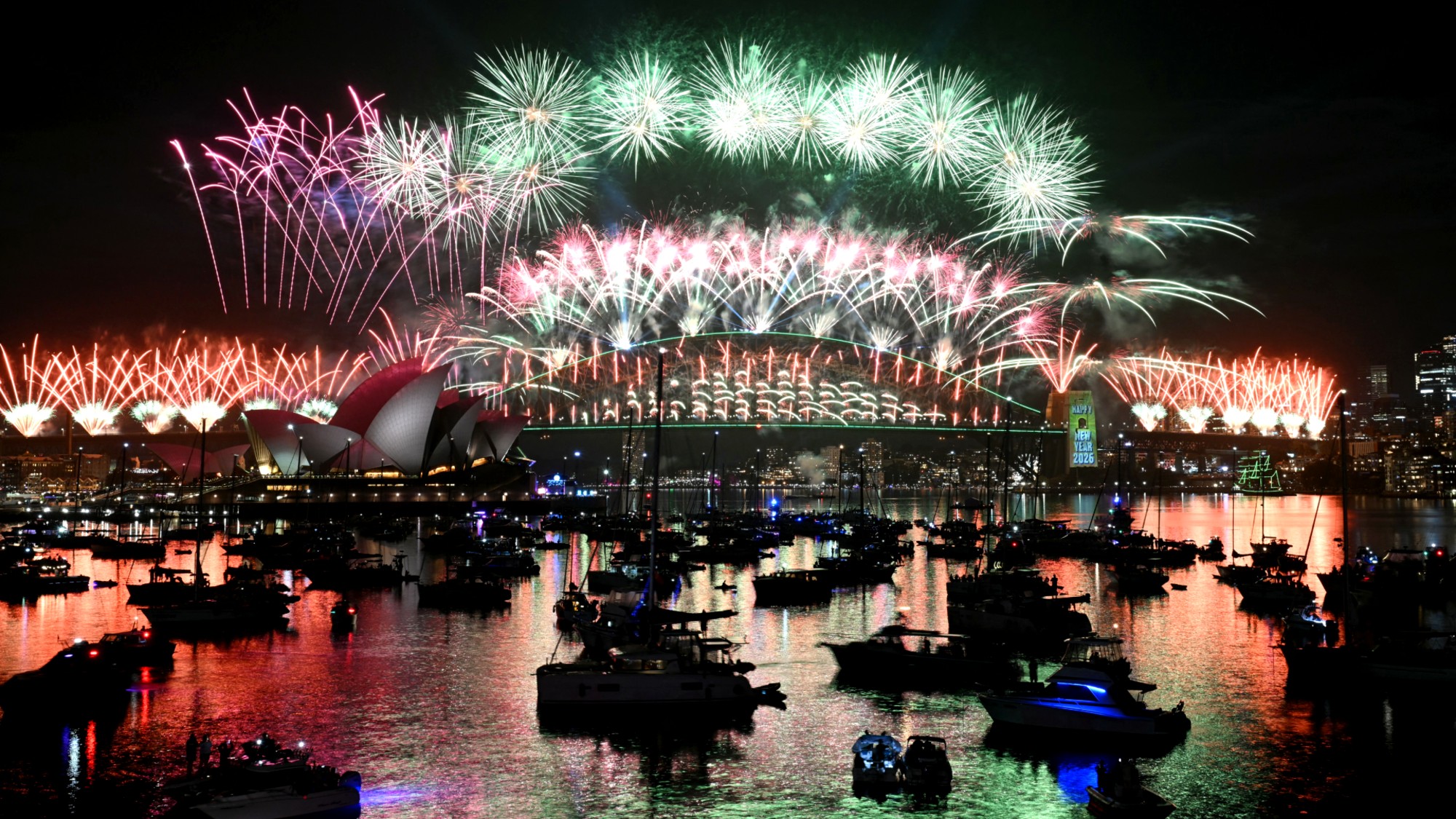
    Midnight display

    Fireworks light up the sky over Sydney Harbour Bridge as Australia welcomes in 2026. Just before midnight, hundreds of thousands of people marked a minute’s silence to show solidarity with the Jewish community after the Bondi Beach terrorist attack on 14 December.

    Saeed Khan / AFP / Getty Images


    PUZZLES

    Guess the number

    Try The Week’s new daily number challenge in our puzzles and quizzes section

    Play here


    THE WEEK RECOMMENDS

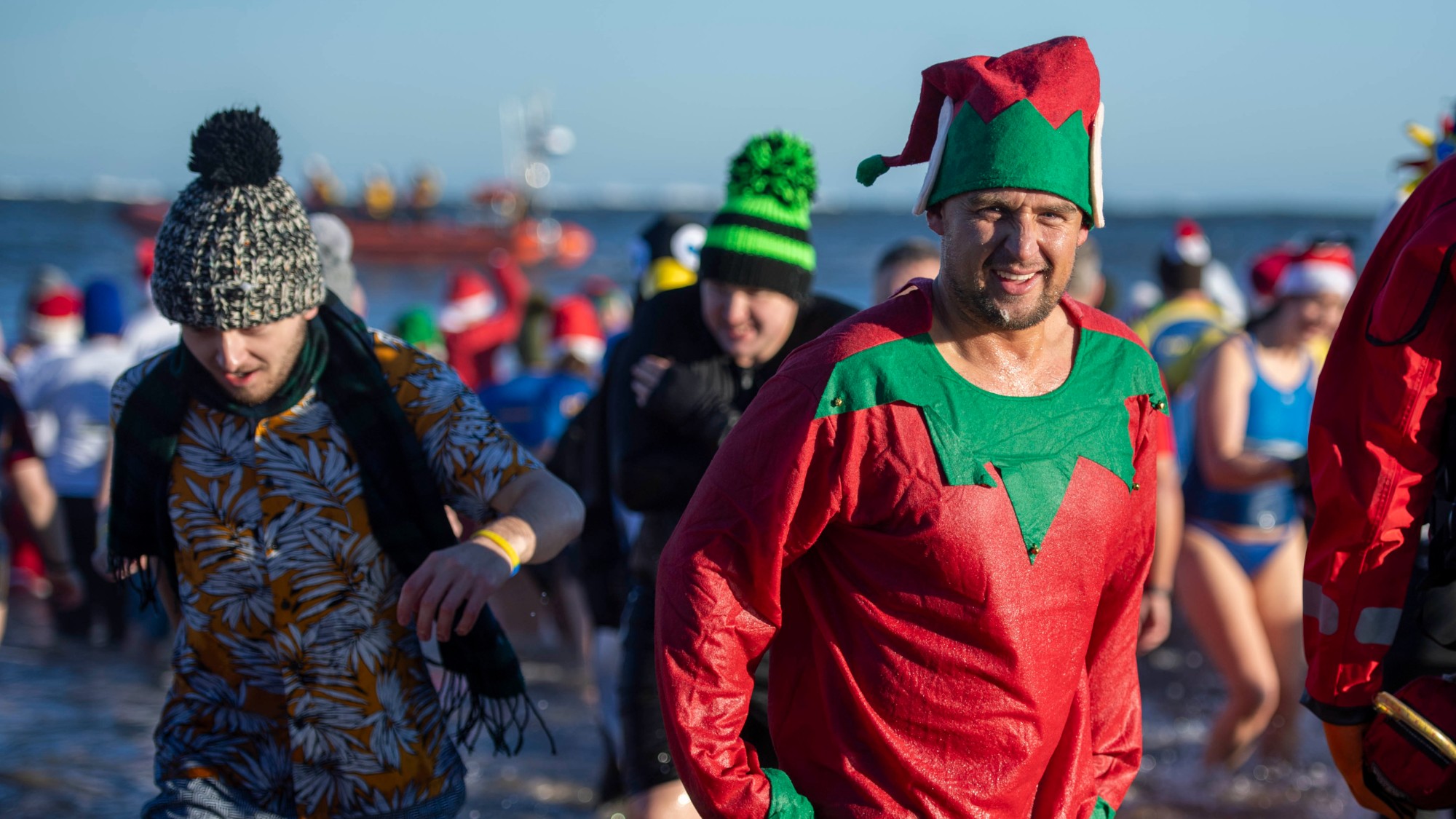
    The best spots for a New Year’s Day swim

    It is nearly time to “don a woolly hat” and a wetsuit, and take an icy dip, said The Telegraph. After a food-heavy Christmas, charging into the open water could be just the “life-affirming” restart you need.

    With over a million Brits belonging to outdoor swimming groups, a brisk swim in a lake, river or the sea is an increasingly popular way to start the year. As fun and invigorating as it is, though, cold water in cold weather can be a bit of a shock to the system, so it’s best to swim with others and not attempt anything beyond your abilities. And, if you’re eyeing up a sea swim, do check the conditions carefully before venturing in.

    From tranquil rivers to mass harbourside events, here is our pick of the best spots for a New Year’s Day dip.

    Broughty Ferry Harbour, Dundee
    This is “the oldest festive swim” I know, taking place for more than “130 years and counting”, said Kate Rew in The Guardian. Run by the excellently named Ye Amphibious Ancients Bathing Association, the New Year’s Day “dook” at 12pm is not for the faint of heart – “on occasion, ice has had to be smashed” before participants can enter the water.

    The River Cam, Cambridgeshire
    Even in winter, you can “float through a dreamscape of vast meadows, low-hanging willow trees and smooth, arched bridges”, said Rosie Hewitson in Time Out. Head to any point along a two-mile stretch between Byron’s Pool and King’s Mill Weir for an “invigorating” dip.

    Saundersfoot, Pembrokeshire
    If last New Year’s Day is anything to go by, you should brace yourself for thousands of swimmers at 12.30pm, and many more watching from the shore, said Abbie Wightwick on Wales Online. Many come “ready to brave the water” in colourful costumes, from cartoon characters to princesses and sea creatures.


    Statistic of the day

    210.3 billion: The number of songs streamed over 2025, according to the British Phonographic Industry. Alex Warren’s “Ordinary” was the most-played track. Streaming now accounts for 89% of the music market, although vinyl sales increased for the 18th successive year to 7.6 million units.


    instant opinion

    Today’s best commentary

    The royal family is edging toward modernity – but in 2026, the public will expect yet more transparency
    Anna Whitelock in The Guardian
    King Charles “has won plaudits” this year for using “the monarchy’s soft power to support” British foreign policy and “strengthen international relations”, writes professor of royal history Anna Whitelock. He’s “been praised”, too, for “his openness about his health”. The “fly in the ointment” remains “his brother Andrew”. And there are those who argue that laws preventing “scrutiny of how royal funds are spent” undermine “democratic accountability”. Next year, the king “needs to embrace openness”.

    Brazil’s President Lula should not run again
    The Economist’s editorial board
    Luiz Inácio Lula da Silva is in “a strong position” to be re-elected as Brazil’s president next year, says The Economist. But he’s 80 and, “for all his political talent”, it’s “simply too risky” for “someone so old” to “serve another four years”. He could “do his country a favour and burnish his legacy” by standing aside. Former president Jair Bolsonaro may be in jail “for plotting a coup” but “Brazilian democracy” still “needs another shot in the arm”.

    The far right is rising and the UK is on the edge. Here’s how I stay hopeful
    Yasmin Alibhai-Brown in The i Paper
    The British “media is obsessed with the bad, mad and dangerous”, writes Yasmin Alibhai-Brown, but “goodness and joy are all around”. On Christmas Day, a “British Muslim chippy owner handed free, hot food to anyone who needed it”. Friends in NHS hospitals “were gratified by the care they got”. My students volunteered at a refugee centre, a homeless shelter and a care home: they are not “cynical or distrustful of strangers”. I am “so proud” of our country.


    word of the day

    Seiche

    When water is pushed to one end of a lake or bay before oscillating back and forth, as seen in America’s Lake Erie this week. “Imagine the water sloshing in a bathtub from one side to the other,” said USA Today. “A seiche creates a similar effect, but on a much larger scale.” Strong winds caused water levels at the eastern end of Lake Erie to reach 20ft, while the water in the western end “vanished”, even revealing a lost snowmobile on the lake’s floor.


    Evening Review was written and edited by Hollie Clemence, Chas Newkey-Burden, Irenie Forshaw, Will Barker, David Edwards and Helen Brown, with illustrations from Stephen Kelly and Julia Wytrazek.

    Image credits, from top: Mohd Samsul Mohd Said / Getty Images; illustration by Stephen Kelly / Getty Images / Shutterstock; illustration by Julia Wytrazek / Getty Images; Saeed Khan / AFP / Getty Images; MI News / NurPhoto / Getty Images

    Morning Report and Evening Review were named Newsletter of the Year at the Publisher Newsletter Awards 2025
     

    Recent editions

    • Evening Review

      Gazing into the economic crystal ball

    • Sunday Shortlist

      The best TV show of the year

    • Saturday Wrap

      America wards off tourists

    VIEW ALL
    TheWeek
    • About Us
    • Contact Future's experts
    • Terms and Conditions
    • Privacy Policy
    • Cookie Policy
    • Advertise With Us
    • FAQ
    Add as a preferred source on Google

    The Week is part of Future US Inc, an international media group and leading digital publisher. Visit our corporate site.

    © Future US, Inc. Full 7th Floor, 130 West 42nd Street, New York, NY 10036.