European and South American leaders are set to sign a new trade deal following decades of diplomatic negotiations. First broached in 1999, the EU-Mercosur agreement will create the world’s largest free trade area, covering more than 700 million people.
What is in the deal?
As part of the agreement, “Mercosur will remove duties on 91% of EU exports” over 15 years, said RTE. This includes scrapping the 35% tariff on European cars, the 27% duty on EU wine exports and the 35% on spirits.
In return, the EU will “progressively remove duties” for 92% of Mercosur exports over up to 10 years. In addition, the EU will allow an additional 99,000 tonnes of beef to be exported from South America, while Mercosur will give the EU a duty-free 30,000-ton quota for cheeses. There will also be protections over recognised brands – such as “Parmigiano Reggiano” – to prevent imitations.
Why has it been controversial?
European farmers have been staging “violent demonstrations” against the deal for months, said the Financial Times. In recent weeks, tractors have circled Paris’ Arc de Triomphe and milk was dumped in the streets of Milan, and since the deal was confirmed, there have been large-scale protests in Ireland, Poland and Belgium.
In the final negotiations, the EU was forced to offer “several concessions” to farmers and “agricultural powerhouses” such as Italy. The European Commission promised an extra €45 billion to farmers in a new seven-year budget from 2028, and agreed safeguards to prevent market disruption from South American imports.
Who are the winners and losers?
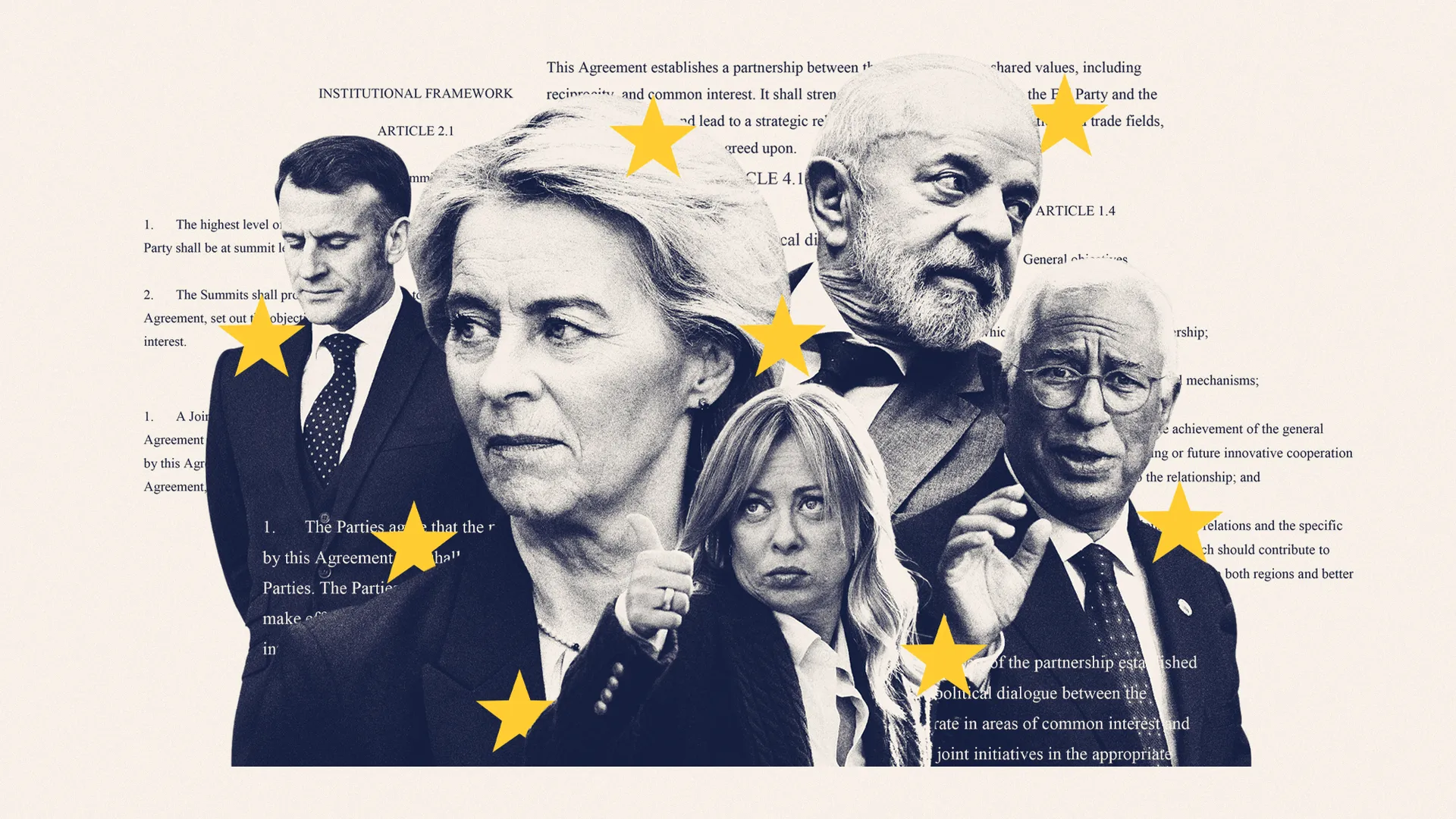
Italy’s Prime Minister Giorgia Meloni has added “yet another laurel in Rome’s crown”, said Politico. She “saw which way the political winds were blowing and skilfully extracted last-minute concessions for Italian farmers after threatening to throw her weight behind French opposition to the deal”.
Despite such concessions, European Commission President Ursula von der Leyen is also a winner, having transformed a “lumbering dinosaur” of a bloc that was “consistently outmanoeuvred by the US and China” into a promising trading proposition.
For von der Leyen and Brazil’s President Luiz Inácio Lula da Silva, the agreement will “signal independence from the world’s two largest economies”, said the Buenos Aires Times, and show that “broad multilateral deals remain possible in a global order upended by Donald Trump”.
|