The Week The Week
flag of US
US
flag of UK
UK
https://cdn.mos.cms.futurecdn.net/flexiimages/jacafc5zvs1692883516.jpg

SUBSCRIBE & SAVE

Less than $3 per week

Sign in
  • View Profile
  • Sign out
  • The Explainer
  • The Week Recommends
  • Newsletters
  • Cartoons
  • From the Magazine
  • The Week Junior
  • Student Offers
  • More
    • Politics
    • World News
    • Business
    • Health
    • Science
    • Food & Drink
    • Travel
    • Culture
    • History
    • Personal Finance
    • Puzzles
    • Photos
    • The Blend
    • All Categories
  • Newsletter sign up Newsletter
  • The Week Evening Review
    Tensions with Iran, a notable White House figure, and the men-only Olympic sport

     
    TODAY’S BIG QUESTION

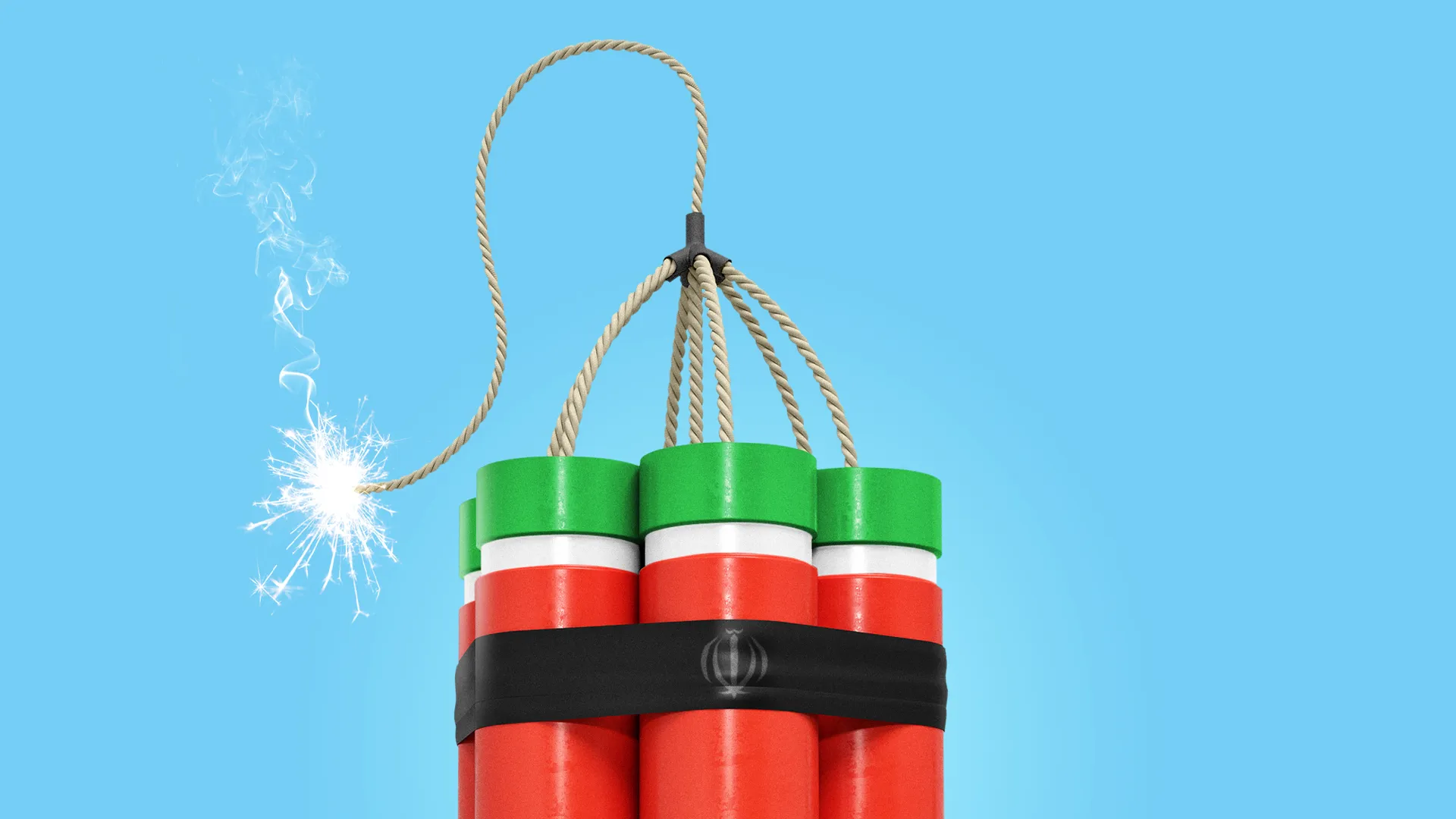
    Will increasing tensions with Iran boil over into war?

    President Donald Trump’s consistent prodding of Iran hasn’t developed into armed conflict, but some foreign analysts are fearful it could be on the horizon. The White House has been pressuring Iran over its nuclear program and recently sent a second aircraft carrier to the Middle East as military tensions heighten. Despite this, other experts say the prospect of war with Iran remains unlikely.

    What did the commentators say?
    Trump has long hinted at the idea of a strike against Iran, and his administration did attack the country’s alleged nuclear weapons armaments in 2025. But White House officials have “discovered that the U.S. could not conduct a major offensive as quickly as they had hoped without real risks to American forces, support from allies and regional stability,” said The Atlantic. And the administration has “yet to outline to military commanders what it would want to achieve” through strikes.

    This likely suggests that the “use of force is not imminent” in Iran, said The Atlantic. Trump has “no good options when it comes to using force,” largely because the U.S. does not have the troop presence built up near Iran to mount a full-on war, said CNBC.

    But things could continue to devolve if negotiations between the U.S. and Iran break down. If Trump does decide to go to war, or even launch a targeted attack, it could create “something that would be quite formidable,” retired U.S. Army Gen. Jack Keane said on “The Cats Roundtable” radio show. It would “put the regime clearly on a pathway to regime collapse.”

    What next?
    Despite “ongoing diplomacy to ease tensions” with Iran, said Al Jazeera, the Trump administration is moving ahead with shoring up its Middle East forces. Recent moves by the White House “put two carriers and their accompanying warships in the region.” This occurred just hours after Israeli Prime Minister Benjamin Netanyahu met with Trump in Washington, D.C., and “reaffirmed his preference for a diplomatic deal” with Iran.

    Diplomatic negotiations have largely been positive, said Iranian Foreign Minister Abbas Araghchi. But Iran also temporarily closed the Strait of Hormuz to “conduct military drills in the waterway,” said Reuters. And Iran is “preparing for the possibility” of an offensive move by the U.S., said The Jerusalem Post.


    Statistic of the day

    392,619: The number of people arrested by Immigration and Customs Enforcement during the first year of Trump’s second term, according to DHS statistics cited by CBS News. Despite the administration’s emphasis on targeting violent criminals for deportation, about 40% of ICE detainees had no criminal record.


    IN THE SPOTLIGHT

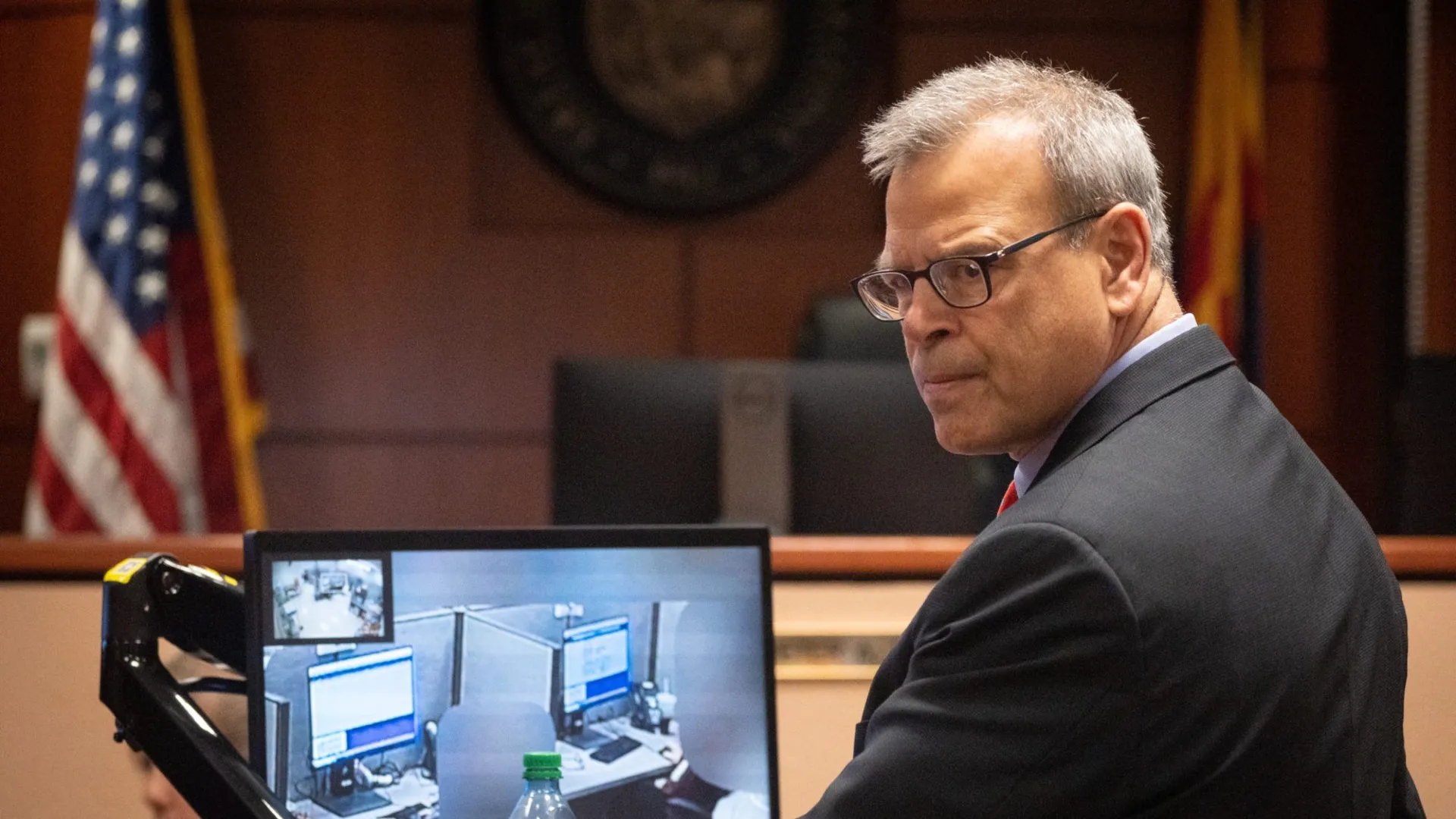
    Kurt Olsen: the ‘Stop the Steal’ lawyer playing a major role

    While several notable conspiracy theorists work in the Trump administration, one who has flown under the radar is beginning to gain traction: Kurt Olsen. The White House hired the attorney last year to oversee election security, and he has recently ramped up his efforts to investigate the 2020 election. With the midterms on the horizon, Olsen’s role within President Donald Trump’s administration may be growing.

    Beginnings and election denial
    Olsen, 63, graduated from the U.S. Naval Academy and served as a Navy SEAL. He later worked as a lawyer and cofounded a law firm. But his national profile began to climb following Trump’s loss to former President Joe Biden in 2020. Since then, Olsen has built a “long history of fighting” the 2020 election results, said USA Today.

    He “joined the Texas attorney general’s attempt” to get the Supreme Court to stop four swing states from certifying Biden's 2020 victory over Trump, said USA Today. The lawyer grew closer to Trump after the election and had “multiple phone calls” with him during the Jan. 6 insurrection, said Politico.

    Director of election security
    The White House gave Olsen the “power to refer criminal investigations” into things that have been “thoroughly debunked,” said The New York Times. He’s one of several prominent election deniers “using the power of the state to keep Trump’s denialism alive.” But even in a “constellation of conspiracists, Olsen stands out.”

    One crucial moment on the national stage for Olsen came in January, when the FBI used a search warrant to seize ballots and records related to the 2020 race from an election center in Fulton County, Georgia. The FBI’s investigation “originated from a referral sent by Kurt Olsen,” said an affidavit for the search warrant. The CIA has also confirmed that the agency is working with Olsen, an unusual move given that he has “no known experience working with the U.S. spy community,” said Politico.

    Olsen has a “history of abusing his law license to spread lies about our elections,” Christine P. Sun, a senior vice president at the States United Democracy Center, said to the Times. “Now, he’s using his role in the administration and the power of the federal government to take actions fueled by those same lies.”


    QUOTE OF THE DAY

    ‘Because my network clearly doesn’t want us to talk about this, let’s talk about this.’

    Late-night host Stephen Colbert, in a taping of “The Late Show,” about an interview with Texas Rep. James Talarico (D). CBS prohibited the interview from being broadcast because of FCC regulations and pressure over talk shows critical of the Trump administration. The interview was posted on YouTube.


    TALKING POINTS

    The Winter Olympic sport that bars women

    The International Olympic Committee boasts that Milano-Cortina 2026 is the “most gender-balanced” Winter Games yet, with the highest level of women’s participation. But there’s one glaring exception: Nordic combined.

    The door to this sport is “slammed shut” to women, said The Independent. The three Olympic events in which athletes compete in both ski jumping and cross-country skiing are strictly men-only, despite equivalent women’s World Cup and World Championship events. 

    ‘Misogynistic mindset’ 
    Nordic combined has been part of the Winter Olympics since the Games debuted in 1924. The “daredevil thrill” of ski jumping combined with the “physically exhausting cross-country ski race” makes for a “two-day event unlike any other,” said The Associated Press. 

    Cross-country skiing has centuries-old origins in Scandinavian military training, which could explain the “misogynistic mindset,” said ABC News. But ski jumping seems to be the decisive factor. Women have been competing in cross-country events since 1952 but were barred from ski jumping until the early 2000s. For decades, they were “deemed too fragile to stand up to the rigors of repeatedly hurtling themselves off the side of a mountain.” 

    To complicate matters, the IOC has “put the entire sport on notice,” said The New York Times. It must boost its small following and increase the number of participating athletes or “risk falling off” the Olympic program. So the women of Nordic combined aren’t just “stuck sitting on the sidelines.” They are “relying on the men’s performance to keep the sport’s future in the Games alive.” 

    ‘Glacial pace’ of change 
    Women were excluded entirely from the first modern Summer Olympics in 1896. Since then, the bans have slowly been eliminated, but the Winter Olympics have changed at a “glacial pace,” said The Independent. 

    Women athletes at the recent Nordic combined World Cup in Seefeld, Austria, staged a protest, holding up their ski poles in the shape of an X to symbolize “no exceptions.” “I do what every single other athlete does,” U.S. Nordic combined skier Annika Malacinski said to The Washington Post. “I work my ass off to be where I am, and yet there’s one group of people telling me I’m not doing it hard enough.”


    Good day 🎨

    … for artists in Ireland. The Irish government has expanded a pilot program that offers a basic income for creative workers. Up to 2,000 eligible artists can claim $383 per week for three years to give them the financial security to pursue their craft and help to keep creative talent in Ireland.


    Bad day 🥛

    … for dairy execs in the U.K. The U.K. Supreme Court has ruled that dairy-alternative manufacturer Oatly’s slogan “post-milk generation” violates regulations prohibiting the word “milk” on nondairy products. The verdict also “indicates regulatory convergence with the EU, where discussions surrounding the labelling of plant-based alternatives persist,” said Food & Drink Digital.


    Picture of the day

    Final festival

    A Mardi Gras reveler parades through the streets of New Orleans during the Krewe of Orpheus procession. The parade marked Lundi Gras, or Fat Monday, the day before Mardi Gras and traditionally the penultimate day of carnival before the beginning of Lent on Ash Wednesday.
    Erika Goldring / Getty Images


    Puzzles

    Daily sudoku

    Challenge yourself with The Week’s daily sudoku, part of our puzzles section, which also includes guess the number

    Play here


    The Week recommends

    The year’s ‘it’ vegetable is a versatile wonder

    Cabbage has been dubbed 2026’s vegetable of the year. It might be the “closest thing to a shelf-stable vegetable we have,” said cookbook author Joe Yonan to Real Simple. It can “last for so long that it seems to be always there, waiting for you.”

    Cabbage is “having a moment,” said Berk Guldal, the chef-owner of Hamdi restaurant in Seattle, to Martha Stewart, because it’s “endlessly versatile. You can pickle it, ferment it, shave it raw into salads or lightly blanch it, and it still shines.” Consider the following techniques a warmup for your cabbage-centric adventures.

    Roast and flavor-assault
    Chef Andy Baraghani is the Crown Prince of Cruciferi. He works wonders with his pan-seared cabbage, always utilizing a complementary mixture of ingredients. Standout examples include a garlic-anchovy sauce with loads of fresh dill, and a chunky, zippy sauce with a whole chopped lemon, pistachios, honey, olive oil, and a flurry of shredded cheese.

    Cloak it in a familiar costume
    A scorching oven setting turns cabbage wedges smoky and charred in chef Hetty Lui McKinnon’s take on chicken Parm. The wedges are then draped with tomato sauce and mozzarella and blasted in the oven again so the cheese bubbles and browns. A finish of croutons and basil leaves provides texture and a green lift.

    Cook softly with moisture
    Sometimes a soft sauna turn in the oven is what cabbage craves the most. Prolific cookbook author Molly Stevens shows you how to make the “world’s best braised cabbage” by cooking it covered, slowly, with onion, carrot and water — or stock if you are feeling glamorous.

    Read more


    Poll watch

    Almost three-quarters of Americans (73%) turn to doctors or other industry professionals for medical advice, according to a Gallup survey. The poll of 5,719 adults found a smaller majority of Americans (53%) also get advice from websites associated with medical authorities, such as hospitals or government health agencies. 


    INSTANT OPINION

    Today’s best commentary

    ‘Jesse Jackson envisioned a more inclusive politics and made it happen’
    Donna Brazile at The Washington Post
    Civil rights activist Jesse Jackson “profoundly changed American politics,” and his life story is a “triumph over adversity,” says Donna Brazile. Jackson “advanced a broadly progressive agenda” and “embraced the then-relatively new idea that diversity was a strength, not a weakness.” He “liked to talk about the nation as a quilt patched together by intent and accident” and “made us see what could be, which helped so much of it come to be, and we are all the better for it.”

    ‘The Mediterranean does not have to be a graveyard. Preventable failures are turning it into one.’
    Amy Pope at Le Monde
    The Mediterranean has “claimed lives that should never have been lost,” says Amy Pope. These deaths are the “predictable outcome of policy failure, criminal exploitation and a global conversation on migration that has become dangerously distorted, and they are largely preventable.” Migrant smuggling networks are at the “heart of this crisis — sophisticated criminal enterprises that profit from despair.” This is “more than reckless indifference”; it’s an “appalling disregard for human life.”

    ‘American Ninja Warriors on ice’
    Chris Schleicher at Slate
    Pairs is the “best discipline in figure skating,” says Chris Schleicher. Pairs skaters are the “American Ninja Warriors of figure skating, doing X Games-level stunts with the gentility and grace of the Bolshoi Ballet.” Whether you are “looking for beauty or you enjoy the NASCAR thrill of impending disaster, pairs has something for everyone.” It comes down to “who can sell us on their connection while forgetting for four minutes that every element they are performing is absolutely insane.”


    WORD OF THE DAY

    dizi

    The Turkish word for “series” and a TV drama genre. With “lush production values, good-looking actors and gripping” storylines, Turkey’s dizis have “hooked audiences” worldwide, said the Financial Times. But as production costs soar and advertising revenue drops, the “squeeze” on these “binge-worthy” soap operas has become a “parable of Turkey’s economy.”


    Evening Review was written and edited by Theara Coleman, Nadia Croes, Scott Hocker, Anya Jaremko-Greenwold, Justin Klawans, Summer Meza and Chas Newkey-Burden, with illustrations by Stephen Kelly and Julia Wytrazek.

    Image credits, from top: Illustration by Stephen Kelly / Getty Images; USA Today Network / Reuters; Alex Pantling / Getty Images; iStock / Getty Images
     

    Recent editions

    • Morning Report

      The Epstein ouster list grows longer

    • Sunday Shortlist

      Desert survival

    • Saturday Wrap

      Bezos shreds the news

    VIEW ALL
    TheWeek
    • About Us
    • Contact Future's experts
    • Terms and Conditions
    • Privacy Policy
    • Cookie Policy
    • Advertise With Us
    • FAQ
    Add as a preferred source on Google

    The Week is part of Future US Inc, an international media group and leading digital publisher. Visit our corporate site.

    © Future US, Inc. Full 7th Floor, 130 West 42nd Street, New York, NY 10036.