The Week The Week
flag of US
US
flag of UK
UK
https://cdn.mos.cms.futurecdn.net/flexiimages/jacafc5zvs1692883516.jpg

SUBSCRIBE & SAVE

Less than $3 per week

Sign in
  • View Profile
  • Sign out
  • The Explainer
  • The Week Recommends
  • Newsletters
  • Cartoons
  • From the Magazine
  • The Week Junior
  • Student Offers
  • More
    • Politics
    • World News
    • Business
    • Health
    • Science
    • Food & Drink
    • Travel
    • Culture
    • History
    • Personal Finance
    • Puzzles
    • Photos
    • The Blend
    • All Categories
  • Newsletter sign up Newsletter
  • The Week Evening Review
    ‘Conservative Party 2.0’, China’s ‘secret rooms’, and Ofcom’s Grok probe

     
    TALKING POINT

    Reform UK: too many Tories?

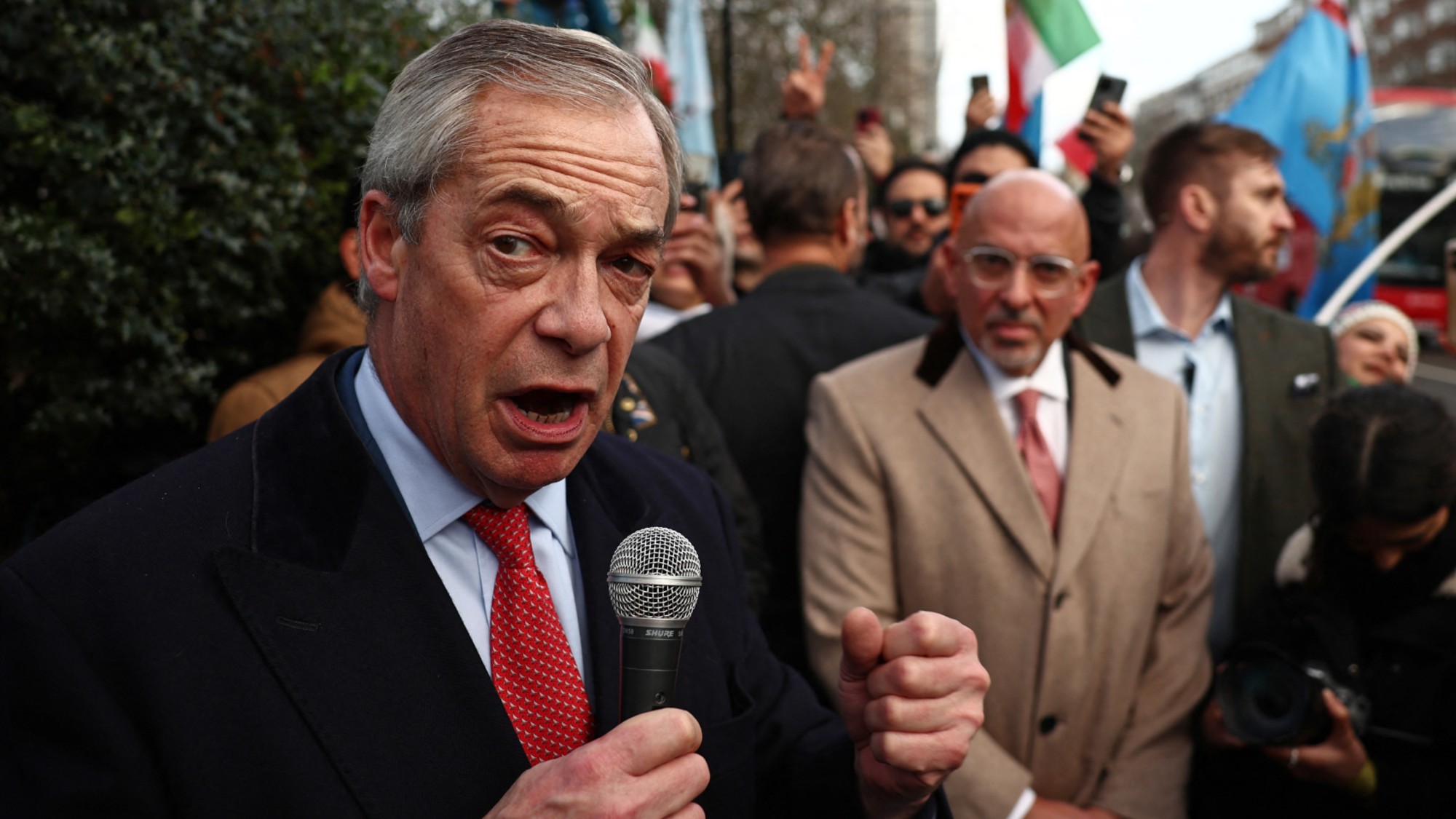
    Nigel Farage could barely contain his glee yesterday as Nadhim Zahawi became the 22nd former Tory MP to defect to Reform.

    Relations between the two politicians haven’t always been so cordial. Farage once accused the former Tory chancellor of only being interested “in climbing the greasy pole”, while Zahawi said he would be “frightened to live in a country run by” Farage, in now-deleted tweets from 2015. But while they appear to have buried their differences, the defection of yet another senior Tory to the Reform ranks “is not without risk” for the populist party, said BBC political correspondent Nick Eardley.

    ‘Creating Conservatives 2.0’
    Lack of experience is one of Reform’s “biggest hurdles in looking like a credible party of government”, said The Guardian’s political editor Pippa Crerar. But if you “pack the ranks with too many former Tories”, you risk “creating Conservative Party 2.0, not long after the original version was booted out of office”.

    Part of Reform’s appeal is that voters “consider them different to the other parties”, said Charlotte Henry in The Spectator. So the “danger” is that Reform “increasingly risks” looking like “a receptacle of Tory rejects, not the upstart movement they try to portray themselves as”.

    Tory party faithfuls “point out privately” that adding Zahawi to a list of defectors that includes Nadine Dorries and Jake Berry is making Reform “look awfully like Boris Johnson’s version of the Conservative Party”, said Sky News’ political editor Sam Coates. Or as one former Tory cabinet minister put it, “same team, new badge”.

    ‘Outsider appeal’
    Farage, in his many incarnations over the years, has carefully cultivated “a brand built on being outside the system”, said Loic Fremond on UnHerd. “But as he inches closer to power, it seems that he has become what he once denounced.” If Reform is to ride its anti-establishment credentials to No. 10, “it cannot rely on Tory defections” to fill its upper echelons, or it will lose its “outsider appeal”.

    “To maintain any credibility as an alternative”, Reform “must demonstrate that it can stand apart from the same failures it claims to oppose”. If it cannot maintain that separation, Farage’s party “risks becoming little more than a repackaged version of the establishment it criticises”.


    Today’s big question

    Is the Chinese embassy a security risk?

    The proposed Chinese embassy in London is under renewed scrutiny as the government struggles to balance opportunity with security concerns in its stance to Beijing.

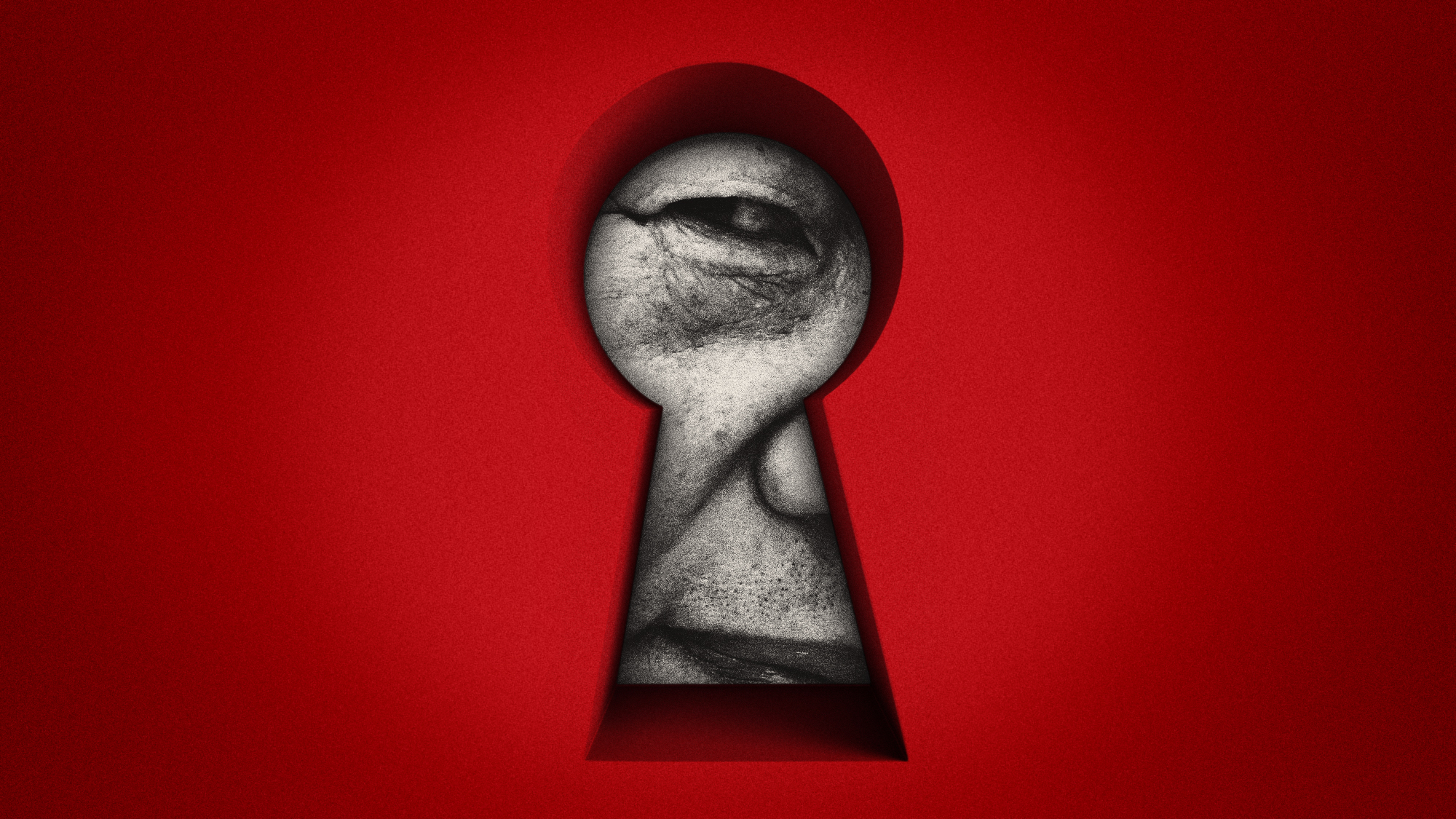
    Following multiple delays, Keir Starmer is set to approve plans for the biggest Chinese embassy in Europe, after MI5 and MI6 declined to raise formal objections. But concerns persist over the site of the planned development, on the Royal Mint Court complex, next to “some of Britain’s most sensitive communications cables”, said The Times. These cables carry financial data to the City of London, as well as “email and messaging traffic for millions of internet users”.

    According to The Telegraph, which has seen unredacted blueprints, China plans to build a network of “secret rooms” beneath the embassy, including a “hidden chamber” over the cables, “raising the prospect that they could be tapped”.

    What did the commentators say?
    “China won’t say what the basement is for,” cybersecurity expert Alan Woodward told The Telegraph. It could be “legitimate classified communications equipment”. But the demolition of the basement wall is a “red flag”. One possibility is that “China plans to install extensive computer infrastructure as part of an espionage operation”, said the paper. Security services have warned that Beijing is “carrying out mass espionage against British targets”, said The Times.

    A group of Labour MPs has written to Housing Secretary Steve Reed to urge the government not to approve the embassy. Concerns remain “significant and unresolved”, including fears the complex could be used to “step up intimidation against diaspora and dissidents”, the letter said. Others have warned that the complex could jeopardise intelligence sharing with the US and the Five Eyes alliance.

    But China will be “engaged in surveillance and interference operations whether it has a new embassy or not”, Nigel Inkster, from the International Institute for Strategic Studies, told Le Monde. “And it will probably be easier for British intelligence services to monitor its activities if they are all grouped together in one place.”

    Beijing has previously denied all allegations of espionage at the site, and a UK government spokesperson told The Telegraph that all security implications “have been identified and addressed”.

    What next?
    Starmer is set to approve the plans by 20 January, ahead of a trip to Beijing, where a £100 million scheme to renovate the ageing British embassy is awaiting approval by the Chinese authorities.


    QUOTE OF THE DAY

    “There’s no point complaining about the wonky wheel if you’re letting the trolley have a mind of its own.”

    Wes Streeting urges his Labour colleagues to stop making excuses for the state of public services. Speaking at the Institute for Government, the health secretary said politicians “are not simply at the mercy of forces outside of our control” and must act with agency.


    Poll watch

    Only 3% of Brits think the US has had an “entirely positive” impact on the rest of the world in recent years. One in ten think it’s been “more positive than negative”, while 57% regard it as “more negative than positive” or “entirely negative”, according to a YouGov survey of 4,903 adults. The rest were unsure or thought the US impact was mixed.


    THE EXPLAINER

    Why X could face UK ban over Grok deepfake nudes

    Ofcom is deciding whether to follow Malaysia and Indonesia in blocking X’s AI chatbot Grok over fake sexualised images. The UK media regulator launched an investigation yesterday after receiving reports of Grok generating deepfake nudes of people without their consent, and could even recommend suspending access to X altogether.

    What will Ofcom investigate?
    It will look at whether X is in breach of the UK’s Online Safety Act, specifically whether non-consensual undressed images of people “may amount to intimate image abuse or pornography” and if AI-produced sexualised images of children “may amount to child sexual abuse material”.

    Under the law, the regulator can fine businesses up to £18 million, or 10% of their global revenue, and take criminal action. It can also order payment providers, advertisers and internet service providers to stop working with a site, “effectively banning them, though this would require agreement from the courts”, said The Independent.

    Technology Secretary Liz Kendall has said the regulator would have her “full support” to block access to X in the UK if the platform was found to be in breach of the law and refused to comply. “Other parties want Ofcom to move faster, or get out of the way,” said Politico. The Liberal Democrats are calling for the National Crime Agency “to take charge”, arguing that “the situation went well beyond Ofcom’s remit as communications watchdog”.

    What has the reaction been?
    Billionaire X owner Elon Musk said the UK government “wants any excuse for censorship”. But amid pressure to act, X last week limited access to Grok’s image generation tool to paid subscribers. Downing Street said the change had merely turned “the creation of unlawful images into a premium service” but was proof that X could move quickly to address the problem if it wanted.

    Any ban would “cause uproar in Washington”, said The Telegraph. The White House has “become increasingly hawkish towards attempts to censor American companies and its citizens”. Blocking X in the UK could lead to the US sanctioning British officials, starting with those working at Ofcom, said The New Statesman’s US correspondent Freddie Hayward. Depending on the outcome of the Ofcom investigation, Keir Starmer “might have to accept that protecting free speech has become an issue of national security”.


    Good day 🏠

    … for borrowers, with the choice of mortgages on offer at an 18-year high, according to a new report. Combined with looser requirements from lenders and falling interest rates, “expectations are high for a booming market in 2026”, said financial information service Moneyfacts.


    Bad day 📖

    … for Samuel Pepys, after pupils at his old school voted to remove his name from one of their houses. Students at Hinchingbrooke School in Huntingdon, Cambridgeshire, backed a proposal to cut ties with the 17th-century diarist after researchers revealed his “harmful, abusive and exploitative” behaviour, particularly towards women.


    picture of the day

    One for the ages

    Kimono-clad women take photos after their Coming of Age Day ceremony in Japan’s second-largest city, Yokohama. The centuries-old tradition is marked with a national holiday dedicated to celebrating all those who are turning 20, seen as the milestone between childhood and adulthood.

    Franck Robichon / EPA / Shutterstock


    Puzzles

    Guess the number

    Try The Week’s new daily number challenge in our puzzles and quizzes section

    Play here


    THE WEEK RECOMMENDS

    Disconnect and unwind at a digital detox retreat

    Hotels and travel companies are increasingly offering “digital detox” retreats where guests agree to immerse themselves in an “internet-free environment”, usually in a beautiful setting, said The New York Times. On these “off-the-grid” experiences, laptops are banned and guests are encouraged on arrival to put their mobile devices into a safety deposit box. Here are some of the device-free retreats on offer.

    Samsu
    This collection of off-grid cabins in rural Ireland was set up by Rosanna Irwin in reaction to her “chronically online life”, said the BBC. The cabins have no Wi-Fi or other digital technology, “so the only tweets guests will hear are from the birds”. There are “simple cooking facilities”, and guests are provided with board games, books and a radio.

    Unplugged
    Like Irwin, Hector Hughes suffered from “burnout”, but he had an “epiphany” while on a technology break at a Buddhist retreat in the Himalayas. In 2020, Hughes co-founded Unplugged, a roster of “tech-detox cabins” (pictured above), complete with device lockboxes, scattered across the UK and Spain. 

    The Detox Barn
    Sisters Lauretta and Sharon Gavin run a series of weekend retreats in Suffolk at The Detox Barn. Despite the name, there are no “stuffy, silent classes” or “meals that leave your body rumbling with hunger”, said Condé Nast Traveller. Instead, guests can enjoy “delicious vegan meals”, “guided countryside walks” and sound bath experiences, in a laid-back environment with “plenty of laughs” (the sisters are a comedy double act). And of course: no phones allowed.


    Statistic of the day

    25%: The rate of tariffs to be imposed by Donald Trump on goods from any nation “doing business” with Iran. “This Order is final and conclusive” and “effective immediately”, the president said on Truth Social, as the Iranian regime’s bloody crackdown on anti-government protesters continues. The White House has yet to release details or official documentation on the policy.


    instant opinion

    Today’s best commentary

    Beware the West’s Useful Idiots Over Iran
    Steven Methven on Novara Media
    The response of Western political elites to the Iranian protests has been “as gloopy, as slippery – and, above all, as thick – as mince”, writes Steven Methven. “‘Stand with the protesters’, they demand”, even though “there’s no organised resistance” and the collapse of the regime would only pave the way for “outside interests to carve up the country”. I’m with those who, “their hearts with the protesters”, nevertheless “refuse to be useful idiots for nakedly imperial powers”.

    Sorry, trolls, the launch of Mattel’s autistic Barbie is its best doll yet
    Victoria Richards in The Independent
    My childhood dolls were “universally platinum blonde” with “tiny waists” and “even tinier outfits”, writes Victoria Richards. They now have wheelchairs and hearing aids, and this week, “it’s autism’s turn”. The “stereotyping” of the new Barbie, with a fidget spinner and headphones, is “a bit clunky”, but as the parent of a child with ASD, I’m delighted to see “elements of the condition” entering “into the mainstream”. As politicians spout about “overdiagnosis”, it’s “important to remind” autistic kids “that they belong”.

    This generation of Britons couldn’t handle the death toll of a modern war
    Mark Wallace in The i Paper
    It’s been 80 years “since this country fought a war with a near-peer enemy power”, writes Mark Wallace. “We are culturally and psychologically unprepared” for the “price” of such a conflict – “in human life” and “in cold financial terms”. We must “snap out of it” and “ensure we have the tech, the troops” and “the will to successfully deter it from coming to pass”, rather than waiting for “our enemies” to issue “a wake-up call of their own”.


    word of the day

    Unc

    Forget “OK Boomer”, Gen Alpha have a new, more affectionate term for their elders. Unc is “suddenly everywhere”, said The Guardian, but we’re not talking about real uncles or even anyone particularly old. Characteristics of “people with ‘unc status’” include watching “Friends”, knowing the Black Eyed Peas tune “I Gotta Feeling” and “being baffled by six-seven”.


    Evening Review was written and edited by Hollie Clemence, Rebecca Messina, Harriet Marsden, Irenie Forshaw, David Edwards, Helen Brown and Kari Wilkin, with illustrations from Stephen Kelly.

    Image credits, from top: Henry Nicholls / AFP / Getty Images; illustration by Stephen Kelly / Getty Images; illustration by Stephen Kelly / Getty Images; Franck Robichon / EPA / Shutterstock; Pasco Photography

    Morning Report and Evening Review were named Newsletter of the Year at the Publisher Newsletter Awards 2025
     

    Recent editions

    • Evening Review

      An ICE investigation showdown

    • Morning Report

      Trump’s Fed fight heats up

    • Sunday Shortlist

      An anticapitalist comedy

    VIEW ALL
    TheWeek
    • About Us
    • Contact Future's experts
    • Terms and Conditions
    • Privacy Policy
    • Cookie Policy
    • Advertise With Us
    • FAQ
    Add as a preferred source on Google

    The Week is part of Future US Inc, an international media group and leading digital publisher. Visit our corporate site.

    © Future US, Inc. Full 7th Floor, 130 West 42nd Street, New York, NY 10036.