The Week The Week
flag of US
US
flag of UK
UK
https://cdn.mos.cms.futurecdn.net/flexiimages/jacafc5zvs1692883516.jpg

SUBSCRIBE & SAVE

Less than $3 per week

Sign in
  • View Profile
  • Sign out
  • The Explainer
  • The Week Recommends
  • Newsletters
  • Cartoons
  • From the Magazine
  • The Week Junior
  • Student Offers
  • More
    • Politics
    • World News
    • Business
    • Health
    • Science
    • Food & Drink
    • Travel
    • Culture
    • History
    • Personal Finance
    • Puzzles
    • Photos
    • The Blend
    • All Categories
  • Newsletter sign up Newsletter
  • The Week Evening Review
    Outright hostility by the Taliban, Russia’s outlook in Ukraine, and AI school

     
    In the Spotlight

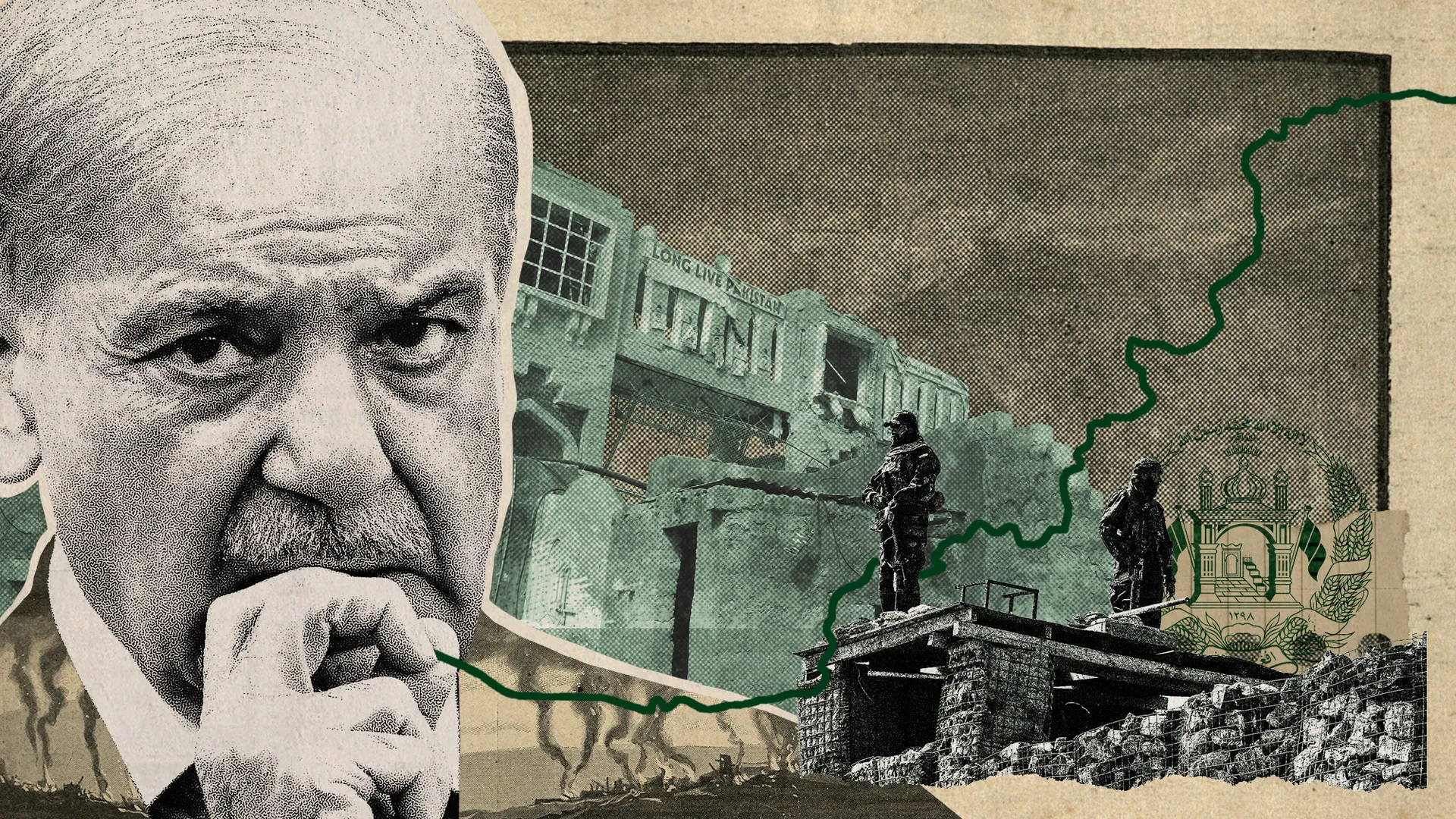
    Pakistan and Afghanistan are in ‘open war’

    While the U.S. and Iran have been ratcheting up threats against each other, a simmering conflict in two neighboring countries just boiled over. Afghanistan and Pakistan devolved into armed conflict today, with the latter declaring the countries in a state of “open war.” Tensions between the two sides have been increasing for months, and experts fear the fighting could represent a breaking point for the broader region.

    Taliban began the conflict
    The fighting began when the Taliban, the ruling government of Afghanistan, launched what it called “retaliatory attacks on military installations in northwest Pakistan,” said NBC News. As residents were forced to flee their homes, Pakistan hit back. A death toll has not been confirmed, but Pakistan said at least 70 people were killed while Afghan officials reported that “dozens of civilians were killed, including women and children.”

    In all, Pakistan bombed more than 20 locations in Afghanistan. Following the initial combat, Pakistan “showed no willingness to stop the most expansive fighting in years,” said The New York Times. Pakistan “made every effort to keep the situation normal,” said Pakistani Defense Minister Khawaja Asif on X. “Our cup of patience has overflowed. Now it’s open war.”

    This marks one of the “biggest escalations in outright hostilities between Pakistan and Afghanistan since 2021 and could be the start of more violence,” said Time. The two countries had a shaky ceasefire deal since October. But tensions emerged over border issues and because the Taliban is getting “closer to India, with which Pakistan has fought over the disputed region of Kashmir.”

    Compounding ‘instability’
    When Pakistan and Afghanistan have fought before, other countries often enter via diplomacy, with “mediation by foreign governments including Saudi Arabia, Turkey and Qatar,” said CNN. But while the fighting has typically only lasted several days, many fear that “further escalation could compound instability.” This comes as tensions in nearby Iran are also increasing.

    Experts believe the war this time could be worse. Any retaliation by the Afghans “will be in Pakistan’s urban centers,” said Abdul Basit, a senior associate fellow from the S. Rajaratnam School of International Studies, to CNN. “This is a recipe for chaos, and chaos is what terrorist networks seek to flourish.” 


    TODAY’S BIG QUESTION

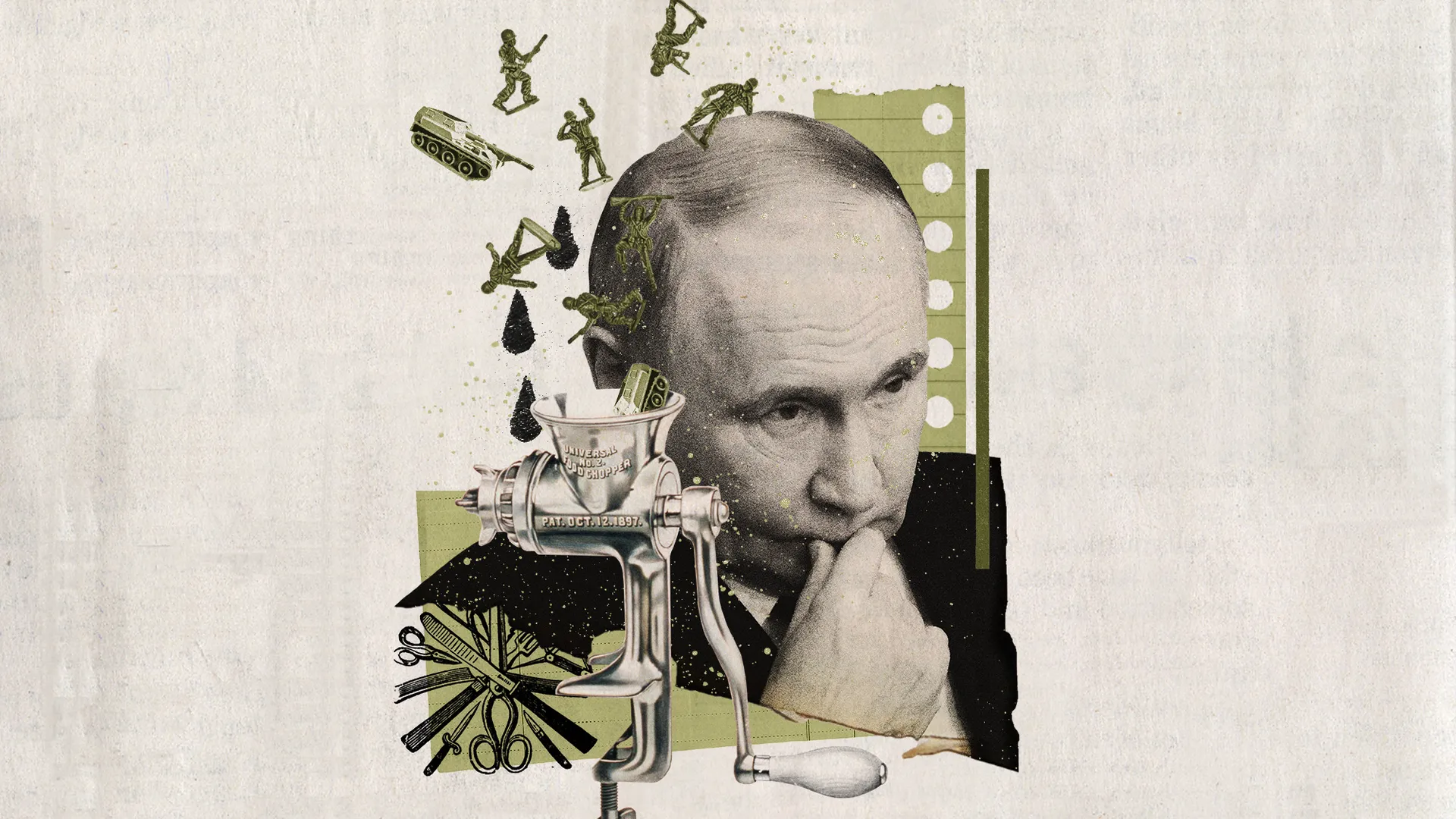
    How long can Russia hold out in Ukraine?

    Russian President Vladimir Putin has “not achieved his goals,” a defiant Ukrainian President Volodymyr Zelenskyy said this week in a televised address marking the fourth anniversary of Russia’s full-scale invasion of Ukraine. The February 2022 invasion was meant to be a “short and successful military operation” that would “force Kyiv back into Moscow’s orbit” and “overturn the entire post-Cold War security architecture in Europe,” said Steve Rosenberg at the BBC. But it “didn’t go to plan.” 

    What did the commentators say?
    As the conflict enters its fifth year, Russian victory seems as far off as ever, and Putin has little to show for his country’s estimated 1.2 million casualties, according to Seth G. Jones and Riley McCabe at Washington, D.C.’s Center for Strategic and International Studies. The average pace of Russia’s progress has sometimes been as little as 50 feet per day, “slower than almost any major offensive campaign in any war in the last century.” 

    Russia’s economy is starting to teeter. It faces a huge shortfall in oil revenues and has been forced to sell gold reserves to cover its budget deficit. And the West has always believed that domestic discontent as a result of the ongoing sanctions would “persuade Putin to abandon the war,” said Peter Rutland and Elizaveta Gaufman at The Conversation. But this approach “tends to downplay the role of ideology,” which has been successfully exploited by the Kremlin to spin the war as an existential threat and maintain support for the president. 

    The Kremlin’s version of events has also been fed to Russia’s opponents. Claims that Ukraine’s frontline faces “imminent collapse” are an “effort to coerce the West and Ukraine into capitulating to Russian demands that Russia cannot secure itself militarily,” said D.C.’s Institute for the Study of War. This is a “false narrative.”

    What next?
    “Standard economic theory suggests that deteriorating conditions should push the Kremlin towards negotiations on ending the war,” said The Economist. “A rational actor facing mounting costs seeks an exit.” But Putin is watching the West grappling with its own problems and wavering in its support for Ukraine. “If your competitors are also weakening, and if you believe you can tolerate the pain longer than they can, the calculus flips.”


    QUOTE OF THE DAY

    ‘Government lawyers should not be allowed to make up a violent and organized terrorist invasion of a major American city.’

    Seth Stern, the chief of advocacy at the Freedom of the Press Foundation, in a disciplinary complaint filed at a Chicago federal court against Sean Skedzielewski. The DOJ attorney justified ICE agents’ violating protesters’ and journalists’ rights because of a riot that didn’t actually happen.


    Statistic of the day

    40,000: The approximate age in years of Stone Age artifacts that indicate humans experimented with symbolic writing, according to a report published in the journal Proceedings of the National Academy of Sciences. The discoveries “dramatically recontextualize the history of communication,” said Popular Science, given that the earliest known written languages date back to about 3000 BCE.


    the explainer

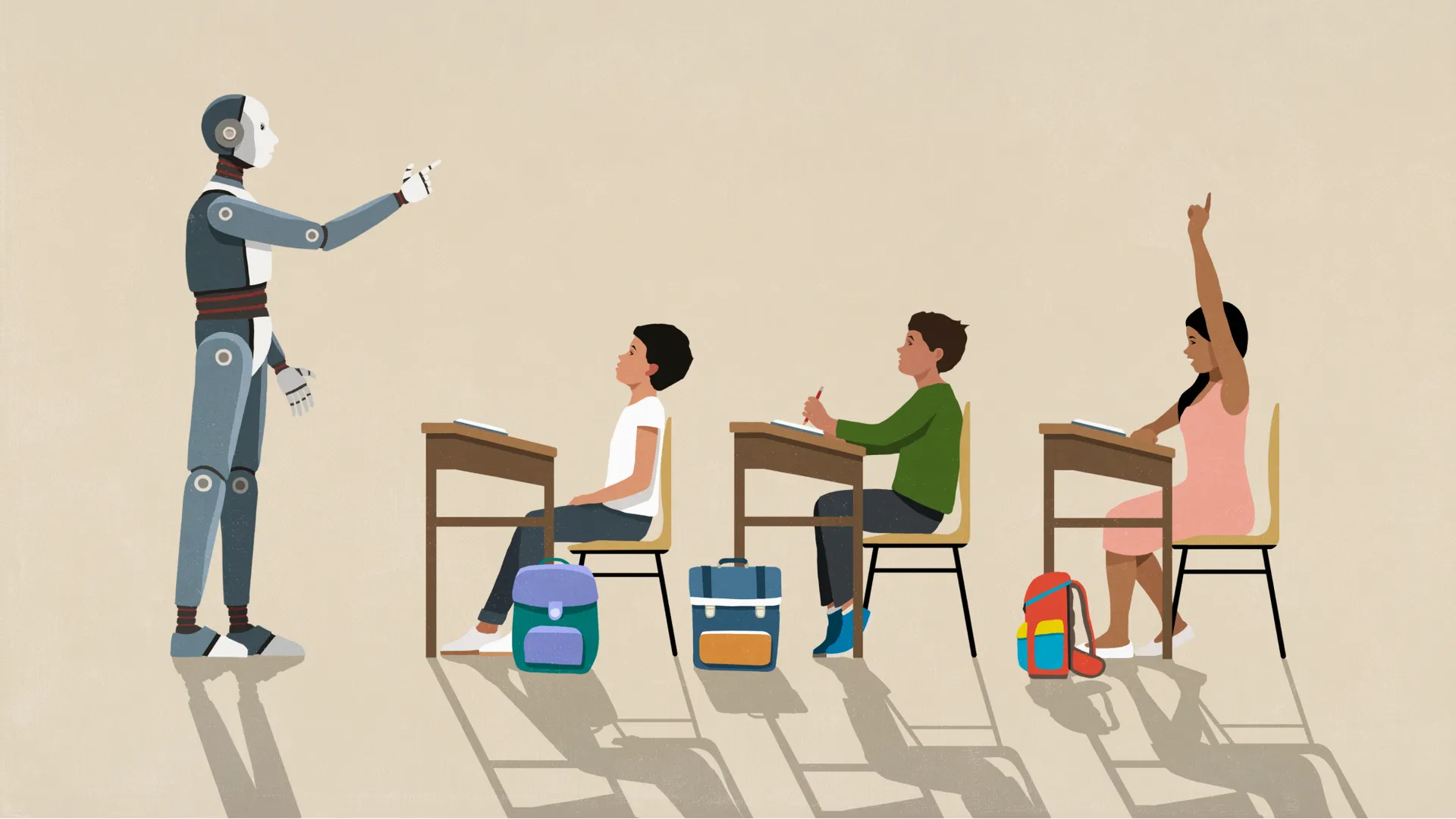
    Alpha School: Will AI replace teachers?

    Recent developments in generative artificial intelligence have educators from elementary to university seemingly fighting an uphill battle as they struggle to manage students’ dependence on the technology. Meanwhile, one company has decided to fully embrace the new tools. But critics question whether replacing teachers with AI is worth the risk.

    How does Alpha School work?
    The AI-powered private school was founded in 2014 by MacKenzie Price, an educational podcaster and the founder of the AI tutor 2 Hour Learning, and software billionaire Joe Liemandt and has several branches across the country, with plans to expand. The school’s recent rise has “coincided with technological leaps in what artificial intelligence can do,” said CNN. 

    Students typically start the day with a group activity that introduces a life skill before sitting down in front of “laptops, plug-in headsets or even virtual reality sets to learn academics” through an AI tutor, said CNN. The program’s two-hour curriculum includes “four 30-minute sessions in math, science, social studies and language,” as well as “20 minutes of additional learning concepts, like test-taking skills.” Instead of traditional teachers, the schools employ “human guides” who do not “manage grades or curriculum” but can offer “specialized teaching, like handwriting.”

    “Harnessing AI thoughtfully will be critical to expanding opportunity and preparing students for tomorrow’s workforce,” said Education Secretary Linda McMahon during a visit to an Alpha campus in September. The school is an “exemplary” case of what tech can do for American education.

    Is the program effective?
    Despite McMahon’s stamp of approval, the AI-driven program has attracted growing criticism. For more than a dozen former employees, students and parents, “what they expected from Alpha School wasn’t what it delivered,” said Wired.

    Former guides, “many of whom requested anonymity because they fear negative consequences,” say Alpha’s educational philosophy was “driven by software metrics and, sometimes, Liemandt’s whims,” said the outlet. Alpha wanted to “prepare students for a hypercompetitive ‘late-capitalism, dog-eat-dog’ environment,” said one guide to Wired.

    Experts say there’s “little outside scrutiny” of Alpha’s model and “how successful it really is at teaching children,” said CNN. A major concern is that Alpha refuses to “allow any independent research to evaluate the claims or to really scrutinize what’s going on,” said Victor Lee, an associate professor at Stanford University’s Graduate School of Education, to CNN. That “sort of implies there’s something to hide.”


    Good day 🪐

    … for stargazing. Astronomy lovers are in for a treat tomorrow night, when six of the eight planets in our solar system will line up in the sky. You can spot Jupiter, Uranus, Saturn, Neptune, Venus and Mercury in a phenomenon known as a planet parade. Try shortly after sunset, looking toward the western horizon.


    Bad day 🚁

    … for mountaineering. Foreign tourists who get into trouble while hiking in France may have to foot the bill for their own rescue, similar to other Alpine countries, according to the country’s public spending watchdog, the Cour des Comptes. About 17% of those rescued in the French Alps and Pyrenees every year are foreigners, said the group.


    Picture of the day

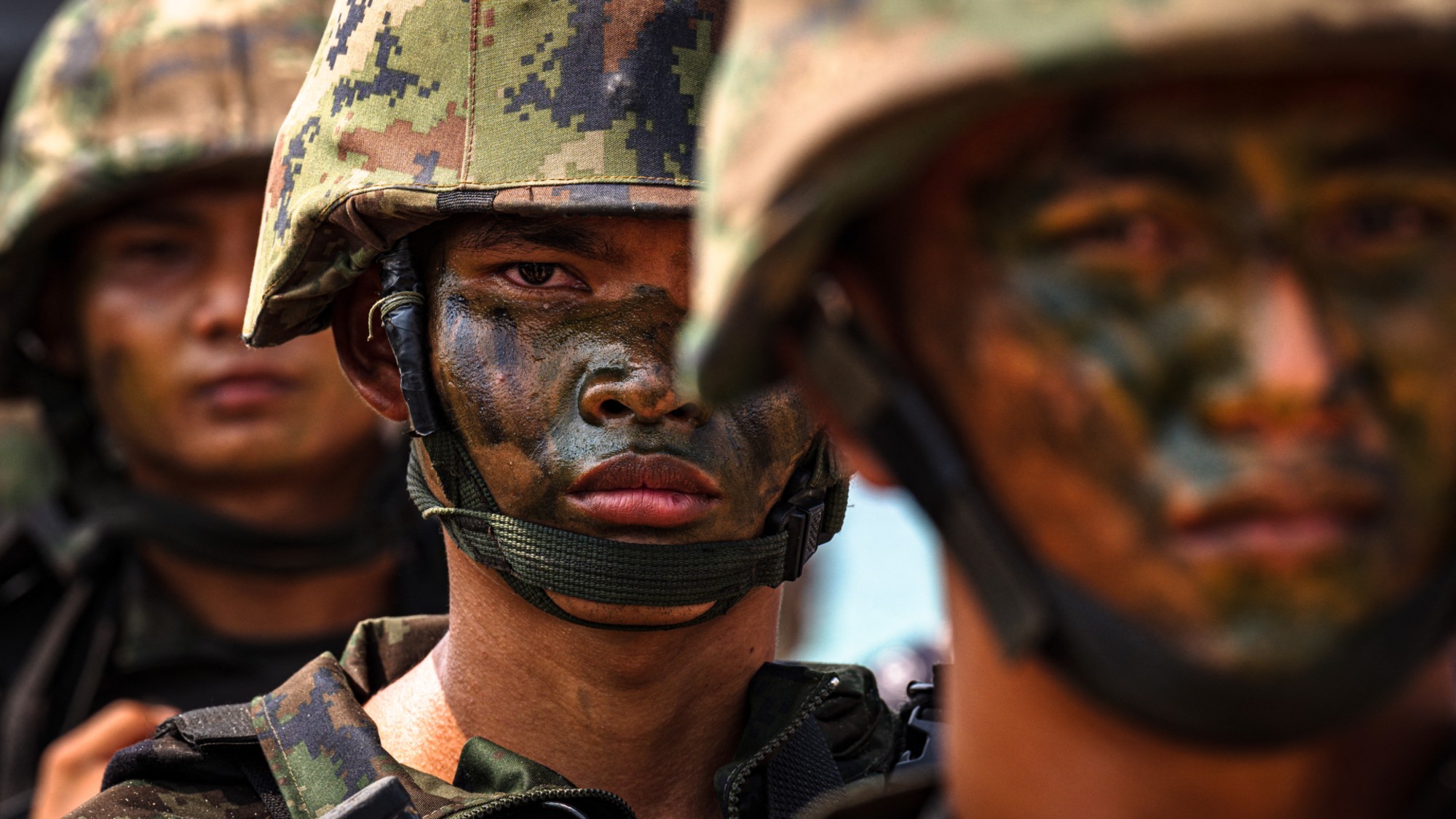
    At attention

    Thai marines line up on the beach after taking part in an amphibious drill during the 46th Cobra Gold multinational military exercises in Sattahip, Thailand. The event brought together U.S., Thai, South Korean and Singaporean armed forces for the longest-running international military exercise in the world.
    Chanakarn Laosarakham / AFP / Getty Images


    Puzzles

    Daily sudoku

    Challenge yourself with The Week’s daily sudoku, part of our puzzles section, which also includes guess the number

    Play here


    The Week recommends

    Accessibility is at the forefront at these US destinations

    Travel is for everyone or rather should be. Cities, landmarks, national parks and other destinations across the U.S. are increasingly making their spaces accessible for all. All of these spots were originally designed with inclusivity top of mind or have adapted to offer equal access.

    Badlands National Park, South Dakota
    This park offers visitors gorgeous views of “striking” landscapes, said Travel and Leisure. It also provides plenty of accessible spaces, starting with the Ben Reifel Visitor Center. A park highlight is the Fossil Exhibit Trail, a “short, accessible” route showcasing the “unique geology and fossil history” of the Badlands, said WheelchairTraveling.com.

    Boston
    This is a historic center, but when it comes to accessibility, Boston is thoroughly modern. Boston’s subway and trolley system is inching closer to becoming fully accessible and now has low-floor buses in its fleet and additional elevators being installed in stations. Even the Freedom Trail, featuring American Revolution sites, is accessible. It’s recommended that visitors use a power wheelchair to go over the cobbled streets and up hills.

    Morgan’s Wonderland, San Antonio, Texas
    Every aspect of Morgan’s Wonderland (pictured above), the world’s first “ultra-accessible” theme park, was thoughtfully planned to “ensure no one feels left out,” said Southern Living. The 25 attractions and shaded playgrounds can be enjoyed by guests of “all ages and abilities,” with rides like the wheelchair-accessible Joy’s Happy Swing and Rocket’s Sky Flight Adventure, a four-seater zip line over the park’s lake.

    Read more


    Poll watch

    Three out of five Americans (60%) do not approve of Trump’s performance, according to a Washington Post / ABC News / Ipsos survey. When asked to name the worst things the president has done since January 2025, 57% of those people point to his immigration policies.


    INSTANT OPINION

    Today’s best commentary

    ‘Cruelty is not strength’
    Jane Clementi at Newsweek
    The “renewed embrace” of the R-word “represents a microcosm of a larger cultural shift taking place across our nation right now,” says Jane Clementi. The “recent online push to ‘Bring Back Bullying’ is no longer a fringe joke but an ideology that’s taking our nation by storm and putting real lives at risk.” This is a “warning about who we are becoming.” America is “not suffering from a lack of toughness but from a growing tolerance for cruelty.”

    ‘As Trump’s immigration crackdown continues, hospitals have become a battleground’
    Theresa Chang at the San Francisco Chronicle
    The Trump administration’s immigration crackdown has “spilled into emergency departments and hospitals across the country,” and hospitals have “become frontlines of heated battles,” says Theresa Chang. Doctors are being “intimidated and directed to violate the Hippocratic Oath, sometimes by their own hospital administrators.” The “moral injury inflicted on clinicians to abandon their oath and ethical duty to patients is immense,” and clinicians are “left to navigate this ethical minefield alone, with patients bearing the consequences.”

    ‘Binance’s MAGA-branding strategy’
    Jacob Silverman at The Nation
    Trump has “enriched himself far more than any American politician before him,” but he “hasn’t done it alone,” says Jacob Silverman. No company has “provided more financial and logistical support to Trump’s cryptocurrency empire, the engine of his newly acquired wealth, than Binance, the world’s largest crypto exchange.” On its “way to becoming the world’s dominant crypto exchange, Binance also became notorious as a financial conduit for cyber criminals, sanctions evaders and militant groups.”


    WORD OF THE DAY

    myllokunmingid

    A jawless fish that lived 518 million years ago, our oldest known vertebrate ancestor, and the subject of an “eye-popping discovery,” according to a Chinese study published in the journal Nature. It turns out that myllokunmingids had four eyes, making them “visually sophisticated animals navigating a dangerous world,” said study co-author Jakob Vinther of Bristol University.


    Evening Review was written and edited by Theara Coleman, Nadia Croes, Catherine Garcia, Elliott Goat, Scott Hocker, Justin Klawans and Summer Meza, with illustrations by Stephen Kelly and Julia Wytrazek.

    Image credits, from top: Illustration by Julia Wytrazek / Getty Images; Illustration by Julia Wytrazek / Getty Images; Malte Mueller / Getty Images; Morgan’s Wonderland
     

    Recent editions

    • Morning Report

      ICE and Columbia tangle over student arrest

    • Evening Review

      Trump’s Epstein allegations

    • Morning Report

      US and Cuba clash over speedboat shootout

    VIEW ALL
    TheWeek
    • About Us
    • Contact Future's experts
    • Terms and Conditions
    • Privacy Policy
    • Cookie Policy
    • Advertise With Us
    • FAQ
    Add as a preferred source on Google

    The Week is part of Future US Inc, an international media group and leading digital publisher. Visit our corporate site.

    © Future US, Inc. Full 7th Floor, 130 West 42nd Street, New York, NY 10036.