The Week The Week
flag of US
US
flag of UK
UK
https://cdn.mos.cms.futurecdn.net/flexiimages/jacafc5zvs1692883516.jpg

SUBSCRIBE & SAVE

Less than $3 per week

Sign in
  • View Profile
  • Sign out
  • The Explainer
  • The Week Recommends
  • Newsletters
  • Cartoons
  • From the Magazine
  • The Week Junior
  • Student Offers
  • More
    • Politics
    • World News
    • Business
    • Health
    • Science
    • Food & Drink
    • Travel
    • Culture
    • History
    • Personal Finance
    • Puzzles
    • Photos
    • The Blend
    • All Categories
  • Newsletter sign up Newsletter
  • The Week Evening Review
    Digital sovereignty, the Mandelson files, and a ‘new grammar of intimacy’

     
    TODAY’S BIG QUESTION

    Can Europe regain its digital sovereignty?

    European nations are racing to lessen their reliance on US technology in the face of an increasingly hostile Trump administration that commands the loyalty of most of Silicon Valley.

    France is preparing to phase out Zoom, Teams and other US video-conferencing platforms and will begin using its own open-source alternative, Visio, in 2027. The aim is to “guarantee the security and confidentiality of electronic communications by relying on a powerful and sovereign tool”, said David Amiel, junior minister for the civil service and state reform.

    At the World Economic Forum in Davos, European Commission President Ursula von der Leyen stressed the “structural imperative” for Europe to “build a new form of independence”. But with a handful of US-headquartered companies controlling most of the world’s cloud computing infrastructure, critics question whether digital sovereignty is a realistic goal.

    What did the commentators say?
    Talk of “technological ‘decoupling’ from the US is hardly new”, said Sébastian Seibt on France 24, but Donald Trump’s “aggressive rhetoric” towards his European allies and “open threats” to seize Greenland have created a “sudden sense of urgency”. If the US president asked Meta, Google and Amazon to “completely cut off European access to their services, our societies and economies would be completely disrupted”, Christophe Grosbost, of the Innovation Makers Alliance, told the site.

    France’s shift to Visio is largely “symbolic” but is still a “big step”, said internet governance expert Francesca Musiani. “At the very least, it signals a desire to reduce exposure to the American ecosystem as soon as a European alternative, however imperfect, becomes available.”

    Europe’s “digital sovereignty paranoia” is now “feeding directly into procurement decisions”, said Steven Vaughan-Nichols on The Register. IT spending is being hiked, with a “big chunk” going into “sovereign cloud” options. “This isn’t just compliance theatre; it’s a straight‑up national economic security play.”

    What next?
    We should prepare in case the US pulls the plug on us, said computer science professor Johan Linåker on The Conversation. The scale and capabilities of Europe’s cloud-computing providers lag far behind those of their US rivals. For the continent to “meaningfully address the risks”, digital infrastructure “needs to be treated with the same seriousness as physical infrastructure” such as roads and power grids.


    THE EXPLAINER

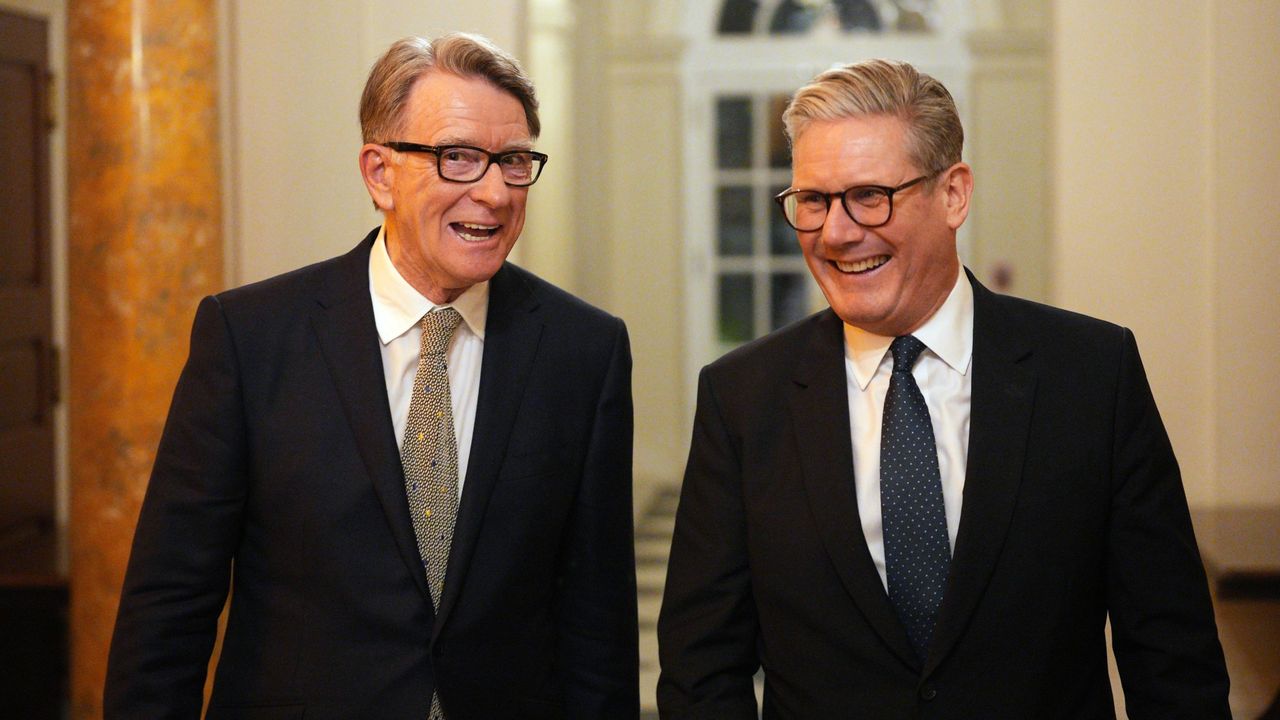
    The Mandelson files: a parting gift to Starmer

    The latest revelations about Peter Mandelson have left many in Labour “seething with disappointment and boiling with betrayal”, said the BBC’s political editor Chris Mason. 

    The Metropolitan Police has launched a criminal investigation after newly released Epstein files revealed that, while Mandelson was business secretary in 2009, he leaked Downing Street emails containing market-sensitive information to Jeffrey Epstein.

    Keir Starmer has ordered the release of files relating to his government’s appointment of Mandelson as US ambassador. But the “gravity of what is alleged” could build “to perhaps one of the biggest” political scandals “for a generation”, said Mason, and calls into question the prime minister’s judgement in sending Mandelson to Washington a year ago.

    What is in the files?
    Starmer has said he will release emails, documents and messages relating to Mandelson’s appointment, provided they do not prejudice national security or damage diplomatic relations. The decision pre-empted a Tory plan to use a Commons debate today to try to force the publication of the records, including details of what Mandelson told the PM and his chief of staff, Morgan McSweeney, about the nature of his relationship with Epstein.

    “Attention will turn swiftly” now to that proviso for exempting documents and “which ones aren’t in scope”, said Politico. No doubt there will be “debate about whether WhatsApp messages sent on private phones will be included”. And it’s not yet clear “who is in charge of the process” and “which senior officials” have oversight.

    What does it mean for Starmer?
    Mandelson “risks being a headache that simply will not end”, said The Guardian’s political correspondent Peter Walker. How on Earth could Starmer’s team have thought it was a “good idea to appoint a tarnished, if well connected, figure to be the ambassador to Donald Trump’s court”?

    Health Secretary Wes Streeting, seen by many as a potential challenger for Starmer’s leadership role, today defended the decision to appoint Mandelson and rejected the idea that it could cost the PM his job. That would “let Mandelson off the hook”, Streeting told LBC. “This is his misjudgement, his misconduct, his irresponsibility.”


    QUOTE OF THE DAY

    “While I was wildly proud of it, I was still Black that next morning.”

    Halle Berry says her 2002 best actress Oscar for “Monster’s Ball” didn’t end her casting struggles. “Directors were still saying, ‘If we put a Black woman in this role, what does this mean for the whole story?’” she told The Cut.


    Poll watch

    If technology could allow people to look any age they wanted, the early 30s would be the most popular choice. Of 4,592 adults surveyed by YouGov, 16% said they would halt the ageing process then. Late 20s (13%) and early 20s (12%) were the next top choices, but only 1% opted for younger than 20s.


    TALKING POINT

    Heated Rivalry, Bridgerton and why sex still sells on TV

    Sex doesn’t sell like it used to: that was the major takeaway from a recent survey of young people in the US.

    In a “stat that made Hollywood blink”, nearly half (48%) of 1,500 respondents aged 10 to 24 said there was too much sex in film and television, said Audrey Weisburd in Paste Magazine. More than 60% of the 14- to 24-year-olds said they wanted romances depicted as “more about friendship than sex”. This fits the stereotype of a generation that’s having less sex than their parents. Yet the findings, from researchers at the University of California, Los Angeles, don’t tell the whole story.

    ‘Movement towards authenticity’
    Shows such as “Heated Rivalry” and “Bridgerton” are “filled with sex scenes” and “body parts” yet have still “captivated young viewers”, said USA Today. For Gen Zs who are not engaging in sex but are seeking out emotional validation and connection, these stories “might almost fill that void”, said Chicago health educator Virginia Gramarosso.

    What “feels unique” about “Heated Rivalry”, about two male ice hockey players having a decade-long affair, “is that it lets its sex scenes play out, sometimes sticking with its characters nearly from the beginning of their encounter until the end in real time”, said Faith Hill in The Atlantic.

    “The way that sex has been portrayed in film for a long time hasn’t been particularly realistic,” said American actor and director Olivia Wilde while promoting her new film “I Want Your Sex”. So “there’s been this movement now towards authenticity”.

    ‘New grammar of intimacy’
    In an era when online porn is more accessible than ever, “gone are the days when gratuitous sex would satiate an audience”, said Olivia Petter in The Times. “People want to see themselves represented on screen and this perhaps applies to sexual content now more than ever.”

    This all “may be less about prudishness than dissonance and fatigue”, said Paste Magazine. Gen Z is “the most digitally sexualised generation in history, raised on algorithmic thirst, parasocial infatuation, and the casual surveillance of bodies online”. Yet “instead of translating that saturation into appetite, it’s produced a kind of sensory burnout”. What they are seeking instead, “consciously or not, is a new grammar of intimacy”.


    Good day ⛸️

    … for Tomàs-Llorenç Guarino Sabaté, after the Spanish figure skater secured a last-minute reprieve to perform a Minion-themed routine at the Winter Olympics. Universal Studios had banned him from using music from the “Despicable Me” franchise at the upcoming Games in Milan, but U-turned after images of him skating in his yellow top and blue dungarees went viral.


    Bad day 🛒

    … for Asda, which has lost its title as Britain’s cheapest supermarket for a big shop, after more than a year in the top spot. The Which? consumer group’s latest monthly ranking puts the cost of a basket of 228 items at £588.96 at Tesco with a Clubcard – £1.45 cheaper than the Asda total.


    picture of the day

    ‘A Fragile Future’

    A pangolin pup curls up at a rescue centre in South Africa, after its mother was rescued from poachers but then died after giving birth. The image is among 24 shortlisted for the People’s Choice Award, run by the Wildlife Photographer of the Year at the Natural History Museum, London.

    Lance van de Vyver / Wildlife Photographer of the Year


    Puzzles

    Guess the number

    Try The Week’s new daily number challenge in our puzzles and quizzes section

    Play here


    THE WEEK RECOMMENDS

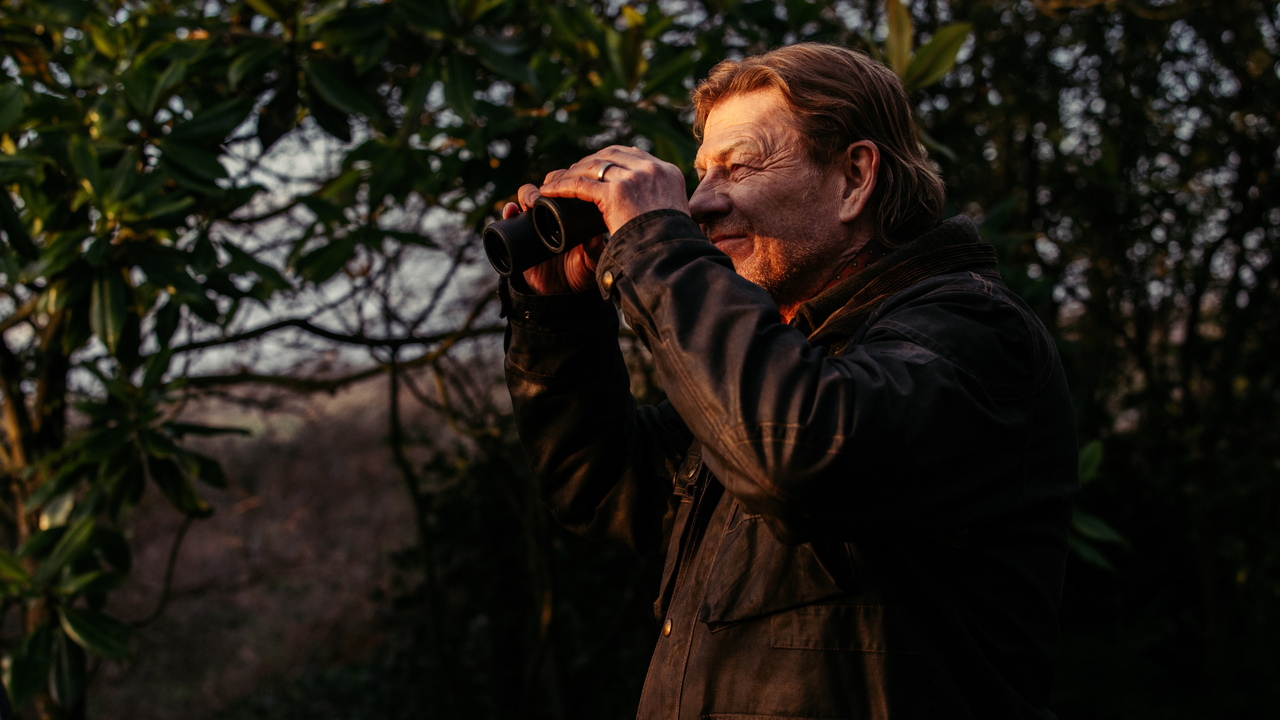
    Sean Bean brings ‘charisma’ and warmth to Get Birding

    The choice of Sean Bean as the new host of “Get Birding” was met with “a raised eyebrow or two”, said Gerard O’Donovan in The Telegraph. But the “Game of Thrones” star has been a “keen birder” since he was a teenager, and “he’s a natural”.

    The RSPB podcast began in 2021 during lockdown as twitching exploded in popularity, and is now back for its fourth series. It’s “hugely listenable”, said Alexi Duggins in The Guardian. Bean is “warm and honest”, sharing his “lifelong love of birding” and how he has found time for it in between his acting jobs. In the first episode, he chats with musician Guy Garvey about “spotting different species while working abroad, recognising birdsong and the meditative joy of watching the feathered creatures”.

    The new series “sprinkles celebrity birdwatchers among ornithological experts” including RSPB president Dr Amir Khan and 23-year-old environmental activist Mya-Rose Craig (also known as Birdgirl), the show’s original presenter, said Lucy White in the Irish Independent.

    Bean makes for a “genial host”. The “rugged actor” is “so Yorkshire he’s wearing a flat cap in the video version”. When he’s not pottering around his “three acres of rewilded land”, he chats with his “fellow bird-fanciers” about the joys of connecting with nature. “Birdwatching really settles your mind,” he says. “I guess it’s like playing a musical instrument, you can’t be thinking of anything else when you’re in the garden, everything else floats away, all your troubles. It keeps you sane.”


    Statistic of the day

    150,000: The number of enquiries from people interested in fostering children in England in 2024-25, according to official data. Only 7,365 were approved. The government has pledged to relax the rules to create 10,000 new places for children by 2029.


    instant opinion

    Today’s best commentary

    No, the public is not irredeemably ignorant
    Sarah O’Connor in the Financial Times
    There’s a “disconnect between the metrics” that “economists, policymakers and journalists” use and “how people actually perceive change in their everyday lives”, writes Sarah O’Connor. “But that doesn’t mean the public is stupid”: if inflation is falling, for example, prices are still rising, “just not as quickly”. Rather than “waving a spreadsheet” and accusing us of being “out of touch with reality”, policymakers should be having conversations “about why the statistics differ” from our “perceptions”.

    Thin-skinned Trump’s threats reveal the weakness he has lived with his whole life
    Simon Kelner in The i Paper
    Donald Trump has “a notoriously thin skin”, writes Simon Kelner. “It clearly rankles” the president that “he cannot subdue” Bad Bunny, who “used his platform” at the Grammys to “decry” US immigration policies. In calling the rapper “terrible”, Trump just “ensured” that more people than ever watch his Super Bowl half-time show on Sunday. Belittling has worked for Trump before, but this time he’s up against someone with a “bigger, more devoted constituency”.

    The embarrassing Brit abroad is a dying breed. I admit it – I was one
    Carol Midgley in The Times
    If you’ve “ever cringed” at the “embarrassing Brit abroad”, writes Carol Midgley, “let your buttocks be unclenched”: they are “a dying breed”. According to a survey, holiday “crimes” such as “packing tins of Heinz beans” and “getting third-degree sunburn” are “on the wane”. I “wince” when I recall my past misdemeanors, including “throwing down the 8am beach towel” to hog a sunlounger and “seeking out restaurants” that “sold chips”. But, “if you must know”, I still take my own teabags.


    word of the day

    Coalie

    The cartoon mascot fronting the Trump administration’s push to “mine, baby, mine”. Coalie will be a “spokesperson” for the “American Energy Dominance Agenda”, Interior Secretary Doug Burgum said on X. With “giant eyes, an open-mouthed grin, and yellow boots”, said Grist, the “combustible lump” is the latest “cute” character dreamed up to make controversial industries “feel less threatening”.


    Evening Review was written and edited by Hollie Clemence, Jamie Timson, Harriet Marsden, Chas Newkey-Burden, Irenie Forshaw, Helen Brown, Adrienne Wyper and Kari Wilkin, with illustrations from Stephen Kelly.

    Image credits, from top: illustration by Stephen Kelly / Shutterstock; Carl Court / Getty Images; Netflix; Lance van de Vyver / Wildlife Photographer of the Year; James Turner

    Morning Report and Evening Review were named Newsletter of the Year at the Publisher Newsletter Awards 2025
     

    Recent editions

    • Evening Review

      ICE’s escalating surveillance

    • Morning Report

      Gabbard in the spotlight

    • Evening Review

      Regime change in Cuba?

    VIEW ALL
    TheWeek
    • About Us
    • Contact Future's experts
    • Terms and Conditions
    • Privacy Policy
    • Cookie Policy
    • Advertise With Us
    • FAQ
    Add as a preferred source on Google

    The Week is part of Future US Inc, an international media group and leading digital publisher. Visit our corporate site.

    © Future US, Inc. Full 7th Floor, 130 West 42nd Street, New York, NY 10036.