The Week The Week
flag of US
US
flag of UK
UK
https://cdn.mos.cms.futurecdn.net/flexiimages/jacafc5zvs1692883516.jpg

SUBSCRIBE & SAVE

Less than $3 per week

Sign in
  • View Profile
  • Sign out
  • The Explainer
  • The Week Recommends
  • Newsletters
  • Cartoons
  • From the Magazine
  • The Week Junior
  • Student Offers
  • More
    • Politics
    • World News
    • Business
    • Health
    • Science
    • Food & Drink
    • Travel
    • Culture
    • History
    • Personal Finance
    • Puzzles
    • Photos
    • The Blend
    • All Categories
  • Newsletter sign up Newsletter
  • The Week Evening Review
    Iran regime change, ‘ghost’ number-plates, and Cyprus military bases

     
    TODAY’S BIG QUESTION

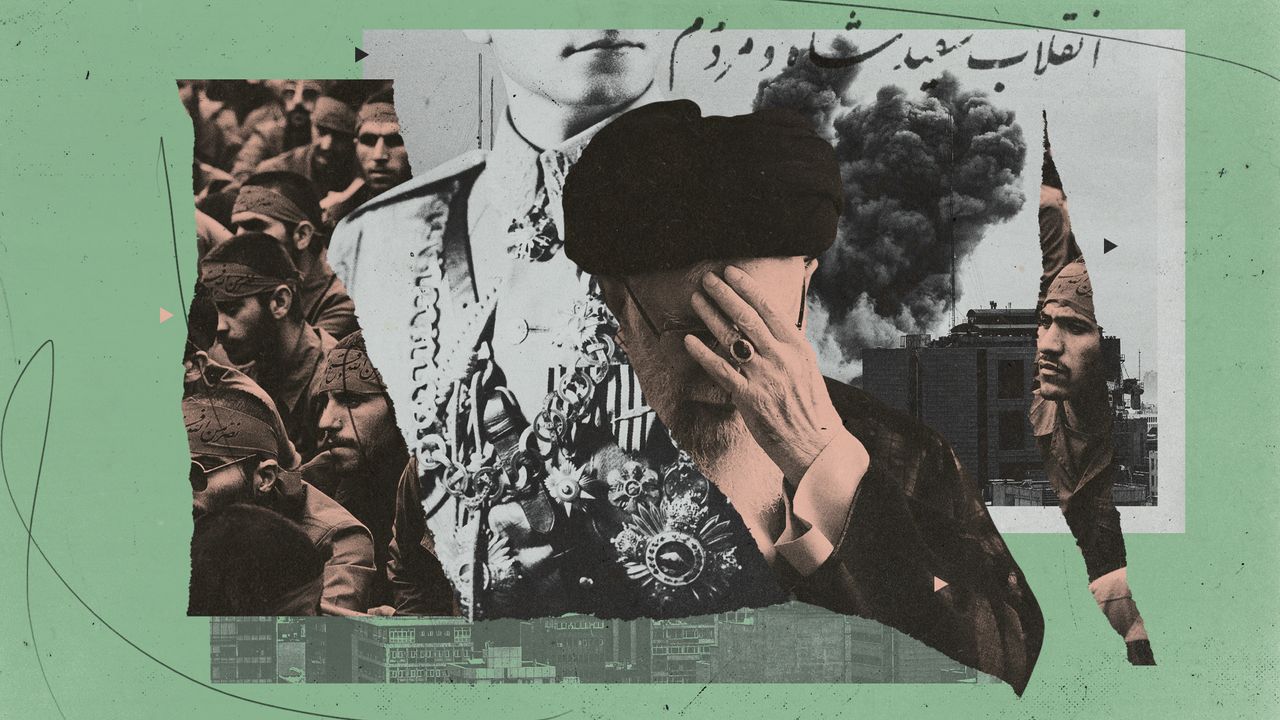
    Is regime change really possible in Iran?

    Donald Trump has said his “worst case” scenario for the Iran conflict would be the emergence of a new leader “as bad as the previous person”.  That “could happen”, the president told Oval Office reporters yesterday. Many experts believe that whoever replaces Ayatollah Ali Khamenei, the tenor of the Iranian regime will change little, if at all.

    What did the commentators say?
    Iran’s regime is “built to handle shocks” like the ayatollah’s assassination, said regional expert Ali Hashem on Foreign Policy. The supreme leader sits at the top of “a dense network of institutions”, including the vast Islamic Revolutionary Guard Corps. “When under pressure, its structure is designed to pull together rather than fall apart.” Iran’s constitution even “explicitly anticipates sudden leadership loss”, with a clear process for transfer of authority.

    Trump is gambling that “simply by providing an external shock to make it fall”, internal opposition forces will “take over and stabilise power”, said historian Justin Vaïsse, founder of the Paris Peace Forum, in Le Monde. Most of Israel’s leaders privately “regard that as a kind of fairy tale”, former Israeli government adviser Daniel Levy told Al Jazeera.

    A popular uprising would require protests from a “cross section of Iranian society” on a scale that the regime couldn’t suppress, Urban Coningham of the Royal United Services Institute told Channel 4 News. “This scenario would need not just thousands, but hundreds of thousands or millions on the streets.”

    What next?
    Trump may “abandon his earlier calls for regime change” and try to strike a “Venezuela-scenario” deal with Khamenei’s successor, said Sharan Grewal on the Brookings Institution’s site. “If so, then for Iran, all Trump’s attacks will really have done is to accelerate” their aged supreme leader’s “already looming death”.

    His second son, Mojtaba Khamenei, is widely tipped to become Iran’s next head of state. He’s “viewed within the regime as a capable and forceful leader”, according to a leaked US intelligence briefing quoted in the Daily Mail, and “is said to be close” to senior leaders in the Revolutionary Guard.


    IN THE SPOTLIGHT

    Ghost number-plates: the car crime blighting Britain

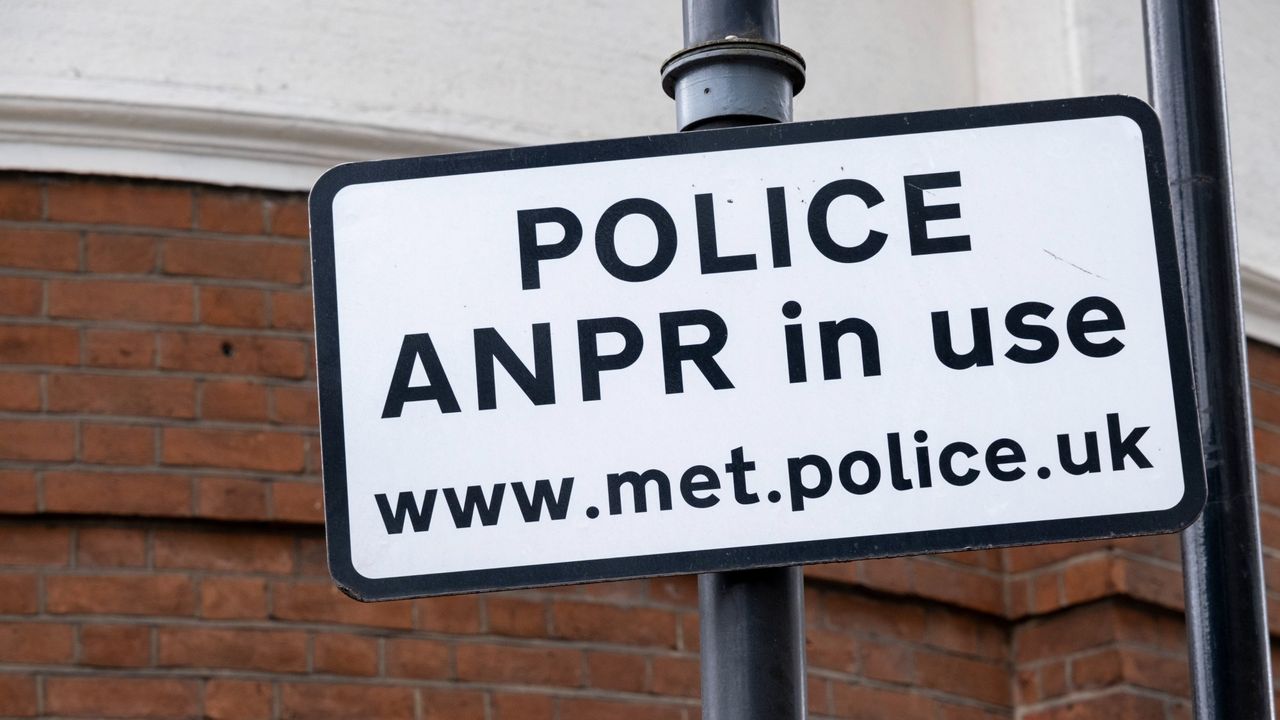
    Britain’s roads are being described as a “number-plate wild west”, with one in 15 cars featuring ghost number-plates to avoid detection. The illegal plates are being offered by “dodgy sellers” who can set up “with no questions asked”, according to the All-Party Parliamentary Group for Transport Safety.

    Security threat
    A ghost number-plate appears normal to the eye but has been modified so that it can’t be read properly by Automatic Number Plate Recognition camera systems. Some ghost plates feature reflective sprays that create a bright glare when viewed through an ANPR camera, while others have clear coatings designed to blur or warp the letters and numbers. Sometimes, the characters themselves are subtly altered – for example, changing a “B” into an “8” – which bamboozles the recognition software used by the cameras.

    The plates are being used to “avoid detection for speeding penalties, parking fines and low-level criminality”, said The Telegraph, and are increasingly popular among “grooming gangs, drug traffickers and organised crime groups”. They could also “pose a security threat”. According to experts, “would-be terrorists” could use them to “bypass surveillance systems around airports, train stations and iconic buildings”.

    ‘No questions asked’
    A trading standards team that investigated ghost plates in Rochdale uncovered more than 600 suppliers in the city. “We were finding people making them in the back bedroom, in the shed, in the garden,” a spokesperson told The Telegraph.

    Currently, criminals can “set themselves up as number-plate sellers with no questions asked”, said All-Party Parliamentary Group member Sarah Coombes, the Labour MP for West Bromwich. The UK has 34,455 suppliers licenced to provide registration plates, but the committee wants to reduce that number “significantly”, by bringing in higher standards and a more expansive annual fee.

    The Driver and Vehicle Licensing Agency said a review of number-plate standards is ongoing, with the target of banning designs that evade ANPR. Transport for London is rolling out infra-red cameras to detect illegal number-plates on licensed taxis and private hire vehicles. If licensed drivers are found to have illegal plates on multiple occasions, they could lose their licences.


    QUOTE OF THE DAY

    “President Trump has been anointed by Jesus to light the signal fire in Iran to cause Armageddon and mark his return to Earth.”

    A US military officer reveals the message his commander encouraged him to pass on to his troops. The Military Religious Freedom Foundation, which published the unnamed officer’s complaint, said it had received more than 200 reports of “similar disturbing pronouncements” since Saturday.


    Poll watch

    More than half (54%) of Reform members think the UK should be governed by a leader with “the authority to override or ignore Parliament”, according to research for anti-racism group Hope Not Hate. The remaining 46% of 629 party members polled by Survation preferred “a liberal democracy with regular elections and a multi-party system”.


    THE EXPLAINER

    The history behind the UK’s military bases in Cyprus

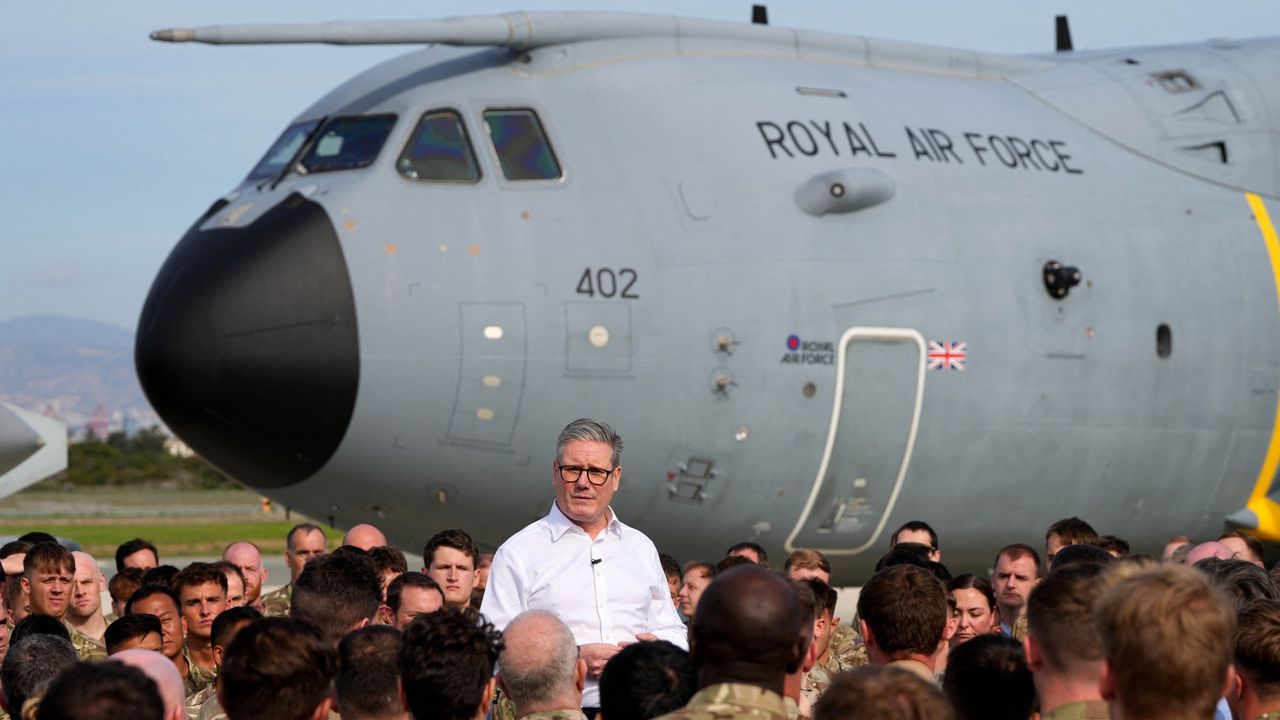
    Britain will deploy HMS Dragon and helicopters with anti-drone capabilities in Cyprus, Keir Starmer has confirmed. In a post on X, the prime minister said he had spoken to the island’s president, and the UK was “fully committed to the security of Cyprus and British military personnel based there”. The deployment follows criticism of the UK by Cyprus following a drone strike on the RAF base of Akrotiri that forced locals to flee.

    Why are there British bases in Cyprus?
    Previously part of the Ottoman Empire, Cyprus became a British protectorate in 1878 and a Crown colony in 1925, before gaining independence in 1959. A “condition of the handover”, said The Telegraph, was that Britain retained two Sovereign Base areas: Akrotiri and Dhekelia. They cover “roughly 3% of the island” and are among the 14 surviving British Overseas Territories, which also include Gibraltar and the Falkland Islands.

    The Cyprus bases “enable the UK to maintain a permanent military presence at a strategic point in the Eastern Mediterranean”, according to the British Army. The RAF Akrotiri base has been used in the past for military operations in Iraq, Syria and Yemen.

    Why is that causing problems now?
    Sunday’s drone attack marked the first time that one of the UK bases on Cyprus has been hit since a rocket attack by Libyan ⁠militants in 1986, and has “effectively dragged the island into the unfolding crisis” in the Middle East, said Politico.

    The potential use of the bases to conduct strikes on Iran is a major point of contention. Cypriot government spokesperson Konstantinos Letymbiotis said that despite assurances to leaders in Nicosia, “there was no clear clarification” from Starmer that the UK’s Cyprus bases “would under no circumstances be used for any purpose other than humanitarian reasons”. Asked whether the Cypriot government will seek to renegotiate the status of the bases, Letymbiotis said that “in this context, we are not ruling anything out”.


    Good day 🎧

    … for travel etiquette, as a leading US airline introduces rules that could see passengers kicked off flights for failing to use headphones when listening to music or videos. A new clause in United Airlines’ terms of service adds the common travel bugbear to its list of disruptive behaviours that can result in refusal of service and even a permanent ban.


    Bad day ⚽

    … for Liverpool FC, as the Reds reel from their fifth stoppage-time defeat this season, a Premier League record. Manager Arne Slot “was angry”, team captain Virgil van Dijk told reporters after a rollicking over last night’s 94th-minute defeat to Wolves. “He had every right because we played poorly.”


    picture of the day

    Painting a picture

    Revellers pause for a selfie during Holi celebrations in the Indian city of Guwahati. The Hindu festival marks the arrival of spring and is traditionally celebrated with dancing, singing and the throwing of coloured powder and water.

    David Talukdar / NurPhoto / Getty Images


    Puzzles

    Guess the number

    Try The Week’s new daily number challenge in our puzzles and quizzes section

    Play here


    THE WEEK RECOMMENDS

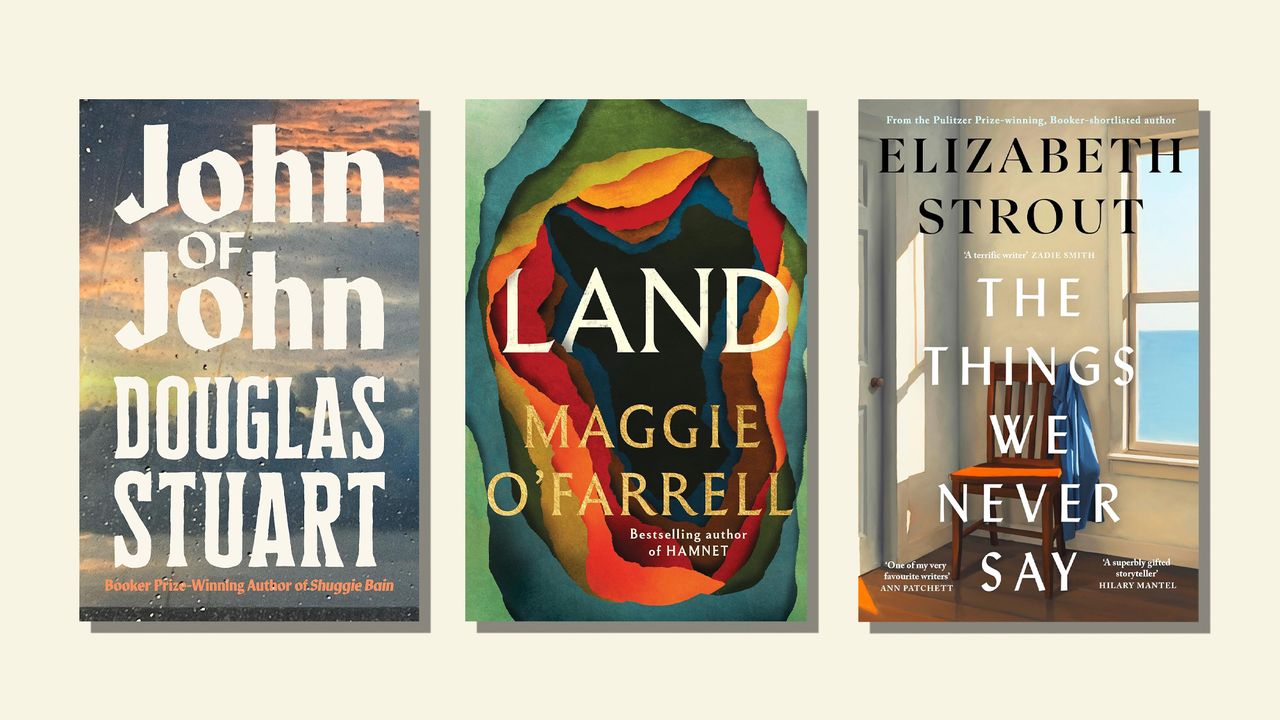
    The most anticipated novels of 2026

    Book lovers can enjoy an exciting range of new releases in 2026, with high-profile novels from the likes of Maggie O’Farrell and Douglas Stuart debuting alongside gripping works from emerging authors.

    Land by Maggie O’Farrell
    Inspired by her Irish heritage, “Hamnet” author O’Farrell’s latest novel is set in the aftermath of the Great Famine and tells “a multigenerational story of separation and reunion, colonisation and resistance, loyalty and survival”, said Julieanne Corr in The Sunday Times. The screen rights to “Land” have already been snapped up.

    What am I, a Deer? by Polly Barton
    Barton’s debut novel follows a young woman who moves to Frankfurt hoping for a fresh start, only to become consumed by an obsession with a stranger and a love of karaoke. Told in “a witty, explosive stream of consciousness”, this is “a sharp, mind-racing literary debut”, said Sofia de la Cruz at Wallpaper*.

    John of John by Douglas Stuart
    A Hebridean community shaped by tradition forms the backdrop to this story of a “troubled father-son bond”, said Daisy Lester in The Independent. “Shuggie Bain” and “Young Mungo” author Stuart continues to explore “masculinity, coming of age and working-class life in a Scottish setting”. This is “Stuart at his very best”.

    The Things We Never Say by Elizabeth Strout
    Set in modern-day Massachusetts, “The Things We Never Say” follows Artie Dam, a history teacher whose pedestrian life is upended when he uncovers a secret about his own past. “Always delightful”, Strout “illuminates the world in new, brighter colours with every book she writes”, said Julia Hass on Literary Hub.


    Statistic of the day

    7 hours and 18 minutes: The optimal amount of nightly sleep for maintaining healthy blood sugar levels, according to a study in the journal BMJ Open Diabetes Research and Care. Consistency is key, said the researchers, who found that along with insufficient or excessive snoozing, irregular sleep patterns were associated with a higher risk of chronic conditions including type 2 diabetes.


    instant opinion

    Today’s best commentary

    How the Greens stole Reform’s mojo
    Aaron Bastani on UnHerd
    Reform’s “whinging” and claims of cheating at the Gorton and Denton by-election made them sound “like losers”, writes Novara Media co-founder Aaron Bastani. They “used to be all conviviality and connection”, but now it’s the Greens going “from strength to strength”. Zack Polanski’s “pick and mix pressure group will only become more successful” in a political world increasingly “mediated through online personalities and causes”. Reform’s TikTok success has “opened the door to new possibilities for the Left”.

    Five years after Sarah Everard’s death, why do I still not feel safe?
    Olivia Petter in The Independent
    “As much as I’d like to think things have changed,” writes Olivia Petter, I fear that what happened to Sarah Everard “could still happen” to any woman. I resent hyperbole “casting us as melodramatic damsels in distress”, but it’s clear violence against women is still not taken seriously enough. Without “cultural change”, it will “continue until it escalates to the most horrifying degree”. Police failed Everard five years ago, and ”we have no reason to believe they wouldn’t fail her again now”.

    Quit ChatGPT: right now! Your subscription is bankrolling authoritarianism
    Rutger Bregman in The Guardian
    “OpenAI, the company behind ChatGPT, is on track to lose $14bn this year,” writes Rutger Bregman, author of “Humankind”. “All it takes to accelerate that decline is 10 seconds of your time” to join the “grassroots boycott” of “your friendly chatbot”. OpenAI is powering a screening tool used by Donald Trump’s Ice agents and has also “quietly signed a deal with the Pentagon”. I’m not against AI but I am against funding a company providing access to “mass surveillance and autonomous weapons”.


    word of the day

    Vanguard

    The codename of a massive Merseyside Police crackdown on crime that launched this morning, putting parts of Anfield into lockdown. Around 300 officers, including mounted patrols and canine units, are involved in Operation Vanguard, targeting offences ranging from modern-day slavery to county lines drug-dealing and domestic abuse.


    Evening Review was written and edited by Rebecca Messina, Jamie Timson, Hollie Clemence, Chas Newkey-Burden, Alex Zagalsky, David Edwards, Adrienne Wyper, Helen Brown and Kari Wilkin, with illustrations from Stephen Kelly.

    Image credits, from top: illustration by Stephen Kelly / Getty Images; Mike Kemp / In Pictures / Getty Images; Kirsty Wigglesworth / Pool / AFP / Getty Images; David Talukdar / NurPhoto / Getty Images; Picador / Tinder Press / Viking

    Morning Report and Evening Review were named Newsletter of the Year at the Publisher Newsletter Awards 2025
     

    Recent editions

    • Evening Review

      Can Trump explain his war with Iran?

    • Morning Report

      Trump floats lengthy Iran war

    • Evening Review

      Trump’s true doctrine

    VIEW ALL
    TheWeek
    • About Us
    • Contact Future's experts
    • Terms and Conditions
    • Privacy Policy
    • Cookie Policy
    • Advertise With Us
    • FAQ
    Add as a preferred source on Google

    The Week is part of Future US Inc, an international media group and leading digital publisher. Visit our corporate site.

    © Future US, Inc. Full 7th Floor, 130 West 42nd Street, New York, NY 10036.