The Week The Week
flag of US
US
flag of UK
UK
https://cdn.mos.cms.futurecdn.net/flexiimages/jacafc5zvs1692883516.jpg

SUBSCRIBE & SAVE

Less than $3 per week

Sign in
  • View Profile
  • Sign out
  • The Explainer
  • The Week Recommends
  • Newsletters
  • Cartoons
  • From the Magazine
  • The Week Junior
  • Student Offers
  • More
    • Politics
    • World News
    • Business
    • Health
    • Science
    • Food & Drink
    • Travel
    • Culture
    • History
    • Personal Finance
    • Puzzles
    • Photos
    • The Blend
    • All Categories
  • Newsletter sign up Newsletter
  • The Week Evening Review
    The Strait of Hormuz, critical ignoring, and the year’s most ‘engrossing’ drama

     
    TODAY’S BIG QUESTION

    Can the West keep the Strait of Hormuz open?

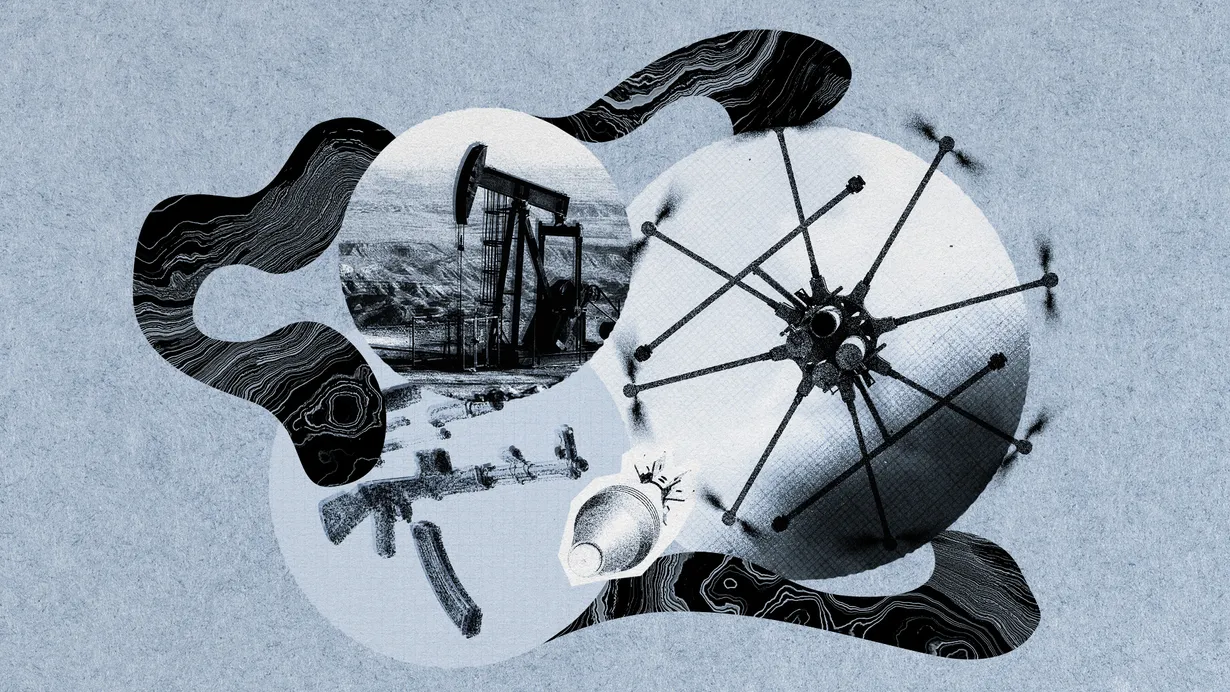
    Tehran today said it will “not allow even a single litre of oil” to pass through the Strait of Hormuz to reach its war enemies. “Any vessel or tanker bound to them will be a legitimate target,” Tehran warned, after UK maritime authorities said that three cargo ships in the vital waterway had been damaged by “unknown projectiles”.

    Donald Trump has said that he “will not allow a terrorist regime to hold the world hostage and attempt to stop the globe’s oil supply”. The US military claims to have destroyed 16 Iranian mine-laying ships, in response to intelligence reports that Iran had begun planting explosives in the strait.

    Since the conflict began, 13 attacks on ships in the strait have been reported, and global insurers are increasingly unwilling to allow oil tankers to attempt to use the route. As prices per barrel spike, Trump has suggested that the US Navy could escort tankers through the shipping channel.

    What did the commentators say?
    Millions of barrels of oil “are now effectively stranded in the Gulf” because regional oil-producing countries, including Iraq and Kuwait, have “no alternative” shipping channel, said Natasha Bertrand on CNN. This is no small incentive for Trump’s naval escort plan. But the risks are high, with the strait described as a “death valley” for vessels trying to navigate it.

    Escorting tanker convoys in the region has been “effective” in the past, said former Royal Naval officer Tom Sharpe in The Telegraph. Given Iran’s “rapidly diminishing” missile threat, a “similar” approach to protecting tankers on their way through Hormuz “would work”. But the strait is shallow, “has a U-bend shape” and is the Iranian Revolutionary Guard’s “home turf”. And there probably aren’t enough US ships “for the task”.

    Japan, South Korea, Australia and Italy could “help out” with “serious air defence warships”, and France has an aircraft carrier en route to the Mediterranean and a frigate off Cyprus. But even with these reinforcements, it’s unclear how long such an operation “could be kept up”.

    What next?
    If the US naval escort plan goes ahead, it “may give Iran juicy American targets”, said The Economist. Despite being “pummelled from the air”, Iran still “enjoys layered defences and forbidding terrain” in the strait, and the regime seems “determined to set the terms for how the war ends”.


    THE EXPLAINER

    Critical ignoring: a strategy for the internet

    Social media posts calling for “red v. blue” wars between schools last month turned out to be nothing more than a phantom online trend. But not before panicked parents had shared the posts on WhatsApp groups, exposing a “gap between how children and their parents experience social media”, said the BBC.

    Experts trying to tackle this online chaos are “increasingly teaching” a strategy known as critical ignoring, Sander Van Der Linden, a professor of social psychology, told the broadcaster. It “will become more important in the face of AI-generated slop, where sometimes it’s better to just ignore low-quality stuff”.

    What is critical ignoring?
    It’s a behavioural strategy for managing information overload by consciously choosing to filter out low-quality, distracting or manipulative content. While critical thinking analyses information, critical ignoring focuses on deciding what to analyse in the first place.

    Critical thinking is not enough “in a world of information overabundance and gushing sources of disinformation”, said researchers Ralph Hertwig, Anastasia Kozyreva, Sam Wineburg and Stephan Lewandowsky on The Conversation. The digital world “contains more information than the world’s libraries combined”, so “critically thinking through all information and sources we come across” would “utterly paralyse us”.

    How does it work?
    The “key word” is “critical”, said Psychology Today. It doesn’t mean “just ignoring everything”, but rather scanning for clues to identify the types of information most likely to be suspect. The presence of misinformation or disinformation may indicate that it’s polarising content or that it “appeals to intuition or common sense” instead of “including facts or evidence”. Another red flag is if the content doesn’t include sources, or if those that are included don’t seem credible. Does it seem to have been released “as a distraction”, or promote “the threat of a bogeyman or a scapegoat”?

    Alternatively, said Tom’s Guide, you can just “ask one question” before engaging. “Would I care about this tomorrow?” If not, simply “move on”.


    QUOTE OF THE DAY

    “That silence was heard as a roar all around the world.”

    Australia’s Home Affairs Minister Tony Burke commends the bravery of Iranian footballers granted asylum after refusing to sing their national anthem before an Asian Cup match in Queensland. The female players today fled a safe house exposed by a team member who changed her mind.


    Poll watch

    Nearly half (46%) of Brits think King Charles should turn down his invitation to make an official state visit to the US. Of 12,002 adults surveyed by YouGov, 36% thought next month’s expected trip and engagements with Donald Trump should go ahead, while 18% were unsure.


    IN THE SPOTLIGHT

    Why are Glasgow’s old buildings burning down?

    For Glaswegians, Sunday’s devastating fire at Forsyth House, a Victorian building next to Glasgow Central station, “feels painfully familiar”, said The National. “In recent years, the city has watched as some of its most recognisable buildings have burned down.”

    As investigations continue into how the blaze started, the “uncomfortable question” of why such disasters keep happening “looms over the city’s architectural heritage”.

    Troubling pattern
    The “acrid smell of smoke” lingering in the air on Monday morning recalled the “devastating” fires that tore through the Glasgow School of Art in 2014 and then again four years later, in the midst of its restoration, said The Guardian. The neighbouring O2 ABC venue was severely damaged in the second fire, and a separate blaze in 2018 ripped through buildings on Sauchiehall Street, in the city centre. In 2024, a large blaze broke out at the derelict Carlton Terrace on the south bank of the River Clyde.

    Sunday’s blaze “looks like a tragic accident but it highlights a brutal reality”, architectural writer and critic Rory Olcayto told the paper. The city’s old buildings are “extremely vulnerable”, and until Glasgow starts to treat them “as part of its social fabric, these crises will keep happening”. A spokesperson for Glasgow City Council said it was “absolutely committed” to protecting the city’s historic buildings and had spent more than £280 million on heritage projects since 2013.

    ‘Massive blind spot’
    Buildings dating back to the 1850s often contain more structural timber, which increases the “fire loading”, the total amount of combustible material present, said Billy Hare, a professor of construction management at Glasgow Caledonian University. Victorian buildings also “rarely feature the fire protections of modern buildings, which must conform to national standards”, he told The National.

    And improving safety isn’t easy, as alterations to listed buildings – of which Glasgow has hundreds – must be “sympathetically balanced with the internal and external appearance”, which inevitably leads to “conflict between regulatory compliance and heritage conservation”.

    Although the cause of the fire at Forsyth House has not been confirmed, early reports suggest it may have been started by lithium-ion batteries exploding in a vape shop. It all points to a “massive blind spot in our regulation”, said Paul Sweeney, a Scottish Labour MSP for the city who has called for stricter safety protocols.


    Good day 🦋

    … for British wildlife, which will replace historic figures including Winston Churchill and Jane Austen on the nation’s next series of banknotes. The nature theme was the most popular choice in the 44,000 responses to a public consultation by the Bank of England last year.


    Bad day 🎤

    … for Katy Perry, the US pop star, who has lost a 16-year legal battle with Katie Perry, a Sydney-based fashion brand. Australia’s High Court ruled that designer Katie Taylor (née Perry) did not breach trademark laws by selling clothing under her birth name, overturning a previous ruling that her fashion label should be deregistered.


    PICTURE OF THE DAY

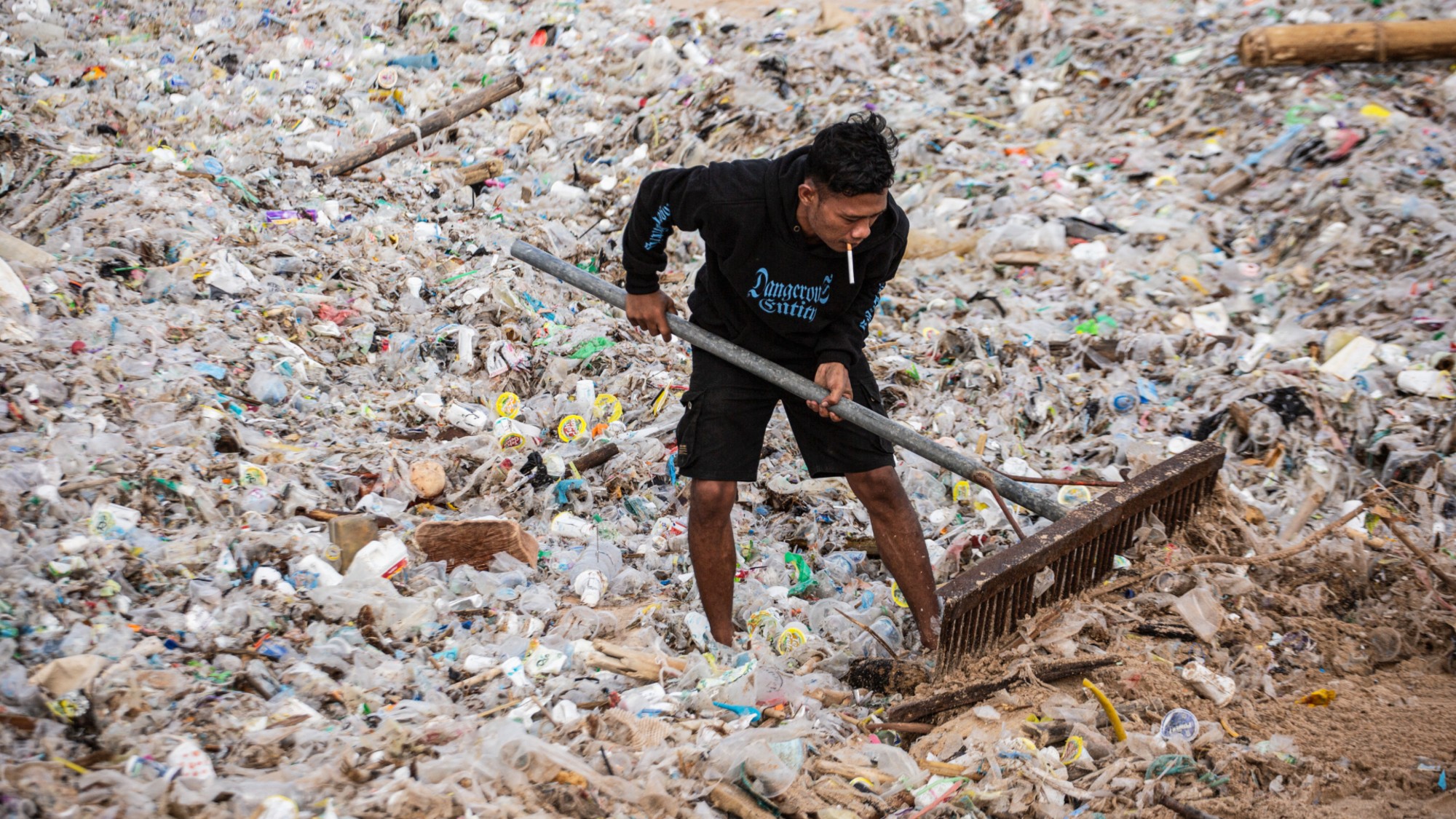
    Flood of plastic 

    A local tries to clean up plastic waste washed ashore by monsoon waves at Jimbaran Beach on Bali. The Indonesian resort island is facing one of the worst rainy seasons in recent history, with widespread flooding and landslides. 

    Lana Priatna / AFP / Getty Images


    Puzzles

    Guess the number

    Try The Week’s daily number challenge in our puzzles and quizzes section

    Play here


    THE WEEK RECOMMENDS

    Gone: David Morrissey keeps viewers guessing

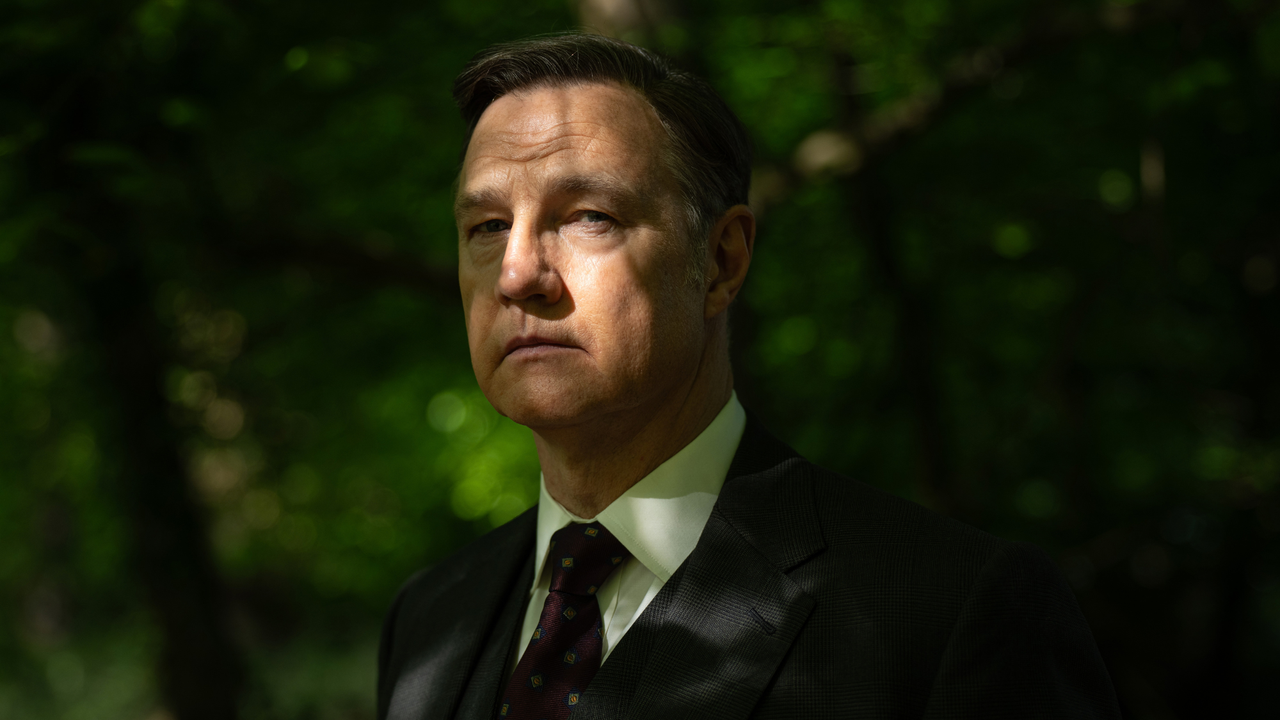
    David Morrissey takes on “gloomy” characters with such ease, “you do rather start to worry for him”, said James Jackson in The Times. In ITV’s new crime drama, “Gone”, the actor stays true to form as Michael Polly, the “brooding” headmaster of a prestigious private school who becomes the prime suspect when his wife vanishes.

    “Despite his buttoned-up surliness, surely he’s a good guy deep down, because isn’t Morrissey always that, too?” But as with any crime drama worth its salt, “we really don’t know”. Polly displays troubling behaviour from the outset of this “sombre thriller”, showing a peculiar lack of concern when his wife goes missing, and initially failing to report her disappearance.

    George Kay’s “slow burn” drama isn’t “just a domestic story”, said Phil Harrison in The Independent. There’s an “unfolding back story” about the investigating detective, Annie Cassidy (Eve Myles), and “the repercussions of an unsolved case from eight years earlier”. After reeling us in with a “deliberately obvious premise”, the show’s “real cleverness” lies in how it constantly asks viewers to “question their own judgement”.

    What seems at first glance to be a straightforward missing person case soon unfurls into a “multitude of wrigglier, trickier things”, from the “nature of guilt and codependency” to the “banality of evil”, said Sarah Dempster in The Guardian. “It’s a hugely taut show that will totally subvert your expectations.” Clues are slowly threaded into the narrative from “unexpected angles”, as the tension builds. “How long until the elastic band snaps?” This will surely be the most “engrossing” drama of the year.


    Statistic of the day

    17.64 million: The record-breaking number of people who attended West End shows last year, according to a new report from the Society of London Theatre and UK Theatre. That was “almost three million more than Broadway”, the report said, yet 36% of UK theatres forecast an operating deficit this year due to rising costs.


    instant opinion

    Today’s best commentary

    Starmer can’t stop Polanski, but Britain’s dog owners might
    Andrew Fisher in The i Paper
    “Zack Polanski has a credible chance of leading – or playing a leading role in – the next government,” writes Labour’s former head of policy Andrew Fisher. “But there is a big problem.” The Greens’ dog-licensing policy “could end up taxing Britain’s 13 million dog owners”. In a cost-of-living crisis, that “speaks to a lack of seriousness and prioritisation”. Polanski must “sharpen his radical message” and “shed policies that don’t fit”, or he’ll always be “firefighting attacks over peripheral issues”.

    Why Trump Should Be Careful What He Wishes for in Cuba
    Guillaume Long and Alex Main on Foreign Policy
    Cuba’s “ambulances often lack fuel”, while its hospitals struggle with “never-ending power cuts”, as a result of Donald Trump’s oil blockade, write Guillaume Long and Alex Main of the CEPR economic think tank. The island nation is spiralling towards an “outright humanitarian” crisis that “could lead to internal conflict” and “mass exodus”. And aside from the “human cost”, that would have “lasting consequences for the security” of the US “and the region as a whole”.

    Let’s be honest about the ups and downs of the sexual revolution
    Sarah Ditum in The Times
    “Violent, degrading sex has been mainstreamed by pornography,” writes Sarah Ditum. “Confronted with this dark sexual landscape”, many younger women “have decided the social advances of the 1960s were a con”. A “small-C conservatism is taking hold”, with “tradwife” influencers pushing 1950s values. But there was “no sexual Eden” then either and “attempting to force the clock back will not reverse our present woes”. Instead, we must acknowledge “the sexual revolution’s shortcomings” and “protect its gains”.


    word of the day

    Ultrasonic

    Forget Sonic the Hedgehog, real-life hedgehogs have ultrasonic hearing. Researchers at the University of Oxford have discovered that hedgehogs can hear up to 85kHz, a far higher frequency than humans and even dogs can detect. The scientists now hope to create high-pitched sound repellents to keep the declining species away from roads and other hazardous places.


    Evening Review was written and edited by Hollie Clemence, Jamie Timson, Will Barker, Chas Newkey-Burden, Irenie Forshaw, Adrienne Wyper, Helen Brown and Kari Wilkin, with illustrations from Stephen Kelly.

    Image credits, from top: illustration by Stephen Kelly / Getty Images; Marco Piunti / Getty Images; Jeff J Mitchell / Getty Images; Lana Priatna / AFP / Getty Images; ITV

    Morning Report and Evening Review were named Newsletter of the Year at the Publisher Newsletter Awards 2025
     

    Recent editions

    • Evening Review

      Iran was ready for this

    • Morning Report

      Anthropic takes Pentagon to court

    • Evening Review

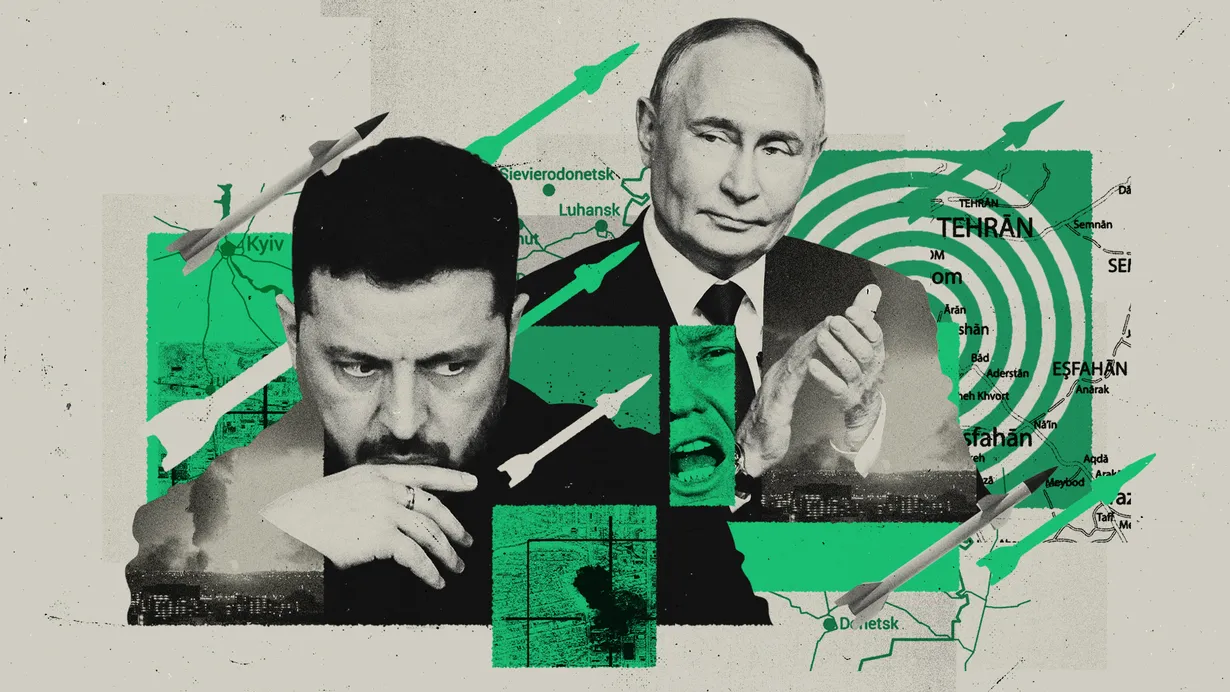
      The Iran war could hurt Ukraine

    VIEW ALL
    TheWeek
    • About Us
    • Contact Future's experts
    • Terms and Conditions
    • Privacy Policy
    • Cookie Policy
    • Advertise With Us
    • FAQ
    Add as a preferred source on Google Add as a preferred source on Google

    The Week is part of Future US Inc, an international media group and leading digital publisher. Visit our corporate site.

    © Future US, Inc. Full 7th Floor, 130 West 42nd Street, New York, NY 10036.