The Week The Week
flag of US
US
flag of UK
UK
https://cdn.mos.cms.futurecdn.net/flexiimages/jacafc5zvs1692883516.jpg

SUBSCRIBE & SAVE

Less than $3 per week

Sign in
  • View Profile
  • Sign out
  • The Explainer
  • The Week Recommends
  • Newsletters
  • Cartoons
  • From the Magazine
  • The Week Junior
  • Student Offers
  • More
    • Politics
    • World News
    • Business
    • Health
    • Science
    • Food & Drink
    • Travel
    • Culture
    • History
    • Personal Finance
    • Puzzles
    • Photos
    • The Blend
    • All Categories
  • Newsletter sign up Newsletter
  • The Week Evening Review
    Mandelson files, Sudan’s growing war, and ‘cuddly’ banknotes

     
    TODAY’S BIG QUESTION

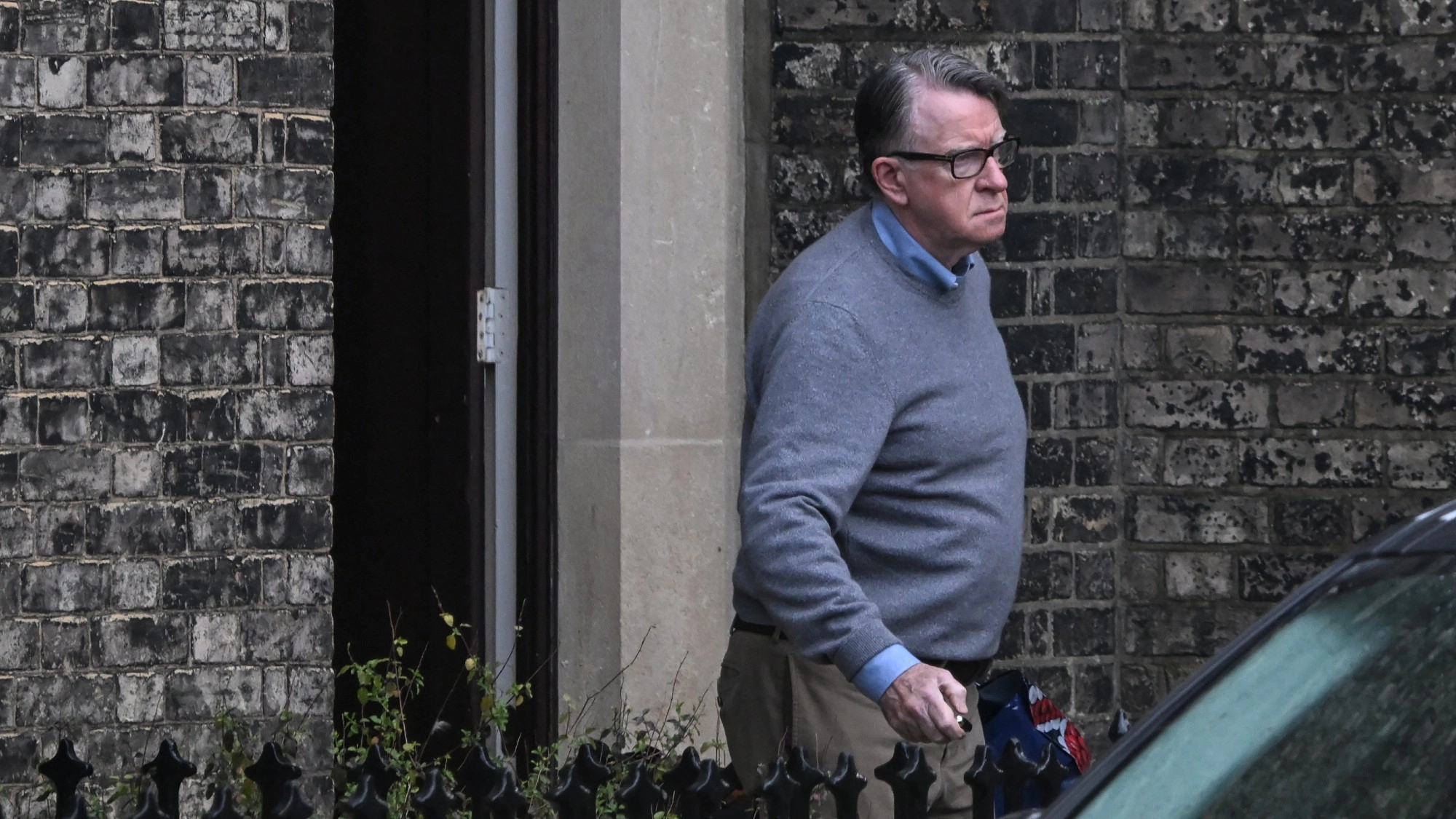
    Mandelson: when will we know the whole story?

    The British public was “expecting to be surprised” by the first tranche of the Mandelson files, said Ailbhe Rea in The New Statesman.  But the 147 pages of emails and documents “contained neither a smoking gun nor bombshell revelation”, said Sky News’ political editor Beth Rigby. The picture remains incomplete, however, with many documents withheld, redacted or yet to be released.

    What did the commentators say?
    Keir Starmer “must release” all the files, said The Telegraph. Some apparently “may not see the light of day for years”, due to ongoing police investigations. Officers are “entitled to do their job”, but questions about the prime minister’s judgment – and credulity – aren’t going away. 

    The files contain a comment by Jonathan Powell, Starmer’s national security adviser and Tony Blair’s chief of staff, about Mandelson’s appointment being “weirdly rushed”. That’s a “quietly damning analysis that will haunt Starmer forever”, said Rea. The decision to give Mandelson a “£75,000 payoff” after he was sacked, when his newly released contract shows “he was owed precisely £0”, raises further questions. There is a “missing piece of the puzzle”: the correspondence between Mandelson and Starmer’s former chief of staff, Morgan McSweeney. 

    The documents also “suggest that due process was not followed on vetting”, said The Times. Mandelson was “offered classified briefings” before being granted appropriate security clearance as US ambassador. And while the government previously refuted allegations that vetting processes were “fast-tracked” for him, it’s now “claiming this was allowed because Mandelson was a privy councillor”.

    The files “failed to include any interventions, comments or guidance from Starmer”, said Anna Gross in the Financial Times. We don’t know whether Mandelson’s appointment was the result of the PM’s readiness to “delegate” high-level decisions to McSweeney, said Gaby Hinsliff in The Guardian. Or maybe he believed that the risk of having “his own personal Machiavelli” close to Donald Trump “was worth it”. Either way, as Starmer admitted this week, it was “his mistake”.

    What next?
    It will be several weeks before more documents are released, after being examined by Parliament’s Intelligence and Security Committee. Senior government figures told The Guardian that Starmer “could suffer further resignations when ministerial WhatsApp messages are published in the next tranche”.


    THE EXPLAINER

    How Middle East violence could fuel more war in Africa

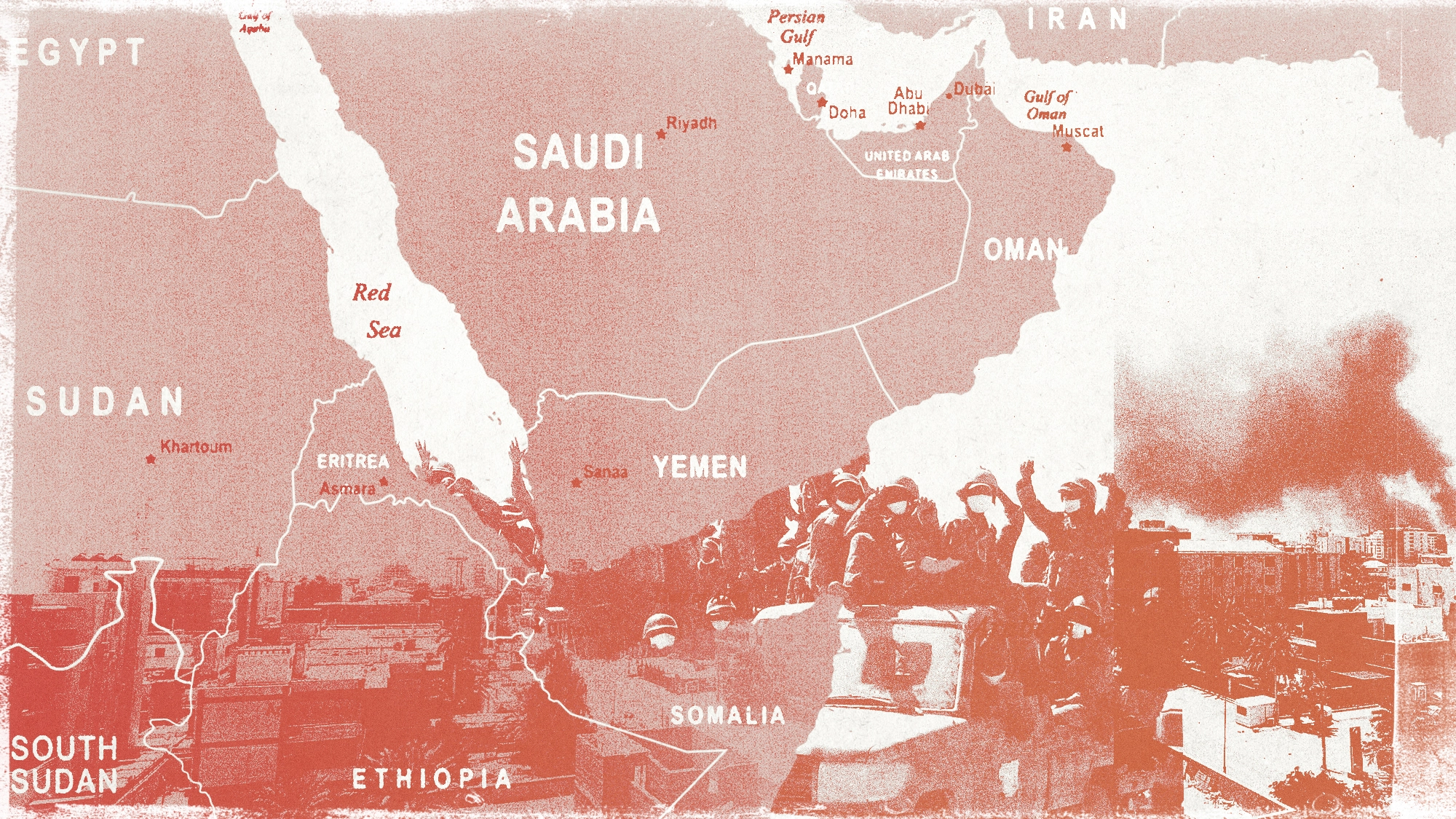
    The power struggle in the Middle East is rippling across the Red Sea and fuelling Sudan’s bloody civil war. Fighting between the Sudanese Armed Forces and the paramilitary Rapid Support Forces has “torn the country apart” since 2023, said The Times. Each side is backed by different Gulf countries and “their network of African allies”. Now, growing tension in the Gulf could cause the Sudan conflict to spread to neighbouring countries.

    How are Gulf states involved in Sudan?
    The UAE has long been accused of supporting the RSF with weapons and funds. Experts believe it uses its ties to neighbouring countries, including Ethiopia, South Sudan, Libya and Chad, to support the paramilitaries. But Saudi Arabia and Qatar back the SAF, as do Turkey, Egypt and Eritrea. Even Iran has played a role, allegedly supplying Sudan’s army with drones and missiles.

    What are their motives?
    Access to Sudan’s ports is an advantage in the “contest for control of the Red Sea”, Ahmed Soliman, from the Chatham House think tank, told The Times. Almost a third of global container shipping flows through the Suez Canal. Sudan sits “at the crossroads of the Red Sea, the Horn of Africa, the Sahel and North Africa”, said Shewit Woldemichael, the International Crisis Group’s analyst for Sudan, on Al Jazeera. The civil war is an opportunity for nations to advance their own interests “in a rapidly changing and contested regional order”.

    Sudan’s “untapped” gold reserves are another motivating factor, said Middle East Eye. It is Africa’s third-largest producer, and the UAE has established itself as a “global trading hub in gold”.

    How has the conflict spread?
    Violence is increasing on Sudan’s borders with Chad and Libya. South Sudan – which gained independence in 2011 – is also being pulled back into civil war.  But “the most worrying theatre for future conflict” is between Ethiopia and Eritrea, said The Times. The two nations signed a peace agreement in 2022, but Ethiopia has recently sent “tens of thousands of troops” north. Alliances have “crystallised” along the same lines as in Sudan: the UAE is backing Ethiopia, while Saudi Arabia and its allies have “thrown their weight behind Eritrea”.

    The mounting tensions between Saudi Arabia and the UAE may “overshadow” their joint peace proposal for Sudan, said Woldemichael. But the threat of Iran could also push Gulf states to “set aside some of their differences” and “revive stalled diplomatic efforts to end the war”.


    Poll watch

    Parents’ behaviour is harming the mental health of more than three-quarters (78%) of headteachers, a poll of 1,759 members of the Association of School and College Leaders suggests. The union warned today at its annual conference in Liverpool that “unreasonable” parents, and the “huge amount of work and stress they generate”, are driving headteachers out of the profession.


    Statistic of the day

    $11.3 billion: The cost to the US of the first six days of the Iran war. Pentagon officials reportedly told lawmakers in a closed briefing that most of the spending was on munitions. But insiders said the estimated total did not factor in expenses including the earlier deployment of troops, aircraft and equipment and was likely to be far higher, according to multiple news outlets.


    TALKING POINT

    The row over wildlife on banknotes

    “For more than 50 years, we’ve chosen to honour our greatest citizens” on our banknotes, in tribute to their “genius, courage and creativity”, said Tory MP Tom Tugendhat in The Telegraph. Now, the Bank of England is replacing them with British wildlife, following a public consultation. Swapping historical figures including Winston Churchill and Alan Turing for “badgers, puffins and red squirrels” sends a message that we “lack the courage to state publicly who we are”. It suggests “we care less for codebreakers than cuddly carnivores”. 

    ‘Values under attack’
    It’s goodbye to the “proud tradition of honouring our greatest Brits”, said Matthew Lynn in The Spectator. “Charles Dickens, George Stephenson, the Duke of Wellington and Elizabeth Fry have all made appearances” on our banknotes. “Somehow, a red robin is never going to have the same resonance.” The Bank of England “is doing its best to kill off paper money”, and rejecting tradition for what looks “suspiciously like an emoji” will accelerate that decline.

    This is “not a neutral act”, said James Price in City A.M. It will flatten “our visual realm” and “erase the uniqueness of our national story”. No wonder there’s a backlash: the “penny is dropping that our history and our values are under attack”.

    Silly controversy
    I think “the move is a stroke of genius”, said Emily Watkins in The i Paper. “I’ll take a badger over Winston Churchill any day.” Britain is “too various to be represented by a handful of dead people”. There is “no figure in history who can represent, let alone please, everyone”, so the Bank is “saving us all endless grief”. By “representing no one, animals represent us all”.

    I can’t think of a sillier public controversy, said Oliver Kamm in The Times. Historical figures on banknotes “is not some hallowed tradition” – it only began in 1970. Presumably, the Bank was not “captured by forces of wokeness” for the 276 years of its existence before then.

    With counterfeiters using increasingly “sophisticated printing equipment”, it’s in everybody’s interests that the Bank “thwarts their efforts by regularly changing the appearance” of notes. It is more important to have a paper currency that “commands trust in the corner shop” than one which “bathes us in a patriotic glow”.


    Good day🤖

    … for Whovians, after two lost “Dr Who” episodes were found in a collector’s forgotten box of vintage reels. The episodes, which have not been viewed since airing in the 1960s, star William Hartnell as the first incarnation of the Time Lord and will be screened on BBC iPlayer this Easter.


    Bad day 🤢

    … for nauseous commuters, who are complaining about a “multi-sensory” advert emitting chocolate smells at a busy London interchange. The Magnum Ice Cream Company said it had “received mostly positive feedback” about its new promo, installed in the tunnel between St Pancras station and King’s Cross St Pancras underground, but online critics compared the “weird” and “artificial” odour to a “chocolate-scented bubble bath”.


    picture of the day

    Dividing lines

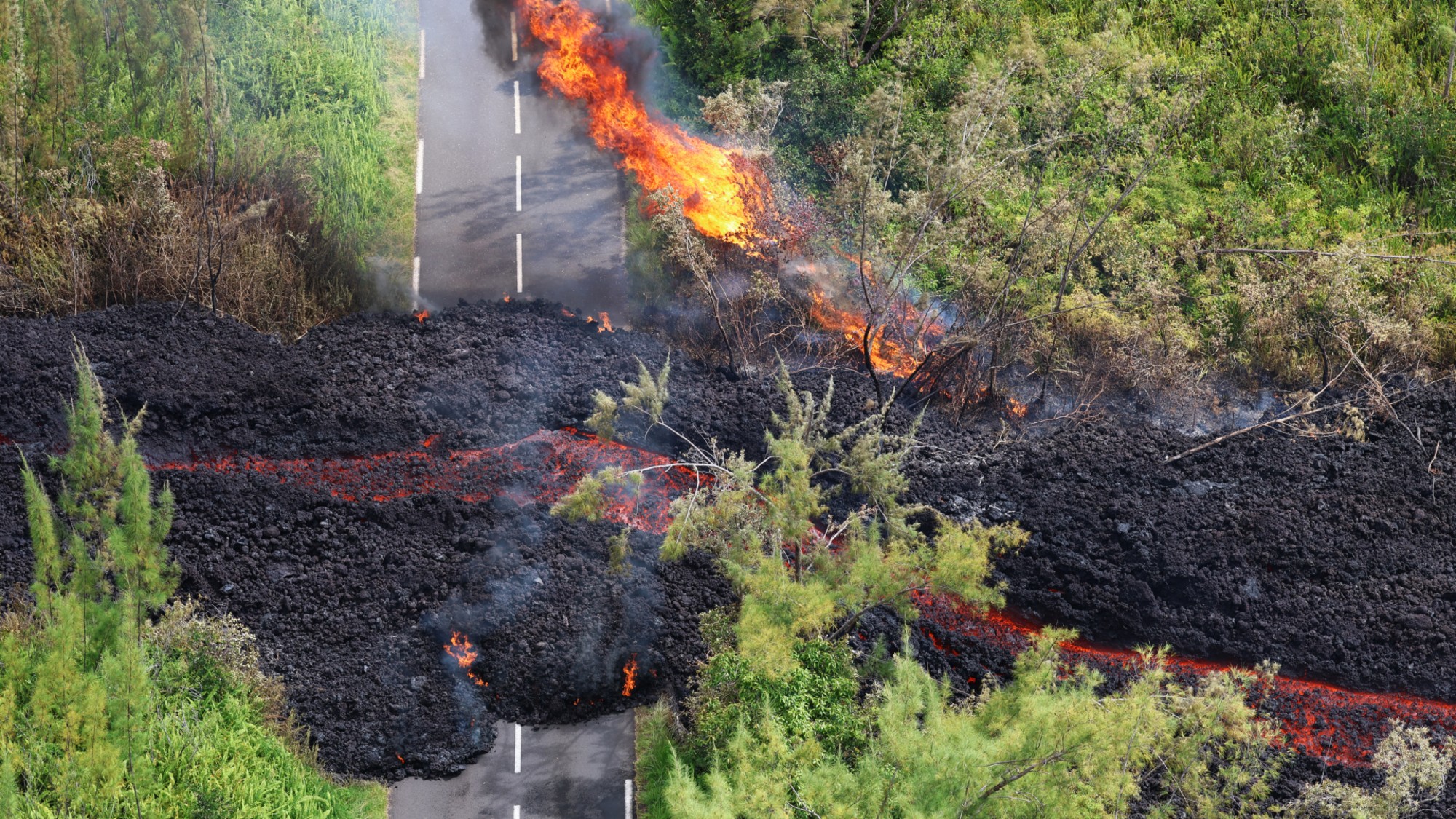
    Two lava flows spew across the road linking the south and east of Réunion island. The Piton de la Fournaise (“Peak of the Furnace”) volcano, on the eastern side of the French overseas territory, has been erupting for a month.

    Richard Bouhet / AFP / Getty


    PUZZLES AND QUIZZES

    Quiz of The Week

    Have you been paying attention to The Week’s news? Try our weekly quiz, part of our puzzles section, which also includes sudoku and crosswords 

    Play here


    THE WEEK RECOMMENDS

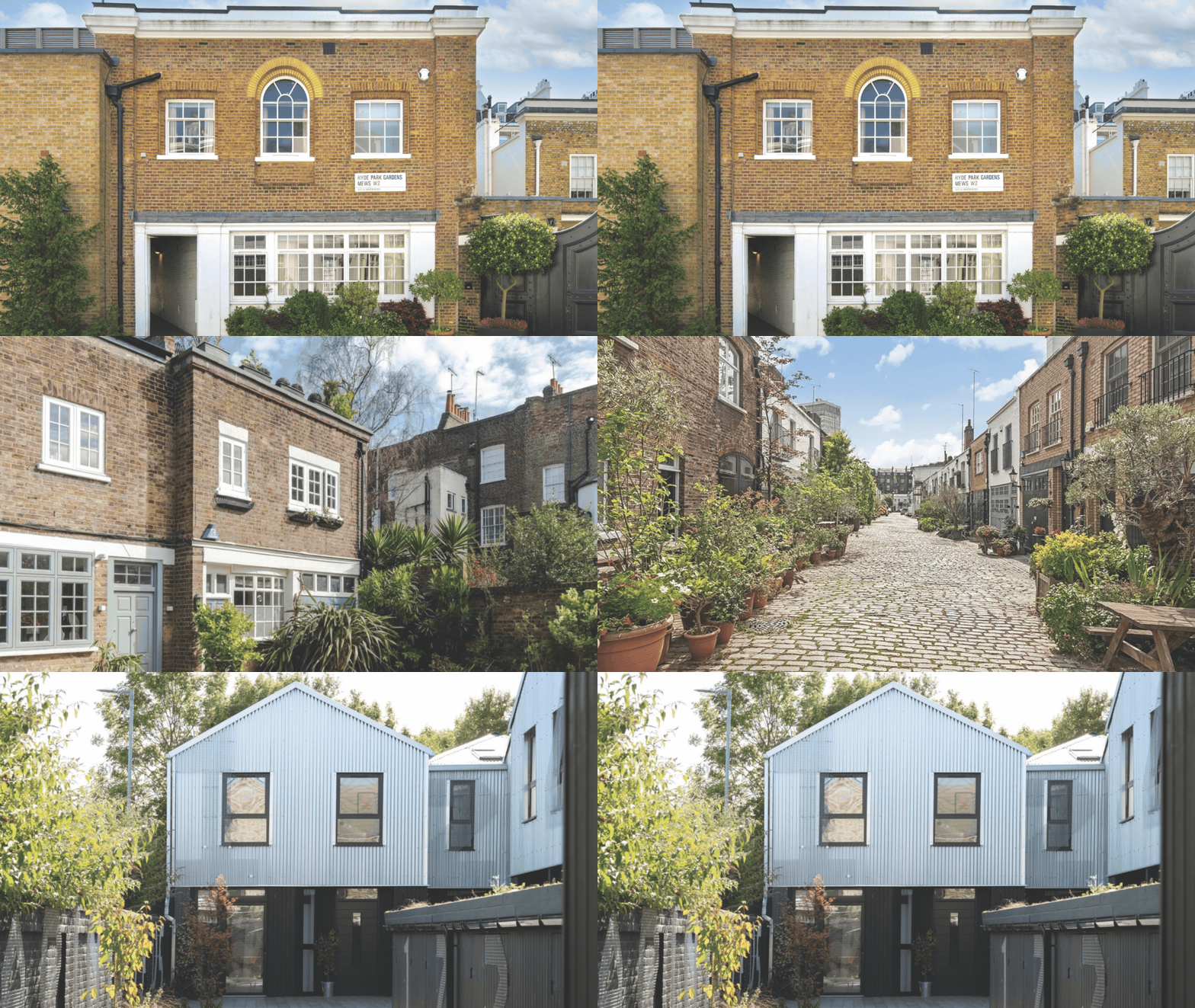
    Properties of the week: London mews houses

    Paddington: Hyde Park Gardens Mews W2
    An elegant and secluded house in arguably the most sought-after mews on the Hyde Park estate, only a short walk to the Royal Park. 4 beds, 2 baths, kitchen, 2 receps, parking. £3.25 million; Savills.

    St John’s Wood: Northwick Close NW8
    A handsome house with a decked roof terrace and potential for an extra floor (planning permission needed). 3 beds, 2 baths, open plan kitchen/living room, patio, garage. £1.799 million; Knight Frank.

    Notting Hill: St Luke’s Mews W11
    A beautifully designed house with luxurious interiors, ideal for entertaining. Main suite with terrace, 2 further beds, 2 showers, utility, kitchen/living room, garage, parking. £2.15 million; Knight Frank.

    Kensington: Queen’s Gate Mews SW7
    A charming house (it also occupies some of the mansion block to the rear) close to Kensington Gardens, the Royal Albert Hall and the V&A Museum. 3 beds, 2 baths, kitchen, recep. £1.75 million; Lurot Brand.

    Tottenham: Tamarind Mews N18
    A striking house designed by the architects Stolon Studio, with a private walled garden close to the River Lea footpath. 3 beds, 2 baths, open-plan kitchen/living room, garden. £500,000; The Modern House.

    See more


    QUOTE OF THE DAY

    “A girlfriend, maybe? Anybody out there? He’s a nice lad.”

    Sue Bellamy suggests a new goal for her jockey champion son, in an ITV interview after his first Cheltenham victory. Tom Bellamy, 31, praised his “really likeable filly” White Noise after winning the Ryanair Mares’ Novices’ Hurdle on the 40-1 outsider.


    instant opinion

    Today’s best commentary

    Why a coughing fit no one was meant to see spells trouble for Putin – and his enemies
    Mary Dejevsky in The Independent
    Online footage of Vladimir Putin having a “coughing fit” was swiftly deleted, writes Mary Dejevsky, but that it “became public at all” means “someone wanted it” to be seen. Yet those hoping for his demise, including Volodymyr Zelenskyy, should “be careful what they wish for”. Putin’s “most vocal internal” opponents “think Russia should be tougher in its war on Ukraine”. That the cough heralds “not only the end of Putin but the promise of a more compliant Russia” is “an illusion”.

    There’s only one thing that can stop Nigel Farage now
    Sherelle Jacobs in The Telegraph
    Nigel Farage is “laser-focused on his delicate route to power”, writes Sherelle Jacobs, but he has a “dangerous” weakness: he “runs away from confrontation as eagerly as he races towards controversy”. That needs to change “if the recent injection of Tory blood into Reform’s veins is to invigorate rather than poison it”. When two key colleagues championed different stances on the Iran war, Farage missed his chance to “show decisive leadership” and “set a clear direction”.

    The insidious rise of Tannoy spam
    Anthony Horowitz in The Spectator
    Travellers “are bludgeoned” by “Tannoy spam”, writes Anthony Horowitz. “Stand on the right, let passengers off first, don’t run in the rain, don’t swear at our staff”, and the dreaded ‘See it, say it, sorted’”. I imagine the theory is that “the more we’re shouted at, the more chance we’ll remember something we didn’t learn as children”. But as I know from my copywriting days, “if you show an advert too many times, you put people off buying the product”.


    word of the day

    Matrescence

    Coined by anthropologist Dana Raphael in 1973 to describe the physical, psychological and emotional process of becoming a mother. Almost 10,000 people have signed a petition launched ahead of Mother’s Day calling for “matrescence” to be added to dictionaries, in recognition of “the largest neurological reorganisation of the adult human brain ever observed”.


     Evening Review was written and edited by Harriet Marsden, Jamie Timson, Rebecca Messina, Will Barker, Irenie Forshaw, Chas Newkey-Burden, David Edwards, Adrienne Wyper, Helen Brown and Kari Wilkin.

    Image credits, from top: Justin Tallis / AFP via Getty Images; Illustration by Stephen Kelly / Getty Images; Sheldon Cooper / SOPA Images/ LightRocket / Getty Images; Richard Bouhet / AFP / Getty Images; Savills; Knight Frank; Lurot Brand; The Modern House

    Morning Report and Evening Review were named Newsletter of the Year at the Publisher Newsletter Awards 2025
     

    Recent editions

    • Evening Review

      Return of the talking filibuster?

    • Morning Report

      US errors blamed for Iran school deaths

    • Evening Review

      Iran war strains US economy

    VIEW ALL
    TheWeek
    • About Us
    • Contact Future's experts
    • Terms and Conditions
    • Privacy Policy
    • Cookie Policy
    • Advertise With Us
    • FAQ
    Add as a preferred source on Google Add as a preferred source on Google

    The Week is part of Future US Inc, an international media group and leading digital publisher. Visit our corporate site.

    © Future US, Inc. Full 7th Floor, 130 West 42nd Street, New York, NY 10036.