The Week The Week
flag of US
US
flag of UK
UK
https://cdn.mos.cms.futurecdn.net/flexiimages/jacafc5zvs1692883516.jpg

SUBSCRIBE & SAVE

Less than $3 per week

Sign in
  • View Profile
  • Sign out
  • The Explainer
  • The Week Recommends
  • Newsletters
  • Cartoons
  • From the Magazine
  • The Week Junior
  • Student Offers
  • More
    • Politics
    • World News
    • Business
    • Health
    • Science
    • Food & Drink
    • Travel
    • Culture
    • History
    • Personal Finance
    • Puzzles
    • Photos
    • The Blend
    • All Categories
  • Newsletter sign up Newsletter
  • The Week Evening Review
    The world economy, super minerals, and the BBC’s new boss

     
    TODAY’S BIG QUESTION

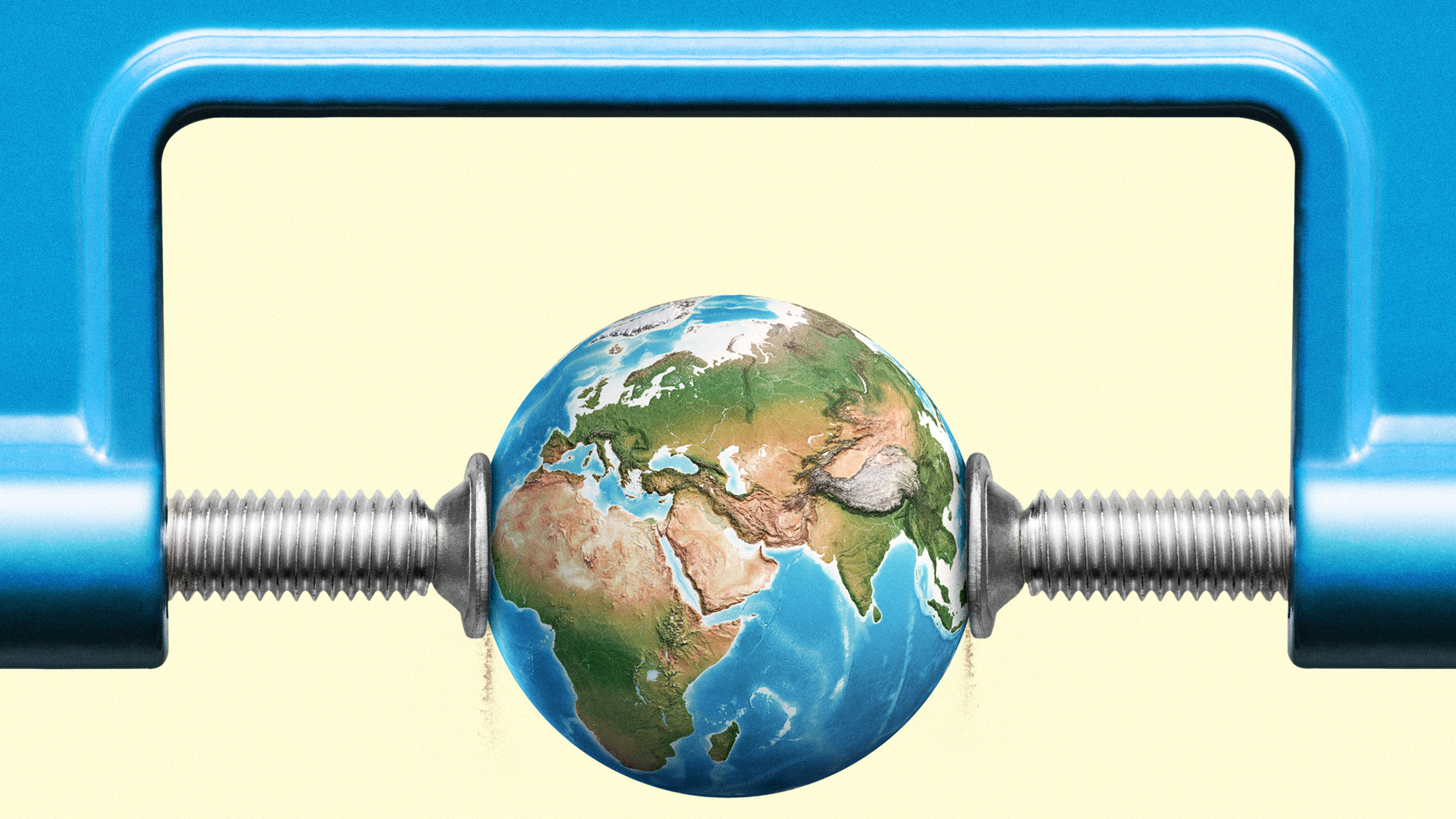
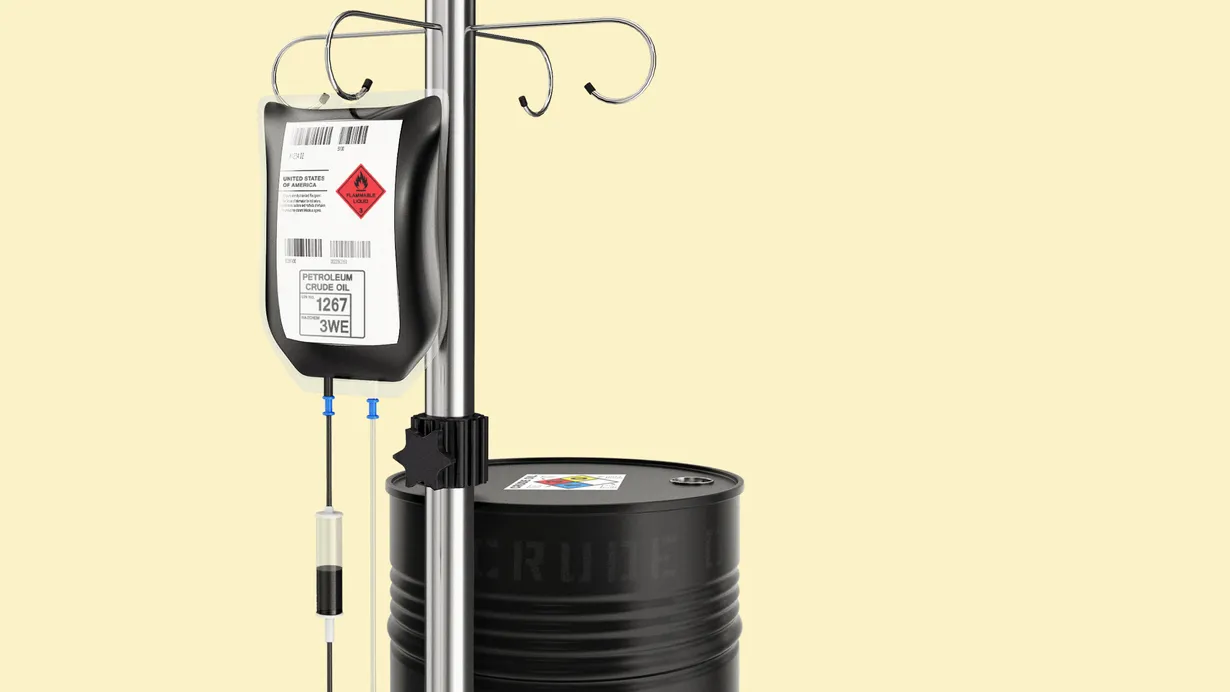
    Will the Iran war trigger a global recession?

    The boss of US financial giant BlackRock has warned of a “steep and stark” global recession if oil prices continue to rise. There will be “profound implications” for the world economy if Iran “remains a threat” and prices hit $150 a barrel, said Larry Fink. 

    The colossal “size and spread” of his investment company, which controls assets worth £11 billion across the globe, gives Fink a “unique insight into the health of the global economy”, said the BBC.

    What did the commentators say?
    “The Iran war is metastasising into a global economic calamity,” said the Financial Times. Until now, financial markets have been “lulled by the belief that the conflict would not last long”, but as the hostilities enter a fourth week, the Strait of Hormuz remains closed and “lasting damage” has been inflicted on critical energy infrastructure in the region. “The worst-case scenarios for investors and policymakers are coming into view.”

    If this crisis continues, “no country will be immune to the effects”, Fatih Birol, head of the International Energy Agency, warned earlier this week. The global economy faces a “major, major threat” as the impact of the Iran war on energy prices exceeds that of the twin oil shocks of the 1970s and of the Russia-Ukraine war. 

    Last week, Iranian militias said the price of oil would reach $200 a barrel. What seemed then “like bravado” is now “closer to becoming reality”, said Jesus Servulo Gonzales in El País. Were prices to rise above even $150, there would be “an inflationary crisis”.

    The current oil-price “ructions” would have “to get much worse” to trigger a global recession, said The Economist, but “less happily, they will almost certainly further stoke popular anger over the cost of living”. The price of Brent Crude is currently around $100 a barrel, up from $60 at the start of the year. Two months at $140 “would push parts of the global economy” into a slump. 

    What next?
    We urgently need to get the Strait of Hormuz opened, oil market expert Rory Johnston told The New Statesman. Iran has now said that “non-hostile” ships can transit through, but even if the route “reopened to 100% of its prior flow” today, it would take two to three months “to renormalise the global system”. Under the “doomsday scenario”, in which the strait stays closed indefinitely, “we’re not talking recession; we are talking depression”.


    THE EXPLAINER

    Magnesium supplements: the latest health trend

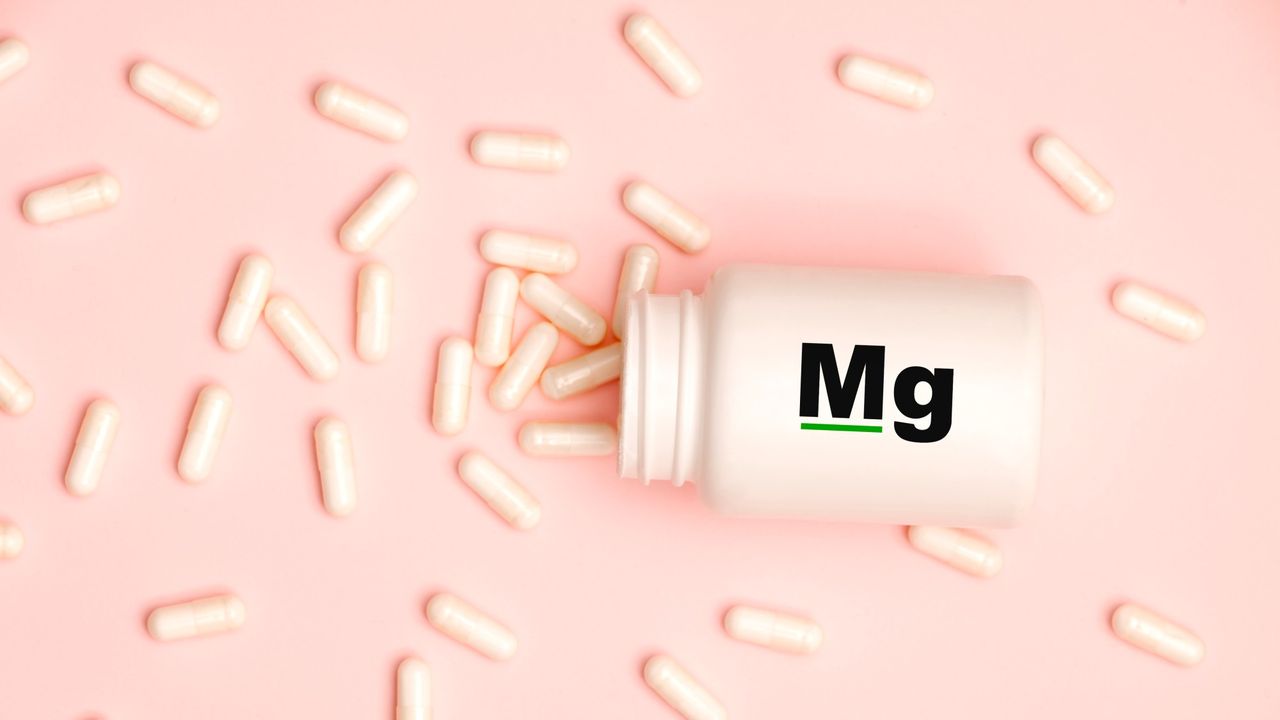
    Magnesium supplements have gone viral in social media wellness circles. The mineral is the “key ingredient in #sleepygirlmocktails”, in which a powder is “stirred into tart cherry juice and prebiotic soda”, creating a “wellness cocktail for anxious millennials”, said Wired. And some people are “popping magnesium glycinate before bed instead of melatonin”, because it “allegedly cures insomnia, constipation and existential dread”.

    Why is magnesium so popular?
    Magnesium is needed to “regulate our nerves, bones, immune system and blood sugar levels”, said The Independent. It’s responsible for “more than 300 biochemical reactions”, including keeping the heartbeat steady and assisting in the production of energy and protein. The body does not naturally produce magnesium, so we need to get it from food or supplements. Magnesium glycinate capsules are commonly used for sleep issues and anxiety, while magnesium citrate usage is used for constipation relief. 

    Nutrients come “in and out of vogue in our society”, a spokesperson for the US Academy of Nutrition and Dietetics told Parents. Magnesium is “having a moment right now”, perhaps because it is an “important nutrient in supporting common health concerns” including sleep, anxiety and PMS. 

    Should we be taking the supplements?
    For people struggling with “migraines, insomnia or other conditions where research suggests health benefits”, supplements may be worth trying, said Wired, but “first talk to a healthcare professional”. Otherwise, unless you have a magnesium deficiency, “supplements aren’t essential”. Instead, focus on consuming magnesium-rich foods such as legumes, leafy greens, whole grains, nuts, fruits and soy products. Dark chocolate is also a good source.

    “Western diets typically have a greater proportion of processed food, where numerous products are mostly refined”, which strips away up to 80% to 90% of the magnesium content, Louise Dye, a professor of nutrition at the University of Sheffield, told the BBC. Supplements can be risky, however. While the kidneys can eliminate excess magnesium from food, high doses from supplements can result in diarrhoea, nausea and abdominal cramping. Other symptoms may include low blood pressure, thirst, drowsiness, muscle weakness and slow or shallow breathing. Extremely high doses can lead to irregular heartbeats or even cause the heart to stop altogether, according to experts.


    QUOTE OF THE DAY

    “Because of all you, I will never walk alone.”

    Mohamed Salah pays tribute to Liverpool fans as he announces his departure from the Premier League side at the end of the season. In a video on social media, the Egyptian star striker said the club “will always be my home”.


    Poll watch

    Dissatisfaction with the NHS has fallen from 59% in 2024 to 51% last year, the biggest drop since 1998, according to an analysis by The King’s Fund and Nuffield Trust. The latest British Social Attitudes survey found that 26% of 3,464 adults polled were satisfied with how the health service runs, a 5% year-on-year increase.


    TALKING POINT

    Matt Brittin: the man tasked with saving the BBC

    There are three “all-time difficult gigs”, said Jonathan Maitland in The Spectator: prime minister, England football manager and director-general of the BBC. The final role may just be “The Most Impossible In The World”. And unlike the other two, there are no “potential big wins”, only “potential catastrophes”.

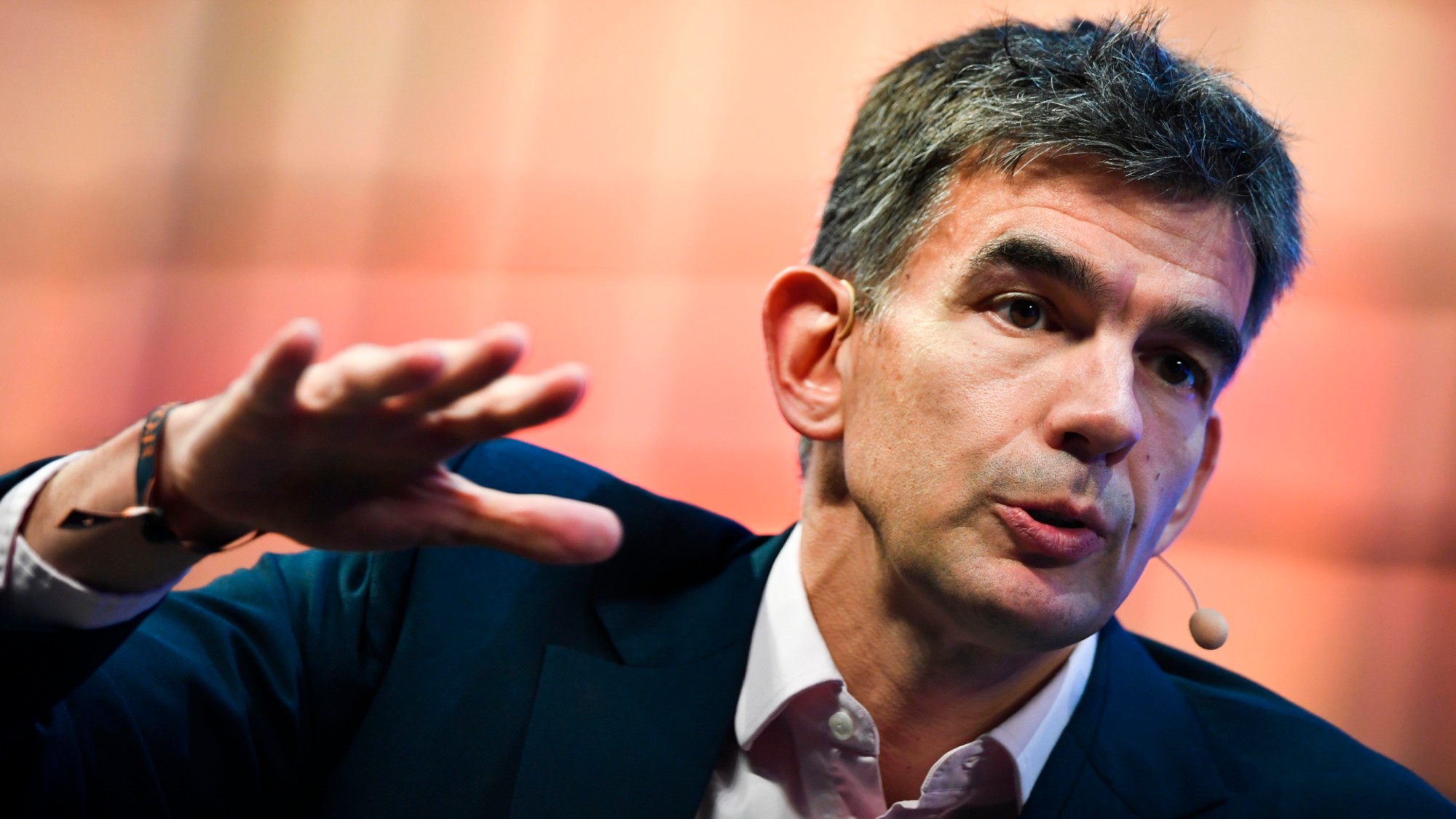
    Now, the next person to be handed the poisoned chalice has been named: Matt Brittin. The former president of Google in Europe, the Middle East and Africa, who is also a former Great Britain rowing bronze medallist, is set to take the reins following Tim Davie’s resignation. 

    ‘Knows diddly squat’
    Just what the BBC doesn’t need, another leftie, said Robin Aitken in The Telegraph. Brittin was appointed non-executive director of The Guardian Media Group last year. Twenty years ago, he was director of strategy and digital at The Mirror. You don’t end up in senior positions at Britain’s leftist publications without sharing “left-wing sympathies yourself”. Given that government-commissioned research by Ipsos found last year that 52% of people don’t trust the BBC to be impartial, that should have “counted heavily against him”.

    The appointment is “baffling to the point of idiocy”, said Jawad Iqbal in The Times. The BBC is “besieged” by “seemingly endless rows”. The “root cause” of every crisis is its journalism and programming – things that Brittin “knows diddly squat about”. The board seems to think the answer to this “calamitous” run is to give control to a “tech bro” who, just like Davie, has “no relevant broadcasting experience”.

    ‘Naturally competitive and steely’
    People within Google have “only good things to say about Brittin”, said the BBC’s culture and media editor Katie Razzall. They describe him as an “inspirational leader and a great team player”, and have “no concerns” about his lack of editorial or broadcasting experience.

    Brittin always seems “positive and cheerful”, said Anne McElvoy in The Independent, and certainly “less arrogant” than the stereotypical tech bro. That might be one reason he impressed the BBC’s board, “browbeaten after an annus horribilis”. As a former champion rower, he is also “naturally competitive and steely”. But the challenges aren’t abating. Brittin won the job from a “depleted field” from which “many industry players absented themselves”. As one leading broadcast figure reportedly said, “the pay is not that good for the blood pressure damage”.


    Good day 🎖️

    … for bravery and kindness, as a man who stopped a hospital bomber by offering him sympathy and a hug received a George Medal today. Nathan Newby was a patient at St James’s Hospital in Leeds in 2023 when he talked the would-be attacker out of blowing up the maternity wing after noticing that he looked anxious and agitated.


    Bad day 📱

    … for Argos, which is facing a backlash from parents and campaigners for selling a wooden “influencer roleplay set” aimed at toddlers. Critics claim the £15 kit, which includes a tripod stand, smartphone, tablet and microphone, encourages young children to go “chasing attention” online.


    PICTURE OF THE DAY

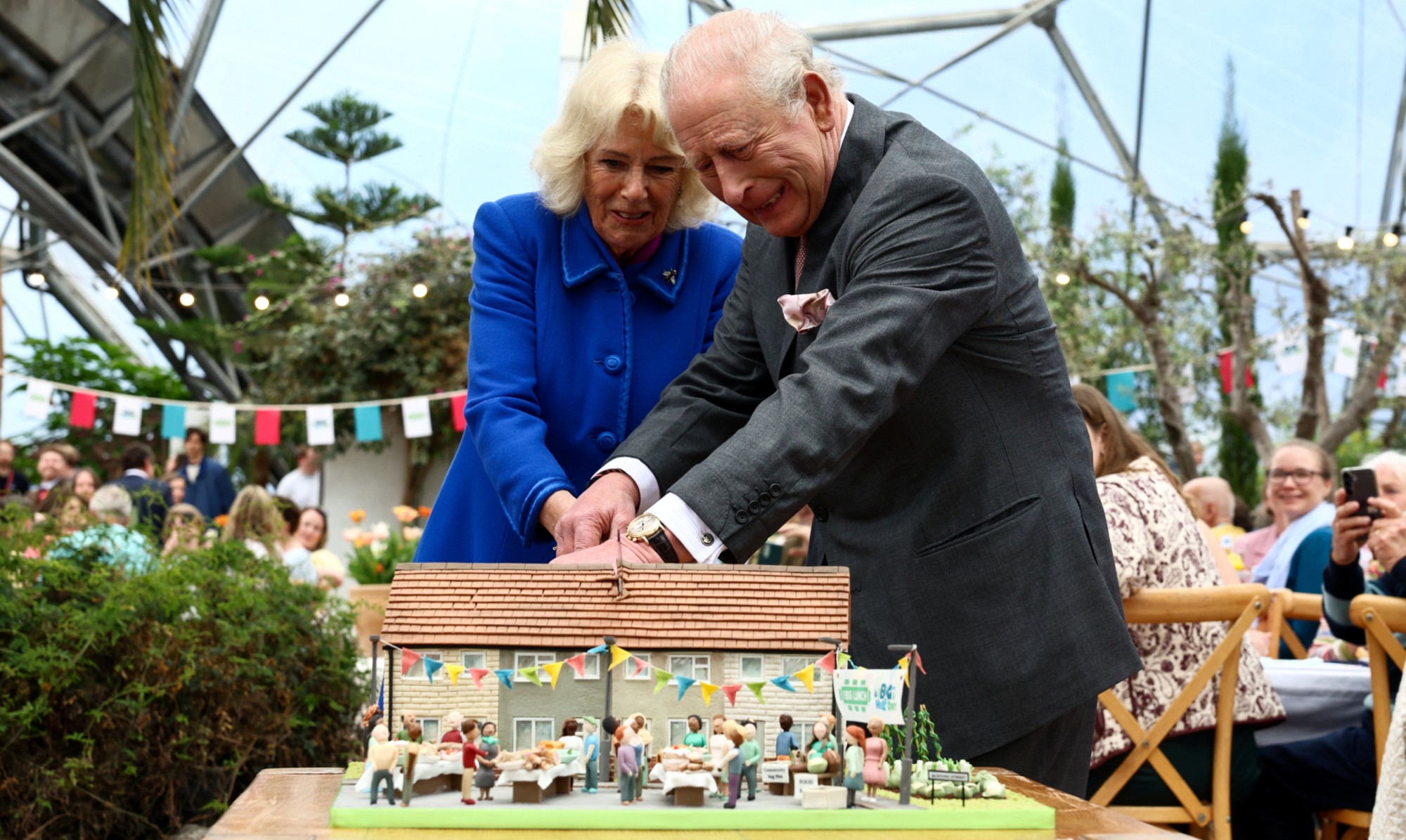
    A cut above

    King Charles and Queen Camilla slice into a street party-themed cake at Cornwall’s Eden Project. The royals launched The Big Lunch and The Big Help Out, a national celebration of community taking place in June, during a visit to mark the ecological centre’s 25th anniversary.

    Toby Shepheard / WPA Pool / Getty Images


    Puzzles

    Guess the number

    Try The Week’s daily number challenge in our puzzles and quizzes section

    Play here


    THE WEEK RECOMMENDS

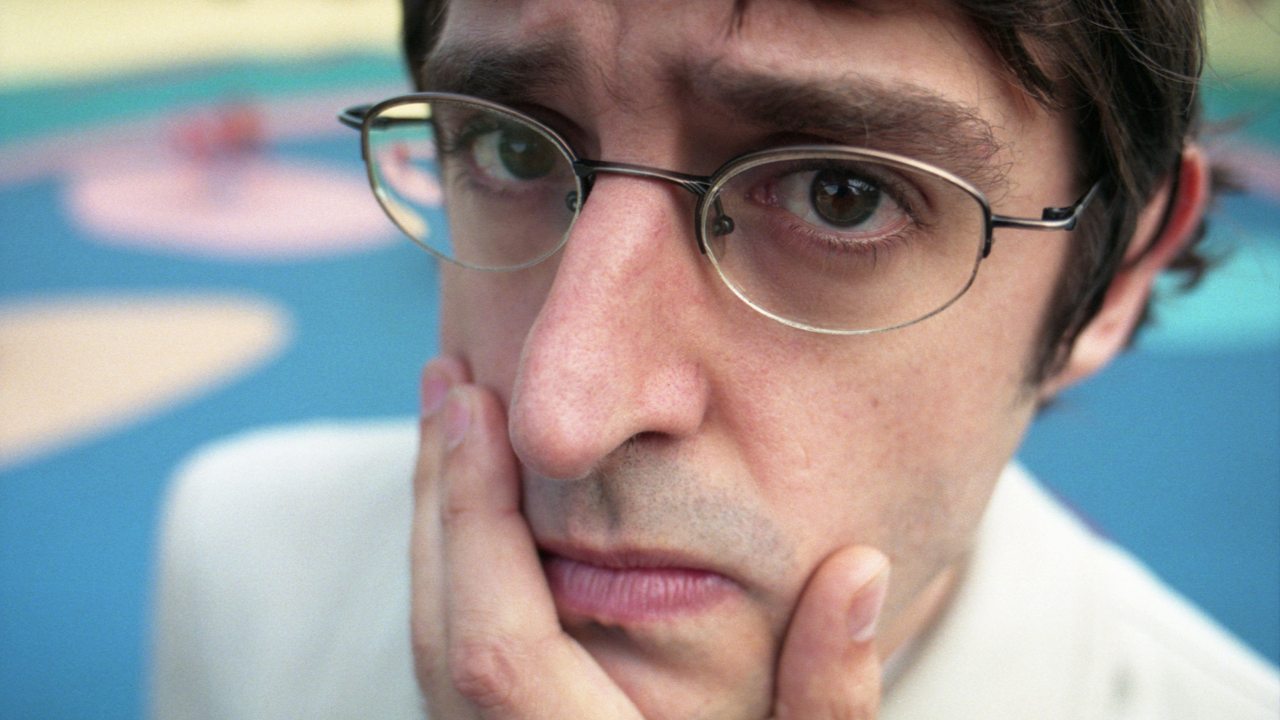
    Must-watch Louis Theroux documentaries

    Louis Theroux is back with a deep dive into the shadowy world of online misogyny. His latest documentary, “Inside the Manosphere”, has met with mixed reviews. Whatever your opinion, Theroux has an impressive back catalogue of documentaries, in which he tackles a wide range of thorny topics with his signature faux naivety and awkward charm. Here are some of the best.

    The Most Hated Family in America (2007)
    Before the explosion of “endless true crime and cult documentaries”, this “jaw-dropping” film about a “family church in Kansas who love to picket the funerals of dead soldiers” caused quite a stir, said The Guardian. In it, Theroux meets a family at the heart of the Westboro Baptist Church – a virulently homophobic group known for its hateful protests.

    Extreme Love: Dementia (2012)
    This “heart-wrenching” documentary sees Theroux travel to Phoenix, Arizona, to spend time at a residential institution for those suffering from dementia, said The Standard. During his visit, he meets not only the patients but also the families “coming to terms with losing one version of their loved ones, and getting used to another”. It’s one of his “sweetest” and most tender films, delving into the pain of the people whose lives are impacted by the cruel disease.

    Drinking to Oblivion (2016)
    In this “staggeringly moving watch”, Theroux embeds himself in the specialist liver centre at King’s College Hospital, London, where he meets patients whose “alcoholism is so severe that it has put them at death’s door”, said The Independent. It’s an “astonishing film that gives a face to an addiction suffered by half a million people in England”.


    Statistic of the day

    $375 million: How much Meta must pay in civil penalties after a New Mexico jury found that the tech giant knowingly harmed children’s mental health and enabled child sexual exploitation on its platforms. The trial marks the first time a jury has ruled on such claims against the $1.5 trillion company, which is facing a wave of similar lawsuits.


    instant opinion

    Today’s best commentary

    Starmer’s press tormentors are merciless. He either needs to fight back or bypass them
    Jane Martinson in The Guardian
    It “was striking” how the press attacked Keir Starmer for refusing “to follow a US president blindly into war”, writes Jane Martinson, but the hostility has “been building” since the election. “Labour prime ministers have rarely been popular in news organisations owned by wealthy men”, and “the media are never going to appreciate a man whose soundbites sound wooden”. Starmer “needs better stories to counter” the negativity, and “a cannier plan to make sure the public sees and hears” them.

    The world needs JD Vance right now
    James Ball in The i Paper
    The Iran war needs to end, “and soon”, writes James Ball. Should the US vice president lead negotiations with Tehran, he might be our “best chance”. J.D. Vance knows that the “Maga base hates overseas conflict” and that he has “no hope of being selected as the Republican nominee for president” if the war drags on. He’s “almost nobody’s idea of a hero”, but we are in “the uncomfortable and unfamiliar position of rooting for his success”.

    Abortion numbers are soaring – and that is not a sign of a healthy society
    Annabel Denham in The Telegraph
    Britain’s fertility rate is “cratering”, termination rates are “historically high” and the “upcoming decriminalisation of abortion” may make things worse, writes Annabel Denham. While the cost-of-living crisis has made “starting or expanding a family more daunting”, there’s an “uncomfortable possibility that abortion has morphed from a last resort to the first line of defence”. “Sex is cheap entertainment in a miserable world, but with consequences.” We mustn’t “pretend those consequences don’t exist”.


    word of the day

    Cathedra

    Latin for chair. Sarah Mullally made history today by taking her seat in two special chairs in Canterbury Cathedral. In a service attended by Keir Starmer and the Prince and Princess of Wales, Mullally was “installed” on the Quire Cathedra and then the St Augustine Cathedra as she officially became the first female Archbishop of Canterbury and leader of the Church of England.


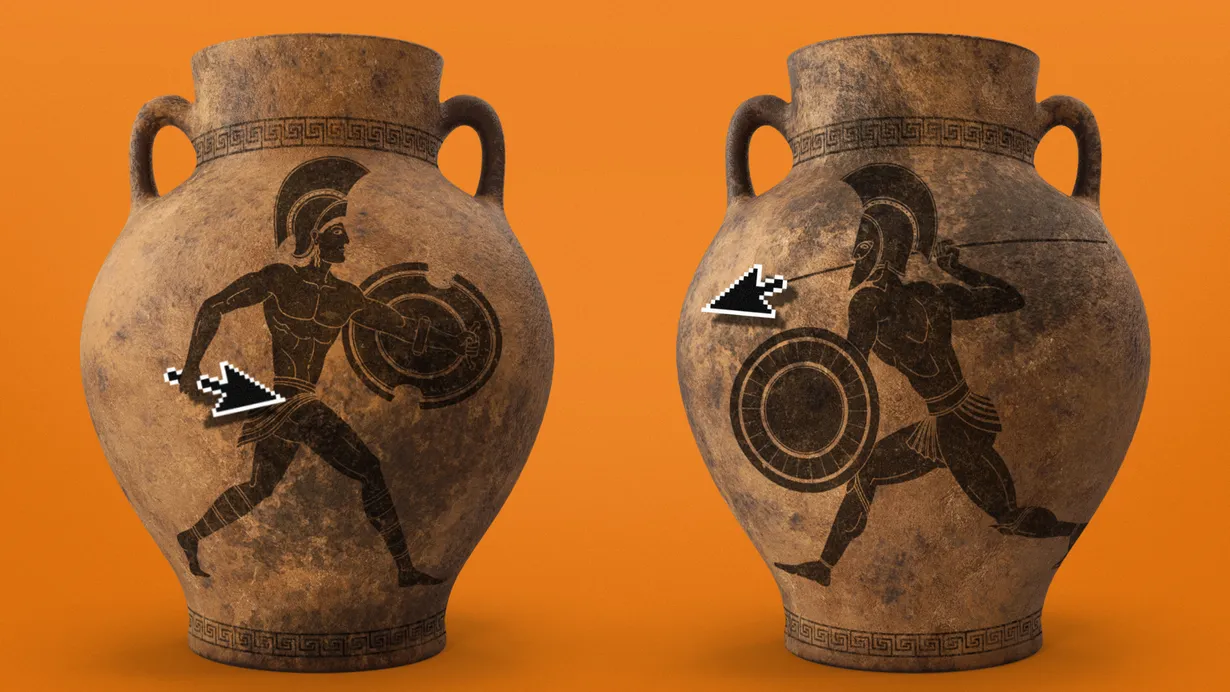
    Evening Review was written and edited by Hollie Clemence, Jamie Timson, Elliott Goat, Theara Coleman, Harriet Marsden, Chas Newkey-Burden, Irenie Forshaw, Helen Brown, Adrienne Wyper and Kari Wilkin, with illustration from Stephen Kelly.

    Image credits, from top: illustrated by Stephen Kelly / Getty Images; Gece33 / Getty Images; Patricia de Melo Moreira / AFP / Getty Images; Toby Shepheard / WPA Pool / Getty Images; Martin Godwin / Getty Images

    Morning Report and Evening Review were named Newsletter of the Year at the Publisher Newsletter Awards 2025
     

    Recent editions

    • Evening Review

      Iran war triggers energy crisis

    • Morning Report

      Trump’s uncertain Iran offramp negotiations

    • Evening Review

      AI warfare in Iran

    VIEW ALL
    TheWeek
    • About Us
    • Contact Future's experts
    • Terms and Conditions
    • Privacy Policy
    • Cookie Policy
    • Advertise With Us
    • FAQ
    Add as a preferred source on Google Add as a preferred source on Google

    The Week is part of Future US Inc, an international media group and leading digital publisher. Visit our corporate site.

    © Future US, Inc. Full 7th Floor, 130 West 42nd Street, New York, NY 10036.