The Week The Week
flag of US
US
flag of UK
UK
https://cdn.mos.cms.futurecdn.net/flexiimages/jacafc5zvs1692883516.jpg

SUBSCRIBE & SAVE

Less than $3 per week

Sign in
  • View Profile
  • Sign out
  • The Explainer
  • The Week Recommends
  • Newsletters
  • Cartoons
  • From the Magazine
  • The Week Junior
  • Student Offers
  • More
    • Politics
    • World News
    • Business
    • Health
    • Science
    • Food & Drink
    • Travel
    • Culture
    • History
    • Personal Finance
    • Puzzles
    • Photos
    • The Blend
    • All Categories
  • Newsletter sign up Newsletter
  • The Week Evening Review
    Oil shock, ICE at the airport, and how AI has reshaped gaming

     
    TODAY’S BIG QUESTION

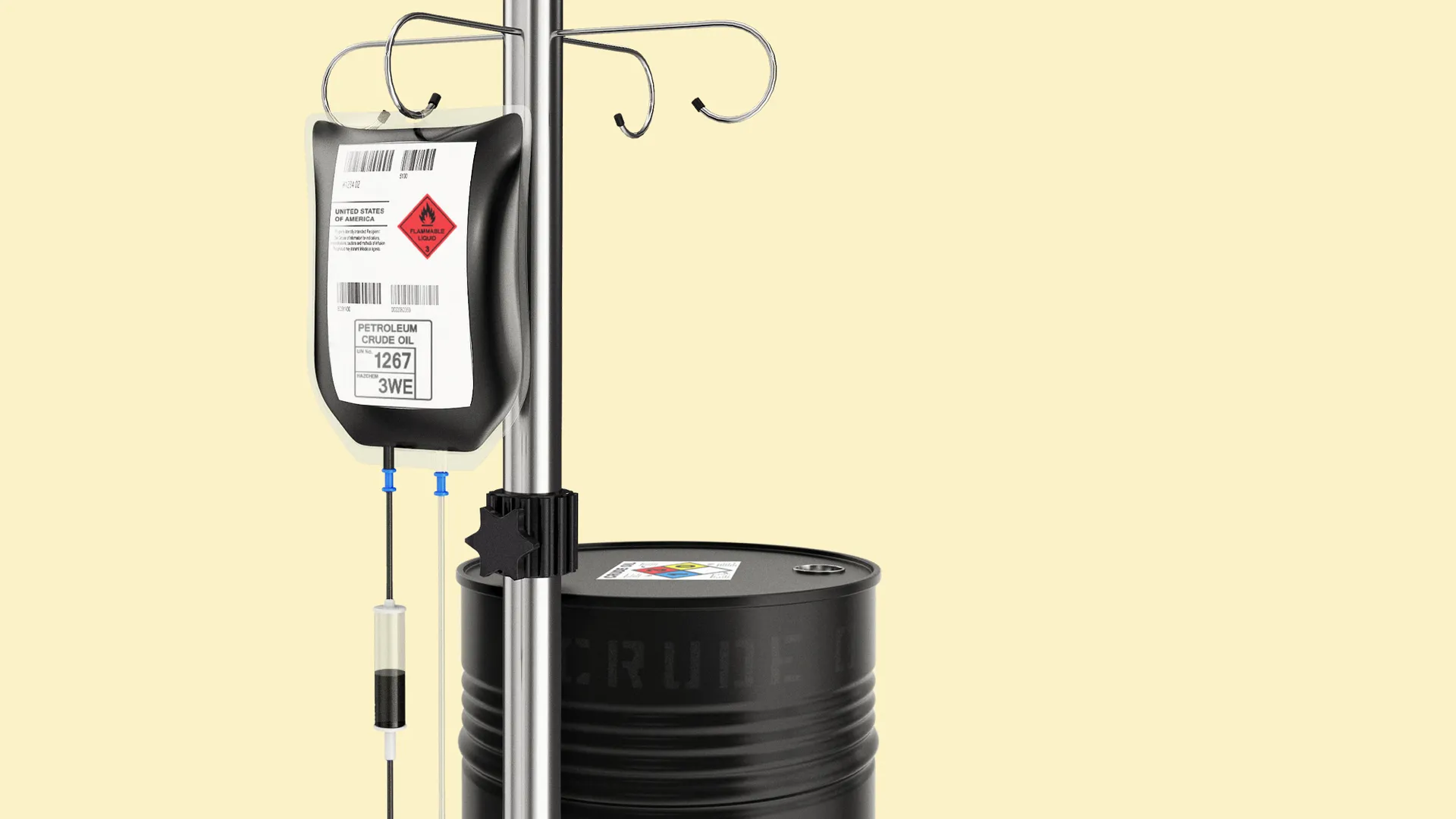
    Will the Iran war end oil dependence?

    President Donald Trump has worked to steer U.S. energy policy away from wind and solar and back to fossil fuels. But the war against Iran is revealing the limits of his oil-driven agenda.

    Trump’s efforts at “blocking clean energy” have left Americans “vulnerable to supply shocks caused by the war,” said The Associated Press. The president has gone “all in on fossil fuels” in his second term, expanding tax breaks for drilling and fast-tracking federal permits while repealing a government finding that climate change “endangers public health and the environment.” He even ended the tax break that subsidized electric vehicle sales. Those decisions are hurting consumers as gasoline and oil prices rise. 

    What did the commentators say?
    One result of the war will be the “acceleration of the global shift to low-carbon energy,” said the Financial Times. Americans are looking for ways to save money by “asking for quotes on home solar systems and looking up electric vehicles online,” Bill McKibben said at The New Yorker. The “good news” is that clean energy technologies like solar and wind can be purchased “more cheaply than we can buy oil.” Americans who use those technologies can rely on the sun instead of the flow of oil through the Strait of Hormuz. 

    The Iraq war cost about $2 trillion. That’s the same amount it would take to build enough clean energy capacity in the U.S. to “make fossil fuels and their price swings irrelevant,” Paul Greenberg said at The New Republic. This money could pay for a “vast array of turbines and panels” across the country. And it would be more productive than waging war, which “destroys capacity of all kinds.” 

    What next?
    Oil executives have warned the White House that the war-driven energy crisis is “likely to get worse,” said The Wall Street Journal. Meanwhile, Trump continues to fight the shift to clean energy sources. His administration yesterday agreed to pay $1 billion to a French company to “abandon its plans to build wind farms off the East Coast,” said The New York Times. In return, TotalEnergies will invest the money in U.S.-based oil and gas projects.


    QUOTE OF THE DAY

    ‘You are also putting yourself into a position that when you pass, people are going to treat it like Mardi Gras in New Orleans.’

    Radio host Charlamagne Tha God, on “The Breakfast Club,” to Trump after the president said, “Good, I’m glad he’s dead,” in a Truth Social Post, about the death of Robert Mueller. The former FBI director oversaw a criminal investigation into Trump’s 2016 presidential campaign and Russian interference. 


    talking points

    Shutdown becomes showdown with ICE at airports

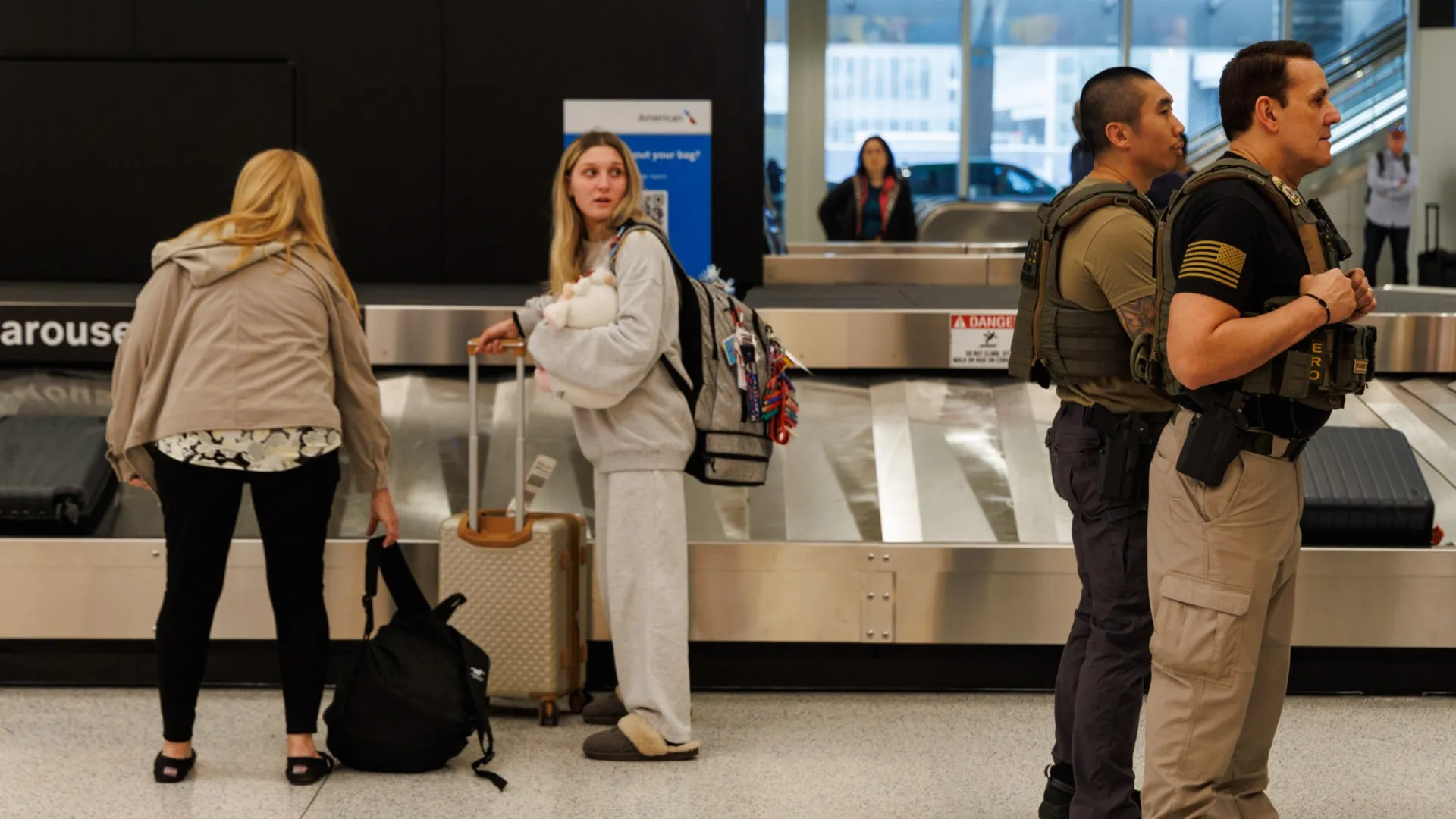
    After the White House dispatched squads of Immigration and Customs Enforcement troops to at least 13 airports around the country, thousands of commuters this week are coming face-to-face with the Trump administration’s anti-immigration push. And with the agency’s undefined remit and documented penchant for aggression, its presence is a Rorschach test for attitudes on the regime’s militarized approach to law enforcement.

    ‘Political, publicity action, not a practical solution’
    “Between 100 and 150 ICE officers” have been sent to more than a dozen airports across the country, said The New York Times. But it’s “unclear” if they are “helping or exacerbating long security lines” that have grown during the Department of Homeland Security shutdown. 

    “I have no idea how they can contribute at an airport unless it was for intimidation purposes,” said Aaron Vazquez, a TSA lead transportation security officer at San Diego International Airport and an airport steward for the local branch of the American Federation of Government Employees union, to KPBS. “What are they going to do, find somebody and shoot them?

    ICE’s stationing in American airports, beyond any potential advantage to security enforcement, is “likely a tactical move” designed to “up the pressure on Democrats in Congress” who are blocking Department of Homeland Security funds, in part over ICE’s conduct in Minnesota and Chicago, said New York magazine. Democrats have “condemned” ICE at airports, so it’s not certain that deployment will “move the needle as funding negotiations continue.”

    ‘Would have been the National Guard’
    Congressional Democrats want to use long lines and travel delays to aid in their DHS negotiations, said Transportation Secretary Sean Duffy on ABC’s “This Week.” The White House’s deployment of immigration forces to airports will “take that leverage away and not make the American people suffer.” If the administration hadn’t sent ICE, “it would have been the National Guard," said Puerto Rico’s Republican Governor Jenniffer González Colón at a press conference.

    Still, some White House supporters have expressed anxieties about the plan. The viability of ICE in airports depends on “whether or not logistically you can get these guys into those places," said Sen. Mike Rounds (R-S.D.) at The Hill, and "get them up to speed."


    Statistic of the day

    $200,000: The production cost that taxpayers shelled out for an ad featuring former Homeland Security Secretary Kristi Noem riding around Mount Rushmore on horseback and urging undocumented migrants to leave the U.S., according to Democratic lawmakers. The cost included $20,000 on horse rentals and $3,800 on hair and makeup.


    IN THE SPOTLIGHT

    How AI is warping the video game industry

    Artificial intelligence has swept through the tech industry, video games included. While many industry heads are declaring AI the wave of the future, so far, integrating AI into gaming has had a rough start. And it’s getting pushback from both developers and gaming enthusiasts.

    ‘RAMaggedon,’ job loss and stunted creativity
    The video game industry reached unprecedented heights during the pandemic, but then artificial intelligence “crept up behind it,” said Wired. The industry proliferation of AI is “already accelerating job loss and cheapening the work of developers at studios.”

    One of the largest problems gaming faces is the global shortage of random-access memory, a dearth referred to as RAMaggedon. Data centers’ need to run AI has “siphoned RAM from the industry,” said Wired. The costs of hardware required for consoles are augmented, leading to higher prices for existing systems and stalled releases of new ones. 

    Gaming is the “only mass media entertainment where the creative ceiling is limited by consumer hardware,” Gene Park, a video game critic at The Washington Post, said to Wired. If consumers can't afford or access tech like sufficient RAM, the “innovation will slow down.” 

    Mixed feelings
    Some gaming executives are pro-AI integration. It’s shocking and “sad” that the industry hasn’t embraced generative AI, said Moritz Baier-Lentz, the head of gaming at Lightspeed Venture Partners, during the recent Game Developers Conference, per PC Gamer. Anti-AI game developers are “demonizing” a “marvelous new technology.” 

    Developers, unlike some executives, do not seem as sure about AI, though many of them are already using it. Overall, 36% of the game developers surveyed for the 2026 State of the Game Industry Report used generative AI, with business professionals and upper management more likely to use it than rank-and-file developers. This year, 52% of developers think generative AI is hurting the game industry, up from 30% last year. And only 7% believe it has a positive impact.

    How the video game industry navigates this issue could influence companies in other sectors, said Nicole Greene, an AI industry analyst, to the Post. Gamers are a “passionate consumer group. They don’t want to go in and see cheap AI backgrounds because a company wanted to cut costs.”


    Good day 🐍

    … for tackling obesity. A molecule that spikes in the blood of pythons after they eat could pave the way for a new class of weight-loss drugs that could have a similar effect as GLP-1s like Ozempic and Wegovy, according to a study published in the journal Nature Metabolism. When the python metabolite was given to obese mice, they shunned food and rapidly lost weight.


    Bad day 🐕

    … for designer dogs. Compared to their purebred relatives, specially crossbred dogs are more likely to exhibit problem behaviors, according to research from the Royal Veterinary College. Labradoodles, cockapoos and the like were more aggressive and less obedient than the breeds from which they are derived, based on the data of 3,424 crossbreeds and 5,978 purebreds.


    Picture of the day

    Look of the season

    A dog in a pet stroller takes in the view at Washington, D.C.’s Tidal Basin during the city’s National Cherry Blossom Festival. The flowering trees are in the “puffy white” stage that precedes full bloom, expected next week.
    Heather Diehl / Getty Images


    Puzzles

    Daily sudoku

    Challenge yourself with The Week’s daily sudoku, part of our puzzles section, which also includes guess the number

    Play here


    The Week recommends

    Spring’s very best cookbooks

    Spring is one of the year’s stacked seasons for cookbooks. In 2026, new releases include an homage to Southern cooking by way of both Emancipation and China, plus a regional exploration of Lebanese food. Get excited, get curious, just get cooking.

    ‘Down South + East: A Chinese American Cookbook’
    Chef-author Ron Hsu, of Atlanta’s Lazy Betty, “so seamlessly blends Chinese cuisine with classic Southern dishes” in his book that they “seem almost destined to be paired together,” said The Kitchn. Banana pudding wafts with the green vanilla notes of pandan. Soy sauce, Maggi seasoning, daikon and shiitake mushrooms bring the pot roast into new territory, and Chinese eggplant is coated in cornmeal before frying. (out now, $40, Abrams)

    ‘Lebanon: Cooking the Foods of My Homeland’
    Food-writing legend Anissa Helou was born in Lebanon and focused her first book, “Lebanese Cuisine,” on the dishes her mother cooked. This book reaches across the nation to showcase a variety of regional dishes. Helou “came to look at the food of my own country afresh, realizing that it’s far more fascinating to view a cuisine through a regional rather than a national lens,” she said in her book. (out now, $40, HarperCollins)

    ‘The Taste of Country Cooking’
    “The most beloved Southern cookbook of all time,” said the press materials for this 50th anniversary edition of Edna Lewis’ 1976 classic, and it’s no exaggeration. “Country Cooking” teaches Americans not steeped in the traditions of Black Virginian cooking how to prepare green tomato preserves, pan-fried chicken and her style of biscuits. Those in the know have long cherished their copies. (May 5, $40, Knopf)

    Read more


    Poll watch

    More than 3 in 5 young conservatives (61%) support the war, compared with 24% who oppose it, according to a survey by Schoen Cooperman Research of 350 Americans under 30 who identify as conservative. This group is more supportive than the public at large, with 44% supporting and 41% opposing.


    INSTANT OPINION

    Today’s best commentary

    ‘Israel’s displacement of civilians in Lebanon is a possible war crime’
    Nadia Hardman at Al Jazeera
    Israel’s “attacks in Lebanon — and the threat of more to come — have caused more than a million people to flee their homes,” but the “laws of war stipulate that civilians cannot be forced to leave their homes unless imperative military reasons dictate,” says Nadia Hardman. The “evacuation must be temporary, and people must be allowed to return once the hostilities end. In short, war is not a license to expel people from their land.”

    ‘Affordable housing is possible if we stop ignoring the obvious’
    Sam Raus at USA Today
    American cities are “short on housing yet full of unused space,” says Sam Raus. With “nearly a quarter of the workforce going remote, and no amount of return-to-office mandates likely to change this trend, it’s time for cities to repurpose these empty buildings to meet the demands of the moment.” Turning “cubicles into apartment complexes for those who still live in cities would require state and local politicians approaching zoning policies, building codes and taxation with fresh eyes.”

    ‘With Tina Fey as first host, “SNL UK” kicked off with familiar skits and very British humor’
    Robert Lloyd at the Los Angeles Times
    After “50 years of being practically synonymous with New York City, ‘Saturday Night Live’ has opened the door to London with ‘Saturday Night Live U.K.,’ following in the steps of ‘Law & Order U.K.’ and possibly nothing else,” says Robert Lloyd. Of “all the cities in the world that might conceivably replicate the spirit of the NBC original, the British capital, with its urban dynamism, media concentration and 20,000 comedians, feels like the obvious, and perhaps only, choice.”


    WORD OF THE DAY

    matrescence

    Coined by anthropologist Dana Raphael in 1973 to describe the physical, psychological and emotional process of becoming a mother. Peanut, a social networking app for moms, is campaigning to add “matrescence” to the dictionary. The process is the “most profound neurological change an adult human brain will ever go through,” said Peanut President Michelle Battersby.


    Evening Review was written and edited by Theara Coleman, Nadia Croes, Scott Hocker, Anya Jaremko-Greenwold, Justin Klawans, Joel Mathis and Rafi Schwartz, with illustrations by Stephen Kelly.

    Image credits, from top: Illustration by Stephen Kelly / Shutterstock / Getty Images; Matthew Hoen / NurPhoto / Getty Images; Sumeth Charee / Getty Images; Abrams Books / HarperCollins / Penguin Random House
     

    Recent editions

    • Morning Report

      Trump’s uncertain Iran offramp negotiations

    • Evening Review

      AI warfare in Iran

    • Morning Report

      Trump and Iran ramp up power threats

    VIEW ALL
    TheWeek
    • About Us
    • Contact Future's experts
    • Terms and Conditions
    • Privacy Policy
    • Cookie Policy
    • Advertise With Us
    • FAQ
    Add as a preferred source on Google Add as a preferred source on Google

    The Week is part of Future US Inc, an international media group and leading digital publisher. Visit our corporate site.

    © Future US, Inc. Full 7th Floor, 130 West 42nd Street, New York, NY 10036.