The Week The Week
flag of US
US
flag of UK
UK
https://cdn.mos.cms.futurecdn.net/flexiimages/jacafc5zvs1692883516.jpg

SUBSCRIBE & SAVE

Less than $3 per week

Sign in
  • View Profile
  • Sign out
  • The Explainer
  • The Week Recommends
  • Newsletters
  • Cartoons
  • From the Magazine
  • The Week Junior
  • Student Offers
  • More
    • Politics
    • World News
    • Business
    • Health
    • Science
    • Food & Drink
    • Travel
    • Culture
    • History
    • Personal Finance
    • Puzzles
    • Photos
    • The Blend
    • All Categories
  • Newsletter sign up Newsletter
  • The Week Evening Review
    AI-powered battlefields, a farmworkers’ reckoning, and the magnesium trend

     
    TODAY’S BIG QUESTION

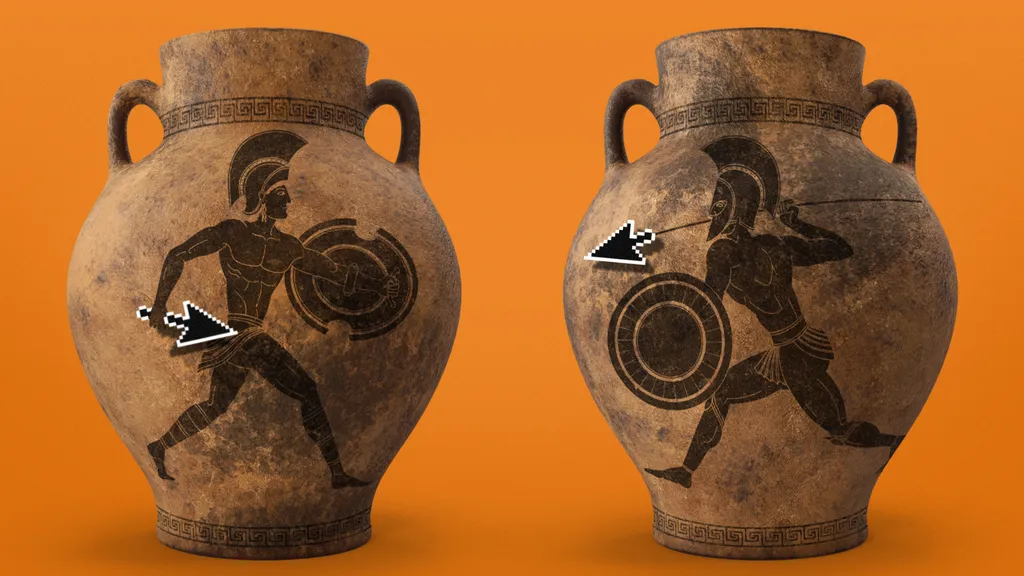
    Are we in a new era of battlefield AI?

    The Iran war is unlike any other conflict of the modern era, marked by shifting justifications, mysterious end goals and growing friction between the two primary aggressors, the U.S. and Israel. Now, a new generation of artificial intelligence tools are further reshaping the way both countries approach and execute their military operations. 

    What did the commentators say?
    The Pentagon is “leveraging a variety of advanced AI tools” in the war on Iran to help “sift through vast amounts of data in seconds,” said CentCom commander Adm. Brad Cooper in a video on social media. AI systems can offer targeting recommendations “much quicker in some ways than the speed of thought,” said Newcastle University lecturer Craig Jones at The Guardian. Battlefield AI programs from the MAGA-aligned software company Palantir can “identify and prioritize targets, recommend weaponry” and account for “stockpiles and previous performance against similar targets,” said The Guardian. Palantir even has access to “automated reasoning to evaluate legal grounds for a strike.”

    At the heart of the Pentagon’s shift to AI-animated warfare is Palantir’s integrated use of Claude, the AI platform from Anthropic. Claude was instrumental in the kidnapping of Venezuelan president Nicolás Maduro, but this marks the “first time it has been used in major war operations,” The Washington Post said. 

    AI warfare isn’t “confined to physical territory,” said The New Arab. Iran has deployed “AI-generated disinformation,” as well as “manipulated images and videos designed to create false impressions of events on the ground.” American and Israeli forces have launched AI systems of their own to “detect and counter manipulation attempts,” creating a “multi-dimensional battlefield” wherein information control is as “strategically important as control of airspace.”

    What next?
    As AI use expands across the military, so has a commensurate effort to “focus on the protections that should govern its use,” said NBC News. This is the “next era” of warfare, said Queen Mary University professor David Leslie to The Guardian. But overreliance on AI might ultimately lead to “cognitive off-loading,” in which the human tasked with overseeing a particular operation feels “detached from its consequences” since the responsibility to “think it through” was made by a computer.


    QUOTE OF THE DAY

    ‘Donald Trump should keep his reckless mouth shut before he gets somebody killed.’

    House Minority Leader Hakeem Jeffries (D-N.Y.) on CNN’s “State of the Union,” after the president on Truth Social called the Democratic Party the “greatest enemy” the U.S. has after the “death of Iran.” In recent years, “targeted political violence has escalated,” said Politico, and political leaders have “tried to tackle the growing crisis.”


    IN THE SPOTLIGHT

    Farmworkers’ reckoning over Chavez abuse allegations 

    The fallout from The New York Times’ allegations of sexual assault against Cesar Chavez was swift and wide-ranging. Now, some in the industry are hoping the revelations about the late farm labor leader open doors for systemic changes, including reforms aimed at advancing the rights of women farmworkers.

    ‘Opportunity for those without scruples’
    The sexual abuse claims, largely made by Chavez’s co-labor leader, Dolores Huerta, represent a fall from grace for a beloved figure in the Latino community. They “raise a difficult question: How do you reckon with the man without losing the movement?” said KCRA-TV Stockton.

    Some are concerned that the focus on Chavez could “leave today’s farmworkers more vulnerable,” farmworker advocate Luis Magaña said to KCRA, because people will be paying less attention to the bigger picture and more on the specifics of the allegations. The moment to have a conversation about this issue of sexual abuse among farmworkers documented in the Times exposé is “overdue.”

    ‘Engage and support our community’
    Huerta, now 95, insists that her allegations against Chavez should not downplay the victories made by labor unions. “We must continue to engage and support our community, which needs advocacy and activism now more than ever,” she said in a statement.

    Many say that the current advocacy for women’s rights in the fields, regardless of Chavez, doesn’t go far enough. Do women feel “safe at work”? Olga Miranda, the president of SEIU Local 87, a union for San Francisco service workers, said to The San Francisco Standard. The floodgates will open because of the allegations, as there are women who will “stand up and speak out and say, ‘I’m not gonna take your shit.’”

    The discourse should shift from “one man to the conditions farmworkers still face today, including a reality many say has long gone unheard: sexual violence against women in the fields,” said KCRA. Many women in these environments, Magaña told KCRA, “stay silent, not for a cause but out of the need to survive.”


    Statistic of the day

    $20 billion-$25 billion: The estimated cost of building Elon Musk’s Terafab, a chip factory designed to consolidate every stage of semiconductor production under one roof. The joint venture between Tesla and SpaceX will be the “most epic chip building exercise in history by far,” he said on X.


    THE EXPLAINER

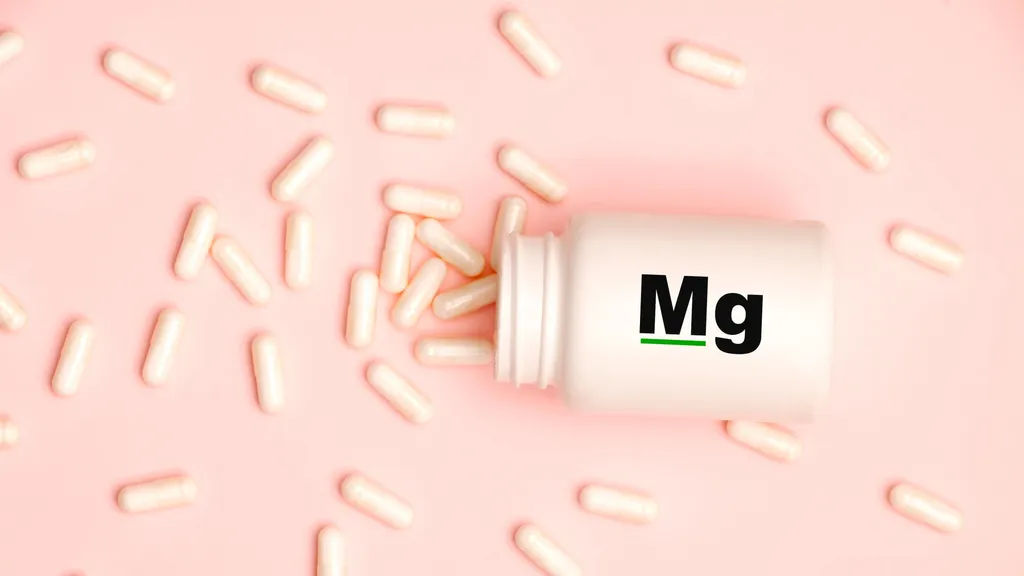
    Magnesium is trending but do we really need it?

    This super mineral is crucial for everyday health. But while many are taking it in supplement form in accordance with the latest social media trend, experts say there’s a healthier way of getting the recommended amount in your diet.

    Why is it so popular?
    It’s needed to “regulate our nerves, bones, immune system and blood sugar levels,” said The Independent. It’s responsible for “more than 300 biochemical reactions” in the body, including keeping the heartbeat steady and assisting in the production of energy and protein. Despite its abundance, the body does not naturally produce magnesium, so we need to get the mineral from food or supplements.

    In the past few years, magnesium supplements have gone viral in social media wellness circles. Many people are “popping magnesium glycinate before bed instead of melatonin,” said Wired. Last year, Google searches for “which magnesium is best for sleep” and “which magnesium makes you poop” more than doubled. While magnesium glycinate capsules are commonly used for sleep issues and anxiety, magnesium citrate is trending for constipation relief. 

    Should we be taking it?
    Magnesium supplements aren’t “essential,” said Wired, though if you are struggling with “migraines, insomnia or other conditions where research suggests health benefits,” they may be worth trying. Instead of supplements, you can focus on consuming “magnesium-rich foods” such as legumes, leafy greens, whole grains, nuts, fruits and soy products. 

    Deficiencies can be difficult to detect, said Louise Dye, a professor of nutrition and behavior at the University of Sheffield, to the BBC. Still, we are not getting enough magnesium from our food. Over the past 60 years, “intensive farming practices have caused a significant depletion of the mineral content of the soil.” 

    Too much magnesium from food “does not pose a health risk in healthy individuals because the kidneys eliminate excess amounts in the urine,” said the National Institutes of Health. But high doses from dietary supplements or medications often result in stomach upset, and extremely high doses can lead to irregular heartbeats or even cause the heart to stop altogether, according to Cedars-Sinai Medical Center.


    Good day 🐥

    … for supporting mama birds. Female birds are more likely to sing when their extended family helps with child care, according to a study published in Nature Ecology & Evolution. Birdsong is usually considered a male trait to attract partners, but avian species that have cooperative breeding are more likely to have female song.


    Bad day 📈

    … for dreaming of homeownership. The average 30-year fixed mortgage rate has risen to 6.22% — the highest level since early December. The climbing rates driving up the cost of buying a home reflect “inflation fears rippling through markets” caused by the Iran war, said CNN. Mortgage applications fell 10% last week, according to a Mortgage Bankers Association report.


    Picture of the day

    Orange alert

    Floodwater covers a Waialua neighborhood on the north shore of Oahu, Hawaii, as the state experiences its worst flooding in 20 years. Thousands have been ordered to evacuate after two consecutive storms dropped as much as 50 inches of rain, already costing about $1 billion in damages, according to officials.
    Mengshin Lin / AP Photo


    Puzzles

    Daily sudoku

    Challenge yourself with The Week’s daily sudoku, part of our puzzles section, which also includes guess the number

    Play here


    The Week recommends

    Chuckle your way through spring with these comedians

    Not a fan of concerts? That’s OK, as you can get a concert of laughs with some comedians hitting the tour circuit this spring. The season’s comedy shows star some of the biggest names in the laugh industry.

    Maria Bamford
    Bamford has been a mainstay in the comedy world for years, and now she’s back on the road with a stand-up tour taking her across the U.S. Her latest comes on the heels of her new documentary, “Paralyzed by Hope: The Maria Bamford Story,” in which the comedian depicts her battle with mental illness in a way that “remains refreshing and fully involving,” said The Hollywood Reporter. For those who want to get newly acquainted with Bamford’s comedy, the documentary is a “good opportunity to fall in love.” (through November)

    Margaret Cho
    Cho speaks her mind like few others, particularly when it comes to social and political issues. Anyone who wants a glimpse of her quick-witted commentary should visit the legend on her “Choligarchy” tour. Her current stand-up show is “all about finding laughter to address real-life issues,” Cho said to ABC6-TV Philadelphia. (through May)

    Gabriel Iglesias
    Better known by his moniker, Fluffy, Iglesias (pictured above) has taken a routine based on clean family-friendly comedy and turned it into one of the most successful stand-up careers ever. Now the master of sound effects is traversing the country on his “1976” tour, providing a “new chapter of the California native’s epic and decorated career,” said Vanyaland magazine. (through September)

    Read more


    Poll watch

    More than half of Americans (58%) think the Iran war is a “bad use” of taxpayer dollars, according to a Strength in Numbers / Verasight survey. Of 1,530 adults polled, 61% oppose military action if it causes gas prices to rise by $1 per gallon. The national average cost is now 95 cents more than it was a month ago.


    WORD OF THE DAY

    uveitis

    Inflammation of the eye’s middle tissue layer, the uvea, often caused by autoimmune disorders, infections or injuries. Tattoos anywhere on the body have been linked to uveitis driven by an immune response to the ink, which can cause vision damage, according to Australian researchers. Previously considered rare, tattoo-associated uveitis is now an increasing health issue.


    INSTANT OPINION

    Today’s best commentary

    ‘Trump’s video game war: AI, memes and a simplistic narrative have flattened the conflict in Iran’
    Nesrine Malik at The Guardian
    The war on Iran, even as it “spreads and destabilizes the Middle East and the global economy, is not real.” This is “how it’s being portrayed” by the Trump administration, says Nesrine Malik. The war is a “video game, a spectator sport, a social media festival of dunking,” and the “architects of this war have made a virtue out of stupidity.” The conflict “feels like the first of its kind in the modern age: distinctly remote and profoundly ignorant.”

    ‘Afroman: American patriot’
    Greg Lukianoff and Adam Goldstein at The Washington Post
    Rapper Afroman “demonstrated in often hilarious fashion why America’s commitment to freedom of speech is the dread of tyrants big and small,” say Greg Lukianoff and Adam Goldstein. Police officers “raided his rural Ohio home in 2022,” and Afroman “responded the way artists have responded to being wronged since time immemorial: turning it into art.” A country is “free when the citizen mocks the state actors who harmed him and the system defends his right to do it.”

    ‘Doctors should be paid to keep patients healthy’
    Ashish K. Jha and Thomas C. Tsai at The Boston Globe
    Experience “points to a promising idea that has been at the center of health care reform for more than a decade: Instead of paying doctors and hospitals for every test and procedure they perform, pay them for keeping patients healthy,” say Ashish K. Jha and Thomas C. Tsai. In this “model called value-based care, doctors and hospitals are paid based on the health outcomes they achieve and the overall cost of caring for their patients.”


    Evening Review was written and edited by Theara Coleman, Nadia Croes, Anya Jaremko-Greenwold, Justin Klawans and Rafi Schwartz with illustrations by Stephen Kelly.

    Image credits, from top: Illustration by Stephen Kelly / Shutterstock / Getty Images; Allen J. Schaben / Los Angeles Times / Getty Images; Gece33 / Getty Images; Ethan Miller / Getty Images
     

    Recent editions

    • Morning Report

      Trump and Iran ramp up power threats

    • Sunday Shortlist

      A science teacher saves the universe

    • Saturday Wrap

      A lack of homeland security?

    VIEW ALL
    TheWeek
    • About Us
    • Contact Future's experts
    • Terms and Conditions
    • Privacy Policy
    • Cookie Policy
    • Advertise With Us
    • FAQ
    Add as a preferred source on Google Add as a preferred source on Google

    The Week is part of Future US Inc, an international media group and leading digital publisher. Visit our corporate site.

    © Future US, Inc. Full 7th Floor, 130 West 42nd Street, New York, NY 10036.