The Week The Week
flag of US
US
flag of UK
UK
https://cdn.mos.cms.futurecdn.net/flexiimages/jacafc5zvs1692883516.jpg

SUBSCRIBE & SAVE

Less than $3 per week

Sign in
  • View Profile
  • Sign out
  • The Explainer
  • The Week Recommends
  • Newsletters
  • Cartoons
  • From the Magazine
  • The Week Junior
  • Student Offers
  • More
    • Politics
    • World News
    • Business
    • Health
    • Science
    • Food & Drink
    • Travel
    • Culture
    • History
    • Personal Finance
    • Puzzles
    • Photos
    • The Blend
    • All Categories
  • Newsletter sign up Newsletter
  • The Week Evening Review
    The Trump oil shock, calcio in crisis, and intertwined energy

     
    TODAY’S BIG QUESTION

    Has Trump’s unpredictability broken the oil market?

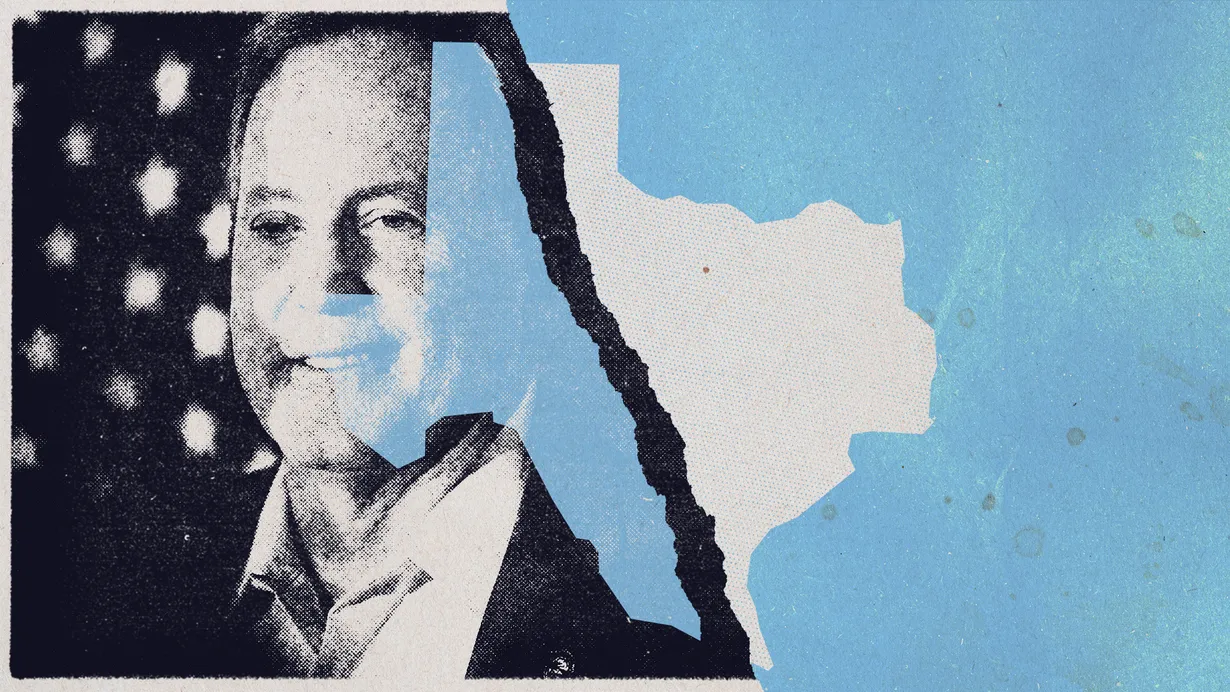
    Despite Donald Trump saying that the Iran conflict would end in “two to three weeks”, oil prices spiked last night; the markets were not soothed. “A word – or social media post” – from Trump “used to spark big moves in prices”, said the BBC. Investors would leap on “signs” that things “could escalate or come to an end”. But now traders seem “to be growing more sceptical about the value of his comments”.

    What did the commentators say?
    At the outset of the conflict, oil prices were “sensitive to Trump’s comments” but his view of the war “seems to change hour by hour”, said The Telegraph. “His stream of often contradictory statements” have made many wonder “whether they can trust the messaging” coming from the US administration, and some traders have drawn back from the market, “leaving prices increasingly untethered from reality”.

    However many solutions to the current global oil crisis Donald Trump comes up with, the oil market isn’t listening any more – “and the price of oil keeps rising”, said Matthew Lynn in The Spectator. There’s simply no point in Trump “trying to talk the price of oil back down again. It just won’t work.”

    His “Persian Taco” tactic “may have run its course”, said Eduardo Porter in The Guardian. “Making extreme threats” and then walking them back may “provide Trump with the illusion of agency” but he “no longer has control of events in Iran”. The markets are “figuring out” that it will probably be Tehran, not the US, that gets to decide when the conflict ends.

    What next?
    “It’s important to distinguish between price movements” and overall stability, said Zachary Karabell in the The Washington Post. “After nearly three weeks of this conflict”, the global financial system is “functioning without panic or alarming signs of stress”. The “smooth functioning” of the financial system, “in the face” of crises like the oil shock, “gets little attention, probably because stability is not news”. But financial institutions and governments have “improved at monitoring” risks, and that should “at least provide some relief in a world full enough of fears”.


    TALKING POINT

    Italy’s World Cup curse

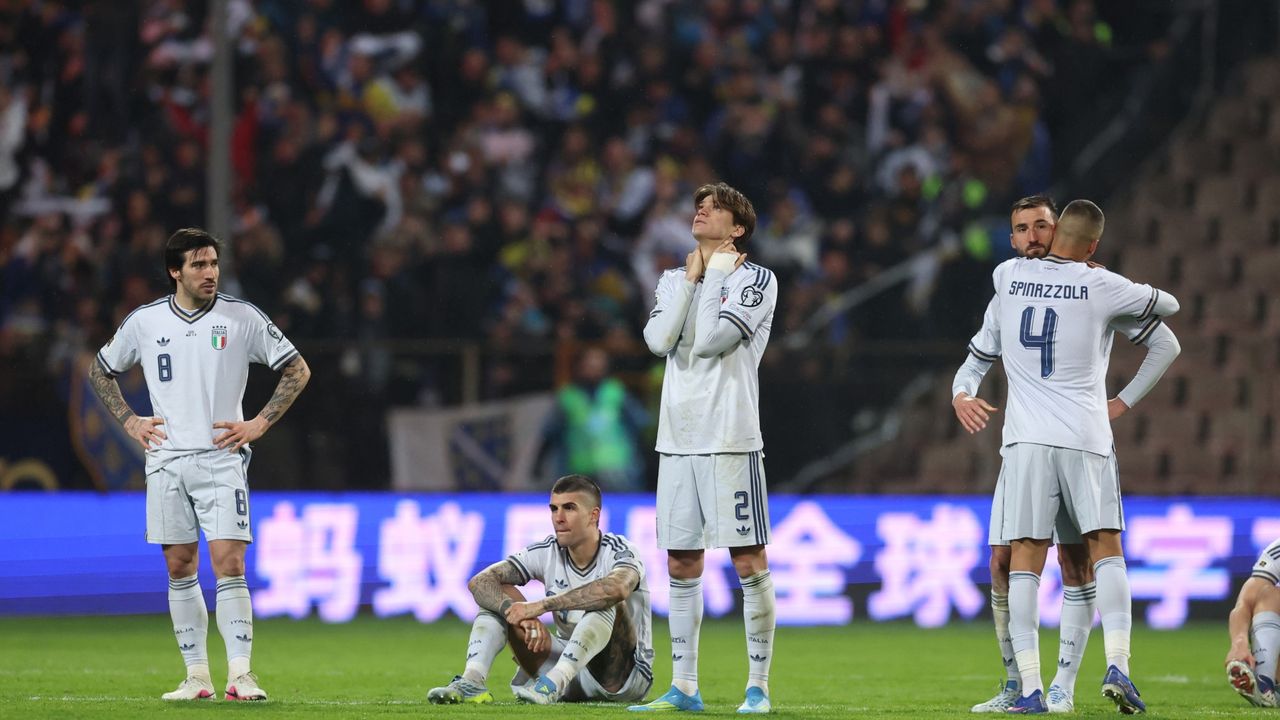
    Italy’s play-off defeat by Bosnia and Herzegovina this week means they’ve missed out on a third consecutive men’s World Cup, “prolonging a sporting nightmare for ⁠the football-mad country”, said Al Jazeera.

    “The Italian catastrophe has now lost its sense of shock,” said Luigi Garlando in Gazzetta dello Sport. “Rather than being unpredictable, it seems to be the norm.” For the first time, an “entire generation will have grown up” without seeing Italy at a World Cup.

    ‘Outrage across the country’
    Italy have won the tournament four times but are now suffering from a “World Cup curse”, according to Corriere della Sera’s front-page headline. The last time the Azzurri “actually won” a knockout match on the game’s biggest stage was “before the first iPhone was released”, said Politico.

    The play-off defeat “triggered outrage across the country”, said Al Jazeera. “It’s clear that Italian football needs to be rebuilt from the ground up,” said Italy’s sports minister Andrea Abodi. Gabriele Gravina, president of the Italian Football Federation, has now resigned.  

    ‘Lack of investment’
    Club sides are feeling the pain, too, said Sky Sports; Atalanta are the only Italian team left in the Champions League. The “lack of investment” in Serie A has seen a “dip in player quality”, with the top division “relying more and more” on older players and paying dearly for the “lack of promising Italian youth coming through”.

    The “influx” of overseas players to Italy’s top clubs in the late 1990s “came at a cost”, said the BBC, because “homegrown talents” found “opportunities” in the top flight “increasingly hard to come by”. While English Premier League clubs “benefit from ever-increasing TV deals”, and other European leagues “attract heavy investment”, Serie A has seen that type of revenue “stagnate”.

    There’s “still a chance” that Italy could end up at this summer’s World Cup, said Give Me Sport. If the Middle East conflict means Iran are not able to compete at the tournament, a last-minute spot for the Azzurri could yet open up.


    QUOTE OF THE DAY

    “Neither elegant nor up to standard.”

    Emmanuel Macron’s verdict on Donald Trump’s jibes about his marriage. Speaking yesterday in Washington, Trump joked that the French president was “still recovering from the right to the jaw”, apparently in reference to a 2025 video that appeared to show Macron’s wife, Brigitte, striking him.


    Poll watch

    Two-thirds (66%) of secondary school teachers in England say they have noticed a decline in pupils’ critical thinking as a result of using AI, according to a National Education Union poll of 9,408 members. However, 76% of the teachers polled used AI tools themselves, for daily tasks like lesson planning.


    THE EXPLAINER

    Why UK renewable energy prices are still tied to gas 

    Disruption in the energy markets caused by war in the Middle East has renewed calls for the UK government to decouple electricity prices from gas – and boost the potential of renewable energy.

    As long as electricity prices are in effect “coupled” to gas prices, consumers are “at the whims of international fossil fuel markets”, said University of Oxford researcher Hannah Ritchie on her By the Numbers newsletter. That makes it “hard to shield people from volatile changes in prices”.

    How does the current system work?
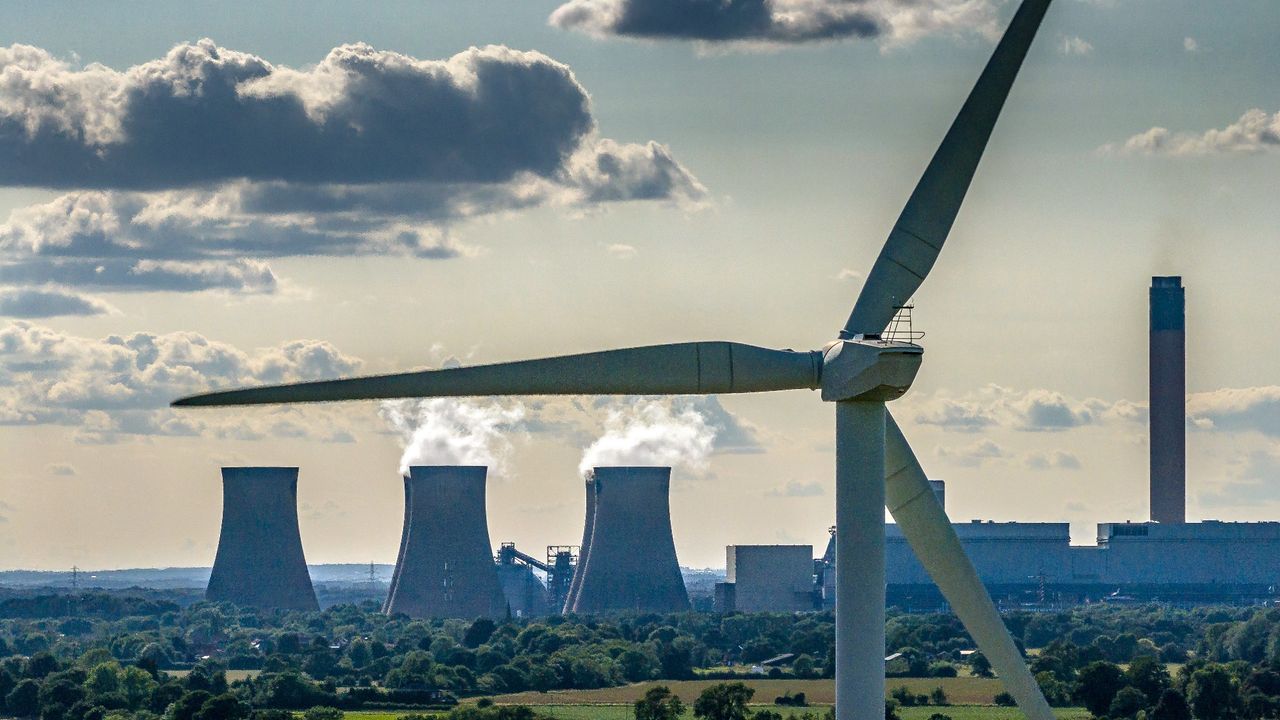
    The UK uses a “marginal pricing” system to buy electricity from the wholesale market. In this system, electricity generators effectively “make ‘bids’ to sell electricity at a particular price”, said Carbon Brief. This usually means cheaper, renewable energy gets the first bids, followed by more expensive sources, until the demand is set.

    However, all providers get paid the same prices, “set by the last, most expensive, bid used to meet demand”, said Sky News. “In the UK, this is almost always gas-fired power stations, which are typically the most expensive source needed to fill the final gap in supply.”

    That means that the cost benefits of renewables are “not properly passed on to consumers”, said Ritchie. The system disincentivises us from going green; it makes “little sense” to push for more renewables if they are not making much difference to energy bills.

    What are the alternatives?
    Decoupling electricity prices from gas could cut household bills by up to £203 a year, according to the think tank Common Wealth, said The Guardian. It proposes an alternative “single buyer model” that would remove low-carbon generators – renewables and nuclear power production – from the wholesale market and pay them “fair, fixed prices” instead. Gas would be placed in a “strategic reserve”, to be used only when renewables could not meet demand.

    Another option would be power-purchase agreements, which can have a “similar effect” to decoupling from gas, said Carbon Brief. Large energy users could sign direct contracts with energy suppliers for a fixed price. This would take some electricity out of the wholesale market, “diluting the impact of gas prices”.


    Good day 🐢

    … for Jonathan, the world’s oldest tortoise, after reports of his death were revealed to be a hoax. The governor of St Helena – where Jonathan has lived since 1882 – confirmed the aged reptile is alive and well. At the estimated age of 193, Jonathan has outlived eight British monarchs.


    Bad day 🚗

    … for Stellantis, which has issued a safety recall for 700,000 cars – including 44,000 in the UK. The car group, which owns brands including Opel-Vauxhall, Citroën and Peugeot, said a manufacturing error in some models made between 2023 and 2026 could potentially lead to overheating.


    PICTURE OF THE DAY

    For all mankind

    Nasa’s Artemis II lifts off from the Kennedy Space Center in Cape Canaveral, Florida, carrying a four-astronaut crew on their mission to the Moon – and beyond. We are going “for all humanity,” said commander Reid Wiseman after the rocket was cleared for launch.

    Mauricio Paiz / NurPhoto / Getty Images


    Puzzles

    Guess the number

    Try The Week’s daily number challenge in our puzzles and quizzes section

    Play here


    THE WEEK RECOMMENDS

    Pretty bluebell walks to put spring in your step

    Bluebells spring to life from late March to early May, carpeting Britain’s gardens and ancient woodland. This year, the mild, wet winter means some of them are already in bloom, and there are plenty of places to spot them around the country.

    Grass Wood Nature Reserve, North Yorkshire
    A short walk from the village of Grassington, this sprawling nature reserve is “one of the largest areas of broad-leaved woodland in the Yorkshire Dales”, said The Times. Come spring, “the ground is awash with bluebells”, as well as primroses, lilies of the valley and wild basil.

    Glen Finglas, Stirlingshire
    This “vast estate” in the heart of the Trossachs National Park is home to “Scotland’s biggest collection of ancient trees”, said The Guardian. At this time of year, the ground turns into a “sea of bluebells” and there is also plenty of wildlife to spot roaming through the glen, including otters, pine martens and golden eagles.

    Winkworth Arboretum, Surrey
    This spectacular woodland “comes alive with jewel-coloured flowers every spring”, said Time Out. The Azalea Steps are a real draw: the stone staircase leading down to the lake is lined with “cascading flowers” in “vibrant” shades of pink, purple and red that “burst into beautiful colour” every year.

    Ashridge Estate, Buckinghamshire
    Dotted with “stunning clusters of bluebells”, the winding woodland trail at Ashridge Estate is well worth a visit, said Country Life. Tucked into the Chiltern Hills, the idyllic spot is home to fallow deer, lesser-spotted woodpeckers and the rare Duke of Burgundy butterfly.


    Statistic of the day

    15.5 million: The total paid out in damages to UK teachers last year, according to data released by teaching union NASUWT. One teacher, who needed surgery after an attack by a pupil, received a six-figure payout, as did another who contracted leptospirosis from a rat infestation at their school.


    instant opinion

    Today’s best commentary

    I was a Remainer – this is why I was wrong
    Juliet Samuel in The Times
    “The country has changed its mind” on Brexit, writes Juliet Samuel, “and I have too – but in the opposite direction”. My Remain vote “was the wrong call”. EU membership is a “serious obstacle to change”. Look how Europe has “moved into the digital slow lane”, while other countries race ahead. We “need a vigorous state, free to tear up the rules, champion Britain’s strengths and take risks. Compared with the opportunity, the costs of Brexit are a rounding error.”

    Of course we should ban kids from social media
    Ian Holdroyd in The New Statesman
    Politicians debating a social media ban for children focus on “grooming, sextortion, criminal exploitation”, writes public-health academic Ian Holdroyd. But that’s “not the whole story”. Studies show children’s social media habits can lead to depression, decreased physical activity and lower educational achievement. As well as “shielding children from the most extreme harms”, a ban could help them lead “fuller lives a little further from the screen”. Our MPs will be voting “on the conditions that will shape a generation”.

    I’ve been waiting 2 years for NHS autism assessment and life is a struggle
    Zahna Eklund in The Mirror
    I strongly believe I’m autistic, writes Zahna Eklund, “but I can’t be sure” because I’m “stuck” on “an NHS waiting list for a diagnosis”. It’s stressful trying to “cope with the symptoms” every day. I know a diagnosis won’t “magically fix me” but it would give me “access to better support”. There are so many others “in a state of limbo” like me. Today is Autism Awareness Day, and “we all deserve to have our voices heard”.


    word of the day

    Gambling

    One of humanity’s oldest vices, according to a new study in the journal American Antiquity that suggests indigenous groups in North America were using dice in the Ice Age. Two-sided gaming tokens, unearthed in the Great Plains region, date back 12,000 years – making them 6,000 years older than the earliest dice found in Europe.


    Evening Review was written and edited by Rebecca Messina, Jamie Timson, Will Barker, Chas Newkey-Burden, Irenie Forshaw, David Edwards, Natalie Holmes and Helen Brown, with illustrations from Stephen P. Kelly.

    Image credits, from top: illustration by Stephen P. Kelly / Getty Images; Claudio Villa / FIGC / Getty Images; Christopher Furlong / Getty Images; Mauricio Paiz / NurPhoto / Getty Images; Mike Kemp / Getty Images

    Morning Report and Evening Review were named Newsletter of the Year at the Publisher Newsletter Awards 2025
     

    Recent editions

    • Evening Review

      Could Kharg Island end the war?

    • Morning Report

      Supreme Court allows gay ‘conversion therapy’

    • Evening Review

      Iran war pokes the AI bubble

    VIEW ALL
    TheWeek
    • About Us
    • Contact Future's experts
    • Terms and Conditions
    • Privacy Policy
    • Cookie Policy
    • Advertise With Us
    • FAQ
    Add as a preferred source on Google Add as a preferred source on Google

    The Week is part of Future US Inc, an international media group and leading digital publisher. Visit our corporate site.

    © Future US, Inc. Full 7th Floor, 130 West 42nd Street, New York, NY 10036.