The Week The Week
flag of US
US
flag of UK
UK
https://cdn.mos.cms.futurecdn.net/flexiimages/jacafc5zvs1692883516.jpg

SUBSCRIBE & SAVE

Less than $3 per week

Sign in
  • View Profile
  • Sign out
  • The Explainer
  • The Week Recommends
  • Newsletters
  • Cartoons
  • From the Magazine
  • The Week Junior
  • Student Offers
  • More
    • Politics
    • World News
    • Business
    • Health
    • Science
    • Food & Drink
    • Travel
    • Culture
    • History
    • Personal Finance
    • Puzzles
    • Photos
    • The Blend
    • All Categories
  • Newsletter sign up Newsletter
  • Brand Logo
    GOP revolt, ‘Broadview 6’ dismissal and Colbert finale

     
    TODAY’S POLITICS story

    GOP scraps ICE bill, Iran vote amid Trump tensions

    What happened
    Senate Majority Leader John Thune (R-S.D.) yesterday abruptly adjourned the Senate for a weeklong break, scuttling plans to get a $72 billion filibuster-proof ICE–Border Patrol funding bill to President Donald Trump’s desk by a self-imposed June 1 deadline. The “most urgent reason for the delay” was the Senate GOP’s “boiling anger” over Trump’s $1.8 billion “anti-weaponization” fund, Semafor said. In another “striking setback that exposed fractures within the GOP,” The New York Times said, House GOP leaders yesterday canceled a vote on blocking the Iran war after it became clear it would pass. 

    Who said what
    The GOP “retreats on both the budget bill and the war powers resolution reflected a pivot” away from “unquestioningly” deferring to Trump, the Times said. The opaque $1.8 billion fund is a “Trump priority,” but it faces “widespread opposition” from Senate Republicans, The Wall Street Journal said, and the must-pass reconciliation bill “gave senators leverage to dig in their heels.” 

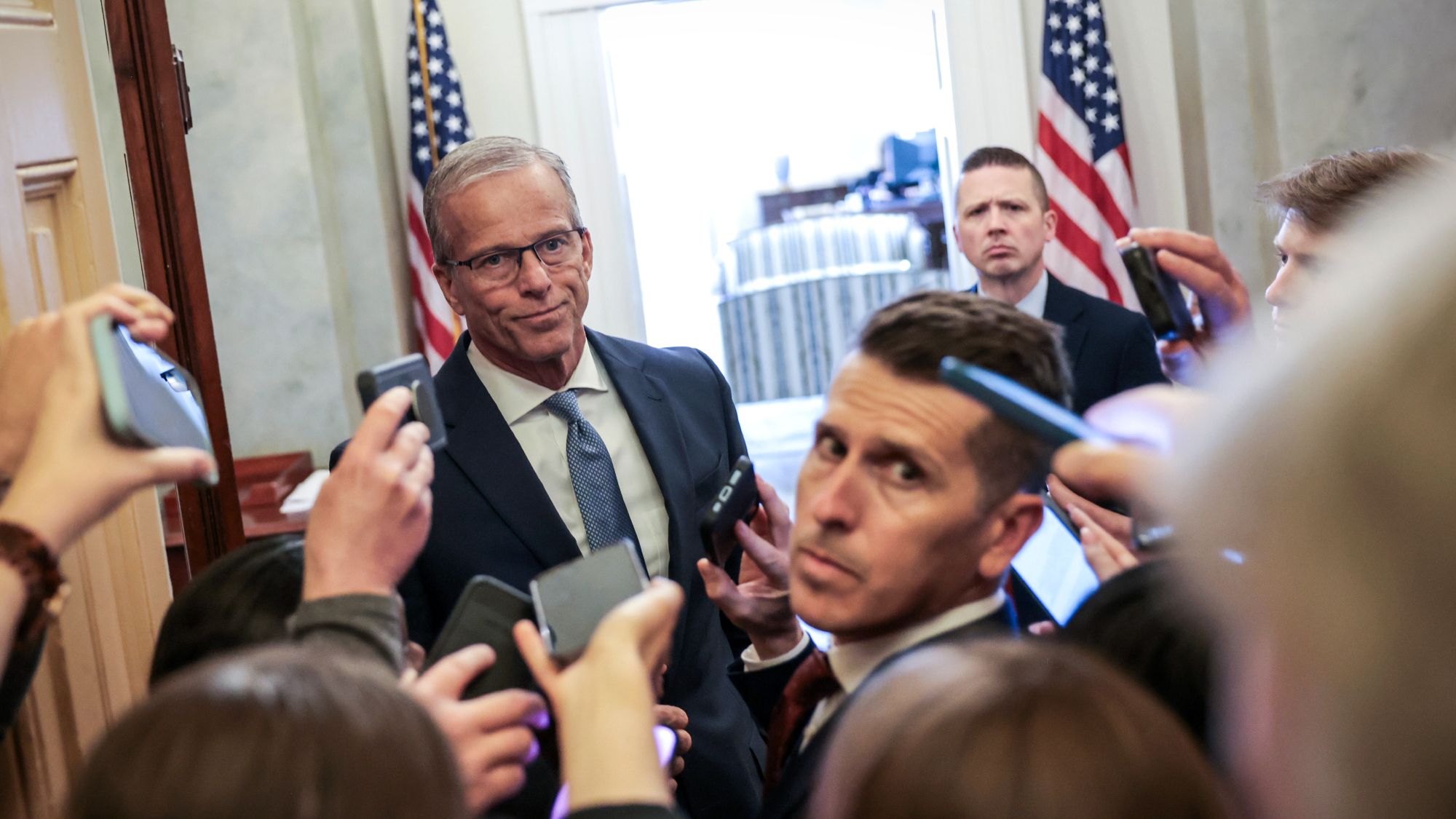
    The special budget process Republicans are using to pass the bill “allows a long series of amendment votes,” The Associated Press said, and “as it became clear” that Democratic amendments to kill or curtail the fund would pass with bipartisan support, Thune (pictured above) called a time-out. The fund “is in real trouble — and it should be,” Sen. Susan Collins (R-Maine) told the Times yesterday.

    What next?
    “By leaving Washington,” Republicans left the “anti-weaponization” fund “intact and without any of the guardrails they might want to impose,” the Journal said. Thune said his party “will pick up where we left off” when they return from vacation.


    TODAY’S JUSTICE story

    DOJ drops tainted case against anti-ICE protesters

    What happened
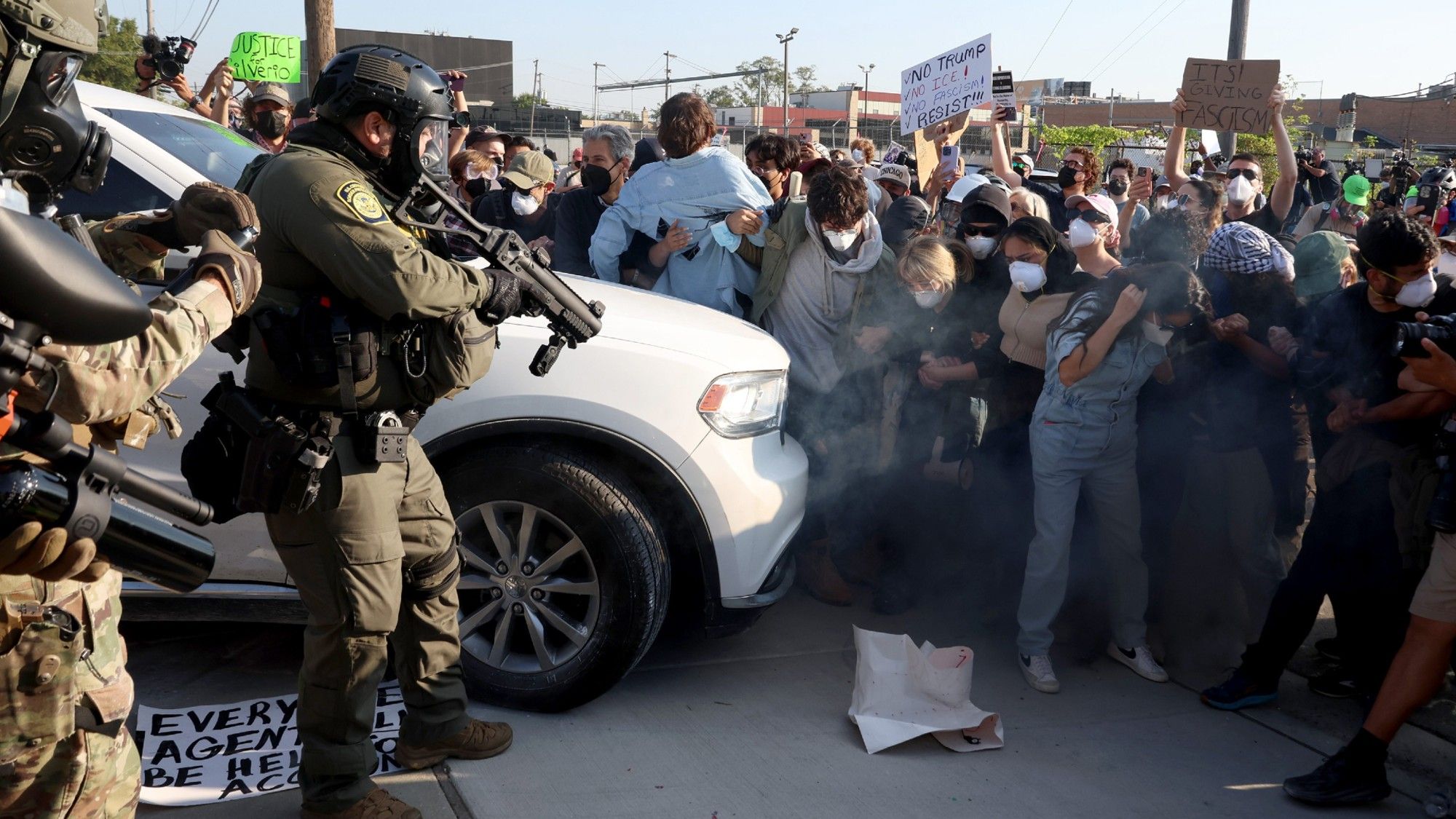
    A federal judge in Chicago yesterday permanently dropped all charges against the four remaining “Broadview Six” anti-ICE demonstrators. U.S. Attorney Andrew Boutros requested the controversial, high-profile case be dismissed after a “stunning hearing that revealed apparent misconduct” by his office’s prosecutors, the Chicago Sun-Times said. The “rare federal trial for misdemeanor charges” had been slated to start next week, CBS News said.

    Who said what
    U.S. District Judge April Perry told Boutros she was “incredibly shocked” by the “prosecutorial behavior” in the grand jury proceedings, according to transcripts of yesterday’s closed hearing. Boutros acknowledged the errors, said he didn’t think it was “deliberate misconduct,” then defended charging the defendants for protesting outside the Broadview detention center during last year’s “Midway Blitz” deportation campaign. Perry told him he was “significantly undercutting” his “mea culpa here by standing behind the charges and continuing to vilify these particular defendants.”

    What next?
    Perry “said she plans to consider possible sanctions against the prosecutors,” The Wall Street Journal said. “Federal judges “don’t talk like this unless it’s REALLY bad, and it is,” former federal litigator Ken “Popehat” White said on social media. “Heads should roll. Careers should end.”


    TODAY’S CULTURE Story

    Colbert signs off in final CBS ‘Late Show’

    What happened
    Stephen Colbert last night hosted the final CBS “Late Show,” nearly 33 years after David Letterman launched the franchise. Paramount canceled the top-rated late-night show last year while seeking approval for a merger from the Trump administration. “Despite all the controversy, Colbert chose to go out on a joyful, celebratory note, with help from Paul McCartney” and other celebrity guests, USA Today said. 

    Who said what
    “We were lucky enough to be here for the last 11 years,” Colbert told his audience when they booed his reminder it was the final episode. He closed the show, with his fellow late-night hosts, beside an “interdimensional wormhole” that is threatening to swallow all of late-night TV. The premature death of Colbert’s show isn’t exactly “‘the death of late night’ — that funeral has been going on for decades,” James Poniewozik said in The New York Times. But it “feels like the end of a cultural era,” or “actually, two eras”: His “Colbert Report” skilfully“parodied politics,” and his “Late Show” spanned “a time when politics became a parody of itself.” 

    What next?
    “The Late Show” is being replaced, starting tonight, with Byron Allen’s “Comics Unleashed,” which “features a rotating roundtable of comics” and is “purposefully evergreen in nature,” CNN said, meaning it “noticeably lacks any political humor.”


    It’s not all bad

    Levels of PFAS compounds have dropped by more than 70% in Canadian seabird eggs since international restrictions and industry phase-outs curbed the use of the “forever chemicals,” according to new research published in the Journal of Applied Toxicology. The findings are “good news” that show these regulations “are having a good effect,” said study co-author Raphael Lavoie of Environment and Climate Change Canada. PFAS chemicals don’t break down easily and can cause serious health issues.


    Under the radar

    Colombia: the world capital for birdwatching

    Colombia is home to 1,900 identified bird species, a whopping 20% of all known avian species, said The Bogotá Post. And earlier this month, the country won this year’s Global Big Day, an annual worldwide birdwatching event in which citizen scientists document the birds they have seen. Over the course of the day, birdwatchers recorded seeing 1,566 species across Colombia, making it the world’s most bird-diverse nation.

    This avian supremacy is a self-reinforcing cycle. The biodiversity has given rise to “avitourism,” said The New York Times. Visitors coming to see the birds “generate needed income,” making it more “profitable to protect, rather than destroy, habitats.” The country “stands out as a destination where biodiversity, conservation and community-driven tourism converge to define the future of travel,” said Carmen Caballero, the president of ProColombia, a national tourism promotion agency.

    While only the 25th largest country in the world by land mass, Colombia “contains immense ecological diversity, from the Amazon rainforest to glacier-topped Andean peaks to palm-fringed Caribbean beaches,” said the Times. These features have allowed myriad bird species to thrive. 

    Decades of political conflict have also contributed. The “conflict between the government, left-wing guerrillas, right-wing paramilitaries and narco-traffickers made many parts of Colombia too dangerous for development,” said CBS News. “Many bird habitats were preserved as a result.” 

    Colombia’s Global Big Day win is a “recognition of the hard work that local communities, guides and researchers do for nature conservation,” said Luisa Aguirre, a director at the Regional Autonomous Corporation of Cundinamarca, to The Bogotá Post.


    On this day

    May 22, 1972

    Richard Nixon became the first U.S. president to visit Moscow, arriving for a summit with Soviet General Secretary Leonid Brezhnev. Nixon’s visit was a key step in the gradual easing of Cold War tensions, and he and Brezhnev signed several landmark agreements, including the Anti-Ballistic Missile Treaty and the Strategic Arms Limitation Treaty (SALT I).


    TODAY’S newspaperS

    ‘Trump serves himself’

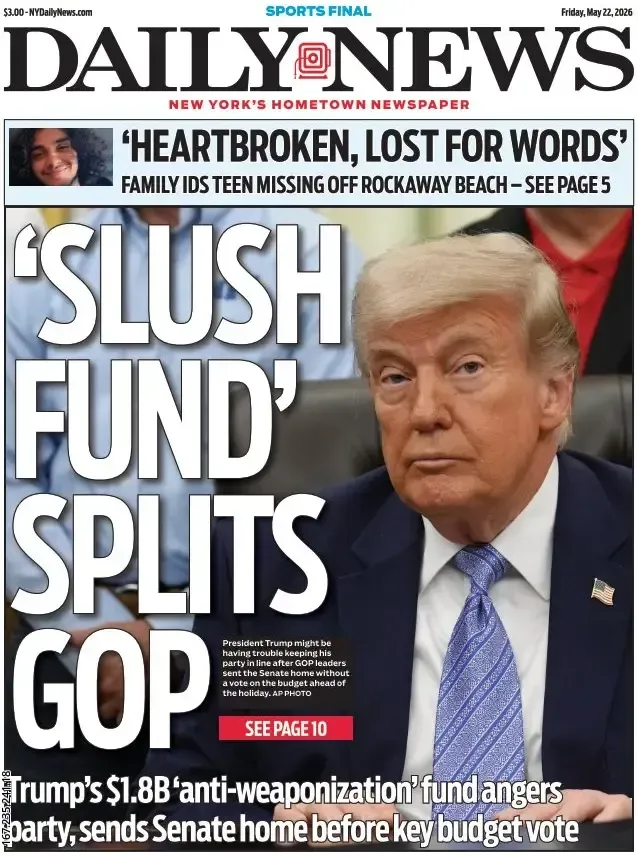
    “Senate rebels against Trump over fund,” The Wall Street Journal says on Friday’s front page. “‘Slush fund’ splits GOP,” the New York Daily News says. “Sidestepping the rules, Trump serves himself” with “once-unthinkable” self-dealing, The New York Times says. “Trump allies are lining up for a slice of $1.8B windfall,” says The Washington Post. “U.S. fuel prices altering travel plans,” the Los Angeles Times says. “Ebola responders say aid cuts left them ill-equipped for outbreak,” says The Philadelphia Inquirer. “‘Broadview Six’ case unravels completely,” the Chicago Tribune says. “Would getting U.S.-indicted Raúl Castro to Miami create a ‘blood bath’ in Cuba?” says the Miami Herald. “Trump: Escalation in Cuba not likely,” says USA Today. 

    ► See the newspaper front pages


    Tall tale

    This mortal royal

    A British radio station apologized to listeners and King Charles III after mistakenly announcing the monarch’s death. Radio Caroline blamed the incident on a “computer error,” and said the pre-recorded “Death of a Monarch procedure” was “accidentally activated.” After the announcement, the station played “God Save the King” and then fell silent. The station said it’s sorry for “any distress caused” and hopes to continue broadcasting King Charles’ Christmas message “for many years to come.”


    Morning Report was written and edited by Nadia Croes, Catherine Garcia, Scott Hocker, Anya Jaremko-Greenwold, Justin Klawans, Rafi Schwartz, Peter Weber and Kari Wilkin, with illustrations by Stephen Kelly and Julia Wytrazek.

    Image credits, from top: Anna Moneymaker / Getty Images; Stacey Wescott / Chicago Tribune / Tribune News Service / Getty Images; Scott Kowalchyk / CBS via Getty Images; Illustration by Stephen P. Kelly / Getty Images
     

    Recent editions

    • Evening Review

      Pentagon pulls troops from Europe

    • Morning Report

      US charges Raúl Castro with murder

    • Evening Review

      Is Russia losing the war?

    VIEW ALL
    TheWeek
    • About Us
    • Contact Future's experts
    • Terms and Conditions
    • Privacy Policy
    • Cookie Policy
    • Advertise With Us
    • FAQ
    Add as a preferred source on Google Add as a preferred source on Google

    The Week is part of Future US Inc, an international media group and leading digital publisher. Visit our corporate site.

    © Future US, Inc. Full 7th Floor, 130 West 42nd Street, New York, NY 10036.