The Week The Week
flag of US
US
flag of UK
UK
https://cdn.mos.cms.futurecdn.net/flexiimages/jacafc5zvs1692883516.jpg

SUBSCRIBE & SAVE

Less than $3 per week

Sign in
  • View Profile
  • Sign out
  • The Explainer
  • The Week Recommends
  • Newsletters
  • Cartoons
  • From the Magazine
  • The Week Junior
  • Student Offers
  • More
    • Politics
    • World News
    • Business
    • Health
    • Science
    • Food & Drink
    • Travel
    • Culture
    • History
    • Personal Finance
    • Puzzles
    • Photos
    • The Blend
    • All Categories
  • Newsletter sign up Newsletter
  • The Week Evening Review
    A post-America Nato, the scale of shoplifting, and Russia’s corrupt army

     
    THE EXPLAINER

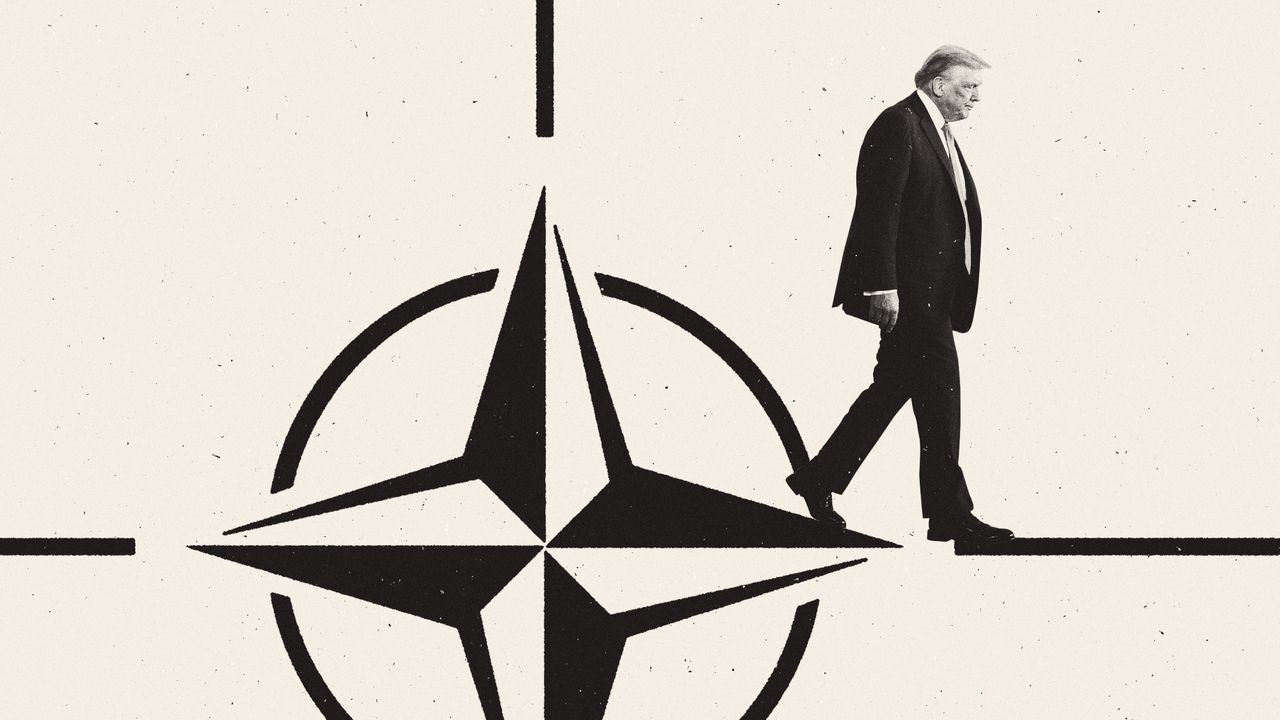
    What would happen if the US left Nato?

    Donald Trump has again threatened to pull the US out of Nato, after Britain and other allies refused to send warships to help reopen the Strait of Hormuz. Dismissing the alliance as a “paper tiger”, he told The Telegraph’s Washington correspondent that removing America from the defence treaty was now “beyond reconsideration”.

    What would it mean for Nato?
    Nato was formed by the signing of the North Atlantic Treaty in 1949 by 12 founding countries, but did not develop its own army. Instead, member states pledged to provide collective defence and security. The US is Nato’s largest single military power and funds 62% of its spending, so America’s withdrawal would dramatically weaken the alliance. Article 5 – the mutual defence clause – would lose credibility without the backing of Washington’s military, making member states far more vulnerable to the likes of Russia and China.

    How would leaving affect the US?
    The US would save money, both by ending its contribution to Nato spending and by no longer maintaining a presence in Europe, Africa and the Middle East. But it would also lose access to many military bases around the world, forcing the US Navy to “operate closer to America’s shores”, said Modern Diplomacy, and US bombers would no longer be able to “reach targets halfway around the world”.

    What would the process actually look like?
    Leaving Nato wouldn’t be easy for Trump, because a 2024 US law prohibits the president from doing so without the approval of a two-thirds Senate majority or an act of Congress. Even if all the Republicans in the Senate voted for it, Trump would still need at least 14 Democrats to join them.

    Given the political obstacles, most Nato observers don’t think Trump will try to withdraw, “despite his obvious displeasure at alliance leaders”, said The Times. But he could “ignore or slow-walk” any future Article 5 request, or “activate long-considered plans to pull back many of the 85,000 US troops in Europe”.


    TODAY’S BIG QUESTION

    Has shoplifting got out of hand?

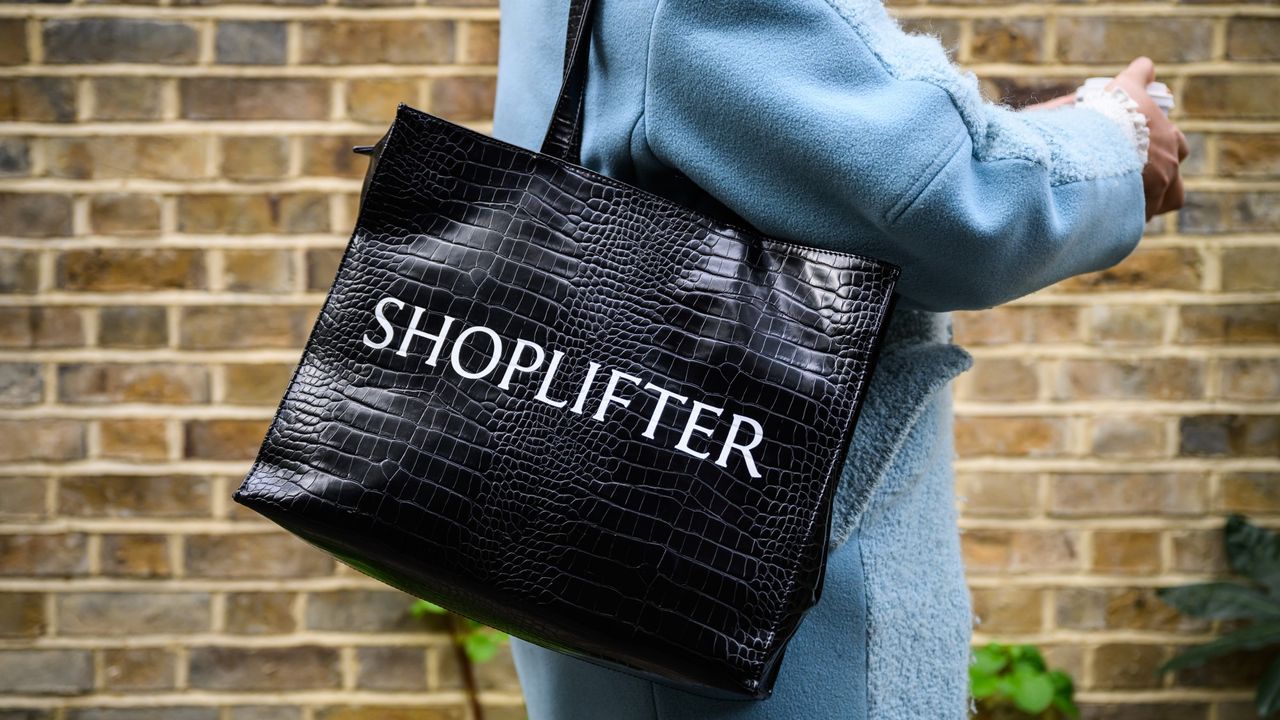
    High-street retailers are demanding more action to tackle the shoplifting epidemic in Britain, after more than 100 young people stormed a Marks & Spencer store in south London last week.

    Shoplifters have become “more brazen, more organised and more aggressive”, said M&S retail director Thinus Keeve in The Telegraph. He called on London Mayor Sadiq Khan and Home Secretary Shabana Mahmood to do more to address the problem, including providing “greater transparency” about its “true scale and impact”. Shoplifting cost retailers in England and Wales an estimated £400 million last year, according to the British Retail Consortium.

    What did the commentators say?
    M&S has “articulated what small retailers, and what the voiceless and powerless ordinary people of this country, have been reporting and witnessing” in recent years, said Patrick West in The Spectator. Last week’s “scenes of mayhem” in Clapham are “distressingly familiar to the inhabitants” of towns and cities witnessing the “seemingly inexorable collapse in civic society and the breakdown of our formerly high-trust society”.

    “This weakness percolates back to policing,” said former Met Police detective Dominic Adler on UnHerd. If criminals “know they’re unlikely to ever face imprisonment, they see little incentive to stop offending”, and overworked police officers “see little reason to arrest, either”. This government’s updates to the 2020 Sentencing Act abolished custodial sentences for many petty offences including most shoplifting, which further “punches the bruise of the ‘broken Britain’ narrative”.

    This is not “a matter for the retailers to solve on their own, as some have suggested”, said The Telegraph’s editorial board. “If criminals think they can get away with theft or even violence”, it will only get worse. “The police need the resources and the support to crack down.”

    What next?
    The government has made some “welcome efforts” to help retailers in its recent Crime and Policing Bill, said The Times. Chief among these is abolishing the “misguided” £200 threshold that made “low-value shoplifting” a lesser offence, “a measure that was designed to ease the burden on police, but that gave encouragement to opportunistic raiders”. But “there is clearly a need for more to be done”.


    QUOTE OF THE DAY

    “It’s so great to hear the Earth again.”

    Artemis II astronaut Christina Koch voices her relief after resuming communication with mission control, following 40 minutes without contact while flying behind the Moon. The Nasa mission reached the furthest distance ever travelled by humans from Earth, at 252,756 miles.


    Poll watch

    The majority of Brits (53%) are opposed to strikes by resident doctors, according to YouGov polling in the run-up to the six-day walkout that kicks off today. Of 6,908 adults surveyed, only 38% said they would support industrial action by the medics over pay and job security.


    IN THE SPOTLIGHT

    How corruption rules the Russian front line in Ukraine

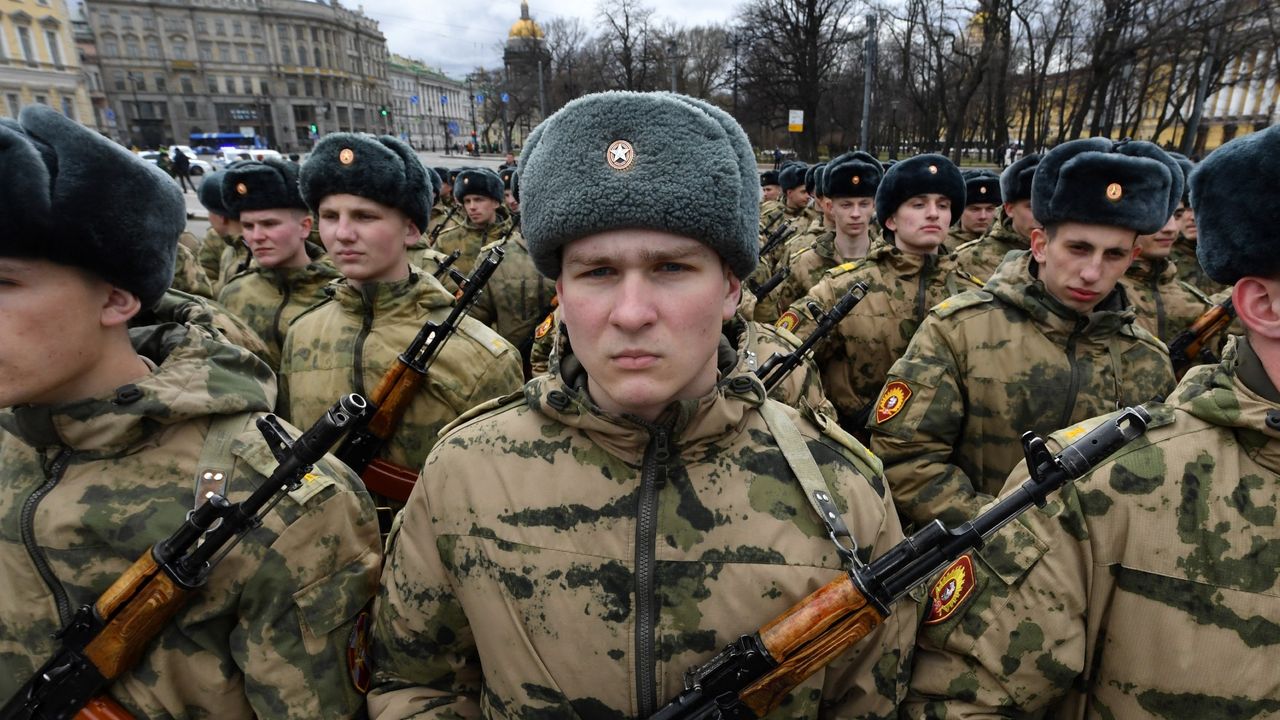
    Russian commanders are charging “up to £30,000 to spare soldiers from the front lines in Ukraine”, said The Telegraph. Recruits unwilling or unable to pay are “reset” – a “euphemism for sending them to their deaths” on the front line.

    Wounded soldiers must “pay thousands” to be declared unfit for active service, said PBS. Those who do not are “forced to literally limp into battle”. Injured soldiers, sometimes on crutches, are being “used as bait” to “draw fire” from hidden Ukrainian artillery, said Seth Jones, from the Center for Strategic and International Studies.

    ‘System of extortion’
    “Corruption and slave labour have long been features of the Russian and Soviet armies,” said The Economist. Soldiers are viewed as “cannon fodder” for their superiors – and also as a “source of enrichment”. Infantry soldiers must “buy their own” military gear in the Russian army, which operates on a “system of extortion and punishment”. Officers demand money from their men “under the pretext of raising money for drones, equipment or food”. Sources have even told of commanders who “requisition troops’ bank cards and PIN codes” before sending them into battle.

    In the Russian military, “men learn quickly to fear their commanders more than their foe”, said PBS. Videos on social media depict the “horrific punishments” faced by soldiers if they fail to pay up, with reports of some “being locked in cages, electrocuted and sexually assaulted”.

    ‘Public resentment’
    The problem is widespread, said The New York Times. In the last two years, “at least 12 high-ranking Russian military officials and generals, as well as dozens of lower-ranking officers, have been indicted on corruption charges”.

    Most recently, Lieutenant Colonel Konstantin Frolov – known as “Executioner” – has been put on trial in a military court, accused of leading a scheme in which “more than 30 soldiers and medics” in his regiment “used weapons to shoot themselves in order to obtain payouts for battlefield injuries”. The plot reportedly defrauded the army of “200 million rubles”, equivalent to more than £1.9 million. This case, in particular, has “fed public resentment of the economic and social privileges” of high-ranking officials, who are accused of perpetuating the war “only for the money”.


    Good day 🍞

    … for burnt toast fans, after scientists gene-edited wheat to slash levels of a potential cancer-causing compound formed when bread gets crispy. The variety of wheat created by experts from Hertfordshire’s Rothamsted Research produces far less free asparagine, an amino acid that becomes carcinogenic acrylamide when cooked. 


    Bad day 🌳

    … for hay-fever sufferers, after the Met Office issued a week-long “red alert” over “very high” pollen counts across most of the UK. The intense concentrations of tree pollen in the air are a key driver of seasonal allergies that can trigger symptoms including itchy eyes, throat irritation and sneezing.


    PICTURE OF THE DAY

    Casualties of war

    A body wrapped in an Israeli flag is lowered into a grave during the funeral of a family killed by an Iranian missile. Vladimir and Lena Gershovich, their son Dmitry and his wife Lucille died when their apartment in the city of Haifa was hit on Sunday.

    Jack Guez / AFP / Getty Images


    Puzzles

    Guess the number

    Try The Week’s daily number challenge in our puzzles and quizzes section

    Play here


    THE WEEK RECOMMENDS

    Where to begin with forest bathing

    “Feeling stressed?” asked Suzanne Harrington in the Irish Independent. Then “find a forest and spend a few hours absorbing its quiet magic”.

    That’s the essence of forest bathing, or shinrin-yoku, a concept introduced in 1982 by Tomohide Akiyama, the then director of the Japanese Ministry of Agriculture, Forestry and Fisheries. He believed spending time outdoors and purposefully reconnecting with nature could be the “antidote” to burnout from the fast-paced, tech-filled modern world.

    Standing beneath the “towering cedar trees” of Japan’s Yoshino forests, it’s hard to feel anything but calm, said Oliver Smith in National Geographic. Exhausted workers from nearby Osaka “flock to this mountain idyll” to practise forest bathing and unwind at local ryokans (traditional Japanese inns with tatami-matted floors).

    But you don’t have to go far to try forest bathing. Just head to a nearby forest and walk “slowly and mindfully”, said Harrington. Leave your mobile phone behind if you can, and “allow plenty of time for silence”, engaging each of your senses by breathing deeply, listening to any sounds, touching branches and smelling the aromas of the forest.

    The psychological benefits of forest bathing are well documented, said New Scientist. But as well as “reducing anxiety and stress”, a new study by researchers at Tokyo University of Agriculture found that a two-night trip to a forest, featuring gentle hiking and mindfulness meditation, also boosted physical health by “lowering blood pressure and inflammation”.


    Statistic of the day

    £1.80: The price of a first-class stamp from today, following a 10p increase. Royal Mail is hiking postage fees for the eighth time in five years, as the number of letters being sent declines and operational costs rise. A second-class stamp now costs 91p, a rise of 4p.


    instant opinion

    Today’s best commentary

    When I get abused just for dancing, it shows how far hatred of politicians has gone
    Stella Creasy in The Guardian
    A recent X post about me dancing at a silent disco sparked “death threats” and “vile commentary on my appearance”, writes Labour MP Stella Creasy. With “abuse and violence towards politicians” now “at an all-time high”, even a moment of joy is treated as grounds for “character assassination”. Debate and “good policy-making only thrive when people can speak freely and listen carefully”, but “that’s harder” in a culture where “bile” towards politicians of all stripes is “so commonplace”.

    Like Trump, I enjoy swearing. Just not to start World War Three
    Robert Crampton in The Times
    “What to make of” Donald Trump’s expletive-laden “act of diplomacy” on Truth Social? In one sense, it’s “funny”, writes Robert Crampton, but a president “is supposed to have a bit of decorum”. Swearing is “rampant” in my London media bubble, but maybe we should all “relearn” some “old-school propriety” when “dealing with this freakishly vulgar man”. Americans think of Brits as “prissy, snobbish, hidebound stiffs”, so let’s “lay off the cuss words” and “come over all haughty and disdainful”.

    Andrew’s latest tantrum shows how pampered his life still is
    Emily Watkins in The i Paper
    It’s time for Andrew Mountbatten-Windsor to move from his “Sandringham bolthole” to another home on the estate, but he’s “dragging his feet”, writes Emily Watkins. “His status may be diminished post-Epstein but his material life continues to be charmed by anyone’s standards – and as such, his cussedness is especially infuriating.” He’s clinging “to a world that let him do whatever he wanted”, but that’s “over for him”. This “ex-duke/prince/playboy should stop pushing his luck”.


    word of the day

    Sextortion

    Record numbers of UK children are being targeted for sextortion, according to Childline’s Report Remove service. Boys aged 14 to 17 accounted for almost all of 394 reported cases last year in which scammers manipulated victims into sharing explicit images or videos that were then used to attempt to blackmail them.


    Evening Review was written and edited by Rebecca Messina, Elliott Goat, Will Barker, Chas Newkey-Burden, Irenie Forshaw, David Edwards, Helen Brown and Kari Wilkin, with illustrations from Stephen P. Kelly.

    Image credits, from top: illustration by Stephen P. Kelly / Getty Images; Leon Neal / Getty Images; Olga Maltseva / AFP / Getty Images; Jack Guez / AFP / Getty Images; Richard Lock / Getty Images

    Morning Report and Evening Review were named Newsletter of the Year at the Publisher Newsletter Awards 2025
     

    Recent editions

    • Evening Review

      Trump puts military spending over day care

    • Morning Report

      Trump’s Easter profanity

    • Evening Review

      Trump loses his grip on oil

    VIEW ALL
    TheWeek
    • About Us
    • Contact Future's experts
    • Terms and Conditions
    • Privacy Policy
    • Cookie Policy
    • Advertise With Us
    • FAQ
    Add as a preferred source on Google Add as a preferred source on Google

    The Week is part of Future US Inc, an international media group and leading digital publisher. Visit our corporate site.

    © Future US, Inc. Full 7th Floor, 130 West 42nd Street, New York, NY 10036.