The Week The Week
flag of US
US
flag of UK
UK
https://cdn.mos.cms.futurecdn.net/flexiimages/jacafc5zvs1692883516.jpg

SUBSCRIBE & SAVE

Less than $3 per week

Sign in
  • View Profile
  • Sign out
  • The Explainer
  • The Week Recommends
  • Newsletters
  • Cartoons
  • From the Magazine
  • The Week Junior
  • Student Offers
  • More
    • Politics
    • World News
    • Business
    • Health
    • Science
    • Food & Drink
    • Travel
    • Culture
    • History
    • Personal Finance
    • Puzzles
    • Photos
    • The Blend
    • All Categories
  • Newsletter sign up Newsletter
  • The Week Evening Review
    Stock market surge, fairway vs. driveway, and strangely dead scientists

     
    TODAY’S BIG QUESTION

    Why are stock markets surging in the Iran crisis?

    The world’s major stock markets are soaring, seemingly impervious to concerns over fuel and energy prices.

    The S&P 500, the benchmark US stock index, hit a record high on Wednesday, mirrored by markets in Asia and Europe. “There’s a lot of risk out there, and yet asset prices are at all-time highs,” Sarah Breeden, deputy governor of the Bank of England, told the BBC.

    What did the commentators say?
    “Nothing, it seems, can dent the almost inexplicable optimism coursing through financial markets,” said ABC’s business correspondent Ian Verrender. In the past, stock markets would “shudder” and “tumble”, then spend a decade recovering from “calamity”. Nowadays, recovery time is weeks, “if they bother to react at all”. After “years of headline-driven volatility”, investors have learned not to “stay bearish for too long”, said Bloomberg.  

    Investors are not “oblivious” to what is happening, said Joe Rennison, markets reporter for The New York Times. They are attuned to “what exactly the markets are measuring”, looking beyond the “immediate upheaval from the war” to its “long-term effects on corporate profits”. Americans may be struggling to afford fuel, but Big Tech is “riding a wave of enthusiasm”. Companies like Microsoft and Meta, which have been shielded from the war, tend to influence markets more profoundly. Investors are also responding to the White House’s “apparent eagerness” to end the combat. They seem to believe the worst “has already passed”.

    Investors have long relied on “ebitda” (earnings before interest, taxes, depreciation and amortisation) to ascertain the “core value of a business”, said Tej Parikh in the Financial Times. But it appears they now rely on “earnings before Iran, tariffs and dubious announcements”.

    What next?
    Analysts have “actually raised their expectations for upcoming profits” for S&P 500 companies, said The Associated Press. Of course, the US stock market “can easily return to falling”. If further peace talks happen and then break down, or if oil supplies cause greater concern, Wall Street’s mood could “swing quickly back to fear”.

    “We expect there will be an adjustment at some point,” the Bank of England’s Breeden told the BBC. What “really keeps me awake at night is the likelihood of a number of risks crystallising at the same time”.


    THE EXPLAINER

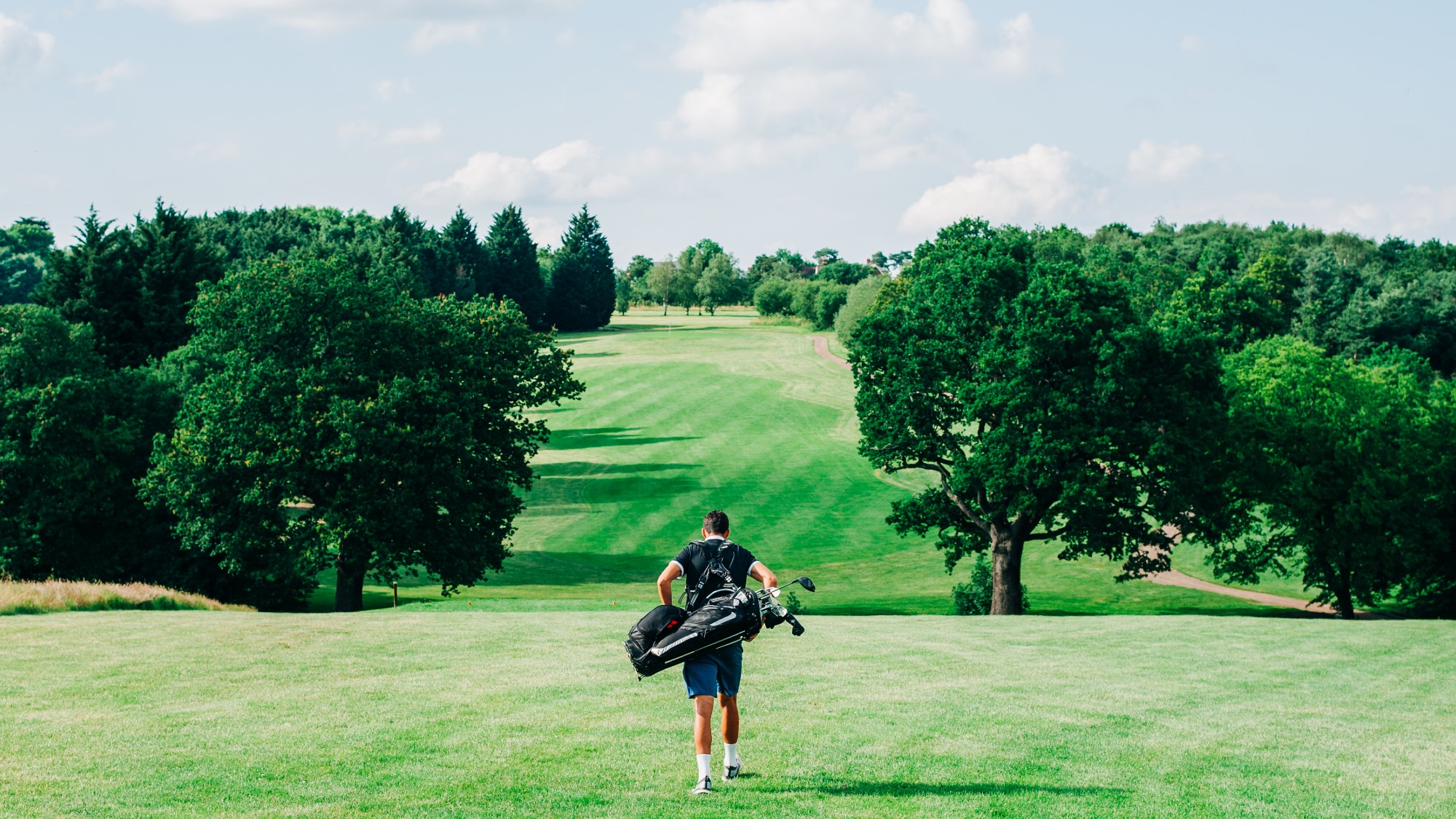
    Are golf courses the answer to the housing shortage?

    Investors are seeing the “lucrative land” on Britain’s golf courses as increasingly “ripe for redevelopment”, said The Times. With one in five golf clubs estimated to be “financially vulnerable”, pressure is increasing on club owners to abandon their fairways and sell to developers.

    How much land do golf courses take up?
    There are roughly 1,800 golf courses in Britain – more than a quarter of all golf courses in Europe. In England, they occupy about 2% of the land: an area more than twice the size of Greater Manchester.

    Given the shortage of affordable homes, there is now a “furious debate” between “fairway and driveway”, said the BBC. The “area occupied by a single golfer” on a London course “could provide a home for around 380 people”, said architect Russell Curtis in his “Golf Belt” report.

    What are the pros and cons?
    Courses are typically “large, low-density sites” on the outskirts of towns, said The Times. This makes them attractive to developers and councils seeking space for new homes. Some London courses “are very close to public transport”, Curtis told the BBC. It “seems reasonable that at least some of those should be turned into housing”.

    But the picture varies. In Wales, most courses sit in rural or out-of-town locations, making them less attractive development prospects. They can also be valuable havens for biodiversity, providing “tree cover, habitats for wildlife, pollinator-friendly environments”, Gavin Anderson, from England Golf, told the BBC .

    What does it mean for golf?
    More land sales seem likely when “rising maintenance, insurance and staffing costs” are leaving many golf clubs “struggling”, said The Times. Sixty courses have closed in the past decade, and nearly 20% of remaining clubs are financially at risk, according to Custodian Golf.

    However, membership of English golf clubs, particularly council-run ones, is rising – from 730,602 in 2024 to 750,07, with junior membership growing by 34%. Supporters say this reflects efforts to make golf more inclusive, which mass sell-offs would only undermine.

    “All the private rich clubs, they’re going to still be about,” Chris D’Araujo, who is campaigning to save council-owned Enderby Golf Course, told the BBC. Redevelopment is taking golf “away from the masses”.


    Poll watch

    Nearly half (44%) of Brits think King Charles should abandon his state visit to the US next week. Only 35% of the 1,049 adults polled by Merlin Strategy for The i Paper think the visit, to mark the 250th anniversary of American independence, should go ahead.


    Statistic of the day

    £1.7 million: The cost of a ticket for this summer’s football World Cup final on Fifa’s official resale website. Organisers have come under fire for exorbitant ticket prices for the men’s tournament, which is being co-hosted by Mexico, Canada and the US. 


    In the Spotlight

    FBI probe into unexplained deaths of US scientists

    The FBI and a US Congressional committee are investigating 10 cases of missing or dead scientists and staff who worked at nuclear or space technology laboratories.

    “The similar circumstances of some of the disappearances”, and the sensitive or secret nature of the research, have fuelled speculation about “co-ordinated foul play or foreign espionage”, said The Hill. Theories have “swirled” on social media about possible efforts to “harm” US nuclear or space programmes, said CBS News.

    ‘Sinister connection’
    William Neil McCasland, a retired US air force general and aerospace defence director, went missing from his home in Albuquerque on 27 February. Investigators soon learned of other aerospace and nuclear officials and researchers who had gone missing or died in mysterious circumstances. These included a nuclear physicist who was fatally shot outside his Massachusetts home, an aerospace engineer who went missing during a hike in Los Angeles, and two scientists, working on nuclear fusion and astrophysics, who were murdered in their homes.

    The FBI confirmed that it is “spearheading the effort to look for connections” between the 10 cases, and the Republican-led House Oversight Committee said it will examine “questions about a possible sinister connection”.

    “I hope it’s random, but we’re going to know in the next week and a half,” Donald Trump told reporters. It is “pretty serious stuff”, but “hopefully a coincidence”.

    ‘No train of logic’
    It is probably not the stuff of “a spy-thriller plot” but “something more personal and tragic”, said CBS News.

    It “seems quite unlikely that” my husband was abducted “to extract very dated secrets”, McCasland’s wife wrote online, noting that he retired from the air force 12 years ago. And there is “no train of logic” connecting Nasa scientist Michael David Hicks, who died in 2023, to other deaths, his daughter Julia told CNN. “I can’t help but laugh about it but, at the same time, it’s getting serious.”

    The cases are “scattered across several years at different, and only loosely affiliated, organisations”, said Joseph Rodgers from the Center for Strategic and International Studies. “If all of the scientists were working on one project or weapons system, then I’d be more suspicious.” A former US Department of Energy official was more succinct: “People do just die.”


    Good day🏃‍♀️‍➡️

    … for activity, with more than two-thirds of adults in England exercising regularly – a new high, according to the Sport England Active Lives Adult Survey. The rise is “particularly driven by older people working hard” to stay fit.


    Bad day 🤖

    … for technology, as the chair of Marks & Spencer blames frustration with self-service checkouts for a rise in shoplifting among “good, honest people”. Archie Norman told The Telegraph that the machines had broken the “human link” between shoppers and retailers.


    picture of the day

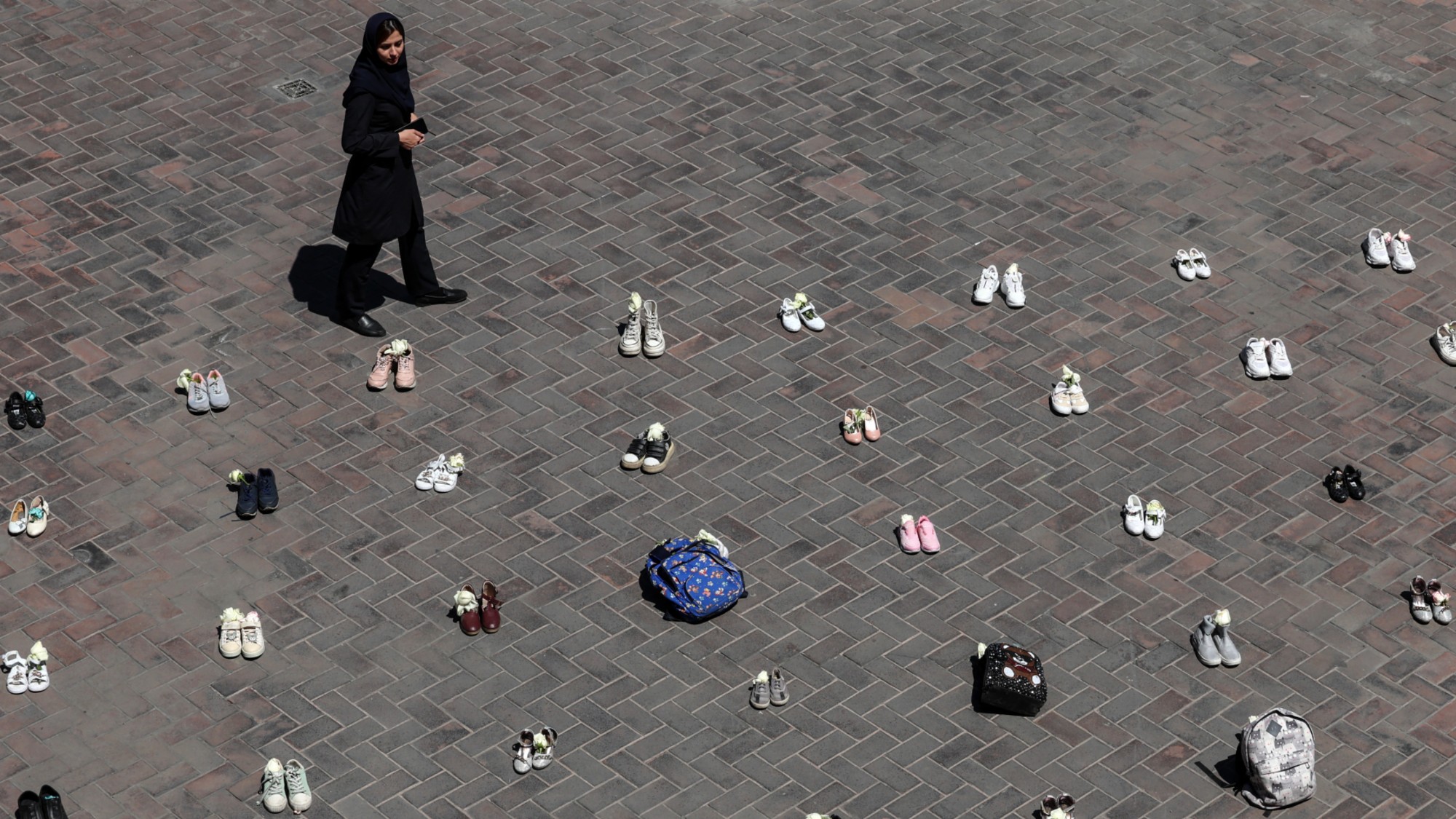
    In memory

    A woman in Tehran’s Valiasr Square walks past symbolic belongings laid out in tribute to the schoolgirls from Minab who were killed in a US airstrike. A missile hit Shajareh Tayyebeh school in the southern Iranian city on the first day of the Iran war, killing at least 170 people.

    AFP / Getty Images


    PUZZLES AND QUIZZES

    Quiz of The Week

    Have you been paying attention to The Week’s news? Try our weekly quiz, part of our puzzles section, which also includes sudoku and crosswords 

    Play here


    THE WEEK RECOMMENDS

    Properties of the week: impressive cottages for £550,000 or less

    West Sussex: Iron Latch Cottage, Selsey
    Charming Grade II, 17th century thatched cottage by Selsey Beach. 3 beds (1 en suite), shower, kitchen/dining room, recep, office, summer house, garden. £550,000; Hamptons.

    Devon: Wytch Green, Hawkchurch
    A characterful Grade II cottage dating back to c.1800. 3 beds, family bath, kitchen, recep, study, 1-bed annexe, garden, parking. £540,000; Symonds & Sampson.

    Wiltshire: Pitts Cottage, Chitterne
    Handsome cottage set in well-tended mature gardens in a popular Wylye Valley village. 3 beds (1 en suite), shower, kitchen/dining room, recep, garden, parking. £435,000; Cooper and Tanner.

    Devon: Gardeners Cottage, Drewsteignton
    A picturesque and beautifully renovated Grade II thatched cottage, located within Dartmoor National Park. 1 bed, 2 baths, kitchen/dining room, recep, garden, parking. £500,000; By Design.

    See more


    QUOTE OF THE DAY

    “I don’t know what Donald Trump is talking about.”

    Kemi Badenoch reacts to reports that the US administration could reassess its support for the UK’s claim to the Falkland Islands – as punishment for Britain’s lack of support in the Iran war. The Tory leader called a leaked Pentagon memo “absolute nonsense”, saying there is “no need to take it seriously”.


    instant opinion

    Today’s best commentary

    Shabana Mahmood’s expletive was shocking. But not for the reason you think
    Zoe Williams in The Guardian
    When a heckler shouted that the Home Secretary was “‘out-Reforming Reform’ and confecting a ‘theatre of cruelty’ with her new immigration policy ideas”, she told him to “f**k right off”, writes Zoe Williams. “Once completely out of bounds”, a politician swearing “lands differently now”. But Shabana Mahmood “has restored its power to shock” – not because of the words she used, but the way they exposed “her contempt for the values of her own party”.

    Western European Elites’ Hungary Hypocrisy
    Ben Sixsmith in The American Conservative
    I find it “difficult to stomach” the “whoops” coming from “Europe’s halls of power” at “the end of Viktor Orbán’s premiership”, writes Ben Sixsmith. Yes, Hungary’s democracy was tainted by Orbán’s “blatant gerrymandering and corruption”, but successive European governments “have completely ignored the popular will on matters as existential as mass migration”. And, while Orbán repressed opposition voices, “Britain has led the way” on “curbing free speech”. It’s time for “Western European leaders” to “look in a mirror”.

    Russell Brand is everything that is wrong with the world
    Alexander Larman in The Spectator
    “There are few stranger public careers” than that of “former ‘comedian’ turned Maga cheerleader-in-chief” Russell Brand, writes Alexander Larman. He denies the sexual assault allegations against him but “goes on podcasts to talk about his past misdeeds with uncomfortably gloating salaciousness”. It’s such a shameless display of “rampant egomania” and “ostentatious self-healing”. Brand combines “the narcissism of the lesser members of the royal family” with the “truth-shredding egomania of Donald Trump” and “the vacuousness” of our “selfie-obsessed age”.


    word of the day

    Kraken

    A colossal, many-tentacled sea monster in Scandinavian folklore. A “kraken-like” octopus, as long as two double-decker buses, once lived in ancient seas, new fossil analysis suggests. And there are signs that this species, Nanaimoteuthis haggarti, had “advanced intelligence”, said the research team from Japan’s Hokkaido University.


     Evening Review was written and edited by Harriet Marsden, Jamie Timson, Rebecca Messina, Chas Newkey-Burden, Will Barker, Irenie Forshaw, David Edwards, Natalie Holmes and Helen Brown.

    Image credits, from top: Illustration by Stephen P. Kelly / Getty Images; Karl Hendon / Getty Images; Ceri Breeze / Getty Images;  AFP / Getty Images; By Design; Hamptons; Cooper and Tanner; Symonds & Sampson

    Morning Report and Evening Review were named Newsletter of the Year at the Publisher Newsletter Awards 2025
     

    Recent editions

    • Evening Review

      What Orbán’s loss means for Ukraine

    • Morning Report

      Navy secretary out in Hegseth purge

    • Evening Review

      Americans’ change on Israel

    VIEW ALL
    TheWeek
    • About Us
    • Contact Future's experts
    • Terms and Conditions
    • Privacy Policy
    • Cookie Policy
    • Advertise With Us
    • FAQ
    Add as a preferred source on Google Add as a preferred source on Google

    The Week is part of Future US Inc, an international media group and leading digital publisher. Visit our corporate site.

    © Future US, Inc. Full 7th Floor, 130 West 42nd Street, New York, NY 10036.