The Week The Week
flag of US
US
flag of UK
UK
https://cdn.mos.cms.futurecdn.net/flexiimages/jacafc5zvs1692883516.jpg

SUBSCRIBE & SAVE

Less than $3 per week

Sign in
  • View Profile
  • Sign out
  • The Explainer
  • The Week Recommends
  • Newsletters
  • Cartoons
  • From the Magazine
  • The Week Junior
  • Student Offers
  • More
    • Politics
    • World News
    • Business
    • Health
    • Science
    • Food & Drink
    • Travel
    • Culture
    • History
    • Personal Finance
    • Puzzles
    • Photos
    • The Blend
    • All Categories
  • Newsletter sign up Newsletter
  • The Week Evening Review
    A ‘masterclass in Trump diplomacy’, the Ukraine war, and London’s bridges

     
    TODAY’S BIG QUESTION

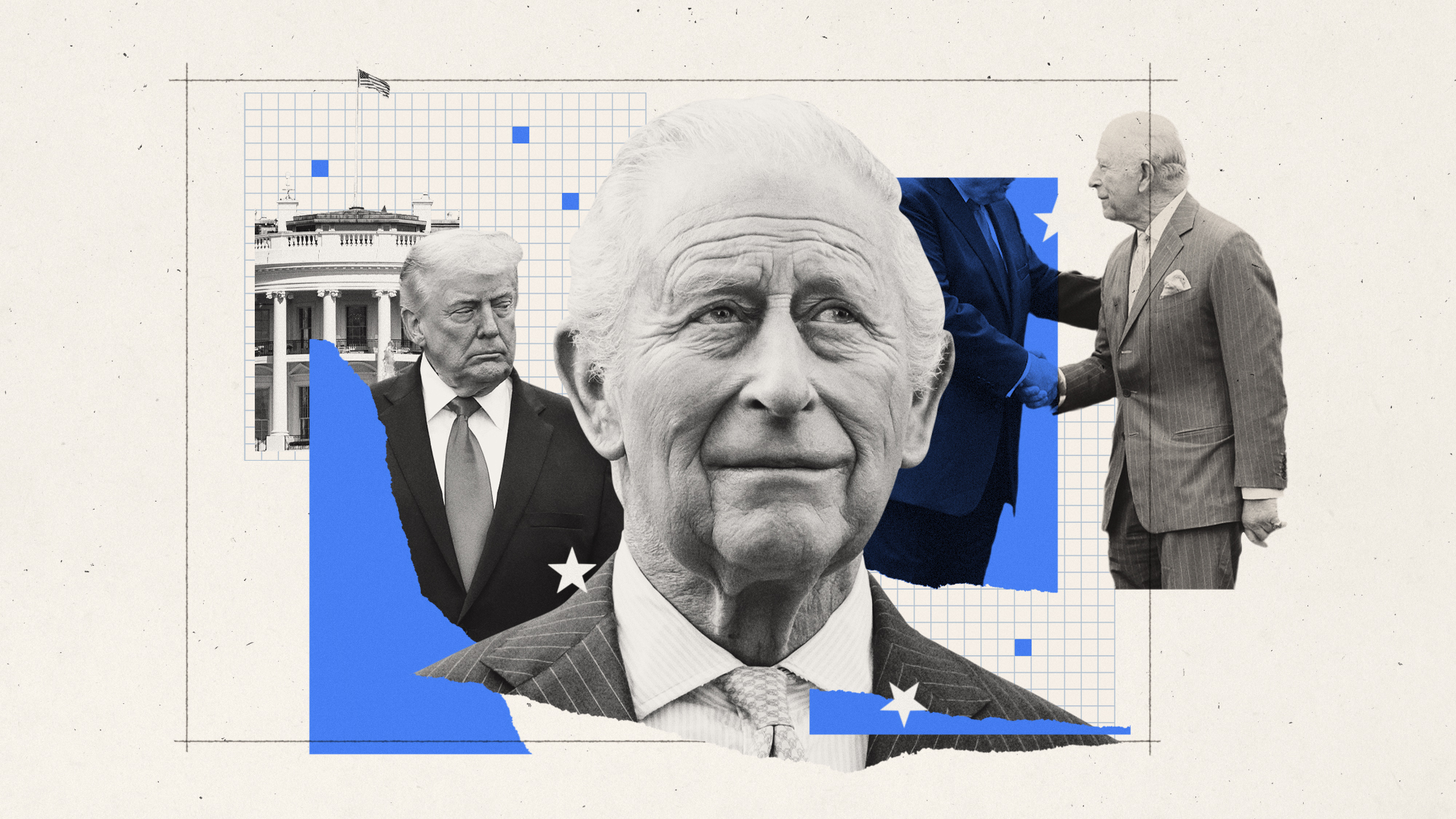
    Has the King saved the ‘special relationship’?

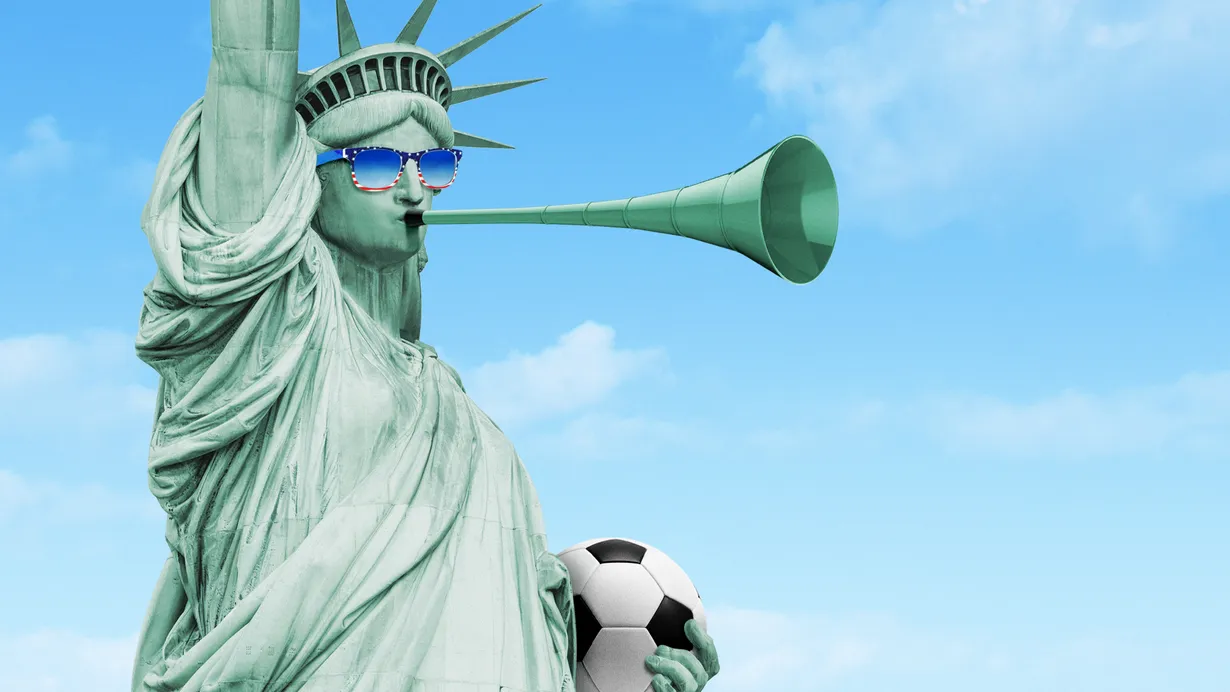
    The US and UK share “a friendship unlike any other on Earth”, Donald Trump has said, during what is widely being seen as a hugely successful state visit by King Charles.

    After delivering a much-praised speech to Congress, the King, with Queen Camilla, last night joined the US president and first lady for a star-studded banquet. In a playful toast, Charles joked with the president and presented him with the bell from the British Second World War submarine, HMS Trump.

    What did the commentators say?
    Officially a celebration of 250 years of American independence, the three-day visit was “billed as a rescue mission”, said the BBC’s North America correspondent Anthony Zurcher. With US-UK relations “strained” by Britain’s refusal to fully back the US-Israeli war against Iran, “the King’s goal has been to ease those tensions with a royal charm offensive”.

    Charles delivered a “masterclass in Trump II diplomacy” at the banquet, said Shawn McCreesh at The New York Times. His speech had “all the right ingredients”: “dry British understatement”; jokes tailored to “Trump’s proclivities”; “a little obsequiousness balanced with a little prodding about Nato”, and “the shiniest, Trumpiest of gifts”.

    The president was “on his best behaviour” and, apart from one protocol-breaking moment when he suggested that the King had agreed with his views on Iran’s nuclear ambitions, he “seemed like putty” in the monarch’s hands.

    “Entirely predictably”, Charles’ speech to Congress did not directly mention Iran, Israel, climate change, immigration, Jeffrey Epstein, “nor a bunch of other hot potatoes in the Trump era”, said David Smith in The Guardian. But it was “exquisitely measured” in its emphasis on the “common bonds that long predate” this president.

    Charles showed “deep respect for his hosts”, said CNN’s Stephen Collinson. But it’s no small irony that “it took a king to remind America of its republican values: the rule of law, democracy and the power of its international example”.

    What next?
    After recent “fraught” weeks, this state visit will “probably help stabilise relations” between Britain and America, said former Tory leader and foreign secretary William Hague in The Times. But “it cannot, on its own, reverse the trend of declining trust and mutual respect”. We will still look at Trump, “fearing this might be the future”, and the US will still “look at us and worry that our glories are all in the past”.


    THE EXPLAINER

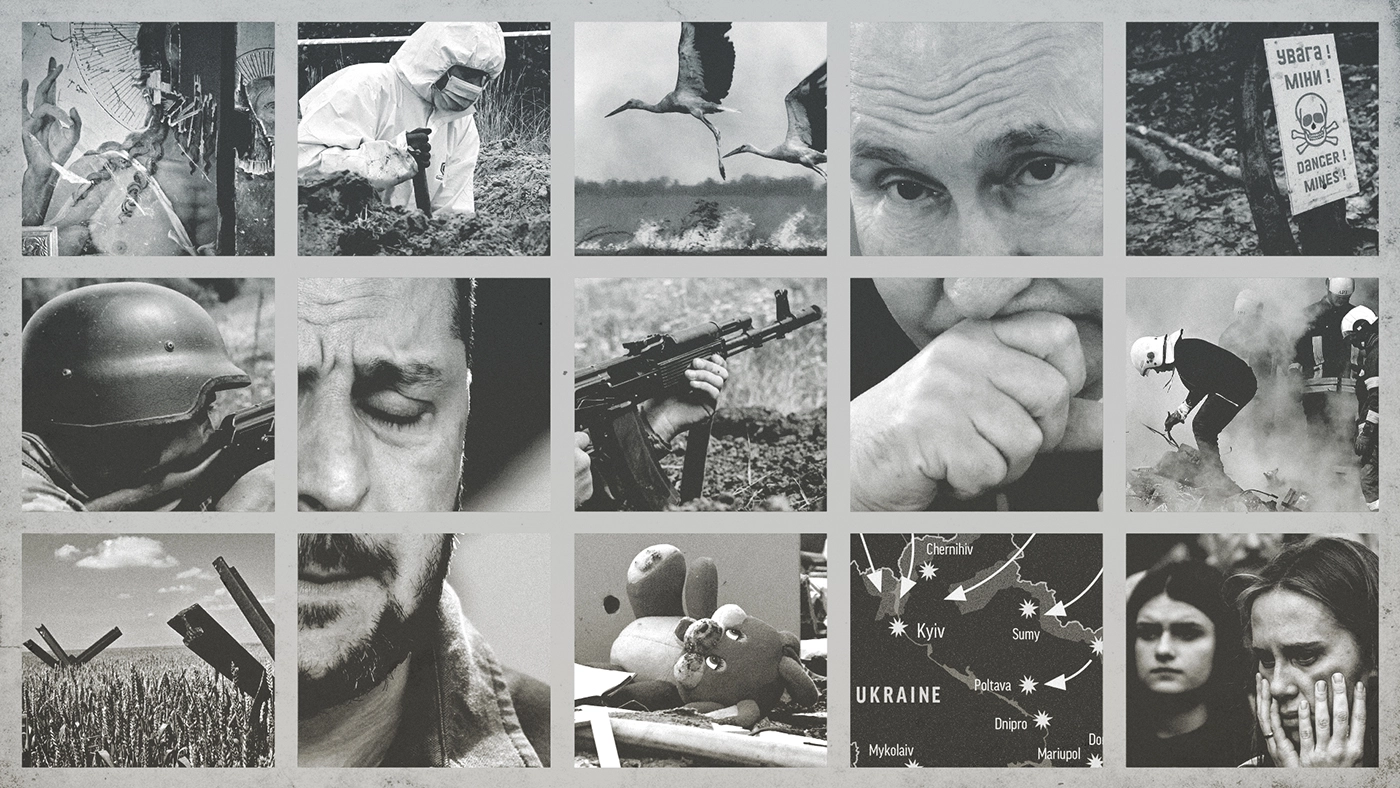
    Who is winning the Ukraine war?

    Volodymyr Zelenksyy has hailed a “new stage in the use of Ukrainian weapons” after his security services struck a Russian pumping station more than 900 miles (1,500km) from the border with Ukraine. The president said these long-range weapons, targeted at oil-producing infrastructure, would “limit the potential of Russia’s war”. Ukraine finally regained more territory than it lost in February, and built on these wins in March, but there is still no end in sight.

    Can Ukraine win?
    Kyiv’s “inherent weakness is that it depends on others for funding and arms”, said the BBC’s international editor, Jeremy Bowen. By contrast, Russia “makes most of its own weapons” and is “buying drones from Iran and ammunition from North Korea” with no limitations on how they are used. It also enjoys an advantage in raw manpower, bolstered by massive conscription drives.

    But a newly approved €90 billion loan from the EU will bolster Ukraine’s cause, allowing it to replenish both its air defences and its rapidly depleting stockpile of weapons, equipment and ammunition.

    How likely is a peace deal?
    The Trump administration has centred peace talks “around a core bargain”, said Samuel Charap and Jennifer Kavanagh on Foreign Affairs: that Ukraine cedes the roughly 20% of the Donbas region it still holds to Russia “in exchange for security commitments from the US and Europe”. Kyiv has raised the option of establishing a demilitarised “free economic zone” in eastern Donbas, but it would never agree to hand over control of territory.

    There is little incentive for Vladimir Putin to engage with peace talks now that Russia’s oil revenues are rising because of the war in the Middle East. Of course, he’d gladly have taken a “Kremlin-friendly peace plan that enshrines Ukraine’s perpetual subordination”, said The New York Times. But he’d also see “a failed process” as a victory if it leads Donald Trump to “pull remaining support for Ukraine”.

    How many troops have died?
    By the start of this year, Russian forces had suffered “nearly 1.2 million casualties” – “more losses than any major power in any war since World War II”, said the Center for Strategic & International Studies think tank. Ukrainian casualty tolls are estimated to be around 500,000 to 600,000.


    QUOTE OF THE DAY

    “I probably disagreed with everything he thought.”

    Roald Dahl’s long-time illustrator Quentin Blake tells The Telegraph he “got on very well” with the children’s author, but didn’t share his interest in “being provocative”.


    Poll watch

    More than half (55%) of Brits would “somewhat” or “strongly” support a one‑year rent freeze for tenants with private landlords. Only 21% oppose the idea, and the rest are unsure. YouGov surveyed 6,557 adults, following reports that Chancellor Rachel Reeves was considering banning landlords from raising rents for a limited period.


    IN THE SPOTLIGHT

    The state of London’s bridges

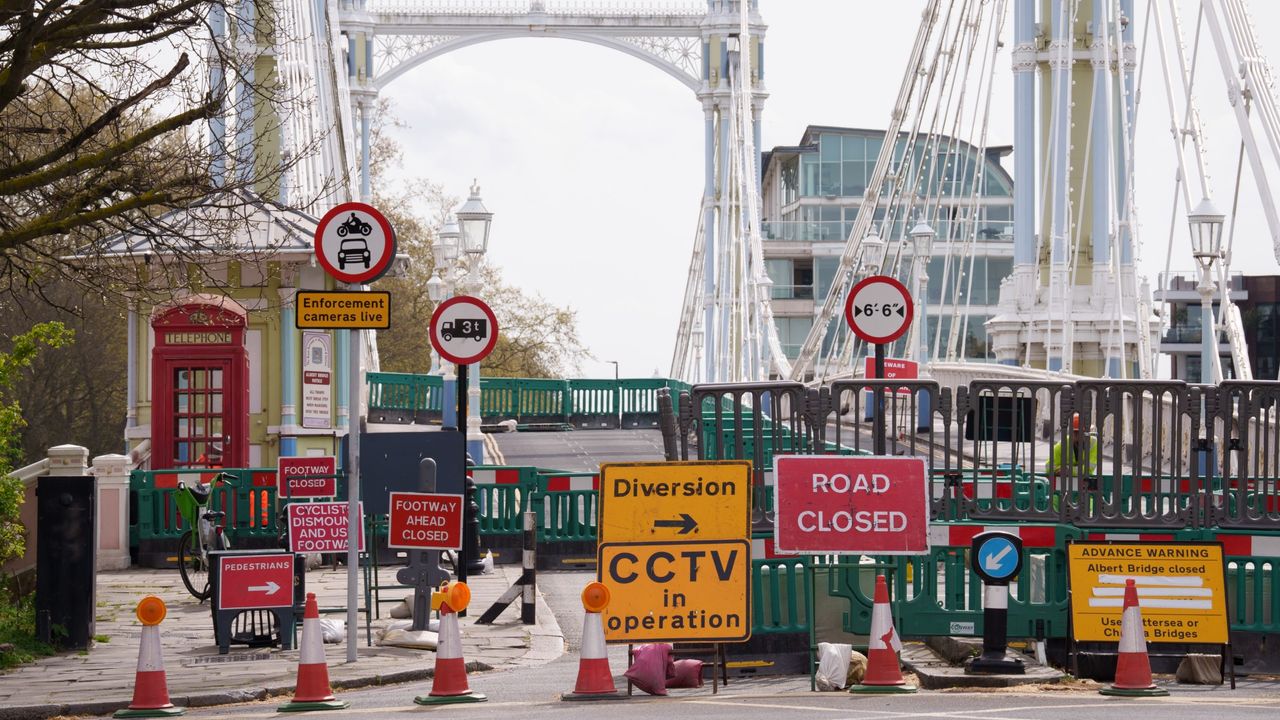
    “London’s bridges really are falling down,” said The New York Times, as the state of the capital’s river crossings made headlines across the Atlantic. Three Thames crossings are closed to cars and reopening them may not be a simple task.

    ‘National embarrassment’
    Engineers conducting a safety assessment of Hammersmith Bridge in 2019 noticed micro-fractures in the cast iron pedestals holding the bridge together. The west London crossing has been closed to cars ever since. Broadmead Road Bridge, a main route in Redbridge, northeast London, has been shut for several years and Albert Bridge (pictured above), “another vital west London crossing”, is shut to vehicles until the beginning of next year because of structural damage, said The Times.

    Three more London bridges – Westminster, Lambeth and Vauxhall –have also been placed on the “critical” list. Although these three aren’t at “immediate risk of closure, the news brings into sharper focus the state of the capital’s river crossings”. It has become “something of a national embarrassment”. London’s bridges are now a “target of international jibes”.

    ‘Managed decline’
    Many of the city’s most important crossings, like Hammersmith Bridge and Westminster Bridge, were built more than 100 years ago. They were never designed for today’s levels of traffic – both in terms of volume and weight – and local authorities are now struggling to afford their maintenance and repair.

    In 2023, the “State of the City Report” found that London’s bridges were in a “state of managed decline”, and £238 million a year needed to be spent to preserve their condition. From 2010-21, just £100 million had been spent.

    Simon Lightwood, the roads minister, has said Hammersmith Bridge is a “good candidate” for investment from the Structures Fund, a pot of government money reserved for infrastructure projects. Meanwhile, TfL has recently improved the road surfaces on Vauxhall and Lambeth Bridges – to protect “below deck structural elements”. But experts told the BBC that, as London’s infrastructure “ages and struggles to cope with more and heavier traffic”, it’s “inevitable” that other bridges “will need to be shut in the future”.


    Good day 🐅

    … for aspiring vets, who will soon be able to watch live medical procedures at London Zoo. A new animal hospital, which includes a public viewing gallery, was announced today – the Zoological Society of London’s 200th anniversary – after an unnamed benefactor made a £20 million donation.


    Bad day 🐚

    … for James Comey, the former FBI director, who has been charged with threatening Donald Trump’s life after sharing an image on Instagram last year. The now-deleted post showed seashells forming “86”, slang for getting rid of something, and “47”, seen as a reference to Trump being the 47th US president. Comey has said he is “still innocent”.


    PICTURE OF THE DAY

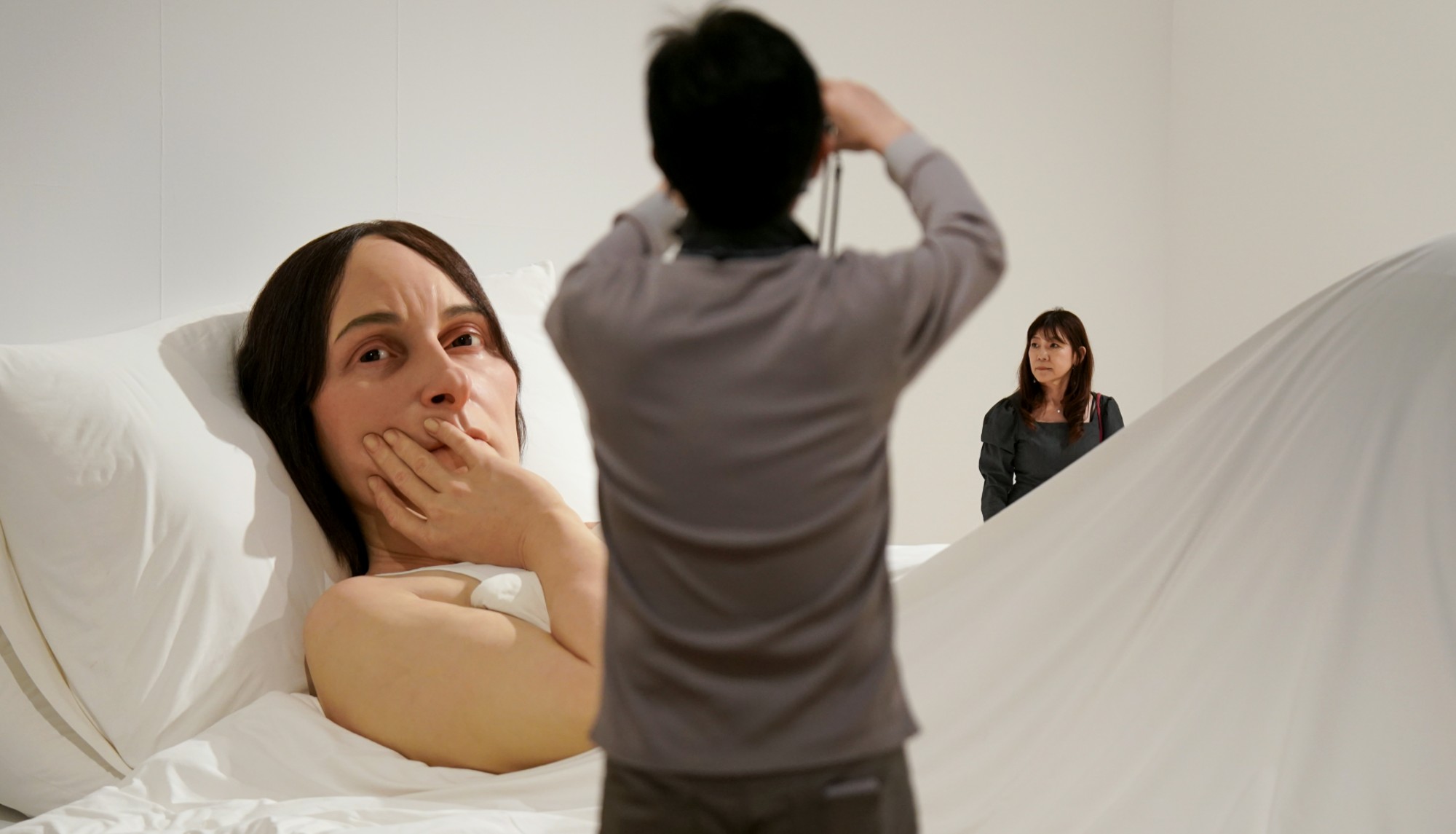
    Bed head

    A visitor photographs Ron Mueck’s “In Bed” installation at the Mori Art Museum in Tokyo. The London-based artist, known for his hyper-realistic sculptures, is opening his second solo exhibition in Japan today.

    Christopher Jue / Getty Images


    Puzzles

    Chain Word

    Try The Week’s new daily word challenge in our puzzles and quizzes section

    Play here


    THE WEEK RECOMMENDS

    The Cage: ‘enthralling’ follow-up to The Responder

    Tony Schumacher gave himself a “tough act to follow” with “The Responder”, said Carol Midgley in The Times. Based on the years he spent working as a police officer, the “quietly glorious” drama about a beleaguered first responder “electrified the flagging cop show format”.

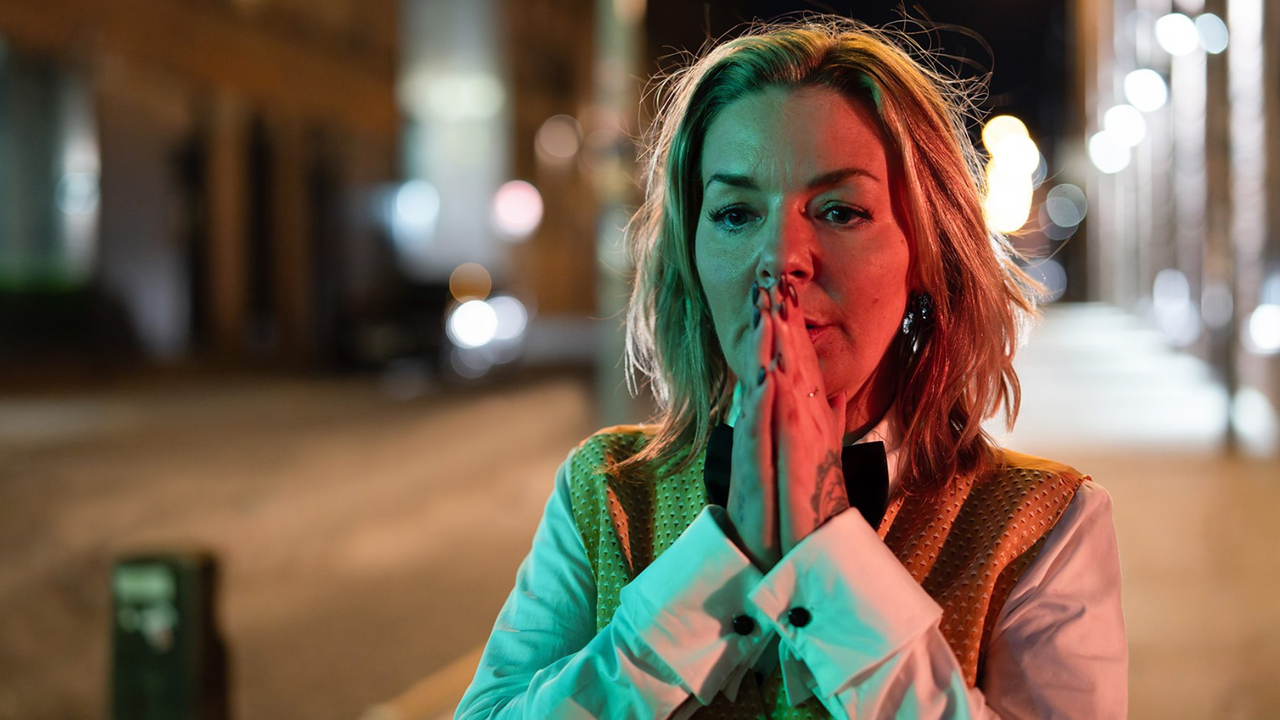
    His new series stars the “endlessly watchable” Michael Socha as Matty, a “likeable but chaotic” Liverpool casino manager, and Sheridan Smith (pictured above) as the “equally likeable” Leanne, who works as a cashier. Both have money worries and both start “cooking the books to steal cash until they realise they are both on the fiddle, and begin to work together”.

    Schumacher has a “rare talent for fleshing out every character and relationship”, said Lucy Mangan in The Guardian. Leanne is a single mother of two, facing eviction and struggling to make ends meet while looking after her kids and caring for her grandmother who has dementia. Meanwhile, “recovering drug addict” Matty is still in the “grip of a gambling addiction” and is “too ashamed of himself” to see much of his teenage daughter “whom he loves dearly”.

    On the surface, this is the tale of a robbery at a casino. But, in reality, it’s an “astonishing, deeply angry, deeply moving state-of-the-nation piece merely masquerading as a mesmerising, perfectly paced and plotted thriller”.

    Leanne and Matty soon find themselves “in over their heads” and “at the mercy of serious criminals”, said Anita Singh in The Telegraph. It’s an “enthralling watch”, carried by the “sheer force” of the “charisma” of Socha and Smith. “You’ll be rooting for this hopeless Bonnie and Clyde.”


    Statistic of the day

    6.4 million: The total number of babies expected to be born in the UK between mid-2024 and mid-2034. For the first time, this is fewer than the 6.9 million people expected to die. According to projections from the Office for National Statistics, the British population may reach 71 million by 2034, growing at a slower rate than previously thought.


    instant opinion

    Today’s best commentary

    Is Andy Burnham actually the answer?
    Jonn Elledge in The New Statesman
    If Andy Burnham can find a way to replace Keir Starmer, “there are reasons to be excited”, writes Jonn Elledge. He’s “personable, well-liked” and has “impressed as mayor of Greater Manchester”. But it’s not so easy “to convince people you’re on their side” from “inside Downing Street”. Getting the UK “out of this mess” requires a high “level of honesty with the public”, and it’s “not clear that Burnham’s political instinct is to tell people things they don’t want to hear”.

    I’m not just any shoplifter…
    Anonymous in the Daily Mail
    I’m a “discerning shoplifter” and take a “moral approach to my pilfering”, says an unnamed writer. I know it’s illegal, but I follow “my own shoplifting code of conduct”, stealing “low value” food items, and only when the other “contents of my basket come to more than £25”. I’ll admit “I do get a buzz”, but that’s not my “main reason”: I think “the big supermarket coffers” can “take it – and so I will”.

    Meghan has no reason to still be whingeing after all this time
    Celia Walden in The Telegraph
    “Another day, another chance to remind the world just how much hardship you’ve endured”, at least if you’re the Duchess of Sussex, writes Celia Walden. She’s now sharing “astrological Instagram stories” about having been through “the hardest seven years” of her life. “The strings on that violin must be almost worn through.” Yet her life actually “looks pretty damn good to most people”. She’d be far “more appealing” if “she dropped the whingeing”, so “how about that happy rebrand, Meghan”?


    word of the day

    Bone-ecru

    The matching shades of white worn by Queen Camilla and Melania Trump on the White House lawn yesterday. “Forget Queen Elizabeth II’s rainbow pastels,” said Harriet Walker in The Times; wearing bone-ecru has become the new “status flex”. While the Roman elite chose purple, ours “don spotless white to prove how removed they are from the messy realities of public transport or carrying one’s own coffee”.


    Evening Review was written and edited by Hollie Clemence, Jamie Timson, Rebecca Messina, Chas Newkey-Burden, Irenie Forshaw, David Edwards and Helen Brown, with illustrations from Stephen P. Kelly.

    Image credits, from top: illustration by Stephen P. Kelly / Getty Images; illustration by Stephen P. Kelly / Getty Images / AP Images ; Richard Baker / In Pictures / Getty Images; Christopher Jue / Getty Images; Element Pictures / BBC


    Morning Report and Evening Review were named Newsletter of the Year at the Publisher Newsletter Awards 2025
     

    Recent editions

    • Evening Review

      Japan pivots from pacifism

    • Morning Report

      Trump mulls Iran’s latest offer

    • Evening Review

      Trump spins the WHCA attack

    VIEW ALL
    TheWeek
    • About Us
    • Contact Future's experts
    • Terms and Conditions
    • Privacy Policy
    • Cookie Policy
    • Advertise With Us
    • FAQ
    Add as a preferred source on Google Add as a preferred source on Google

    The Week is part of Future US Inc, an international media group and leading digital publisher. Visit our corporate site.

    © Future US, Inc. Full 7th Floor, 130 West 42nd Street, New York, NY 10036.