The Week The Week
flag of US
US
flag of UK
UK
https://cdn.mos.cms.futurecdn.net/flexiimages/jacafc5zvs1692883516.jpg

SUBSCRIBE & SAVE

Less than $3 per week

Sign in
  • View Profile
  • Sign out
  • The Explainer
  • The Week Recommends
  • Newsletters
  • Cartoons
  • From the Magazine
  • The Week Junior
  • Student Offers
  • More
    • Politics
    • World News
    • Business
    • Health
    • Science
    • Food & Drink
    • Travel
    • Culture
    • History
    • Personal Finance
    • Puzzles
    • Photos
    • The Blend
    • All Categories
  • Newsletter sign up Newsletter
  • The Week Evening Review
    Broken Britain, the Thucydides trap, and Gen-Z twitchers

     
    TODAY’S BIG QUESTION

    Is Britain becoming ungovernable?

    Westminster’s latest political “merry-go-round has prompted soul-searching”, said Charlie Cooper on Politico. Despite being a G7 economy and “former global hegemon”, Britain is “increasingly a picture of political instability”.

    What did the commentators say?
    Following his election win, Keir Starmer promised to be honest with voters about “how tough this will be” and warned that “things will get worse before they get better”. But less than two years on, said Cooper, it is the parties on the extremes “offering quick and direct solutions” – such as Reform’s pledge to slash immigration or the Greens’ promises of wealth taxes – “that now win a hearing with voters”.

    The “constant churn” among PMs is “an indictment of leadership in the country”, said Tej Parikh in the Financial Times. But British voters also “struggle” to accept some necessary “trade-offs”. With the electorate’s lack of patience and the declining “calibre of public discourse”, it’s hardly surprising that “Britain gets cakeist and myopic leaders, who are low on reform and high on easy answers”.

    The hard truth is that this “omnicrisis” of low productivity, a housing shortage, social care strain, welfare reform and ballooning national debt is not “easy to answer”, said Isabel Hardman in The i Paper. Doing something about it all would require “a leader who doesn’t care about social media storms or polling fluctuations or the complaints of focus groups” and who can “switch off all that noise and fixate on the real problems”.

    What next?
    “Anyone who wants to replace Starmer has to start by accepting that he has done good things – just not enough and not at scale,” said Aditya Chakrabortty in The Guardian. Then they must “turn and face the country and tell us what they would do better”.

    A “deep and justified pessimism” is gripping the UK. The feeling is that “tomorrow will be worse than today, that our children will not enjoy the same standards of living that we have done. That is what any Labour leadership contest must address.”


    THE EXPLAINER

    What is the Thucydides trap?

    Chinese president Xi Jinping told Donald Trump last week that he hoped the US and China could avoid the “Thucydides trap”. He was referring to an ancient Greek theory of war that has become a staple of geopolitical commentary in recent years. But what do classical battles have to do with current US-China relations?

    What does the trap refer to?
    It’s the theory, re-popularised in the 2010s by US political scientist Graham Allison, that when a rising power threatens to displace an established power, the result is often war. It is named after Athenian general and historian Thucydides, whose account of the build-up to the fifth-century BC Peloponnesian War between Sparta and Athens included the observation that “the growth of power of Athens, and the fear that this instilled in Sparta, made war inevitable”.

    The implication is that, if an established superpower “manages the rising power badly”, it can feel “obliged to go to war when that’s not necessarily the only option”, said David M. Pritchard, a University of Queensland associate professor of Greek history, on The Conversation.

    How does it apply today?
    In 2026, the established superpower is the US, and the rising power is China. There is tension between the two over trade and tariffs, and over China’s claims to sovereignty over Taiwan. According to the Thucydides trap, if Washington insists on a policy of confrontation with Beijing, war will be the likely outcome.

    Xi’s remarks were “an entirely unsubtle warning, and even a threat”, said Aaron MacLean on The Free Press; he was making it clear that, to avoid conflict, the US must “radically change” its “attitudes and actions”, and “accommodate” itself “to a Chinese-led world order”.

    This is the lesson to be learned from the Peloponnesian War, said Pritchard on The Conversation. Sparta “had good reason to fear the rising Athenians”, but curbing their rise came “at a terrible cost”: decades of war wiped out much of its fighting population and forced it to depend on unreliable allies, triggering its eventual decline. If it had found a way to accommodate Athens, Sparta could have continued as a superpower “well into the fourth century”.


    QUOTE OF THE DAY

    “We were speechless. We couldn’t believe our eyes when we first saw that.”

    Trinity College Dublin’s Elisabetta Magnanti tells The Associated Press about the moment researchers discovered a copy of the oldest-known English poem. “Caedmon’s Hymn”, attributed to a seventh-century agricultural labourer, was found transcribed in a ninth-century manuscript in Rome’s National Library.


    Poll watch

    More than a fifth (22%) of NHS nurses say low staffing levels put patients at high risk of harm. Two-thirds (69%) of the 13,000 nurses surveyed by the Royal College of Nursing had been forced to make “difficult decisions” about prioritising care. Just one in 10 said staffing levels were adequate.


    IN THE SPOTLIGHT

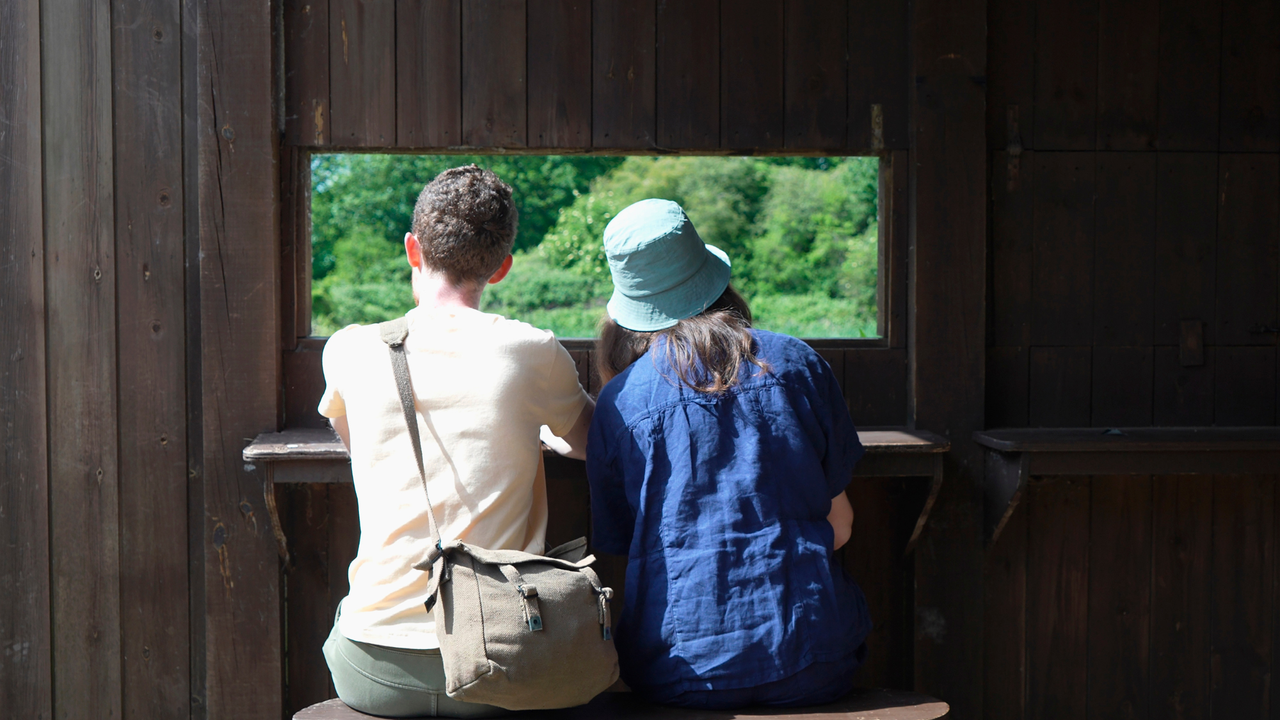
    Why birdwatching is a hit with Gen Z

    Birdwatching is the fastest-growing outdoor hobby among young people, according to a study commissioned by the Royal Society for the Protection of Birds. There has been a 47% increase in birdwatching across all ages since 2018, but a 1,088% surge among those aged 18 to 24 – suggesting around 750,000 Gen Zers are budding ornithologists.

    ‘Competitive side’
    Gone are the days of birdwatching being classed as “niche or old-fashioned”, Molly Brown, an RSPB wildlife adviser, told The Guardian. It is attracting a “diverse” crowd because it is easy and cheap, and it doesn’t matter “how much or little” you know to begin with.

    Like a lot of other trends, social media has played a part. Birding apps such as Merlin Bird ID, and many online groups, are helping younger enthusiasts “connect with fellow birders and share tips and sightings”, Kabir Kaul, a 20-year-old wildlife campaigner, told The Times. Twitching is not without its “competitive side”, and young birdwatchers are getting into friendly battles to see “who can spot the most species”.

    Another benefit Gen Z fans are aware of is that regular birdwatching can help protect against cognitive decline in later life. A Canadian study, published in The Journal of Neuroscience, found that “brain regions linked to attention and perception” appeared denser in scans of “experienced” birdwatchers.

    ‘Grandma hobbies’
    Birdwatching isn’t the only real-world pastime surging among Gen Z. Younger people are creating an analogue hobby movement, said Fortune, although, ironically, usually with the help of social media. Newly cool “grandma hobbies” include “pottery, origami and even blacksmithing”. 

    Having a hobby is “really important” and we “don’t prioritise them enough”, said Jaime Kurtz, a professor of psychology at James Madison University in Virginia. They can help “reduce anxiety and stress”, build focus and offer a “sense of accomplishment”. That is certainly the case for 22-year-old twitcher Isaiah Scott, who told Fortune that he has racked up sightings of around 800 species so far. “It feels like a video game, but in real life.”


    Good day 🌴

    … for dates, of the edible variety. Ocado is reporting that sales of medjool dates have doubled over the past year, as viral recipes and demand for natural alternatives to ultra-processed sweet treats boost the popularity of the sticky fruit.


    Bad day 🍷

    … for French winemakers, as beer sales outstrip wine sales in the famously plonk-loving nation for the first time. French consumers glugged 22.1 million hectolitres of beer last year, compared with 22 million hectolitres of wine. Annual per-capita wine consumption in France has decreased by almost a third since the 1960s.


    PICTURE OF THE DAY

    Larger than life

    A sculpture of Brazilian football legend Pelé is lowered into place outside Jalisco Stadium in the Mexican city of Guadalajara ahead of this summer’s World Cup. The bronze statue, by artist Alejandro Velasco Mancera, is 6.5 metres tall and weighs three tons.

    Ulises Ruiz / AFP / Getty Images


    Puzzles

    Chain Word

    Try The Week’s new daily word challenge in our puzzles and quizzes section

    Play here


    THE WEEK RECOMMENDS

    Sunny UK terraces for al fresco drinks with a view

    The briefest spell of sunshine sends us rushing to the park or pub. But if you’re looking for somewhere a bit more special to soak up the predicted Bank Holiday rays, try a buzzy terrace with a view. From trendy, canal-side spots to swanky rooftop bars, here are some of the best.

    The Gun, Docklands, London
    Open all year round thanks to the retractable roof and glass walls, the views from the riverside terrace at The Gun are “superb”, said The Standard. Sip a glass of rosé and “feast on oysters” or, come summer, enjoy a pizza from a van in the riverside garden.

    Lock 91, Manchester
    This “charming canal-side garden” is one of the city’s “best-kept secrets”, said Secret Manchester. The fashionable bar is set within a carefully restored 19th-century lock-keeper’s cottage, and you can usually “snag a spot” on the “intimate” outdoor terrace.

    The Raeburn, Edinburgh
    The “secret rooftop terrace” of this “smart boutique hotel” becomes a “real suntrap” over summer, said Condé Nast Traveller. There’s also a first-floor mezzanine looking out over an “out-of-the-city type view that you won’t find anywhere else”.

    Rockwater, Hove
    “A beach bar with a rooftop terrace, what more could you possibly ask for?” said The Telegraph. Rockwater offers a “huge wine collection, along with cocktails and spritzes”, and a great selection of “luxurious seafood dishes” and handmade pizzas.

    Blackstock Roof Garden, Liverpool
    Set atop the newly revamped Blackstock Market, this “Mediterranean-inspired rooftop brings a slice of coastal Europe to Liverpool”, said Condé Nast Traveller. In the evening, the terrace is “the perfect place to dance under the stars”.


    Statistic of the day

    £81,000: The average private pension savings of British women nearing retirement age – almost half the male average of £156,000, according to figures released by the Pensions Commission. The government-backed body is to tell ministers that future pension reforms must seek to bridge the gender savings gap.


    instant opinion

    Today’s best commentary

    The result of normalising Reform’s ideas? Neighbour is turned against neighbour
    Nesrine Malik in The Guardian
    The “anti-migrant right has been given too much space” to turn “so-called legitimate concerns around immigration” into “covers for prejudice”, writes Nesrine Malik. And Reform’s local election success means “things will not get better”, as its councillors spread “further fear, suspicion and division”. How will ethnic minorities in Reform-led areas fare under a party that views them as “a threat to the social fabric of the very communities they live in”?

    I’ll decide, Olive, when it’s time to go to bed
    Kathleen Stock in The Times
    US entrepreneur Bill Nguyen says “his life has been taken over by an experimental AI agent called Olive”, writes Kathleen Stock. Like an “overbearing mother”, Olive is “buying him things, booking holidays, offering parenting advice and even telling him when to go to bed”. But there’s “life satisfaction” in “activities you dread beforehand, detest throughout, yet still face and overcome”. Tech bosses want us “lost in dazed, frictionless oblivion” when we actually need “grit, proactivity, self-discipline and focus”.

    The underappreciated glories of a ‘staycation’
    Ysenda Maxtone Graham in The Telegraph
    “Staycation” bookings “are sharply on the rise this year”, writes Ysenda Maxtone Graham. How wonderful. Remember how, during the “pandemic summers”, we loved “discovering the beauties on our own doorstep”? Britain has “incredible” food, architecture and “changing landscapes”, from “raw coasts” to “rolling hills”. Staycationers can visit friends and relatives and speak their “native language” with “locals in pubs”, and if it rains, “you don’t feel so personally affronted”. Best of all, “when you’ve had enough, you can drive home”.


    word of the day

    Heartlands

    The areas Prince William will retain under plans to sell off a fifth of his 135,000-acre Duchy of Cornwall estate. He will then invest £500 million into housing and nature projects in the five “heartlands” in Cornwall, the Isles of Scilly, Dartmoor, northeast Somerset, and Kennington in south London.


    Evening Review was written and edited by Rebecca Messina, Elliott Goat, Chas Newkey-Burden, Deeya Sonalkar, Irenie Forshaw, David Edwards, Helen Brown, and Kari Wilkin, with illustrations from Stephen P. Kelly and Julia Wytrazek.

    Image credits, from top: illustration by Stephen P. Kelly / Shutterstock / Getty Images; Kenny Holston / Pool / Getty Images; illustration by Julia Wytrazek / Getty Images; Ulises Ruiz / AFP / Getty Images; Capuski / Getty Images

    Morning Report and Evening Review were named Newsletter of the Year at the Publisher Newsletter Awards 2025
     

    Recent editions

    • Sunday Shortlist

      Twin vengeance

    • Saturday Wrap

      Is this the new Covid?

    • Evening Review

      Dems call for corruption crackdown

    VIEW ALL
    TheWeek
    • About Us
    • Contact Future's experts
    • Terms and Conditions
    • Privacy Policy
    • Cookie Policy
    • Advertise With Us
    • FAQ
    Add as a preferred source on Google Add as a preferred source on Google

    The Week is part of Future US Inc, an international media group and leading digital publisher. Visit our corporate site.

    © Future US, Inc. Full 7th Floor, 130 West 42nd Street, New York, NY 10036.