The Week The Week
flag of US
US
flag of UK
UK
https://cdn.mos.cms.futurecdn.net/flexiimages/jacafc5zvs1692883516.jpg

SUBSCRIBE & SAVE

Less than $3 per week

Sign in
  • View Profile
  • Sign out
  • The Explainer
  • The Week Recommends
  • Newsletters
  • Cartoons
  • From the Magazine
  • The Week Junior
  • Student Offers
  • More
    • Politics
    • World News
    • Business
    • Health
    • Science
    • Food & Drink
    • Travel
    • Culture
    • History
    • Personal Finance
    • Puzzles
    • Photos
    • The Blend
    • All Categories
  • Newsletter sign up Newsletter
  • The Week’s Sunday Shortlist
    A ‘jarring and confident’ thriller, Spiderman goes noir, and a new novel by Elizabeth Strout

     
    FILM REVIEW

    Is God Is

    “Every filmmaker has to start somewhere. Aleshea Harris is starting at the top,” said William Bibbiani in The Wrap. In adapting her own award-winning 2018 play, Harris has made “one of the most stunning first features in recent memory,” a “jarring and confident” thriller about adult twin sisters on a mission to find and kill their monstrous father. Racine and Anaia, played by Kara Young and Mallori Johnson, were scarred during childhood by the man credited here as Man, and they thought their mother had died in a fire he set. But she tasks them with exacting revenge, and they treat her words as Scripture. “Is God Is is Old Testament. It’s Greek tragedy. It’s gothic. It’s punk. It’s grotesque. It’s beautiful.” Harris asked a lot of her actors, but “each of them understood the assignment,” said Odie Henderson in The Boston Globe. Young is a two-time Tony winner, and she and Johnson are “superb” as the volatile Racine and watchful Anaia, who during their cross-country hunt tangle with both of their father’s subsequent wives. Meanwhile, Sterling K. Brown “makes Man’s over-the-top wickedness terrifying.” For a revenge picture, Is God Is “doesn’t find quite the release one might expect,” said Guy Lodge in Variety. Even so, it’s a remarkable movie, both “wildly entertaining” and “viciously upsetting” as it dramatizes the deep, damaging effects of a society in which patriarchy and physical violence hold so much sway. 


    tv review

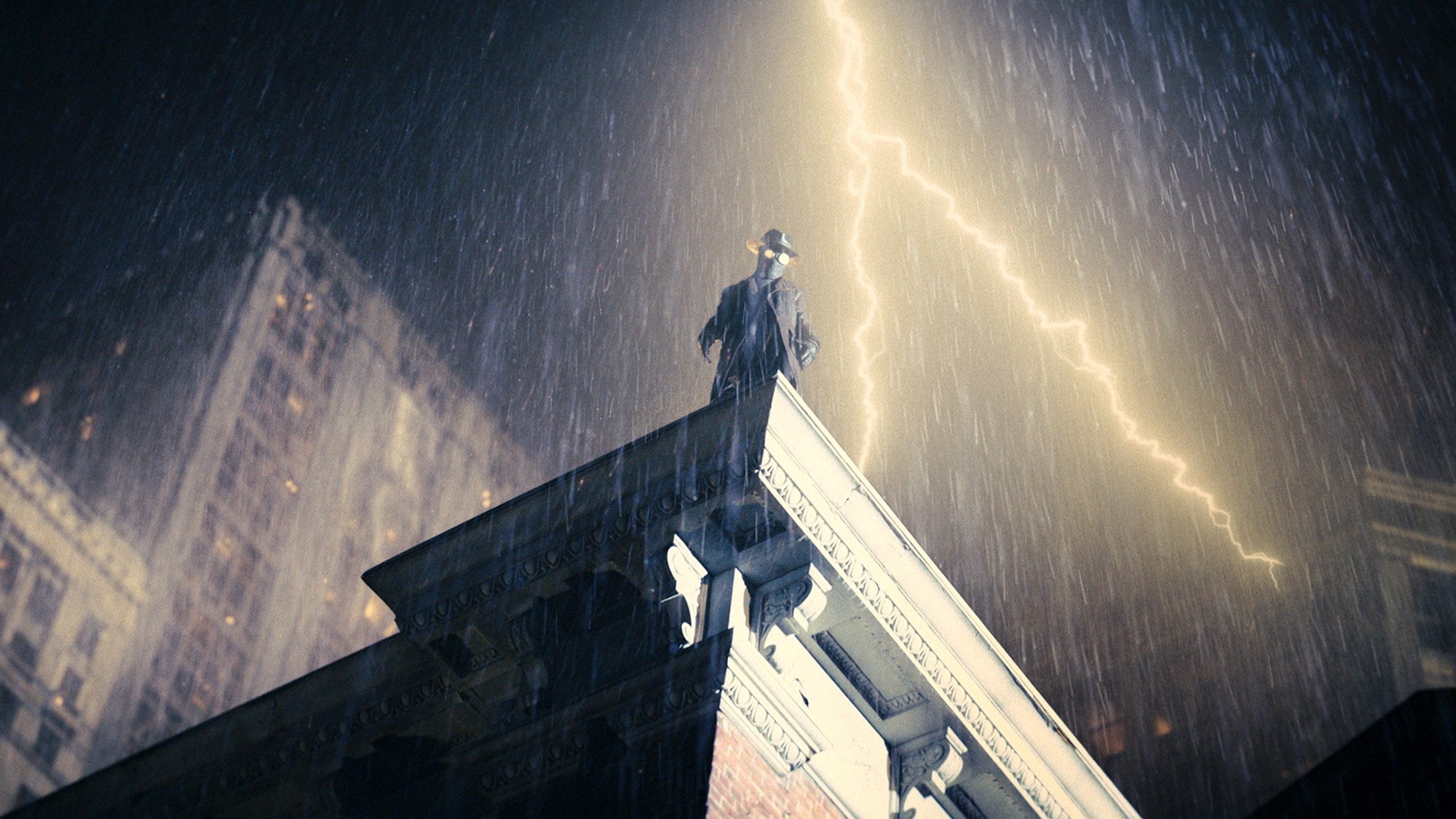
    Spider-Noir

    What do you get when you cross Raymond Chandler with Stan Lee? The answer may look something like this live-action new Marvel series about a hard-boiled detective with web-slinging proclivities. And why not cast Nicolas Cage as the alt-Spidey to make it all a bit wilder? Giving flesh to a voice role he filled in 2018’s Into the SpiderVerse, Cage plays gumshoe Ben Reilly, whose alter-ego, the Spider, comes out to fight villains with unusual abilities of their own. The series will be available both in black and white and “TrueHue” colorization. Brendan Gleeson and Li Jun Li co-star.
    Monday, May 25, at 9 p.m., MGM+


    FOOD & DRINK

    Vegan ice cream: Top pints

    We seem to have entered “a vegan ice cream golden age,” said Mace Dent Johnson in The New York Times. The best options “can even replace the real deal,” but you have to choose carefully to avoid the flops. To help, we sampled 55 pints and selected these as the crème de la faux crème.

    365 Whole Foods Market Oatmeal Creme Cookie Oat Milk Frozen Dessert ($5)
    The “dense, creamy texture” of Whole Foods’ frozen oat milk is already appealing, and this flavor adds high-quality mix-ins including tasty oaty bits, marshmallow crème, and pools of molasses.

    Van Leeuwen Vegan Peanut Butter Brownie Honeycomb ($9)
    The brownie bits and honeycomb pieces disappoint, but this vegan ice cream is “one of the richest we tried,” laced with walls of sweet-salty peanut butter.

    Jeni’s Lemon Bar NonDairy Frozen Dessert ($9)
    “This spot-on take on the lemon bar balances coconut cream, tart lemon curd, and crumbly shortbread.”


    BOOK OF THE WEEK

    The Things We Never Say

    by Elizabeth Strout

    “The Things We Never Say is classic Elizabeth Strout,” said Adam Begley in The Atlantic. There’s the usual New England setting, some family secrets, and an unhappy marriage. There are a few differences, though. We’re not in Maine, the Pulitzer Prize winner’s usual locale, but in coastal Massachusetts, where we’re following a protagonist very unlike Strout’s most famous creation, the brittle, blunt Olive Kittredge. Artie Dam is a 57-year-old married high-school history teacher who is widely beloved by his students. Still, Artie, “suffers from the most common ailment in Strout’s world: loneliness.” When we meet him, he’s even contemplating suicide. However, it’s not a mortal threat that carries the story; it’s Strout’s usual magic—“harpooning the reader with language as plain as a Congregational church and a cast of characters no more exotic than your neighbors.”

    “Strout’s capacious empathy and rigorous attention to the nuances of human behavior and psychology are as evident as ever,” said Priscilla Gilman in The Boston Globe. A decade after a fatal tragedy that Artie had no part in but has believably infected his relationships with his wife and son, Artie feels his isolation growing when his friend Flossie, one of the only people he feels he can confide in, reveals she’s moving away. Unfortunately, “this is by far Strout’s bleakest book,” and it isn’t helped by also being her most political, as she has tied Artie’s despair in part to the imminent 2024 re-election of President Trump. Her story “seems to lose its bearings” because she tries to make it a parable for where America is headed. You can agree that Trump is ruining the country and still not want to hear the 2024 or 2025 details repeated here, said Maggie Shipstead in The New York Times. “On the other hand, there’s a poignancy to the way Strout sets Artie’s personal disillusionment against the backdrop of a larger grief.”

    Despite the novel’s accretion of tragedies new or remembered, said Ron Charles in his Substack newsletter, “the story keeps ascending toward a sense of astonishment at the interior complexity of life.” Artie eventually expresses amazement at the hidden layers of every person he knows, including himself. Yet he remains a relative innocent for a man his age, unable to accept the griminess of the world as it is outside his classroom. Strout has said she loves him, and while “such affection would typically be deadly for a serious novel,” hers is “the love of a Protestant God who spares us no agony on the path to beatitude.” At the end of his journey, he finds no simple answers. Still, the universe “feels a little more comprehensible with a novel this good in it.”


    OBITUARY

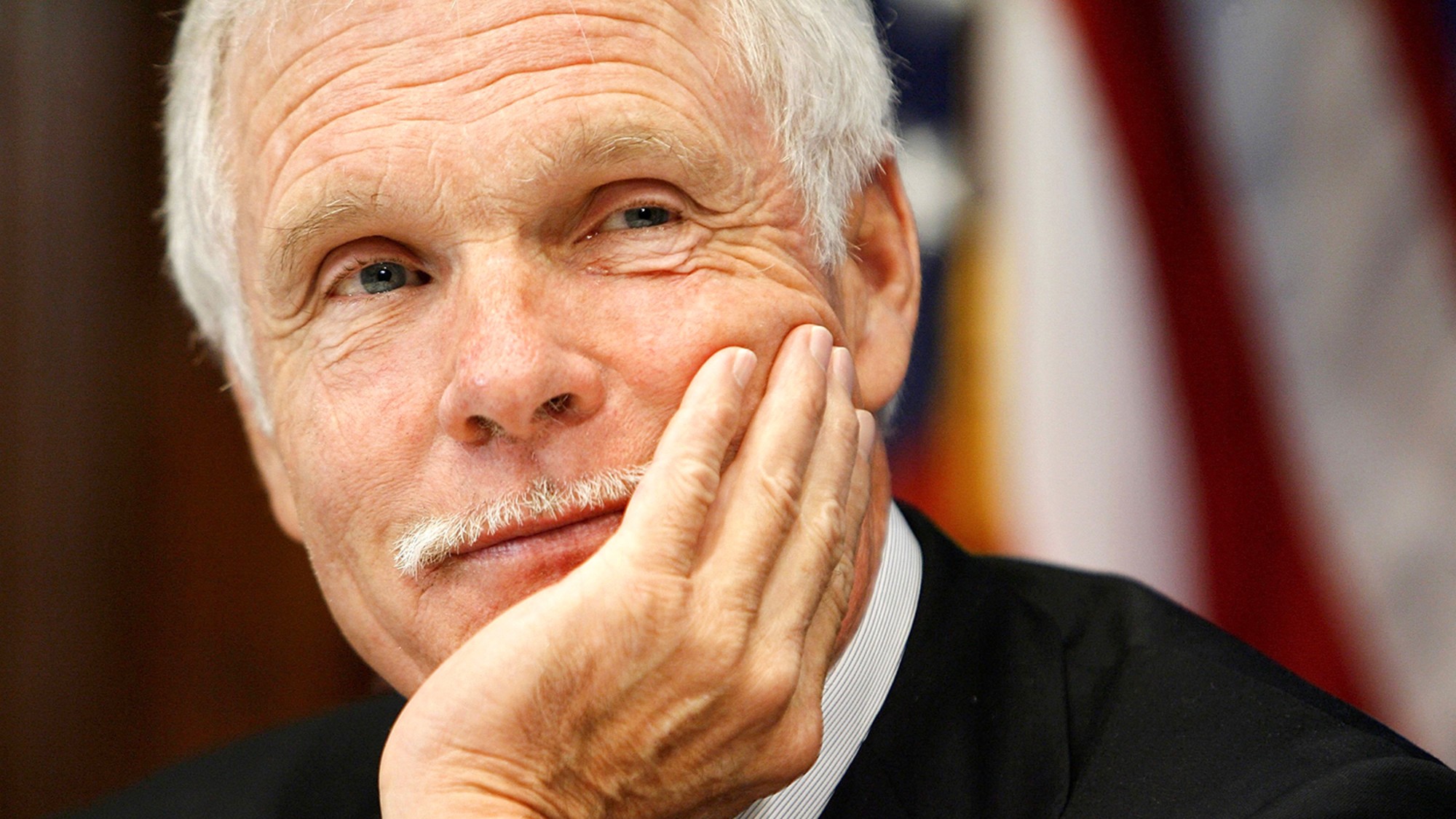
    Ted Turner

    The pugnacious media mogul who founded CNN

    Ted Turner made television news a pervasive presence. Before he started the first 24-hour cable news channel, the Cable News Network, in 1980, Americans got their news from the three major networks’ 6:30 p.m. broadcasts. By 7 p.m., Turner said, “the news was over.” CNN upended that model, and it was just one of Turner’s achievements. He built the Atlanta-based Turner Broadcasting System into a juggernaut incorporating seven cable networks. A ferocious competitor, he owned three sports teams, including the Atlanta Braves, and skippered his yacht to a win in the 1977 America’s Cup. Along the way he piled up billions of dollars but later gave much of it to charity, and bought and conserved nearly 2 million acres of wildland. Turner did none of this quietly. Headstrong and an incorrigible womanizer whose three wives included actress Jane Fonda, the “Mouth of the South” challenged rival Rupert Murdoch to a fistfight, called Christianity “a religion for losers,” and compared himself to Winston Churchill and Alexander the Great. “If only I had a little humility,” he once said, “I’d be perfect.” 

    Raised in Savannah, Ga., Robert Edward Turner III was shaped by his “complicated relationship with his father,” an abusive drunk who ran a billboard company, said The Wall Street Journal. Turner both feared him and sought his approval. After military school he attended Brown University, but he was suspended for bedding a woman in his dorm room; he left Brown and returned to work for his dad. When the elder Turner shot himself dead in the bathtub, Turner inherited the business at 24. He “buried his shock and grief in work,” said CNN.com. He bought up radio stations, then a struggling Atlanta TV station. He turned it around by acquiring the rights to Braves games, and as it became profitable “he started to think bigger.” Beaming the TV signal up to a satellite, he created what became TBS, “cable TV’s first superstation,” reaching 2 million subscribers with a lineup of sports, movies, and sitcoms. 

    Turner’s move into 24-hour news was seen as a “major gamble,” said The Washington Post, and CNN, which went live on June 1, 1980, had a rocky start. “Initially laughed off” due to its “lowbudget look” and technical snafus, it bled tens of millions of dollars in its first five years. But gradually it “upended the way news was consumed, riveting audiences” by covering stories such as the 1989 fall of the Berlin Wall as they unfolded. CNN’s fortunes took a leap during the 1991 Gulf War, said the Associated Press. While most TV journalists fled Baghdad, CNN correspondents stayed put and captured vivid scenes, including anti-aircraft tracers lighting up the sky and reporters “flinching from the concussion of bombs.” CNN’s coverage won a Peabody Award, and in 1991 Turner was named Time’s man of the year.

    As he notched business wins, Turner earned a reputation “for philandering, drunkenness, and public misconduct,” said The New York Times. His marriages were “rocked by open displays of infidelity,” and he “further tarnished his image by uttering ethnic and racial slurs.” But he “could nonetheless be a man of great charm.” Fonda, his wife from 1991 to 2001, called him “a 3D-stereophonic, Shakespearean-level sound-and-light show” and the public saw him as a lovable rogue. Turner continued to expand TBS, buying the Hanna-Barbera catalog and the MGM film library to create the Cartoon Network and Turner Classic Movies. But by the mid-1990s, he “appeared to have reached the limit of his empire-building ambitions.” In a move he later termed a terrible mistake, he sold TBS to Time Warner, giving up an operational role. When Time Warner made what would prove a disastrous merger with AOL in 2001, he resigned amid reports he’d been forced aside, said NBCNews.com. That “effectively marked the end of his reign as a media industry chief.”

    In the ensuing years Turner threw himself into philanthropy and conservation, said The Telegraph (U.K.). He donated $1 billion to U.N. charities and “supported a range of environmental initiatives.” Buying land in a dozen states, he acquired the nation’s largest herd of bison and started the bison-focused chain Ted’s Montana Grill. In 2018, Turner revealed he had Lewy body dementia, a degenerative brain disorder. Despite his regrets over the Time Warner debacle, he looked back fondly on a career he said was guided less by a profit motive than a spirit of adventure. “Hardly anybody wins all the time,” he said in 2008. “I’ve won more than most.”




    Sunday Shortlist was written and edited by Susan Caskie, Ryan Devlin, Chris Erikson, Chris Mitchell, and Matt Prigge.

    Image credits, from top: Amazon/Everett, Prime, Getty (2)
     

    Recent editions

    • Saturday Wrap

      Is this the new Covid?

    • Evening Review

      Dems call for corruption crackdown

    • Morning Report

      What happened at Trump’s China summit

    VIEW ALL
    TheWeek
    • About Us
    • Contact Future's experts
    • Terms and Conditions
    • Privacy Policy
    • Cookie Policy
    • Advertise With Us
    • FAQ
    Add as a preferred source on Google Add as a preferred source on Google

    The Week is part of Future US Inc, an international media group and leading digital publisher. Visit our corporate site.

    © Future US, Inc. Full 7th Floor, 130 West 42nd Street, New York, NY 10036.