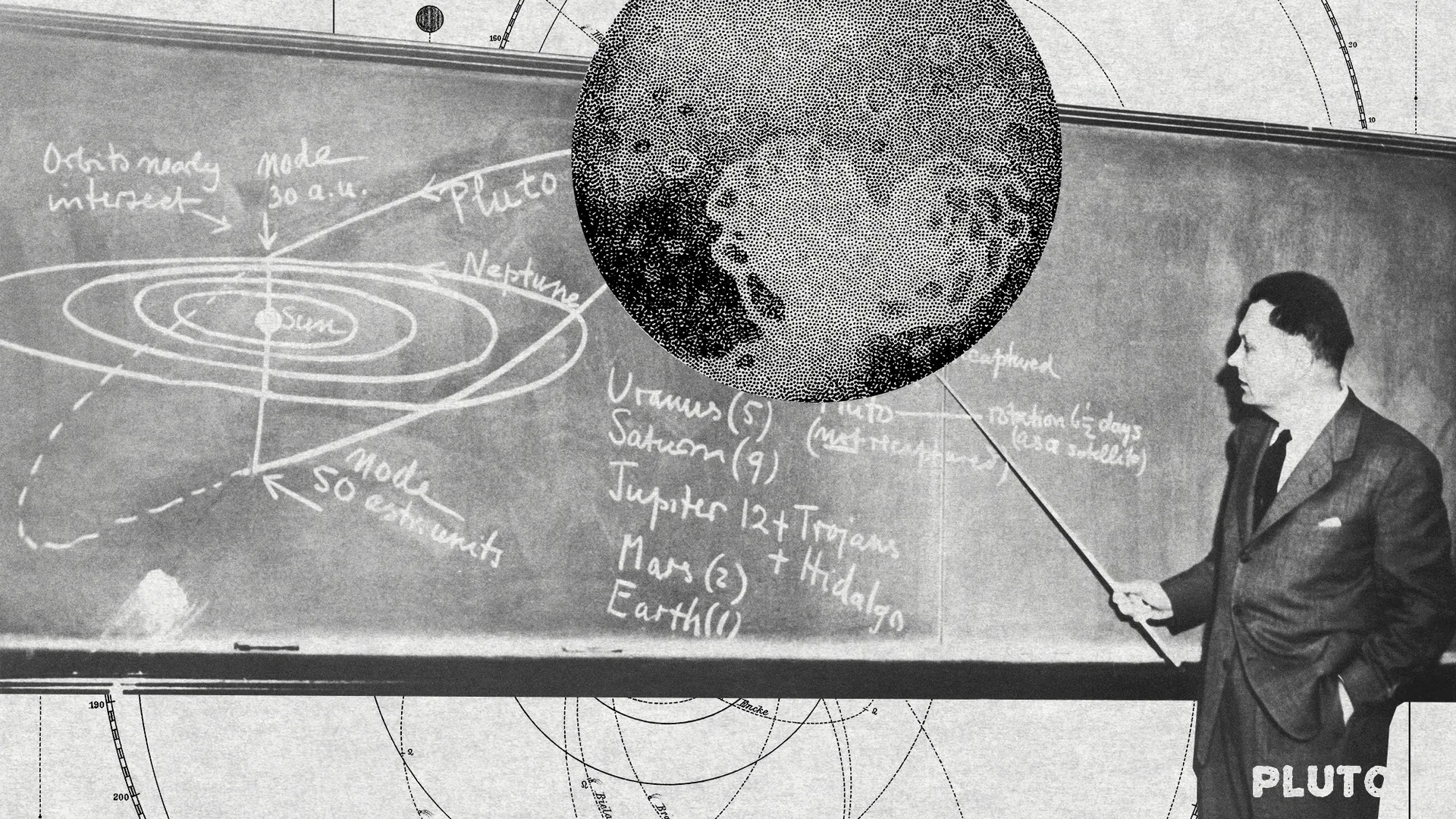
There has been a fierce debate over the past two decades about the standing of the distant icy world of Pluto after it was contentiously stripped of its planethood and reclassified as a dwarf planet. NASA Administrator Jared Isaacman has indicated that he might revisit the matter, but the decision won’t be easy, said The Observer, because scientists are still “worlds apart” on the issue.
Pluto was discovered on Feb. 18, 1930, by American astronomer Clyde Tombaugh. For 76 years, the “tiny ball of rock and ice” was recognized as the ninth, smallest and most distant planet of the solar system. But in 2006, nine years after Tombaugh died, members of the International Astronomical Union voted on the criteria for a planet.
To qualify, the group decided, an object must orbit the sun, be nearly round and be the largest object in its path. Pluto meets the first two conditions but not the third, because it shares its orbit with other icy objects in a region called the Kuiper Belt. So its status was downgraded to a dwarf planet. Now, Isaacman has signaled that the space agency might reexamine the case for Pluto to regain its planetary status.
With an “echo of MAGA,” “make Pluto a planet again” is a phrase that suggests a “nostalgic journey back to a past of certainties,” when “everything was in its right place in the heavens,” said The Observer. But “actually, it’s the Plutonists who represent the argument for radical change,” and vocal supporter and planetary scientist Alan Stern has calculated that there might be as many as 1,000 planets in the solar system. But first, the best thing that NASA and other Pluto advocates can do is “escalate the discussion,” said Space.com (a sister site of The Week). |