The Week The Week
flag of US
US
flag of UK
UK
https://cdn.mos.cms.futurecdn.net/flexiimages/jacafc5zvs1692883516.jpg

SUBSCRIBE & SAVE

Less than $3 per week

Sign in
  • View Profile
  • Sign out
  • The Explainer
  • The Week Recommends
  • Newsletters
  • Cartoons
  • From the Magazine
  • The Week Junior
  • Student Offers
  • More
    • Politics
    • World News
    • Business
    • Health
    • Science
    • Food & Drink
    • Travel
    • Culture
    • History
    • Personal Finance
    • Puzzles
    • Photos
    • The Blend
    • All Categories
  • Newsletter sign up Newsletter
  • The Week Evening Review
    Netanyahu’s ‘climbdown’, travel bans, and a dating app disruptor

     
    TODAY’S BIG QUESTION

    Is Netanyahu’s balancing act slipping?

    Donald Trump “lashed out” at Benjamin Netanyahu last night in an “expletive-laden call” about Israel’s actions in Lebanon, US officials told news site Axios. One source paraphrased Trump’s remarks to the Israeli leader: “You’re fucking crazy. You’d be in prison if it weren’t for me. I’m saving your ass. Everybody hates you now. Everybody hates Israel because of this.”

    Trump publicly described the call as “very productive”, saying he had demanded that Israel abandon plans for a “major raid” and that Netanyahu had “turned his troops around” as a result. But Netanyahu is caught between Trump’s demands to end the bombardment of Lebanon, which threatens peace talks with Iran, and domestic pressure to escalate the campaign against Hezbollah.

    What did the commentators say?
    The Israeli prime minister’s “climbdown” to Trump provoked criticism from “across the political spectrum”, said James Shotter in the Financial Times. There was already “mounting frustration in Israel at the failure to defang Hezbollah”, and polls suggest Israelis “favour more aggressive action” against the group. Netanyahu is also worried that any US-Iran deal will “leave Israel’s core concerns – Iran’s stockpile of enriched uranium, its ballistic missile program and regional proxy network – largely unaddressed”, said Tal Shalev of CNN’s Jerusalem bureau.

    “It’s hard to overstate how deeply Netanyahu views this moment as a possible personal and political defeat,” Danny Citrinowicz, senior researcher at Israel’s Institute for National Security Studies, wrote on X. The man who built his political career on confronting Iran’s nuclear ambitions may be forced to accept an agreement that “not only legitimises the very regime he sought to weaken but also exposes the collapse of his long-standing Iran doctrine”.

    What next?
    Hours after Trump announced the ceasefire agreement, Israeli attacks on southern Lebanon resumed. At least eight people have been killed today, according to Lebanese state media. In a statement, Netanyahu said he had told Trump that Israel would continue its operations until Hezbollah’s attacks stopped. “Our position remains the same,” Netanyahu wrote.

    The Lebanese government, which wants Hezbollah to disarm, began direct negotiations with Israel today. Iran continues to insist that any ceasefire between the US and Iran hinges on peace in Lebanon. A senior Iranian military officer said that resumption of hostilities with the US was “inevitable”.


    THE EXPLAINER

    Why Piker and Uygur were banned from the UK

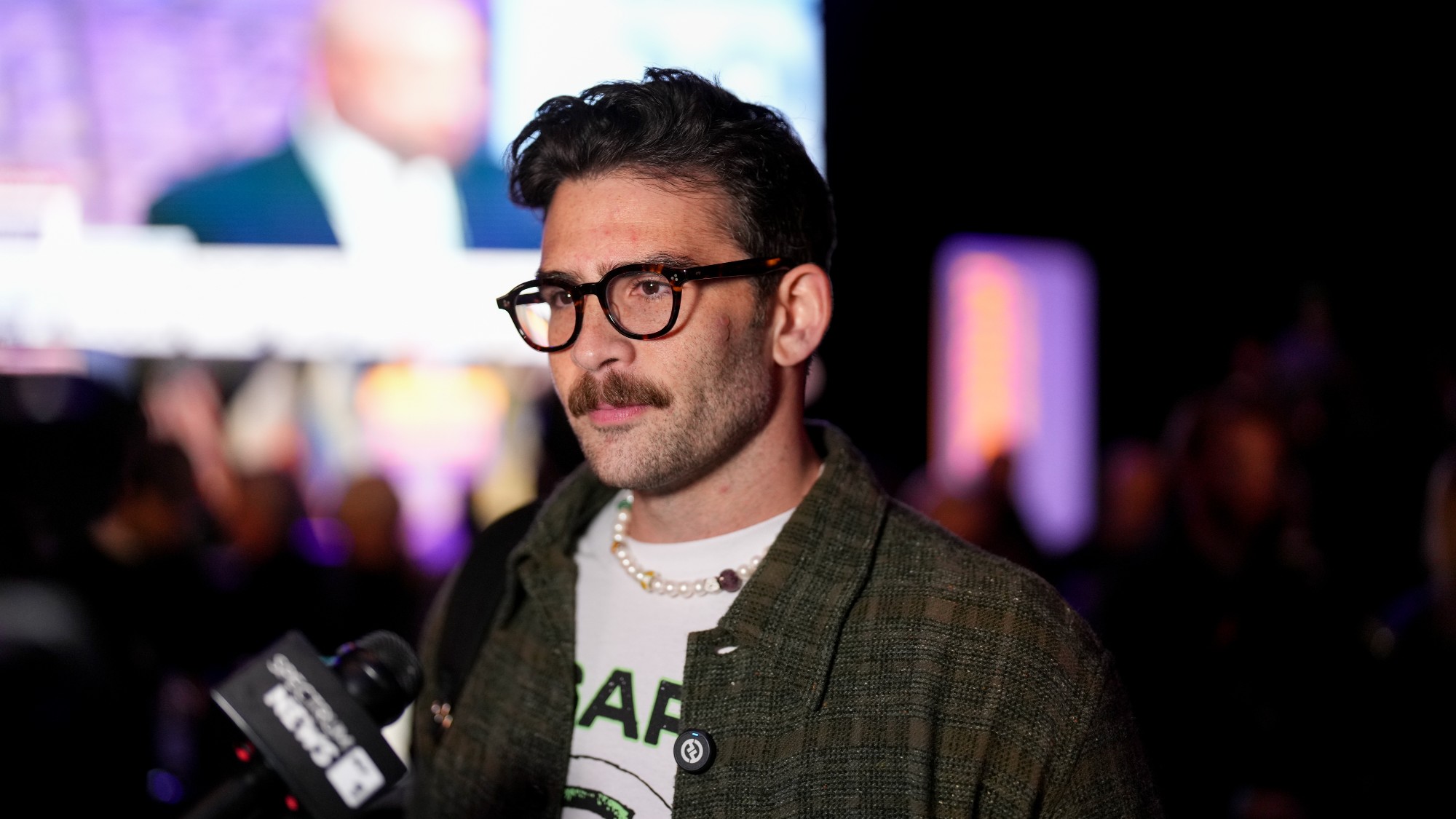
    Two controversial US political commentators accused of spreading anti-Israeli rhetoric have been barred from entering the UK. Cenk Uygur and his nephew Hasan Piker (pictured above) had been due to appear at the SXSW London culture and tech festival this week, but their visas were revoked by the Home Office on the grounds that their presence “may not be conducive to the public good”.

    Why have they been banned?
    Home Secretary Shabana Mahmood decided to ban the pair “due to fears they could fuel antisemitism”, said The Times. Home Office decisions to refuse or cancel an electronic travel authorisation, which allows foreign nationals travel to the UK for up to six months, are “based on an assessment of the potential risk an individual may pose to UK society”. 

    Turkish-American Uygur, who hosts the left-wing “The Young Turks” political talk show, has repeated “classic antisemitic tropes, such as the claim that Israel controls America”. Piker, who runs his own stream, has stood by his characterisation of Hamas as “1,000 times better” than Israel, arguing he is not antisemitic but anti-Israel.

    Who else has been banned?
    In May, 11 “far-right agitators” were barred from entering the UK to join Tommy Robinson’s Unite the Kingdom rally in London. Islamist hate preachers have also been prohibited from entering the country, as has US rapper Ye, formerly known as Kanye West, due to his history of antisemitic remarks.

    What has the reaction been?
    “Are we free any more?” Uygur said in a series of posts on X. “This is oppression of Western citizens by our own governments on behalf of a different country!” Britain has “revoked my visa as well”, Piker replied. “All at the behest of Israel. The West is betraying ‘liberal values’ for a genocidal fascist foreign government.”

    Left-wing outlet Novara Media’s Ash Sarkar, who was due to chair a discussion with Piker at SXSW, said the decisions were evidence of an “authoritarian turn motivated by Labour’s fear of being called antisemitic, and fear of being called out for their position on the genocidal war on Gaza”. But surely there “must be a distinction”, said broadcaster Jonathan Sacerdoti in The Spectator, “between protecting open argument and importing those whose public role is to turn conspiracy into cash”.


    QUOTE OF THE DAY

    “You legend. Manager loved it.”

    A Southampton FC official praises a junior staff member sent to spy on rival clubs, in a WhatsApp message revealed in a League Arbitration Panel report. The panel yesterday published its reasons for dismissing Southampton’s appeal against sanctions imposed over the “Spygate” scandal. 


    Poll watch

    More than a third (34%) of British adults think a university degree isn’t worth the time and money, up from 14% in 2005. In the latest annual British Social Attitudes survey, only 36% of the 850 people polled believed graduates end up being a lot better off financially, down from 50% two decades ago. 


    IN THE SPOTLIGHT

    The dating apps fighting swipe fatigue

    Millions of dating app users have “grown used to vetting partners with the flick of a finger”, said Catherine Pearson in The New York Times. But Bumble has “announced plans to kill off the swipe feature”, while newcomer app Breeze is taking another route.

    Ending ‘superficial, snap judgements’
    Many users are experiencing “dating app burnout”, said Pearson. In a bid to tackle the issue, Bumble is losing the swipe function and embracing AI-powered algorithms to re-engage those who “crave an experience that feels less overwhelming and more purposeful”. The aim is to “end superficial, snap judgements”.

    Meanwhile, “Breeze is a welcome disruptor in the dating app landscape,” said Isabella Silvers in The Telegraph. Since launching in Europe in 2020, after winning investment from the Dutch version of “Dragon’s Den”, the app has clocked up more than two million downloads. Users join “matching pools” that bring together “like-minded daters”, based on everything from hobbies (“outdoor lovers”) to niche interests (“rat owners/lovers”). So far, Breeze has arranged more than 737,000 dates, “resulting in 10 babies – that it knows of”.

    ‘Evidently working’
    The key to Breeze’s success seems to be “payment and consequences”, said Silvers. Users receive a “select number of profiles” at 7pm every day. After accepting a match, they specify their availability and pay a £9.50 deposit to secure a drinks date (or £4.50 for a “walk and talk”), “before being allowed to make a decision on anyone else”. The chat function for matched users is only opened up four hours before the date – prompting last-minute date confirmations, rather than “meaningless messaging”.

    Breeze is “evidently working”, especially in the Netherlands, where it’s “the third most popular and fastest-growing” dating app, said Lydia Spencer-Elliott in The Independent. “But can it save Britain’s dismal dating scene?” It can certainly save us from being stood up or ghosted or “strung out” for weeks with no follow-through. But “what it absolutely can’t save” us from “is ourselves”. It’s “knackering” to keep “riding the rejection rollercoaster of the dating-app landscape” – and, sometimes, “the best remedy is to give it all a rest”.


    Good day 💉

    … for disease control, with three new vaccines in development to tackle the latest Ebola outbreak in DR Congo and Uganda. The International Aids Vaccine Initiative, the University of Oxford and pharma company Moderna are all researching vaccines against the rare Bundibugyo strain that are being “urgently accelerated towards clinical trials”, according to the Coalition for Epidemic Preparedness Innovations.


    Bad day 🗒️

    … for press freedom, as the Pentagon bans journalists from its press office. After progressively limited access for accredited reporters over recent months, the US defence department has announced that the space has been redesignated as a Sensitive Compartmented Information Facility, a secure area used for handling classified information.


    PICTURE OF THE DAY

    Courting attention

    Naomi Osaka celebrates scoring a point against Aryna Sabalenka during their singles match at the French Open. The Japanese tennis champion was later knocked out of Roland Garros, but has won over fashion fans with her eye-catching on-court outfits.

    Julien de Rosa / AFP / Getty Images


    Puzzles

    Chain Word

    Try The Week’s new daily word challenge in our puzzles and quizzes section

    Play here


    THE WEEK RECOMMENDS

    The booming UK hostel scene

    Forget “bleak dormitories with creaking iron beds and draughty communal spaces”, said Georgie Duckworth in The Guardian. A new generation of UK hostels are offering a comfortable place to stay without the hefty price tag that often comes with cabins, cottages and lodges.

    As staycations boom in the face of uncertainty over the war in the Middle East and soaring airfares, holidaymakers are looking for affordable places to stay closer to home. These reasonably priced accommodations encourage “outdoor pursuits and socialising”, with a range of private rooms for families and communal rooms with bunk beds. One of the best is The Rocks in Pembrokeshire: a “bright and stylish” hostel with a cosy shared lounge, and firepits for “stargazing and marshmallow toasting” in the evenings. Rooms are “snug but smart”, with “soft sheets and Welsh woollen blankets”.

    The Youth Hostel Association offers rooms in a “beautiful building in a luxury location” for a fraction of the price of other staycations, said Catherine Lofthouse in The Sun. My “favourite” is Chester Trafford Hall, an “old Georgian mansion set in lovely grounds”. In a great “blend of city and countryside”, visitors can enjoy walks from the doorstep, or “hop on the bus” to the city centre to “wander through the historic streets”.

    There are plenty of completely “off-grid” escapes, too, for “wild adventurers” and “digital detoxers”, said Freya Parr on BBC Countryfile. Consider travelling off the beaten track to Ulva – a small Scottish island off the west coast of Mull. Here, you’ll find the community-owned Ulva Hostel, which sleeps just 14 people. Offering a comfy living area, shared kitchen and a sauna, with additional camping pitches available outside, it’s the “perfect spot” from which to explore the remote, car-free island.


    Statistic of the day

    1.1 million: The number of full-time jobs generated by the UK’s net zero economy, according to a new report from the non-profit Energy and Climate Intelligence Unit. Net zero workers earned an average of £43,142 last year, 11% more than the national average wage. 


    instant opinion

    Today’s best commentary

    Ukraine’s forcibly transferred children must not be a bargaining chip
    Tatiana Vorozhko on Al Jazeera
    More than 20,000 Ukrainian children have been “forcibly transferred to Russia”, writes Tatiana Vorozhko, who documents war crimes for The Reckoning Project. Ukraine has made “intense efforts” to “bring them back”, but for Moscow, they’re a “yet another negotiating chip”. This issue “cannot be put on hold” alongside “stalled” peace talks. “Each passing day” further “deepens the pain of separation”. “There is no principle more universal than the belief that children belong with their parents.”

    Nigel Farage’s Desert Island Discs appearance would have been one of the great hate-listens
    Kat Brown in The Independent
    The BBC has denied rumours that Nigel Farage is banned from being a “Desert Island Discs” guest, a scenario that could provide a “fascinating psychological insight into someone very strange”, writes Kat Brown. He doesn’t listen to music, so choosing the discs “could prove a bit of a problem”, as could “looking back” over his life. “How uncomfortable” to “revisit his schooldays, let alone his bank account”. And being stuck on “an island, with no audience to perform to”? “Unthinkable.”

    Barbarian phone addicts must be permanently banned from the theatre
    Celia Walden in The Telegraph
    Rosamund Pike has publicly shamed an audience member for “texting during the finale of her West End play”, writes Celia Walden. Good, because “when you behave like a child, you should be treated like one”. “Theatre relies on our ability to suspend disbelief”: when that’s “severed by a phone bleeping”, the “magic” is ruined. Anyone “so morbidly, surgically attached” to their phone that they can’t put it away should be banned “for life” from “theatreland”.


    word of the day

    Debug

    Google’s parent company “wants to ‘stop bad bugs with good bugs’”, said The Guardian, “and it’s not talking about coding”. Alphabet’s life sciences venture Verily has requested government permission to release up to 32 million sterilised mosquitoes in California and Florida, as part of its “Debug” programme. The aim is to eventually lower the number of the disease-spreading insects, the world’s deadliest creatures. 


    Evening Review was written and edited by Hollie Clemence, Rebecca Messina, Harriet Marsden, Will Barker, Chas Newkey-Burden, Irenie Forshaw, Adrienne Wyper, Helen Brown and Kari Wilkin, with illustrations from Stephen P. Kelly.

    Image credits, from top: illustration by Stephen P. Kelly / Getty Images; Adam Gray / Bloomberg / Getty Images; D3sign / Getty Images; Julien de Rosa / AFP / Getty Images; Tim Lamper / Getty Images

    Morning Report and Evening Review were named Newsletter of the Year at the Publisher Newsletter Awards 2025
     

    Recent editions

    • Evening Review

      Russia expanding the conflict

    • Morning Report

      Israel pushes further into Lebanon, seizes castle

    • Sunday Shortlist

      Criminal hearing

    VIEW ALL
    TheWeek
    • About Us
    • Contact Future's experts
    • Terms and Conditions
    • Privacy Policy
    • Cookie Policy
    • Advertise With Us
    • FAQ
    Add as a preferred source on Google Add as a preferred source on Google

    The Week is part of Future US Inc, an international media group and leading digital publisher. Visit our corporate site.

    © Future US, Inc. Full 7th Floor, 130 West 42nd Street, New York, NY 10036.