Though the Trump administration’s $14 million attempt to change the color of Washington, D.C.’s Reflecting Pool has backfired, something positive that can be said about its algae bloom is that it’s not toxic. But toxic algal blooms are a worldwide phenomenon that can harm humans and devastate marine life. And as the climate crisis warms the water, the problem is intensifying.
‘Underwater bushfire’
“Algal blooms are a rapid, explosive growth of algae,” said pharmacology researcher Ian Musgrave at The Conversation. Blue-green algae, known as cyanobacteria, naturally occur in inland waters, estuaries and the sea. They can “suffocate fish” and produce toxins that cause nausea, skin irritation and even liver failure in humans.
Algae have “flared at hot spots” along the South Australian coastline, causing “stinging eyes, coughing, rashes, headaches and breathing difficulties” among surfers, said ABC. And beachgoers are “horrified by the dead animals washing ashore,” said The New York Times.
A crowdsourced platform has recorded more than 100,000 instances of dead sea life in the Australian region since February last year. It was “literally just like an underwater bushfire,” said a recreational fisherman.
‘Visible from space’
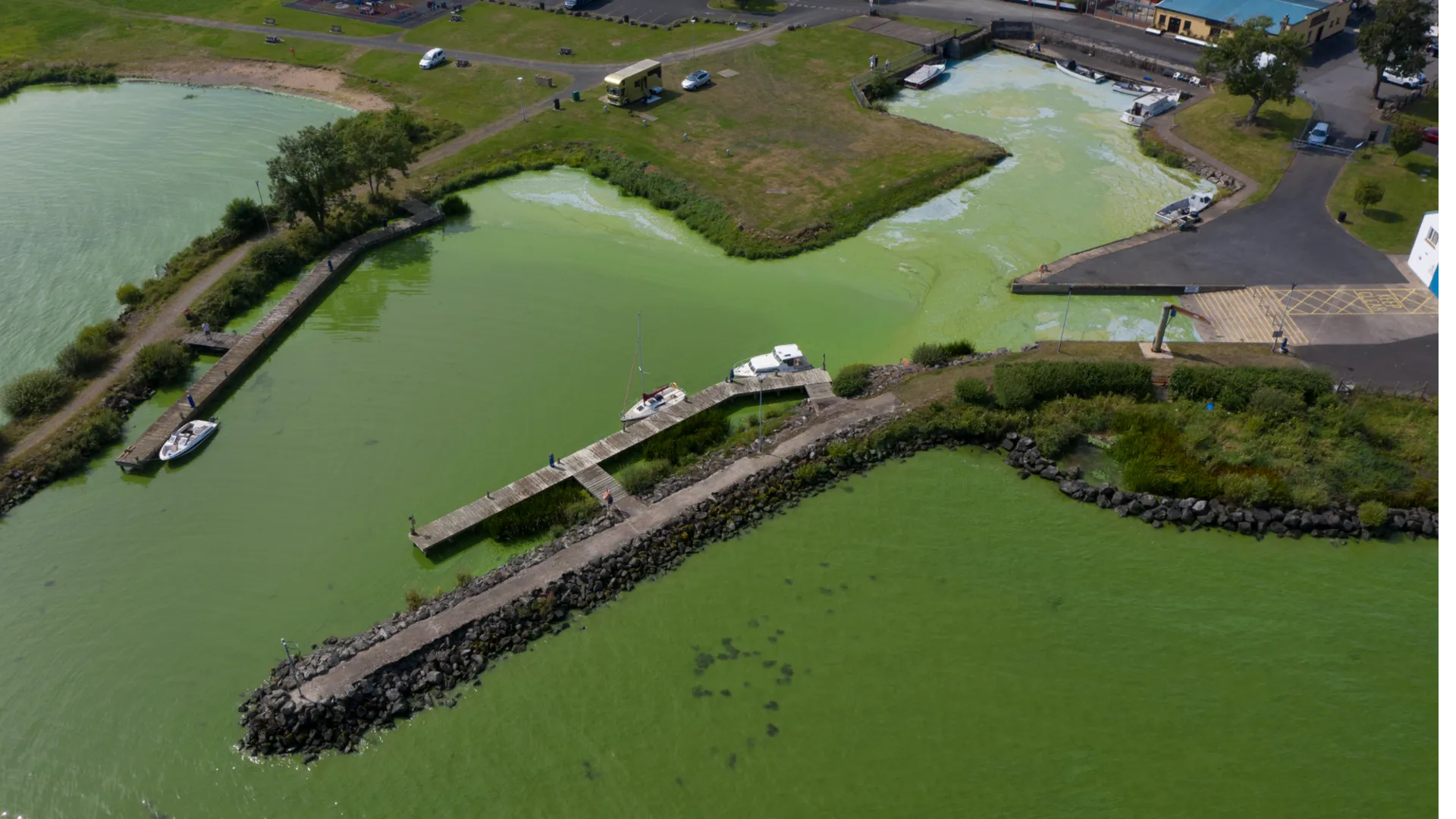
Harmful algal blooms stalk shores far beyond Australia. In Southern California, an “unprecedented multi-toxin event” last year killed hundreds of seabirds, sea lions and dolphins, said the Public Policy Institute of California. And the U.K.’s largest freshwater lake, Lough Neagh (pictured above) in Northern Ireland, has also been “choking on recurring toxic algal blooms” for years, said The Guardian.
The algae feed on high levels of nutrients in the water, mainly from agricultural runoff, fertilizer and livestock waste, as well as “inadequate wastewater treatment.” Global warming has also increased water temperature, encouraging the abundant blooms.
In some places, an algal bloom is “so widespread it’s visible from space,” said The Guardian. The blooms “coat the surface, kill wildlife, unleash stenches” and make the water “unusable,” and the impact on wildlife and tourism is “incalculable.” |