The Week The Week
flag of US
US
flag of UK
UK
https://cdn.mos.cms.futurecdn.net/flexiimages/jacafc5zvs1692883516.jpg

SUBSCRIBE & SAVE

Less than $3 per week

Sign in
  • View Profile
  • Sign out
  • The Explainer
  • The Week Recommends
  • Newsletters
  • Cartoons
  • From the Magazine
  • The Week Junior
  • Student Offers
  • More
    • Politics
    • World News
    • Business
    • Health
    • Science
    • Food & Drink
    • Travel
    • Culture
    • History
    • Personal Finance
    • Puzzles
    • Photos
    • The Blend
    • All Categories
  • Newsletter sign up Newsletter
  • The Week Evening Review
    The equality duty, unaffordable retirements, and David Sullivan’s rise and fall

     
    TODAY’S BIG QUESTION

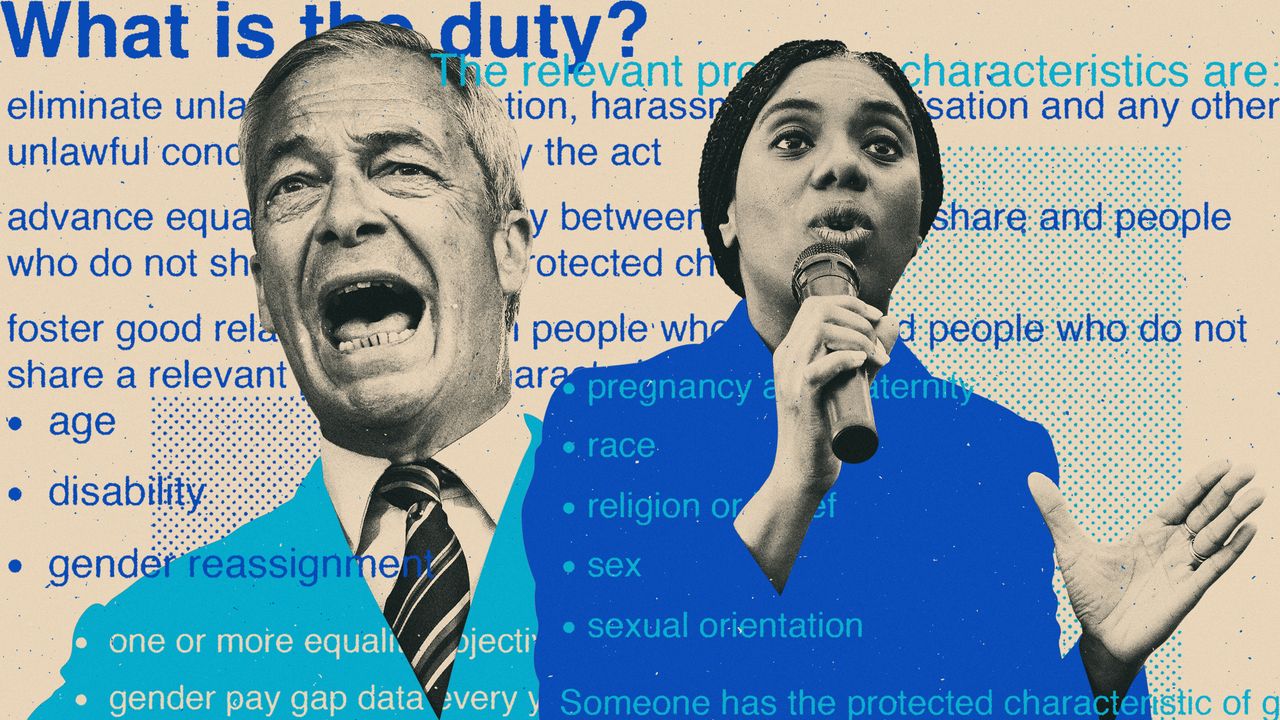
    Are equality guidelines in need of reform?

    Kemi Badenoch’s call to scrap equality guidelines for police and other public bodies has opened up a new front in the culture wars. The landmark Equality Act 2010 offers a valuable “shield” against discrimination, she said in a speech yesterday, amid rising tensions over Henry Nowak’s death and a knife attack in Belfast by a Sudanese asylum seeker. But the Public Sector Equality Duty, which requires public bodies to demonstrate the promotion of equality, has become a legal “minefield” and should be repealed “in its entirety”.

    What did the commentators say?
    Badenoch’s intervention has turned the “once uncontroversial” public sector equality duty into the “new battleground in Britain’s culture wars”, said Aamna Mohdin in The Guardian. But experts in equality law say many of the examples cited by critics “misunderstand its purpose and how it operates in practice”. They stress that the duty “does not require public organisations to provide a particular service or introduce a particular policy”.

    With just over a week until the Makerfield by-election, Nigel Farage has “weaponised the Nowak case”, giving fresh impetus to Reform’s calls to scrap the Equality Act entirely, said The Times. Keir Starmer is “right” to claim that Farage is “playing politics with a tragedy”, but the PM “downplays genuine concerns about politicised policing”. In this febrile political atmosphere, Badenoch’s “common sense” approach “emerges from this debate with most credit”.

    Given the recent “attacks on transgender rights” in the UK, “it is perhaps not surprising that the equalities consensus is all but dead now even with race”, said David Maddox in The Independent. Although Farage’s colourful rhetoric dominates headlines, he remains a “policy vacuum”. Badenoch has “spied her opportunity” to take the lead in “a policy arms race on the right of politics to own the culture wars agenda”.

    What next?
    “Without the Equality Act, employers could refuse jobs on the basis of race, fail to make reasonable adjustments for disabled workers, or discriminate against pregnant women,” human rights barrister Karon Monaghan told The Guardian. “Do we want a society” like that, she asked. When the next general election comes, said the paper, “we may get our answer”. 


    QUOTE OF THE DAY

    “We want to make it absolutely clear that overnight unrest is not welcome, and peaceful protest is the only way forward.”

    The family of Belfast stabbing victim Stephen Ogilvy call for calm, in a statement pleading against the “horrific attack” being “used to divide people or fuel hostility”. Ogilvy, who suffered deep cuts to his head and lost an eye, remains in hospital. 


    THE EXPLAINER

    The coming storm: Britons unprepared for retirement

    Millions of people in Britain risk falling off a financial cliff edge when they retire, the Pensions Commission has warned. At least 15 million people are not saving enough for post-work life – and new research has found that fewer than one in ten Brits will be able to afford a “comfortable” retirement.

    How bad is the problem?
    A “minimum retirement lifestyle” now costs £13,900 a year for a single person or £22,500 for a couple, according to latest calculations by Loughborough University’s Centre for Research in Social Policy. A “moderate” lifestyle costs £32,700 or £45,400, and a “comfortable” lifestyle requires £45,400 or £62,700.

    The state pension is roughly £12,550 a year, and about 82% of the current working population are putting aside enough to be able to reach the minimum retirement lifestyle. But only 23% will reach the moderate level, and 9% will enjoy a comfortable retirement. There is also a significant gender difference in private pension savings.

    Why aren’t we better prepared?
    Many people have a bad case of “present bias”: retirement is decades away but current expenses are immediate, so they prioritise today’s bills. Many don’t have the means to save into a private pension, and some find the whole system confusing. Automatic workplace pension enrolment became mandatory in 2018 but often excludes gig workers or those on lower wages. Just 4% of self-employed workers are saving for retirement, according to the Pensions Commission.

    What can be done?
    The government has faced calls to raise the legal minimum that employers must put into staff pensions under automatic enrolment. The statutory minimum workplace pension contribution is 8%, with 5% coming from the employee, and 3% from the employer.

    The Pensions Commission will be making its recommendations early next year. But the independent body has already flagged that, to address the pensions gender gap, reforms to pensions policy and the labour market are needed, including improving access to childcare, an issue that disproportionately impacts mothers’ ability to work and save.


    Poll watch

    Europeans’ trust in the US has fallen to a new low, according to a poll of 19,481 people across 15 countries. A majority in every nation included in the European Council on Foreign Relations study thought the US would not support them if they came under attack. Only 11% of all respondents viewed Washington as an ally. 


    IN THE SPOTLIGHT

    David Sullivan: West Ham’s ‘king of porn’

    The billionaire owner of West Ham United has resigned as the football club’s co-chair to fight accusations by seven women of “sexually exploitative and predatory behaviour”. A joint investigation by The Times and the BBC’s “Panorama” uncovered claims that women were offered spots as “regular girls” in tabloid newspapers owned by David Sullivan (pictured above) if they agreed to have sex with him.

    Sullivan “made a fortune from selling sex in the pre-internet world of adult magazines, films, telephone chat lines and newspapers filled with topless glamour models and teenage girls”, said the BBC, and became known as the “king of porn”.

    In a statement released by West Ham following the investigation reports, the 77-year-old said he “categorically” denies all the allegations, which he characterised as “decades-old”, “factually incorrect and entirely false”.

    ‘Immoral earnings’
    Sullivan grew up in South Wales, Essex and Hertfordshire, before being sent to boarding school aged 11. He was “short and shy”, said The Times, and “experimented” with business from an early age, selling football memorabilia to students. “I stopped being shy when I was 22 and started to earn money,” he later said. “Money gives you confidence.”

    After studying economics at Queen Mary College in east London, and a short period working in advertising, he began selling “glossy prints” of topless models with university friend Bernard Hardingham. In 1973, both were charged with conspiring to publish and post obscene materials and fined £50.

    “By 25, Sullivan was a millionaire, and decided to branch into films,” said The Guardian. “Come Play With Me” was the “first, and most successful”. In 1982, Sullivan was convicted of “living off the immoral earnings of prostitution from massage parlours” and was jailed for nine months, although he spent only 71 days in prison following an appeal. He has always maintained his innocence.

    ‘Mainstream’ success
    Sullivan then turned to more “mainstream” publishing, founding the Sunday Sport in 1986, and then the Daily Sport five years later, said the BBC. His titles ran a “mixture of bizarre, lurid and salacious stories with a steady diet of topless glamour models on many pages”.

    In 1993, Sullivan acquired a majority stake in Birmingham City, which was in administration, for £700,000. In 2010, having sold that stake, he bought West Ham, alongside David and Ralph Gold, who ran the Ann Summers sex toys and lingerie empire. He retains a 38.8% stake in West Ham, making him the club’s largest shareholder. 

    In his resignation statement, he said he wanted to focus his “full energy and attention on fighting these false allegations”.


    Good day 🪶

    … for twitchers, who are flocking to the Welsh seaside town of Y Foryd to see a western reef heron. The sighting marks “the first ever recording in Britain for this bird”, which is usually found in southern Europe, Africa and parts of Asia, said ornithologist and “Springwatch” presenter Iolo Williams.


    Bad day ⚽

    … for off-pitch privacy, after the passport numbers of Lionel Messi and every other player on the Argentina men’s football squad were leaked in a security blunder. The information should have been blurred on the official team sheet released ahead of their pre-World Cup friendly with Iceland in Alabama. 


    PICTURE OF THE DAY

    Show of support

    Crowds cheer Kim Jong Un and Xi Jinping at the end of the Chinese president’s two-day state visit to North Korea, in a photo released by the state-run North Korean Central News Agency. The two leaders hailed their nations’ “unbreakable” bond during the rare summit.

    KCNA / EPA / Shutterstock


    Puzzles

    Chain Word

    Try The Week’s new daily word challenge in our puzzles and quizzes section

    Play here


    THE WEEK RECOMMENDS

    Top liminal horror films

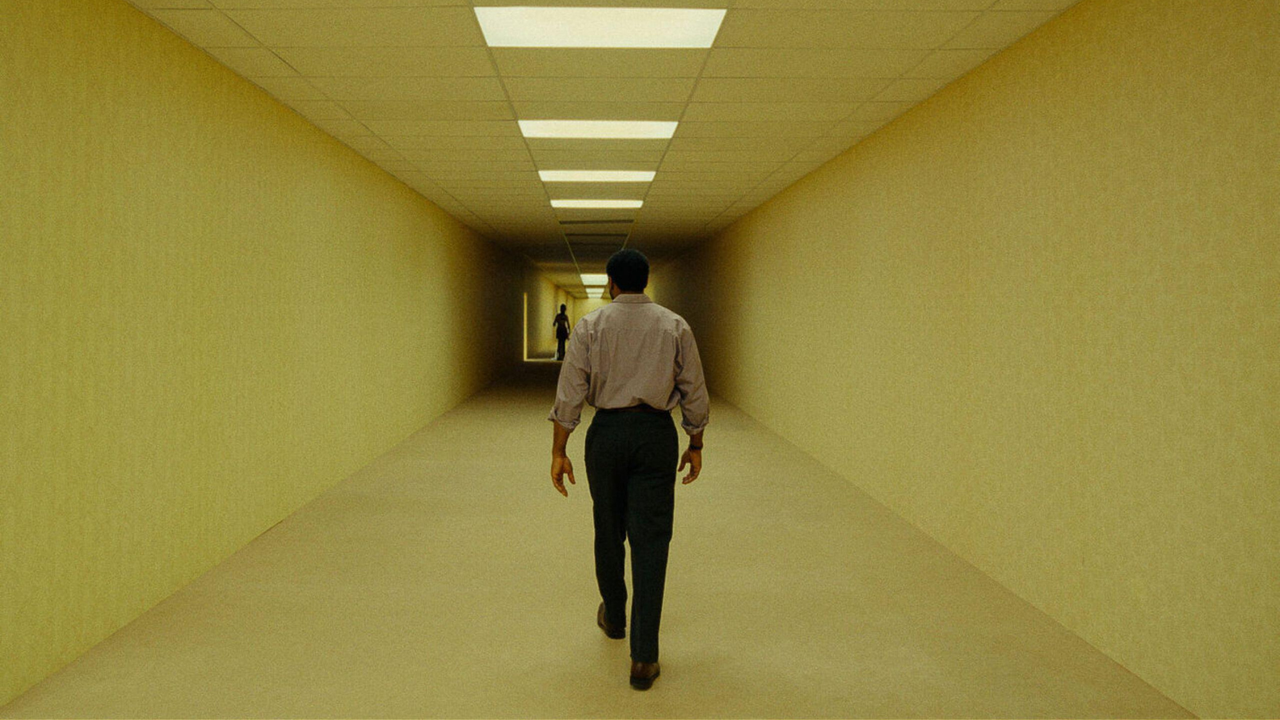
    Low-budget horror movie “Backrooms” has been generating “considerable buzz”, said Wallpaper. The unsettling directorial debut from 20-year-old YouTuber Kane Parsons is based on a viral web series that he made as a teenager. The film earned $81 million (£60 million) in North America on its opening weekend, a new record for an original horror film. But it’s just the latest success in the genre of liminal horror, based on the unsettling feeling of “in-between” spaces.

    The Shining, 1980
    “One of the great classics of liminal horror”, this iconic film is “arguably one of the scariest” movies of all time, said SlashFilm. Much of Stanley Kubrick’s masterpiece centres on the “eerie emptiness” of the sprawling hotel that Jack (Jack Nicholson) and his family are looking after for the winter. The long, deserted corridors leading nowhere helped introduce the idea that emptiness “can, in itself, be a character”.

    The Blair Witch Project, 1999
    Possibly still the “greatest found-footage horror movie”, this low-budget film is another “excellent” example of liminal horror, said ScreenRant. The action follows three students who set out into the woods to document the mythical Blair Witch. Space stretches and the “never-ending woods that loop constantly create a suffocating atmosphere”.

    Exit 8, 2025
    Genki Kawamura’s liminal horror is based on a Japanese video game of the same name, said Dread Central. Set in the Tokyo subway, the busy commuter hub is transformed into an “endless purgatory” for the “perilous protagonist”. Brilliantly immersive and filled with a gnawing sense of dread, Kawamura’s film expertly makes the “innocuous subway tunnel feel like a layer of hell”. 

    See more


    Statistic of the day

    12,060: The record number of pieces in Lego’s new Sagrada Família set, released ahead of Pope Leo’s visit this evening to the real basilica. The Barcelona landmark has taken 144 years to build and is now the world’s tallest church, at 172.5 metres. The £649.99 Lego version is 62cm high but should be much quicker to assemble. 


    instant opinion

    Today’s best commentary

    Justice is blind, but she is human. That’s why AI can never replace judges
    Jonathan Sumption in The Telegraph
    Judges will be piloting the use of AI but only “in the preparation of cases”, apparently, writes former senior judge Jonathan Sumption. Yet “where are we heading”? “Because it is useful”, AI’s “dangers and limitations” are “easy to overlook”. It doesn’t “have emotions” or a “moral conscience”, so lacks “one of the most basic qualities of a good judge: an ability to empathise with” people’s aspirations, failings and follies. The “work of a judge” is “an inherently human business”.

    What Diana told me when Charles ‘arranged psychiatric help for her’
    Jennie Bond in The i Paper
    Newly released letters from Prince Diana to “her handsome actor friend” Terence Stamp capture her “funny, mischievous, complex and troubled personality”, writes former royal correspondent Jennie Bond. She was full of “light and laughter” but could be “incredibly frank” too. “Indignant” about rumours that she’d been sent to a psychiatrist, she once told me she was just “too sane” for royal life. “It was, I thought, a particularly astute comment. Life behind palace walls must often seem totally bonkers.”

    The Book of JO’B
    Michael Murphy in The Critic
    “Radio pugilist” James O’Brien mistakes “journalism for exhibitionist incredulity at anything deviating from the liberal consensus”, writes Michael Murphy. JO’B enjoys “deploying abrasive sophistry” to make callers to his show “feel stupid”; it’s “the intellectual equivalent” of “masturbating in the mirror”. He’s “built a reputation, and career, on sucker punching amateurs”, but “history is already sitting in judgement on the liberal, multicultural, high immigration model of Britain” that he champions. He’s “becoming an anachronism in real time”.


    word of the day

    Bycatch

    The accidental capture of animals including dolphins, seals and seabirds during commercial fishing. Thousands are “caught and killed” in UK waters each year, according to the first-ever analysis of bycatch data. The new report, from the Wildlife and Countryside Link, sets out the “urgent action required to help recover” populations of protected species, ranging from phasing out static fishing nets to improving monitoring.


    Evening Review was written and edited by Hollie Clemence, Rebecca Messina, Chas Newkey-Burden, Will Barker, Irenie Forshaw, Helen Brown, David Edwards and Kari Wilkin, with illustrations from Stephen P. Kelly.

    Image credits, from top: illustration by Stephen P. Kelly / Getty Images; Peter Dazeley / Getty Images; Richard Pelham / Getty Images; KCNA / EPA / Shutterstock; A24 / Alamy

    Morning Report and Evening Review were named Newsletter of the Year at the Publisher Newsletter Awards 2025
     

    Recent editions

    • Evening Review

      Trump’s grip on Congress slips

    • Morning Report

      Ramen beats Pratt to reach LA mayoral runoff

    • Evening Review

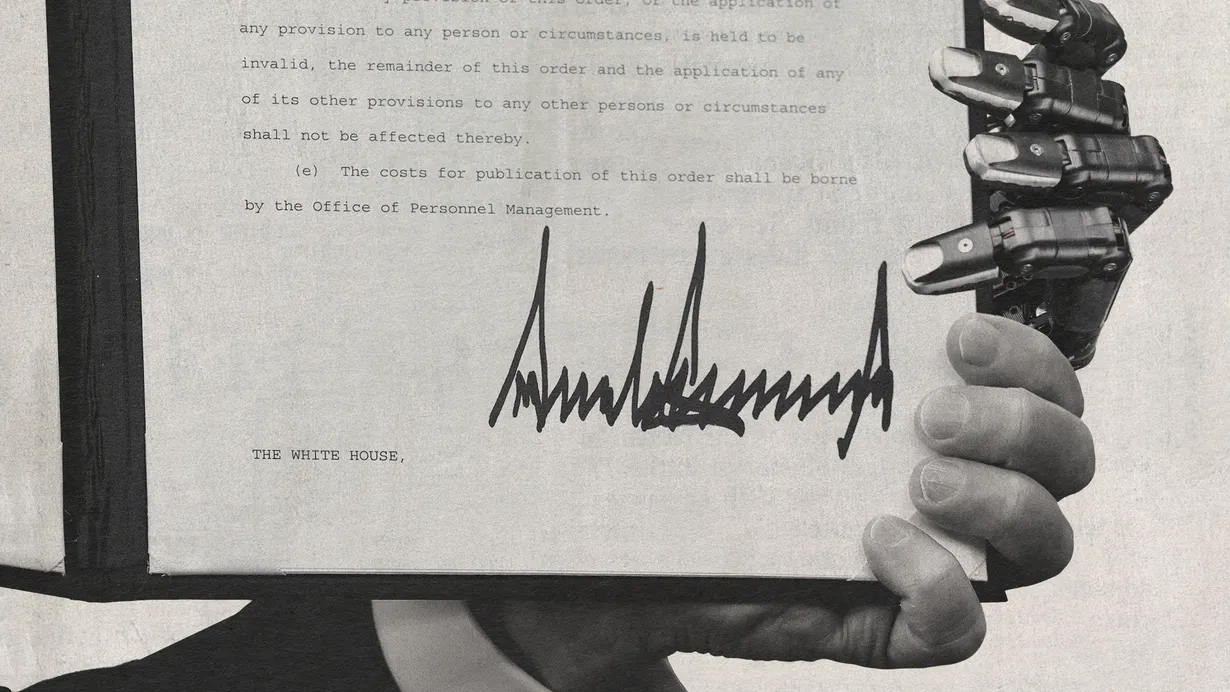
      Trump’s AI sea change?

    VIEW ALL
    TheWeek
    • About Us
    • Contact Future's experts
    • Terms and Conditions
    • Privacy Policy
    • Cookie Policy
    • Advertise With Us
    • FAQ
    Add as a preferred source on Google Add as a preferred source on Google

    The Week is part of Future US Inc, an international media group and leading digital publisher. Visit our corporate site.

    © Future US, Inc. Full 7th Floor, 130 West 42nd Street, New York, NY 10036.