The Week The Week
flag of US
US
flag of UK
UK
https://cdn.mos.cms.futurecdn.net/flexiimages/jacafc5zvs1692883516.jpg

SUBSCRIBE & SAVE

Less than $3 per week

Sign in
  • View Profile
  • Sign out
  • The Explainer
  • The Week Recommends
  • Newsletters
  • Cartoons
  • From the Magazine
  • The Week Junior
  • Student Offers
  • More
    • Politics
    • World News
    • Business
    • Health
    • Science
    • Food & Drink
    • Travel
    • Culture
    • History
    • Personal Finance
    • Puzzles
    • Photos
    • The Blend
    • All Categories
  • Newsletter sign up Newsletter
  • The Week Evening Review
    Reform’s ‘downward slope’, views on Starmer from abroad, and hot schools

     
    TODAY’S BIG QUESTION

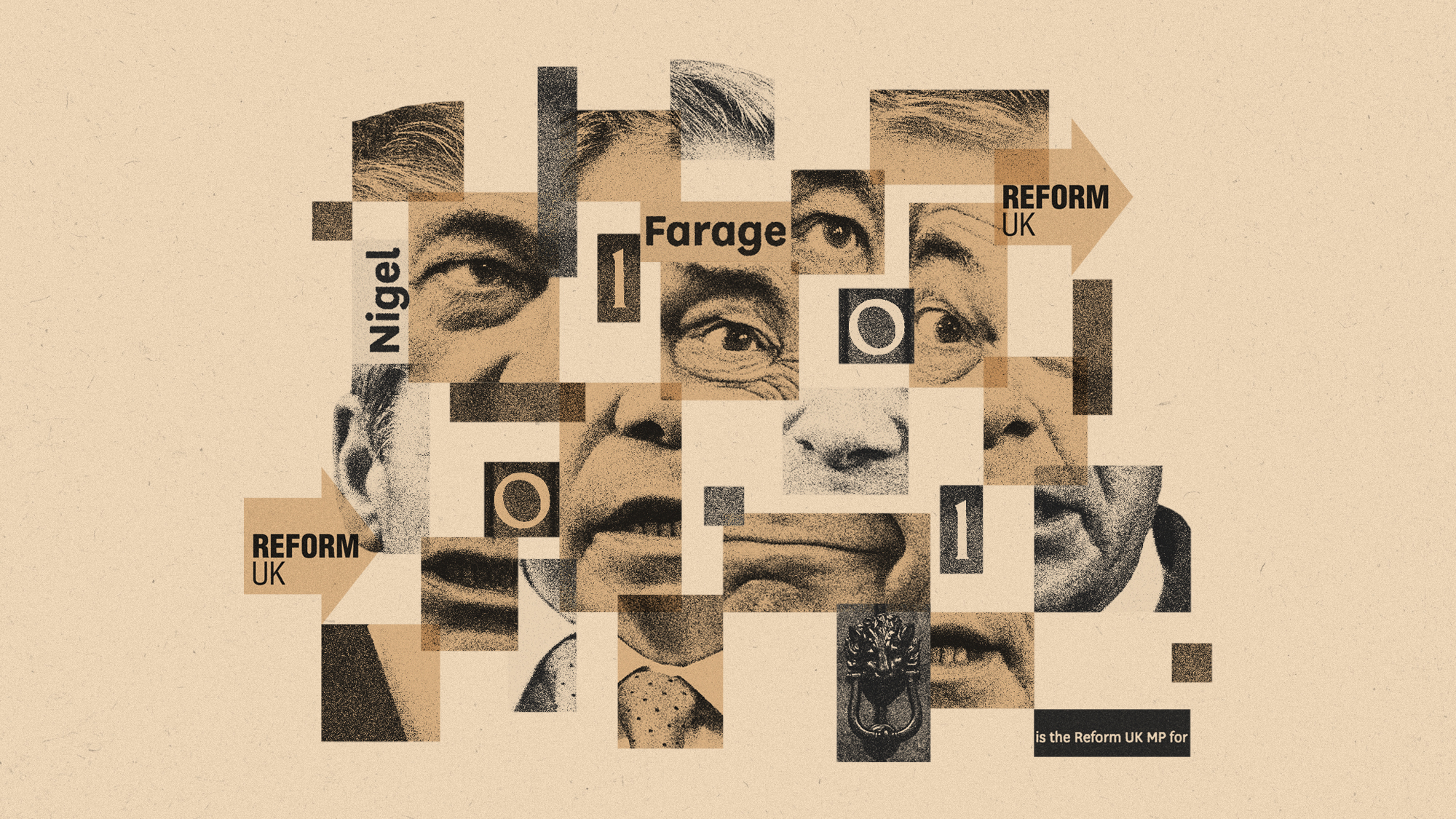
    Can Farage still reach No. 10?

    The question of whether Keir Starmer would resign in the wake of Andy Burnham’s victory in Makerfield has been answered. But the “slower-burning question”, said David Aaronovitch in The Independent, is whether Nigel Farage’s grin can really “grace the doorstep of No. 10” after four by-election defeats in a row.

    The “solidity of the anti-Reform tactical vote” in last week’s by-election has shown that people “don’t want” him as prime minister. Reform UK appears to be “on a downward slope”, and the expected arrival of a “doe-eyed” Andy Burnham in Downing Street could make life trickier yet for Farage.

    What did the commentators say?
    This latest by-election “exposed many of Reform’s weaknesses”, several of which “stem from serious flaws in Farage’s character”, said veteran by-election reporter Michael Crick in The Times. Farage runs the party “as a personal dictatorship”; he alone picked the out-of-depth Robert Kenyon as Reform’s candidate. “No serious democratic party” can be run that way. In Makerfield, as in Gorton & Denton, there are those who so “detest him”, they were “breaking habits of a lifetime” to vote “ABF – Anyone But Farage”.

    Farage was “beaten at his own game” by “Reform’s yet more evil twin”, Restore Britain, said Jonn Elledge in The New Statesman. He “now faces the same dilemma he once posed to the Tories: stand firm and lose votes” to the right, or “move right and alienate those closer to the centre”.

    Rupert Lowe’s “ultra-right splinter group” succeeded in mobilising “disaffected white working-class people” in a constituency where there was “support for the British National Party” 20 years ago, said Kitty Donaldson in The i Paper. Their “desire to give the Establishment – which now apparently includes Farage – a kicking seemingly knows no bounds”.

    Makerfield was clearly “a setback” for Farage’s “ambitions of winning power”, said Nick Gutteridge in The Telegraph. But “there is no sign” within Reform’s ranks that “fatalism has set in”.

    What next?
    A new threat could emerge within Reform from one of Farage’s high-profile Tory defectors, said Aaronovitch in The Independent. If their leader’s waning popularity and “diminishing energy” mean he’s no longer up to “making a serious bid for power”, then “that quintessence of pushiness”, Robert Jenrick, will “have to do something about it”.


    THE EXPLAINER

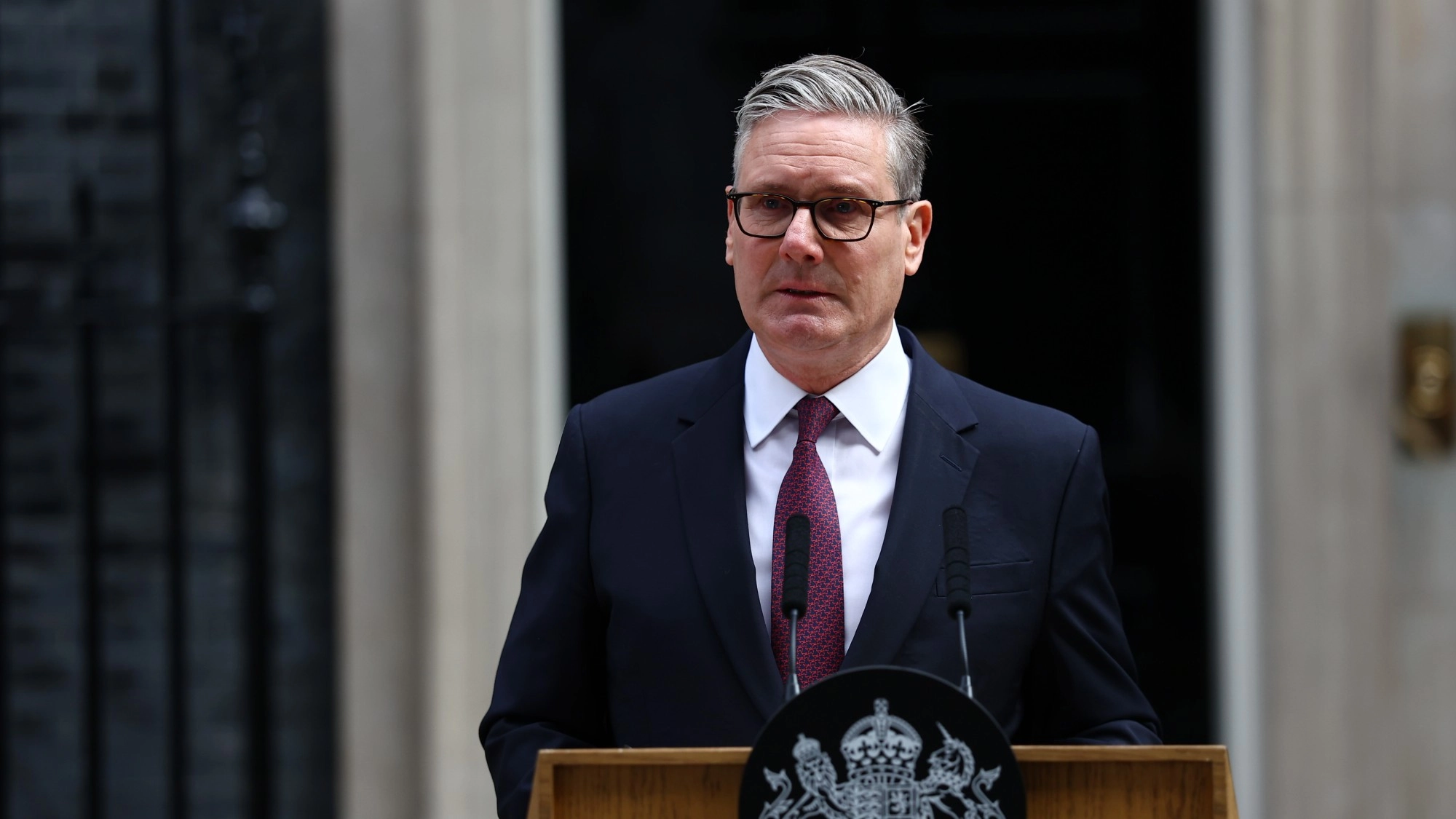
    How the world viewed Keir Starmer’s resignation

    Another prime minister resigning from office adds to the “unprecedented instability” of modern-day Britain, said Le Monde. Keir Starmer’s imminent departure – with many of the policies of his likely successor Andy Burnham as yet unknown – is having tangible consequences on the world stage.

    Thoughts from abroad 
    “God save the King and this desolate land of the United Kingdom,” said Antonello Guerrera in La Repubblica. Since Starmer was elected in 2024, he has “always been a Hamlet: paralysed by indecision, doubt, and sunk by tragic ineptitude”. And on Monday, “the curtain fell”.

    Donald Trump predictably “humiliated” Starmer on social media but many other world leaders thanked him for his service, including his “staunch ally” Volodymyr Zelenskyy, his “comrade” Emmanuel Macron, and Giorgia Meloni. Ursula von der Leyen, president of the European Commission, paid tribute, saying: “It can take many leaders years to grow into the statesman you became in just two years.”

    “Pragmatic, cool and rational”, Starmer embodied a strain of “anti-politics” and could get the job done without a fuss, said Enrico Franceschini in La Republicca. But these qualities were eroded by a “lack of charisma, the inability to communicate” and a “limited political vision”. He had “good intentions” but was “unable to implement them”.

    Where it all went wrong
    “Beleaguered” Starmer’s tenure was “troubled” from the outset, said Euronews. From failing to declare gifts in his first few months of office and appointing Peter Mandelson as US ambassador to numerous policy U-turns on “welfare reform, introducing digital IDs and scrapping winter fuel payments”; his time in office was “littered with controversy”.

    He was also “undone by economic stagnation” and “underspending on defence”, said The Washington Post. But for a while there was “no obvious answer” as to who could replace him.

    Fundamentally, Starmer “broke his promise of stability”, instead making “constant changes of strategy”, said Claudi Pérez in El País. He inherited a “poisoned chalice” of “stagnant” growth but, like “bad tennis players”, he made “too many unforced errors”.


    QUOTE OF THE DAY

    “It’s literally none of your business.”

    Nigel Farage refuses, on BBC Radio 4’s “Today” programme, to detail what he has done with the £5 million given to him by British cryptocurrency investor Christopher Harborne before he was elected as Clacton’s MP. The Parliamentary Standards Commissioner is investigating whether or not the Reform UK leader has broken any rules.


    Poll watch

    Steak and chips tops a list of the nation’s most romantic dishes, winning the hearts of 29% of 2,000 Brits polled by Heinz. Pasta, at 26%, followed closely in second place, while 4% were won over by the doner kebab.


    IN THE SPOTLIGHT

    How heatwaves will mean children miss out on school

    More than 1,000 schools across England and Wales are closing or finishing their days early this week to protect students against extreme heat. Teachers and pupils are struggling to cope in school buildings that were never designed for sky-high temperatures.

    Losing learning
    Pupils overheating in schools have become a “major concern”, as the UK experiences increasingly extreme weather, said The i Paper. Government guidance warns school leaders to look out for the symptoms of “heat stress”, including discomfort, irritability and signs of dehydration.

    Before this year’s heatwaves, some schools were already known to have one or two days a year when indoor temperatures hit 35C and learning becomes “very difficult”, according to modelling by the Met Office and University College London for the Department for Education. And “without the implementation of any adaptation measures, students could potentially lose up to 12 days of learning per year on average” in the future. 

    ‘Astronomical’ air-con costs
    “Many schools don’t have any ventilation systems other than opening and closing windows,” said Tim Fulford, a teacher and National Education Union health and safety representative. In some, “you can’t even do that”.

    Britain is “built for a climate that no longer exists” and “will be increasingly distant in years to come”, concluded a report from the UK’s independent Climate Change Committee last month. Among its many recommendations was a call for air conditioning to be installed in all schools within 25 years.

    This is the “only real solution”, said Nottingham junior school teacher Radhika Sanghani in The Independent, but “the cost would be astronomical”. Kids are “tired, they’re red-faced, they’re finding it all horrendous”. Some aren’t sleeping well. They just “can’t cope”.

    The Climate Change Committee also said exams should be held at cooler times of the year. The UK Health Security Agency has advised that schools should “consider rearranging school start, finish and play times to avoid teaching during very hot conditions”. 


    Good day 🔌

    … for LineShine, a Chinese supercomputer that has beaten its US rivals for the first time to become the world’s most powerful. The machine, housed in Shenzhen’s National Supercomputing Center, debuted at No.1 in the annual Top500 ranking of supercomputers after performing more than two quintillion calculations per second.


    Bad day 🧼

    … for Dettol, after an advert intended to criticise “toxic men” backfired. Viewers threatened to boycott the British hygiene brand after the ad, released in China, featured a man seeking a “clean” virgin girlfriend who hadn’t been “contaminated” by other men. His girlfriend dumps him in the mini-drama, but critics found the general tone offensive to women.


    PICTURE OF THE DAY

    Primate prophecy

    Walter “the oracle orangutan” cools down with some frozen fruit after predicting a win for Germany in their World Cup match against Ecuador tomorrow. The ape, who has been making football predictions at Dortmund Zoo since 2006, chose a sack of treats bearing the German flag, as he did ahead of Germany’s last two victories.

    Ina Fassbender / AFP / Getty Images


    Puzzles

    Chain Word

    Try The Week’s new daily word challenge in our puzzles and quizzes section

    Play here


    THE WEEK RECOMMENDS

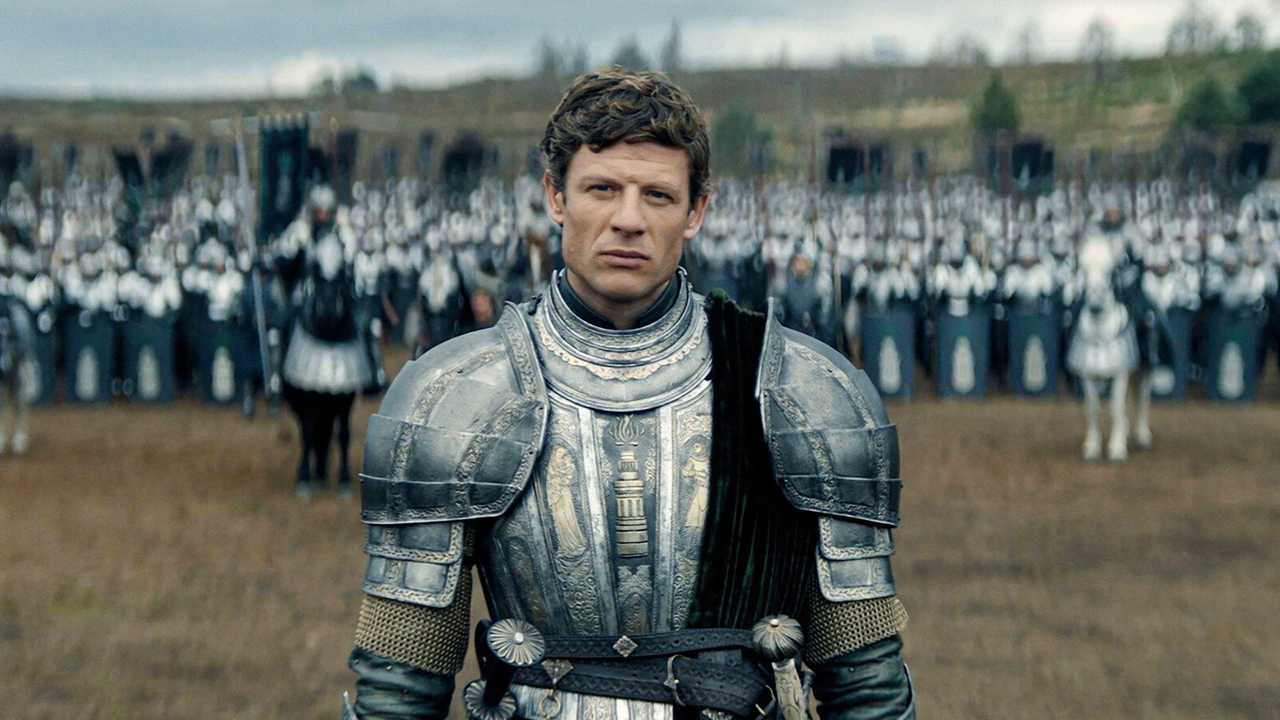
    ‘OTT’ James Norton revives House of the Dragon

    “Breathe a fiery sigh of relief,” said Jack Seale in The Guardian. After two “forgettable” series, “House of the Dragon” has finally “found its focus” with a flamboyant new villain played by James Norton.

    Set centuries before “Game of Thrones”, the new season of the spin-off sees a “power vacuum” emerge in Westeros, into which various rulers and royals “seek to step”. It kicks off with the bloody Battle of the Gullet at sea: an “orgy of CGI carnage” with “underwater punch-ups and dragonly intervention”.

    The “explosive” sequences thankfully don’t “come at the cost of nuanced character drama and thoughtful quasi-historical themes”, said Caroline Siede in Empire. In one “tremendous” episode, Emma D’Arcy (Queen Rhaenyra) is put at the centre of the action as we’re given a “high-wire day-in-the-life-style story about what it actually means to be a queen”.

    Until now, the prequel had lacked an “over-the-top anti-hero”, said Ed Power in The Telegraph. The “long wait is at an end”, however, as “top telly totty” James Norton has been brought in to play the “love-to-hate” Lord Ormund Hightower. He goes “full fantasy panto” with his “absurdly OTT” performance, accelerating from “calmly psychotic to full-fledged loony” in one memorable scene. The “reliably charismatic” Matt Smith returns as Rhaenyra’s “power-mad husband” Daemon Targaryen. He is a “devilish delight”.

    The show at times “stretches itself thin” as it moves between so many characters on an “increasingly crowded board”, said Siede in Empire. But the “upside” is a “welcome sense of unpredictability” about what will come next, in a series that’s packed with plot twists. “More action-packed but as thoughtful as ever”, season three might just be the show’s “best offering yet”.


    Statistic of the day

    £59.2 billion: The gap between how much businesses and individuals owed in tax last year, and how much they actually paid. New HMRC estimates show that 6.4% of taxes due were not collected in the 2024-25 financial year, up from 6% in the previous 12 months, despite government efforts to improve collection and compliance.


    instant opinion

    Today’s best commentary

    Will Israel finally hold up its hands to its atrocities?
    Donald Macintyre in The Independent
    There are “wearisomely familiar denials from Jerusalem” after a UN report concluded that Israel “has been deliberately targeting children in Gaza”, writes Donald Macintyre. But the evidence is “detailed” and “formidable”, including the “torture of adolescents” and “massive air strikes” on “schools and displacement camps crowded with children”. It’s impossible to justify, yet some Israeli politicians hold the “chilling” view that these “children might grow up to be ‘terrorists’ and therefore it is better to eliminate or cripple them”. 

    We are becoming a joke country like Italy used to be
    Lionel Barber in The i Paper
    Britain used to look down on Italy “as the epitome of political instability”, writes Lionel Barber. But Giorgia Meloni is “into her fourth year as Prime Minister” while we face our seventh in 10 years “after an internal Labour Party coup”. Andy Burnham is “a crowd-pleaser rather than a lion-tamer”; a Westminster “gatecrasher whose legitimacy is open to question”. An “easy come, easy go attitude” to PMs is “becoming baked into our political culture” and we are “poorer as a result”.

    Heatwave hysterics wouldn’t have lasted a day in 1976
    Ysenda Maxtone Graham in The Telegraph
    Many of us have childhood memories of the “blazing” summer of 1976, writes Ysenda Maxtone Graham. Our parents didn’t “infect” us with “heatwave-related anxiety”; they enjoyed the “searing heat” with a “gin and tonic, and perhaps just a mild worry about the dead lawn”. It’s not healthy to have “hysterics every time the mercury slides past 30” and it’s “not fair on children” to rob them of “the unadulterated, carefree enjoyment of a hot summer’s day”.


    word of the day

    Omega

    The shape of the Greek letter Ω inspired the name of the weather pattern behind the current sweltering heatwave. In an Omega Block, there is a “bulge of warmer, settled high pressure held between two cooler low pressure ​systems”, said Reuters. The “high pressure area of warm air gets stuck”, meaning “hot, still air gets lodged” for days or, sometimes, weeks.


    Evening Review was written and edited by Hollie Clemence, Jamie Timson, Chas Newkey-Burden, Will Barker, Irenie Forshaw, David Edwards and Helen Brown, with illustrations from Stephen P. Kelly.

    Image credits, from top: illustration by Stephen P. Kelly / Getty Images; Peter Nicholls / Getty Images; Franconiaphoto / Getty Images; Ina Fassbender / AFP / Getty Images; Landmark Media / Alamy

    Morning Report and Evening Review were named Newsletter of the Year at the Publisher Newsletter Awards 2025
     

    Recent editions

    • Evening Review

      Is Ossoff the Democrats’ best bet?

    • Morning Report

      A rare bipartisan win on housing

    • Evening Review

      Musk’s wealth spurs backlash

    VIEW ALL
    TheWeek
    • About Us
    • Contact Future's experts
    • Terms and Conditions
    • Privacy Policy
    • Cookie Policy
    • Advertise With Us
    • FAQ
    Add as a preferred source on Google Add as a preferred source on Google

    The Week is part of Future US Inc, an international media group and leading digital publisher. Visit our corporate site.

    © Future US, Inc. Full 7th Floor, 130 West 42nd Street, New York, NY 10036.