The Week The Week
flag of US
US
flag of UK
UK
https://cdn.mos.cms.futurecdn.net/flexiimages/jacafc5zvs1692883516.jpg

SUBSCRIBE & SAVE

Less than $3 per week

Sign in
  • View Profile
  • Sign out
  • The Explainer
  • The Week Recommends
  • Newsletters
  • Cartoons
  • From the Magazine
  • The Week Junior
  • Student Offers
  • More
    • Politics
    • World News
    • Business
    • Health
    • Science
    • Food & Drink
    • Travel
    • Culture
    • History
    • Personal Finance
    • Puzzles
    • Photos
    • The Blend
    • All Categories
  • Newsletter sign up Newsletter
  • The Week Evening Review
    Reeves’ legacy, Japan’s new spy agency, and aging on death row

     
    TODAY’S BIG QUESTION

    What’s the final verdict on Rachel Reeves?

    Just days before from her expected departure from No. 11, Rachel Reeves defended her legacy to the “great and the good of the City” in the annual Mansion House speech, said the Financial Times. Her “valedictory” address claimed successes in reduced government borrowing and lower NHS waiting lists. “Loud applause and even whoops of support from guests” indicated support from the finance sector – even if that might not be widely echoed across the country.

    What did the commentators say?
    A handful of isolated wins aside, Reeves has “rarely shown the kind of bravery or instinct needed for this great office”, said James Moore in The Independent. She may have resisted the “juvenile attempts” to tax billionaires advocated by many in her party but she opted for “one of the worst possible means” to raise funds in hitting employers with higher National Insurance contributions. By far her “darkest legacy” is the “million young people not in education, employment or training”.

    Reeves’ record is the worst of “any chancellor of modern times”, said Matthew Lynn in The Telegraph. The economy’s “stagnant” growth only looks “tolerable” in the context of poor performances from other G7 countries; unemployment is on the rise, and debt has “soared” close to 100% of GDP. Given her shortcomings, her belated attempts to appeal to Andy Burnham’s regime were “an embarrassing end to a dismal chancellorship”.

    A “fair assessment” of Reeves’ tenure in No. 11 “would not be wholly negative”, said The Times’ editorial board. “She has a couple of sizeable achievements to her name.” She relaxed some of the “onerous” regulation on businesses, made reforms to the London Stock Exchange and “consolidated” the “fragmented” pensions industry. But although Labour may have inherited a “sizeable fiscal problem”, Reeves’ “disastrous” first budget only “exacerbated it”.

    What next?
    Markets have “responded positively” to reports that Home Secretary Shabana Mahmood – viewed as “tough operator and capable minister” – is likely to become Reeves’ successor when Burnham’s cabinet is announced on Monday, said the Financial Times. Whatever the selection, the future chancellor’s “big task” will be to frame a convincing autumn Budget.


    THE EXPLAINER

    Japan’s first post-war intelligence agency

    Japan is to open its first centralised intelligence agency since the Second World War, in the face of the increased security threats posed by China and Russia. 

    Pacifism is enshrined in the country’s post-war constitution and culture, so Japan has, for decades, relied on co-operation with US military intelligence. Prime Minister Sanae Takaichi has described the new legislation that has just passed the upper house of the Japanese National Diet (pictured above) as a “first step” towards strengthening the country’s independent espionage capabilities.

    How will it work?
    The agency will be formed of two bodies: a National Intelligence Council, acting as the government’s command centre for intelligence gathering and analysis; and a National Intelligence Bureau, responsible for operations.

    The aim is to improve Japan’s intelligence abilities “by strengthening co-ordination, reducing inter-agency barriers and ensuring that intelligence products better meet policymakers’ requirements”, Sanshiro Hosaka, of the International Centre for Defence and Security, told Al Jazeera.

    Why now?
    The Trump administration’s repudiation of long-standing allies has revealed the dangers of over-reliance on US intelligence sharing. With the reform of its intelligence system, Japan’s approach to security is “becoming more self-reliant and autonomous”.

    Japan’s intelligence system has “long been fragmented”, said The New York Times. “That has left the country especially vulnerable to espionage and foreign interference.” To make matters worse, Japan also lacks an anti-espionage law, which has made it relatively easy for foreign intelligence activities to go unpunished. “Japan has had enough of being a ‘spy paradise’,” said Philip Shetler-Jones and Masashi Umehara of the Royal United Services Institute think tank.

    How are Russia and China operating now?
    Both Russian and Chinese activity within Japan have increased in recent years. In 2024, cybersecurity research group Citizen Lab exposed a so-called “paperwall” of Beijing-run websites disguised as Japanese-language news sources to spread pro-China disinformation. The Russian military, meanwhile, has taken advantage of lax espionage laws to establish a secretive intelligence unit in Tokyo, known as the 20th Directorate. “Posing as diplomats or businesspeople, its officers work to buy or steal battlefield technology and smuggle it into Russia,” said The New York Times. Estimates cited by the US paper suggest 90% of Russian missiles and drones used in Ukraine contain Japanese components.


    QUOTE OF THE DAY

    “Hard to see it now, but England is living a golden era and learning to compete on the hardest of games.”

    Spanish football journalist Guillem Balagué on England’s World Cup defeat by Argentina last night. The team’s need for “bravery”, and “trust” in “controlling midfielders”, is a “lesson for the future”, he wrote on X. “But they are so close.”


    Poll watch

    Keir Starmer’s worst mistakes as prime minister were cutting the winter fuel allowance for pensioners, making too many U-turns, and “everything”, according to a YouGov survey of 2,104 UK adults. Those three responses came joint top, with 6% of the vote each – although a far larger number of respondents (31%) could not name any particular misstep.


    IN THE SPOTLIGHT

    The US is executing more elderly inmates

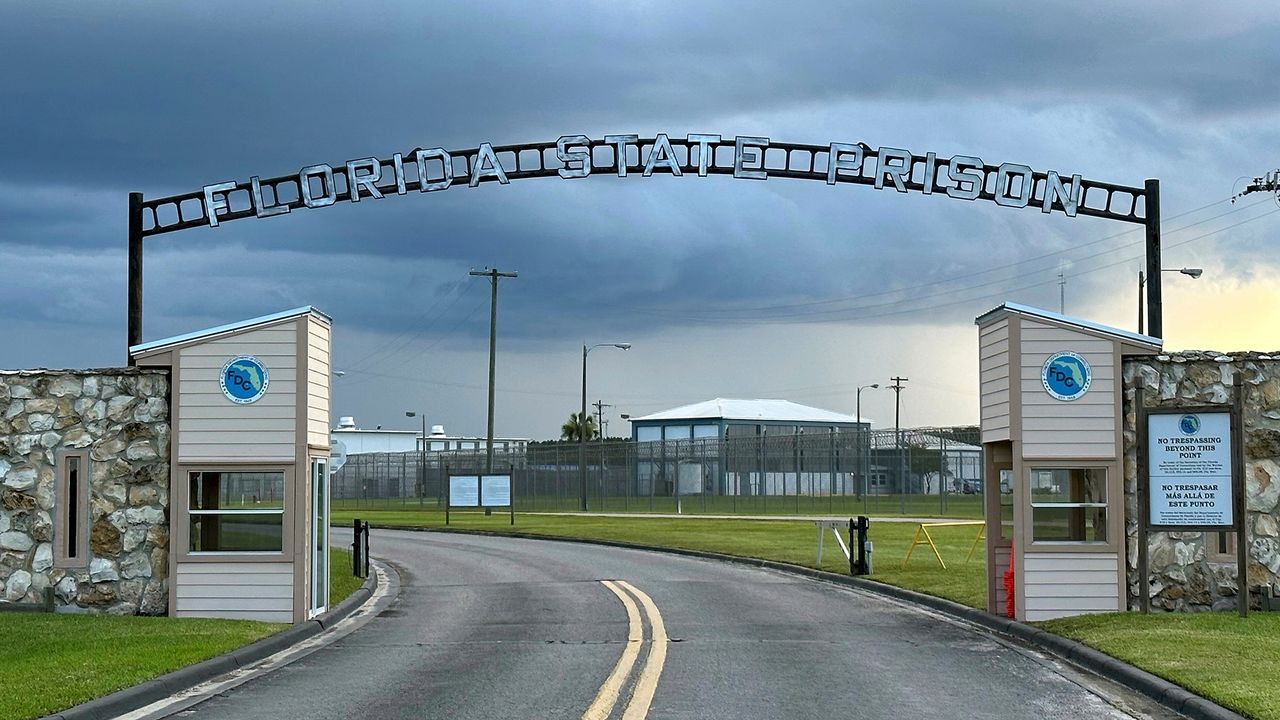
    Florida has executed the oldest prisoner in its state history, the latest in a spate of capital punishments carried out on elderly death-row inmates. 

    Dennis Sochor, 74, was convicted of killing Patricia Gifford in 1982, hours after meeting the 18-year-old at a party. On Tuesday, he was put to death after the US Supreme Court rejected his final appeal. He was one of three Florida inmates over the age of 70 to be executed in the past month.

    ‘No compunction’ for the old
    The Sunshine State is considered “a mecca for senior citizens”, said The Hill. But Florida has shown “no compunction about carrying out executions of elderly death-row inmates”. Indeed, later this month, the state is set to execute its first octogenarian, 80-year-old Dominick Anthony Occhicone, convicted of killing his ex-girlfriend’s parents in 1986. If his execution goes ahead, he’ll be the second-oldest known inmate put to death in modern US history, after 83-year-old Walter Leroy Moody Jr. in 2018.

    Florida has carried out 10 executions this year, more than all other US states combined. About half of its remaining 242 death-row inmates have “exhausted their appeals” and could see their death warrant issued at any time, said The Associated Press. Three of them, not including Occhicone, are over 80.

    Multiple medical conditions
    Florida isn’t the only state “killing the old and infirm”, said The Hill. Death rows across the US are “filled with old people”: the average age of executed inmates has increased from 36 in 1977 to 52.3 in 2024, according to the Death Penalty Information Center.

    The penal system must increasingly grapple with an ageing population whose health problems “can complicate efforts to execute them”, said the AP. Occhicone, the 80-year-old facing execution this month, has multiple medical conditions and “needs help getting in and out of the shower”.

    Some question “the humanity of administering capital punishment” to prisoners who might soon die naturally. For others, it only shows how “lengthy appeals”, and reviews designed to prevent an innocent person being executed, can “delay justice”.


    Good day 🐴

    … for Dartmoor ponies, after Natural England backed down on plans that, campaigners said, would have put them at risk of culling. The semi-wild ponies were to be included in a new limit on the number of animals allowed to graze the moors but, after an outcry, they will be excluded from the scheme.


    Bad day 👥

    … for identical twins, who can fall foul of the EU’s new entry-exit system technology. A British employee of news site Politico was stopped at Cluj-Napoca airport in Romania after her travel history was erroneously confused with that of her twin sister – apparently due to their identical facial scans.


    PICTURE OF THE DAY

    As the smoke clears

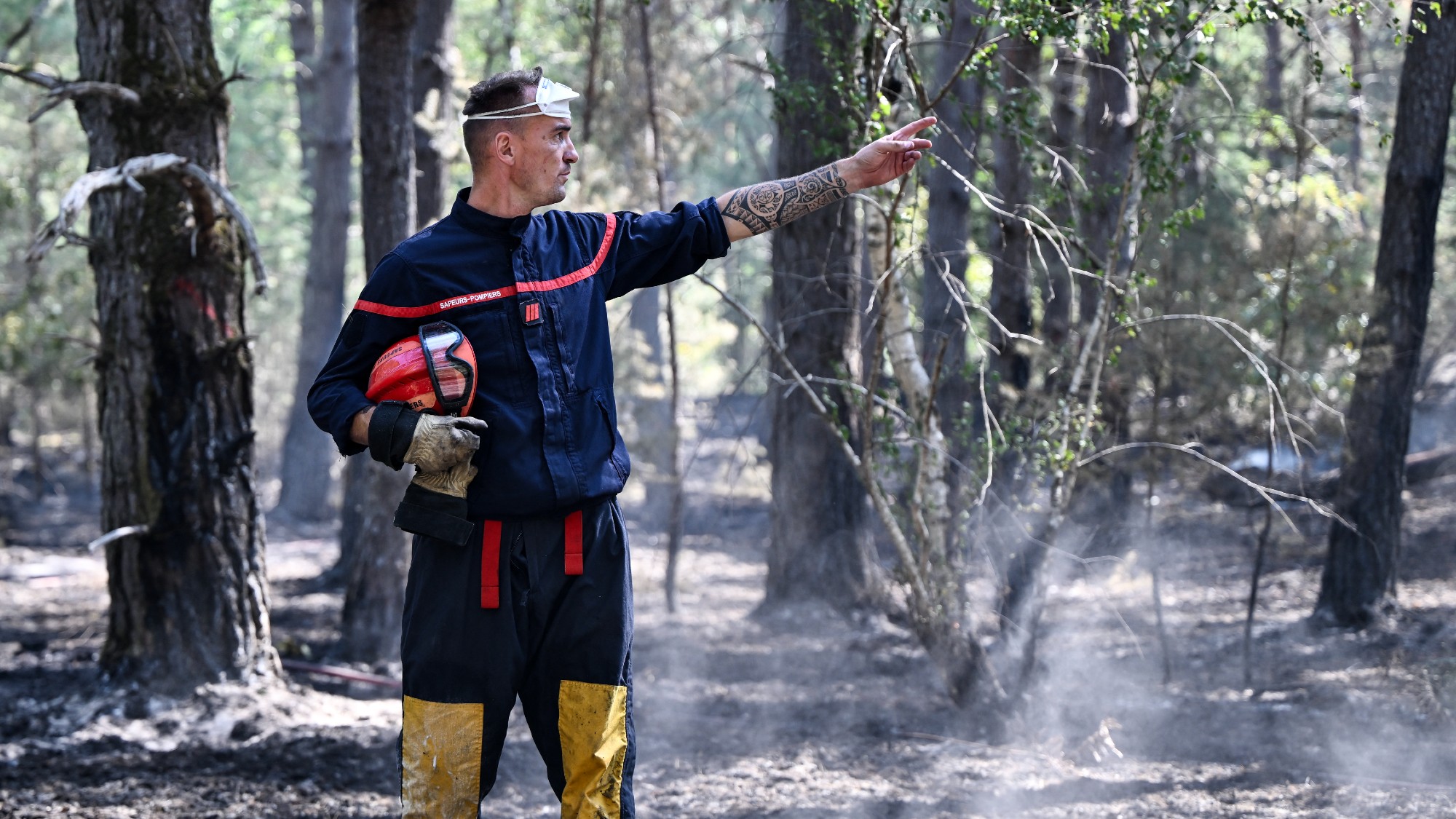
    A French firefighter points to the smouldering undergrowth in Fontainebleau forest, in the Ile-de-France region. A four-day fire is thought to have destroyed around 2,000 hectares.

    Lou Benoist / AFP / Getty Images


    Puzzles

    Chain Word

    Try The Week’s new daily word challenge in our puzzles and quizzes section

    Play here


    THE WEEK RECOMMENDS

    A mini guide to Edinburgh Fringe 2026

    This August, the world’s largest performing arts festival – the Edinburgh Festival Fringe – will stage 3,649 shows from 71 countries across 258 venues, with a total of 53,884 performances on the schedule.

    “Truly, all human life is here,” said Tristram Fane Saunders in The Telegraph. Nowhere else in the world would you find performances of “Endometriosis: The Musical!”, “Robot Wars with Roombas” or “Chekhov in Flemish Sign Language”.

    You can also catch some of the biggest names in comedy, with Frank Skinner, Nish Kumar, James Acaster and Sara Pascoe all making appearances. Edinburgh Comedy Award winner Ahir Shah, “one of the most intelligent voices in stand-up”, is back with “Golden”, and tickets are almost sold out for “Peach Fuzz”, the stand-up comedy show from “Saturday Night Live UK” star Ania Magliano. But perhaps the most “controversial” stand-up show this year will be “Cartwheel”, Amanda Knox’s exploration of her wrongful conviction in 2007 of the murder of Meredith Kercher.

    Drama-wise, there’s a “great mix” of “returning shows, debuts and even some world premiere runs”, said Kevin Quinn in Edinburgh Evening News. Emma Howlett’s “ambitious”, female-led “The Plot” is a tragi-comic, “fast-paced, imaginative exploration of power” set in the aftermath of the Gunpowder Plot. And Australian writer and actress Hannah Reilly’s will be staging her acclaimed “Roleplay”, a “bold” and “darkly funny” depiction of a “broke feminist podcaster who rebrands as a provocative ‘slutfluencer’ in pursuit of fame”.


    Statistic of the day

    £400 million: The potential revenue lost every year to fare-dodging on the nation’s rail network, according to government estimates. The Department for Transport is to invest £33 million in new barriers at fare evasion hotspots, including head-height gates equipped with AI technology to detect tailgaters. 


    instant opinion

    Today’s best commentary

    In Wales, I’ve seen what happens when devolution isn’t done right. Here’s what Andy Burnham must know
    Will Hayward in The Guardian
    One of the “big lessons” of Welsh devolution, writes Will Hayward, is that “you can’t just devolve responsibilities; you have to devolve tools”. When “key levers” remain in Westminster, it’s like “giving someone a brand-new electric car without any capacity to charge it”. More devolution “is an incredible opportunity for the UK” but we mustn’t take a “cookie-cutter approach”: “different places have different challenges and could require different solutions”. Doing devolution well “is just as important as doing it at all”.

    The perks of parenting by spreadsheet
    Soumaya Keynes in the Financial Times
    My husband and I aim to divide childcare “as evenly as we can”, writes Soumaya Keynes. So, because “perceptions of what has happened doesn’t always match reality”, we keep a “parenting spreadsheet”, with “over 1,000 rows” to “mark every morning, afternoon and evening of parenting” each of us has done. I’m currently the one “in credit” – by “7.5 days and 24 bedtimes”. I know “it’s not for everyone” but “it works” and stops “guilt or resentment building”.

    My son’s acne proves two-tier healthcare is already upon us
    Jemima Lewis in The Telegraph
    “I took my son to a private dermatologist” for a “powerful drug” that the “NHS remains reluctant to prescribe”, writes Jemima Lewis. A “certain breeziness” is “part of what you’re paying for”. NHS doctors are “constrained” by various prescribing rules but private doctors can dish out “any drug with a UK licence”. No doubt “this lack of oversight” encourages “some dubious practices” but it’s also “a blessing”. My son’s drug worked; “my only regret” is not “throwing money at the problem” sooner.


    word of the day

    Chintz

    An ornate floral-print textile, originally developed in 16th century Hyderabad but more recently associated with your grandmother’s living room. Chintz is enjoying a renaissance, said The Times, with a forthcoming V&A exhibition dedicated to the fabric, and several luxury hotels incorporating it into recent renovations.


    Evening Review was written and edited by Rebecca Messina, Jamie Timson, Will Barker, Elliott Goat, Harriet Marsden, Irenie Forshaw, Chas Newkey-Burden, David Edwards, Natalie Holmes, Steph Jones and Helen Brown, with illustrations from Stephen P. Kelly.

    Image credits, from top: illustration by Stephen P. Kelly / Getty Images; Kiyoshi Ota / Bloomberg / Getty Images; Curt Anderson / AP Photo; Lou Benoist / AFP / Getty Images; Piotr Czajkowski / Getty Images

    Morning Report and Evening Review were named Newsletter of the Year at the Publisher Newsletter Awards 2025
     

    Recent editions

    • Evening Review

      A solution to the housing crisis?

    • Morning Report

      Back-to-back deadly ICE encounters

    • Evening Review

      A growing geopolitical alliance

    VIEW ALL
    TheWeek
    • About Us
    • Contact Future's experts
    • Terms and Conditions
    • Privacy Policy
    • Cookie Policy
    • Advertise With Us
    • FAQ
    Add as a preferred source on Google Add as a preferred source on Google

    The Week is part of Future US Inc, an international media group and leading digital publisher. Visit our corporate site.

    © Future US, Inc. Full 7th Floor, 130 West 42nd Street, New York, NY 10036.