The Week The Week
flag of US
US
flag of UK
UK
https://cdn.mos.cms.futurecdn.net/flexiimages/jacafc5zvs1692883516.jpg

SUBSCRIBE & SAVE

Less than $3 per week

Sign in
  • View Profile
  • Sign out
  • The Explainer
  • The Week Recommends
  • Newsletters
  • Cartoons
  • From the Magazine
  • The Week Junior
  • Student Offers
  • More
    • Politics
    • World News
    • Business
    • Health
    • Science
    • Food & Drink
    • Travel
    • Culture
    • History
    • Personal Finance
    • Puzzles
    • Photos
    • The Blend
    • All Categories
  • Newsletter sign up Newsletter
  • The Week Evening Review
    Uniting Britain’s political right, examining AI doctors and Trump’s yen move

     
    TODAY’S BIG QUESTION

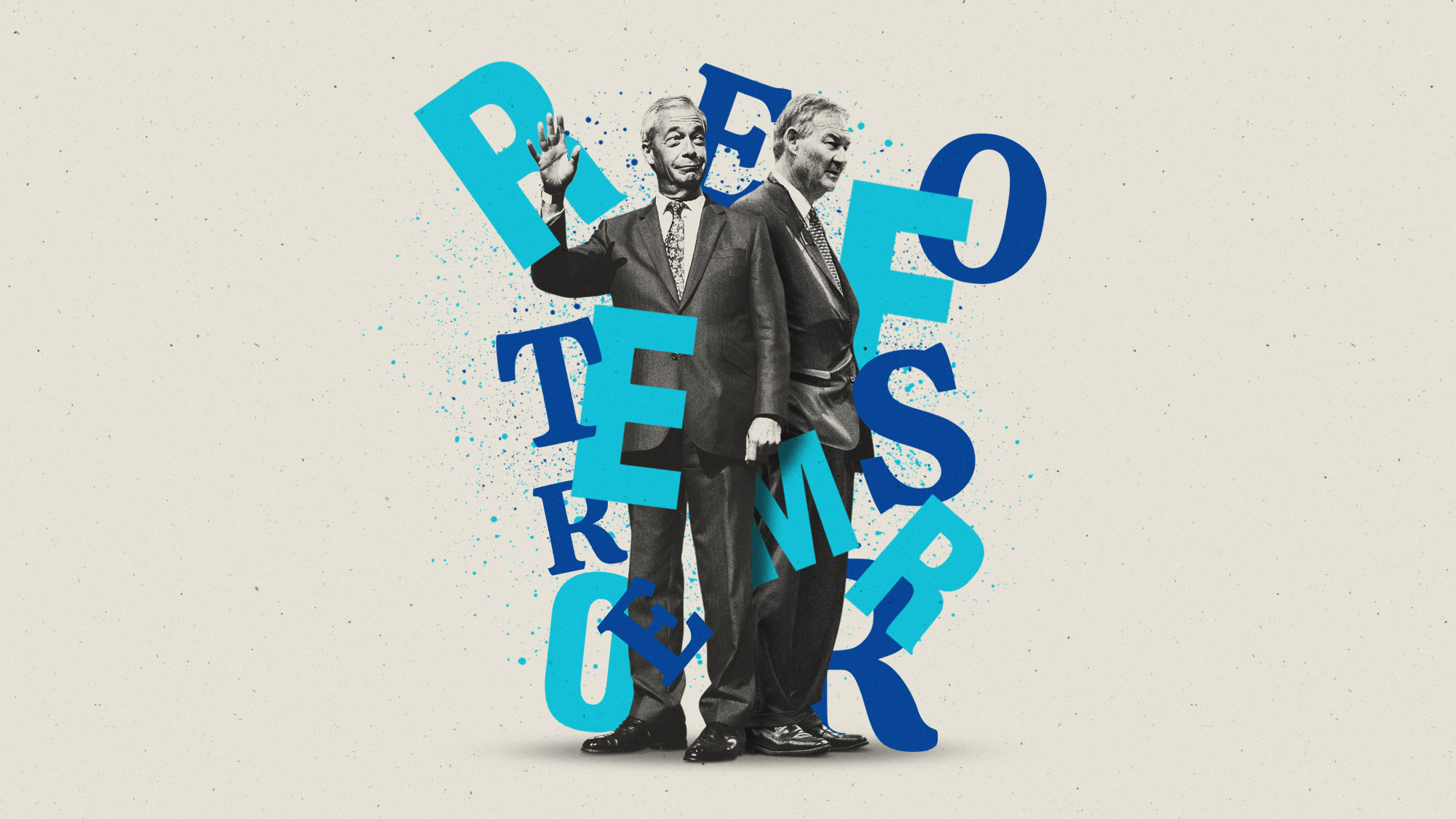
    Could a Reform-Restore coalition unite the right?

    Rupert Lowe has proposed an electoral pact with Nigel Farage to unite the “patriotic right” of British politics and take on Andy Burnham.

    “Politics being politics,” said Politico, former Reform MP Lowe, who was suspended from Farage’s party in March 2025, spelled out “five conditions for cooperation”. They include a referendum on restoring the death penalty and “the exclusion of former Tory ministers from any future cabinet”. Farage said he had an “open mind” to Lowe’s offer, but “I’m certainly not going to be ditching people who I view to be allies and a great asset”.

    What did the commentators say?
    Lowe’s conditions show that he is not serious about this offer, said veteran Farage ally Gawain Towler on Substack. It “is a demand engineered to be refused”, and in speaking out while Farage is under investigation over his financial conduct, Lowe “has chosen the moment of maximum embarrassment to apply pressure and called it generosity”.

    Surely Farage is a “savvy enough politician to spot that this is not so much a gift as a trap, from a man whom he personally detests”, said James Ball in The i Paper. Even if Farage went along with Lowe’s demands, “this would create new political problems for him”. Among Reform’s voters are “people who aren’t fully signed up to the idea of mass deportations and full-blown Islamophobia”. They are “simply fed up of the status quo and the mainstream parties”.

    But neither Reform nor Restore “can make the progress needed to nullify the left without the other”, said Giles Sheldrick in the Daily Express. “Many of those closest to the man who almost single-handedly delivered Brexit have said he is driven by ego and ambition.” Farage denies those accusations, but Lowe’s “offer in a bombshell social media post may well provide the definitive answer”.

    What next?
    With the imminent by-election in Clacton and the Labour government’s resurgence, Farage “is facing something of a perfect storm”, Tim Bale, a politics professor at Queen Mary University of London, told Politico. “But while he’s on the ropes he’s by no means on the floor, let alone out for the count.”


    IN THE SPOTLIGHT

    Dr Chatbot will see you now 

    Almost three in 10 Britons now use AI chatbots to get health advice, recent polling suggests. But UK medical-policy experts are warning that the growing trend may create confusion and undermine trust in GPs and other healthcare workers.

    The Academy of Medical Sciences’ call for caution coincides with OpenAI’s rollout of ChatGPT Health in the US. The company claims the new feature “allows users to securely connect medical records and wellness apps” to provide more personalised insights and allow them to “take a more active role” in their health.

    ‘Zero awareness of fallibility’
    ChatGPT Health is not yet available in the UK, but with more than 300 million people worldwide regularly directing their health-related questions to ChatGPT, it could swiftly become a “democratising force in healthcare”, Tanzeem Choudhury, a health-innovation expert at New York’s Cornell University, told CBS News. Yet there are risks and trade-offs, said former Public Health England medical director Yvonne Doyle.
    “Used well”, an AI tool such as this can “help direct people to trusted sources”, she said on the Academy of Medical Sciences website. But it can also mislead “convincingly” and “exploit uncertainty”.

    The “danger” with an AI chatbot is that it has “zero awareness of its own fallibility” and always provides an answer “even when one doesn’t exist”, said Celina Cartoto and Anthony Kelly on RTE. Users need to remember that although it “speaks like a doctor, listens like a therapist and remembers like a friend”, it is actually “none of them”.

    Privacy concerns
    Addressing another key concern of critics, OpenAI has said that Health has “enhanced privacy” and encryption, and that conversations used in the Health tab won’t flow into non-Health chats. But it’s no accident that Health has not yet been rolled out in the UK and the EU, where data protection and digital privacy laws are stricter than in the US.

    It all comes down to whether “you trust OpenAI to keep to its word”, Robert Wachter, a medic who has written extensively about AI and healthcare, told Time magazine. OpenAI has a “really strong corporate interest in not screwing this up”. Its brand is “dependent” on the user “feeling comfortable” in sharing their information, and any sort of data breach would end that trust.


    QUOTE OF THE DAY

    “My kidneys were packing up, my organs were just seizing up. People were coming to say goodbye.”

    Phil Collins describes his life-threatening battle with alcoholism. The musician, who is now sober, told The Sunday Times that he was “very lucky”  to have survived the damage caused by his extensive alcohol intake, which left him hospitalised for seven months from November 2023.


    Poll watch

    A majority of Brits (60%) believe Black people are treated differently by police, while 22% think they are treated about the same as everyone else, according to a YouGov survey of 3,116 adults. Those who think Black people are dealt with differently are divided on how that manifests: 36% think the police are more strict, while 24% think they are more lenient.  


    THE EXPLAINER

    Donald Trump’s multibillion-dollar yen play

    “To Do. Buy Japanese Yen (JPY) $5-10 bil,” read a note written by US Treasury Secretary Scott Bessent during a cabinet meeting on Friday. Yesterday he confirmed on X that the US had participated in “coordinated foreign exchange actions” with the Japanese government to counter “disorderly yen movements”.

    The yen has sunk to a 40-year low against the dollar in recent weeks, in the latest milestone in Japan’s economic decline. But having traded at ¥163 to the dollar on Thursday, the yen has strengthened to ¥155 to the dollar since the intervention. Donald Trump claimed the joint move would be “good for the world economy”. But some analysts believe the intervention will best serve America’s interests.

    Why is the yen so weak?
    Japan, the world’s fourth biggest economy, has “long struggled with a weak yen”, said CNN. After suffering recession and “chronic deflation” in the 1990s, Japan has kept interest rates much lower than other developed economies. In April, the Bank of Japan increased its rate to 1% – the highest since 1995 – while the US rate usually lies between 3.5% and 3.75%. Such low rates are intended to stimulate consumer spending, but they are much less attractive to international investors. Other issues, including a “decades-long slide in its working-age population”, substantial government debt and low productivity, have also hampered economic growth, said the BBC.

    What’s in it for Trump?
    The Japanese government has been buying up yen, thereby “raising the value of their currency”, said The Guardian. But to pay for this, Japan has been selling off US government bonds, which are kept by many countries as a “store of national wealth”. If these bonds are sold quickly and in large quantities, it can lead to a rise in the interest rate that the US pays on its debt, making it more expensive for the US to borrow money.

    Is this a sign of things to come?
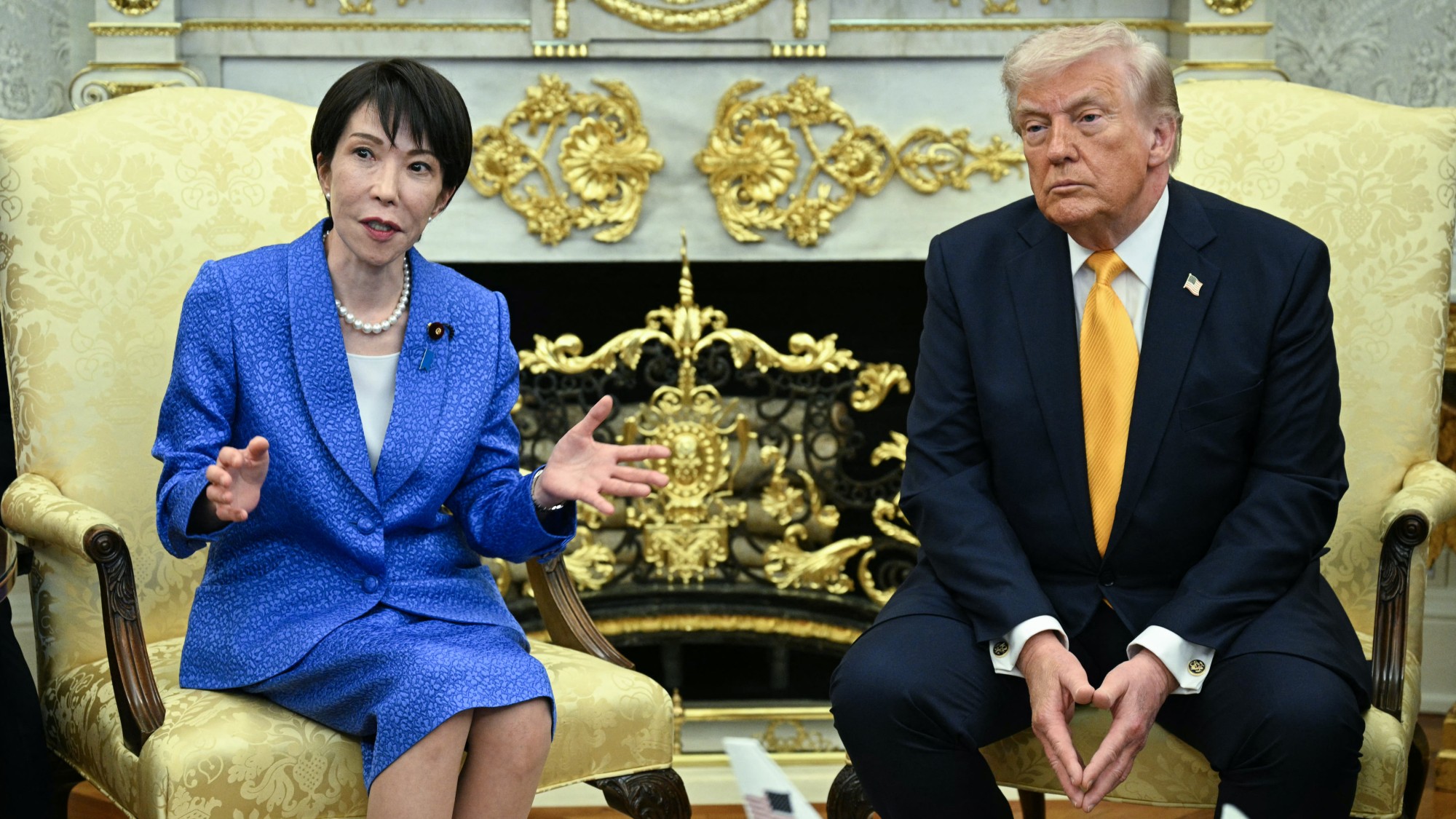
    Both sides have announced they would not hesitate to participate in further joint interventions. Within Japan, there is concern that spending plans announced by Prime Minister Sanae Takaichi (pictured above with Trump) will put further pressure on the currency. A two-year cut in sales tax on food and soft drinks from 8% to 1% is intended to ease cost-of-living pressures. However, the policies could instead “strain public finances and rattle markets”, said the Financial Times.


    Good day 👶

    … for surgical advances, after doctors successfully operated to correct a birth defect while the infant was still in the womb. Baby Theo had gastroschisis, a condition that causes the intestines to grow outside the body, but a team in Texas used pioneering keyhole surgery techniques to gently push them back into his abdomen. Theo is the first British baby to undergo the in-utero procedure and only the third in the world.


    Bad day 🎤

    … for Arianators, after Ariana Grande announced she will take “a step back” from public life when her world tour ends next month, due to “endless, ongoing” scrutiny. Speculation had been rife following last week’s release of her eighth studio album, “Petal”, which features lyrics about widespread criticism of her appearance and weight. 


    PICTURE OF THE DAY

    Hot and cold 

    A woman eats a melting ice cream in front of an anti-US billboard in Enghelab Square in central Tehran. Iran has denied that any negotiations with Washington are taking place, after Donald Trump claimed that new peace talks would begin today.

    Atta Kenare / AFP / Getty Images


    Puzzles

    Chain Word

    Try The Week’s new daily word challenge in our puzzles and quizzes section

    Play here


    THE WEEK RECOMMENDS

    The best supermarket ice creams, lollies and gelato

    A sweet, icy treat is just the thing when temperatures peak on a hot summer’s day. From fruity to creamy to outrageously chocolatey, here are some of the coolest-tasting supermarket options around.

    Waitrose No 1 Santo Domingo Chocolate Ice Cream
    Supermarket ice creams no longer come with a regulation “cocktail of gums and emulsifiers”, said Tom Hunt in The Guardian. Brands are using “fewer additives” and prioritising a more “rich and complex” taste – and Waitrose has really hit the mark with this “dark and deeply chocolatey” tub.

    Häagen-Dazs Matcha Ice Cream
    This one is for “devotees of the powdered tea”, said Giulia Crouch in The Times. Where most similar products tend to “fall short”, the Häagen-Dazs version “delivers big time”, even for a “matcha snob”, with a “proper hit of green tea flavour” and “sweet, grassy, slightly bitter notes”.

    Hackney Gelato Banana Caramel & Pecan Gelato
    This “deservingly” won two stars in the Great Taste Awards 2024, said Crouch in The Times, and the flavour combination still “plays beautifully” for me. The “deep, buttery richness” of caramel pairs wonderfully with the “sweet creaminess of the banana”. A sprinkle of toasted pecans adds a layer of “welcome crunch”.

    M&S Pineapple, Coconut & Lime Ice Lollies
    Ice cream may be what you crave when the temperature rises, but your body actually generates more “metabolic heat” when it works to digest food, said Sophie Morris in The i Paper. Fortunately, lollies are “mostly made from sugar, water, fruit juice and flavourings”, so there isn’t as much to digest. These M&S ones are a “frozen dream” of “pineapple juice, coconut milk, sugar and lime juice”.


    Statistic of the day

    90cm: The length of the ballot paper for the Clacton parliamentary by-election. Listing the 33 candidates standing against Nigel Farage has resulted in the longest ballot paper in British political history, which is costing four times more to print than standard ballot papers, the local council said.


    instant opinion

    Today’s best commentary

    The school summer holiday should be capped at a month
    Allison Pearson in The Telegraph
    When I was a child and school broke up summer, we “played out” while “a network of ‘aunties’ kept an eye”, writes Allison Pearson. But now, many families have “both parents in employment” and “few children would be allowed to roam freely”, so the six-week break has become a costly “logistical nightmare”. We should shorten it, moving a week to Christmas, when it’s “easier” for parents “to piece together the leave they need to be with the children”.

    Let’s rekindle capitalism with a conscience
    Tony Sewell in The Times
    “We have convinced ourselves” that “making money is evil”, writes Tory peer Tony Sewell, and that “you can’t have social stability alongside great wealth”. But Quaker businessmen Cadbury, Rowntree, Fry and Clark showed that “profit and moral responsibility” to “workers, communities and society need not be at odds”. When we talk now of levelling up, we need to remember that “commercial success and social conscience” can genuinely reinforce one another”.


    What your hotel room behaviour reveals about you

    Polly Hudson in The i Paper
    “You don’t really know someone” until you “see how they treat their hotel room”, writes Polly Hudson. I always tidy mine because leaving it “looking like there has been a burglary says a lot about who you are” – and “none of it is good”. Then there’s unpacking etiquette: open the case and “let the contents explode out” or “hang up every single item”? Going away means “whoever you’re with” may forever hold “a single wrong move” against you. “Happy Holidays!”


    word of the day

    Naoero

    The new official name of the world’s third-smallest country. The government of the Pacific nation formerly known as Nauru said that name, pronounced “Now-roo”, was only adopted because the local name, pronounced “Now-ero”, was difficult for foreigners to say. President David Adeang heralded the formal switch to Naoero as “the beginning of renewed national pride”.


    Evening Review was written and edited by Jamie Timson, Elliott Goat, Chas Newkey-Burden, Lea Tran, Will Barker, Irenie Forshaw, David Edwards, Helen Brown and Kari Wilkin with illustrations by Stephen P. Kelly and Julia Wytrazek.

    Image credits, from top: illustration by Stephen P. Kelly / Alamy / Getty Images; illustration by Julia Wytrazek / Getty Images; Jim Watson / AFP / Getty Images; Atta Kenare / AFP / Getty Images; Mizina / Getty Images

    Morning Report and Evening Review were named Newsletter of the Year at the Publisher Newsletter Awards 2025
     

    Recent editions

    • Sunday Shortlist

      The sexual anxiety of Gen Z

    • Saturday Wrap

      Are Republicans doomed?

    • Evening Review

      Iran’s covert allies?

    VIEW ALL
    TheWeek
    • About Us
    • Contact Future's experts
    • Terms and Conditions
    • Privacy Policy
    • Cookie Policy
    • Advertise With Us
    • FAQ
    Add as a preferred source on Google Add as a preferred source on Google

    The Week is part of Future US Inc, an international media group and leading digital publisher. Visit our corporate site.

    © Future US, Inc. Full 7th Floor, 130 West 42nd Street, New York, NY 10036.