America has fallen far behind China in the electric vehicle race. Can it catch up?
How big is China’s EV industry?
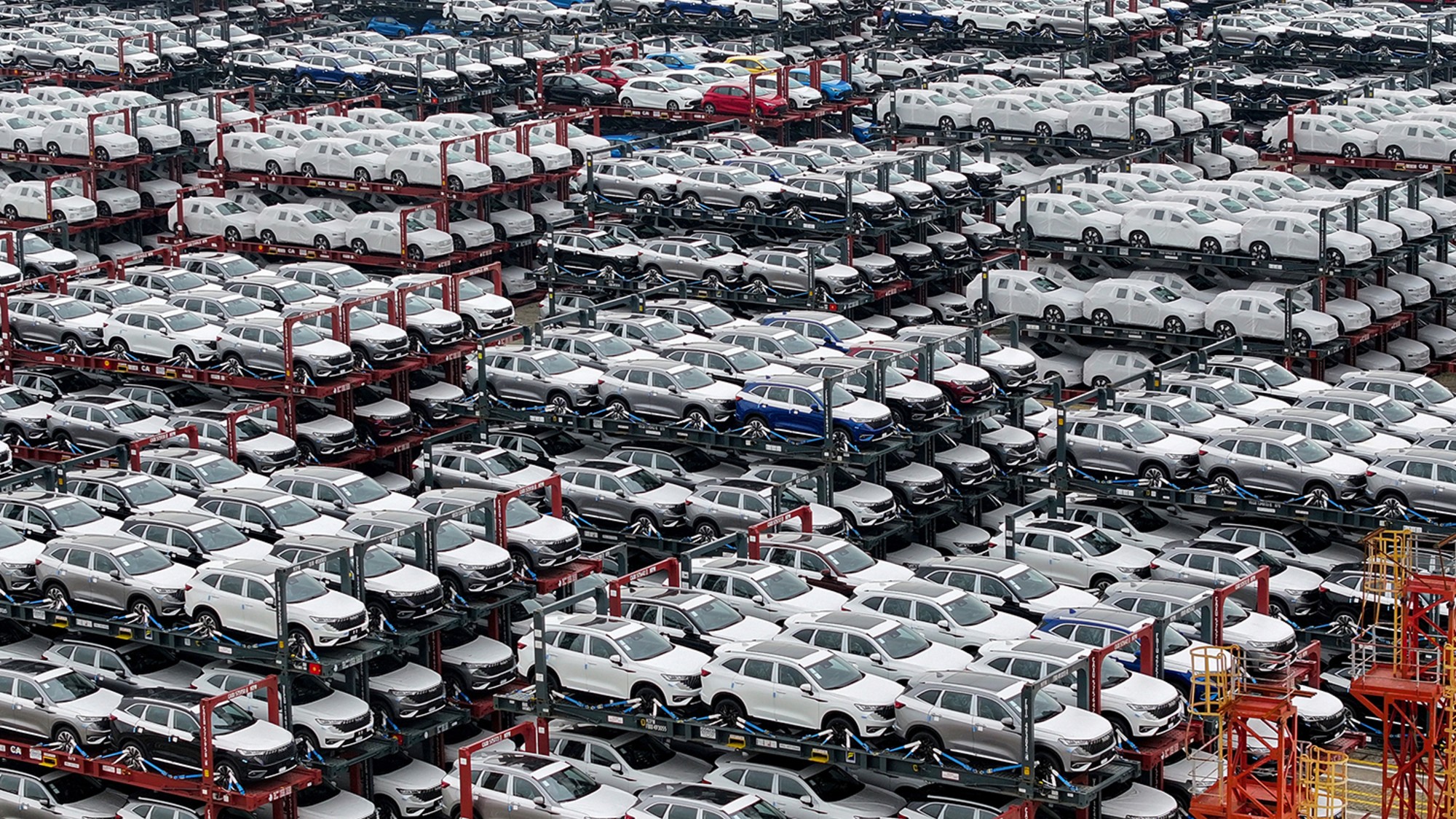
Chinese automakers last year made nearly 16 million electric vehicles, a whopping 75% of all EVs sold globally. The U.S. produced only 5%. More than half of new cars sold in China are now EVs—here it’s about 10%— and those vehicles are in heavy demand around the world: Tariffs of up to 127.5% have kept them out of the U.S., but 80% of EVs sold in Latin America are Chinese, as are 75% in Southeast Asia, and 57% in Australia. It’s a staggering turnaround for China, which in 2000 made only 2 million cars a year, all of them gas-powered. Today, Chinese EVs impress with their affordability—budget models run as low as $7,800, compared with $29,000 for a Chevrolet Bolt in the U.S.—reliability, battery range, and luxury features that come as standard, such as massage chairs, big screens, and built-in refrigerators. With every major nation except the U.S. shifting from gas- to battery-powered cars, a move that’s been accelerated by the Iran war driving up oil prices, China’s dominance is expected to grow. “We’ve reached a genuinely existential moment” for U.S. automakers, said Stephen Ezell of the Washington-based Information Technology and Innovation Foundation.
How did China become an EV power?
It began in 2001, when Beijing realized EVs would help it “solve multiple problems at the same time,” said China-based auto analyst Bill Russo: “energy security, environmental pollution concerns, and industrial competitiveness.” It pumped more than $230 billion into the EV sector over 15 years, funding new automakers and new battery and charging technologies. Beijing also offered EV buyers rebates and tax incentives, constructed the world’s largest network of public charging stations, and helped automakers build vertically integrated supply chains. BYD, which overtook Tesla last year as the world’s top EV producer, mines its own lithium, makes its own batteries and semiconductors, and even exports cars on its own ships. Recognizing the challenge, President Barack Obama in 2009 launched a $2.4 billion grant program to boost EV development in the U.S.; a $465 million loan helped Tesla get its breakout Model S to market. Under President Joe Biden, the federal government put $7.5 billion toward charging networks and offered billions more in incentives for buyers and automakers. Many of those efforts were scrapped following President Trump’s return to the White House last year.
What did Trump do?
Calling climate change a “con job,” Trump signed into law a GOP mega-bill that nixed a $7,500 tax credit for new EV buyers. His administration has dismantled clean-air regulations and fuel economy standards that spurred carmakers to move toward EVs; it has also challenged states’ authority to set their own tougher standards. “You’re not going to be forced to make all those cars,” Trump said last year, while signing a law aimed at killing rules from California, which would phase out the sale of new gas-only cars by 2035. EV sales had already stalled in the U.S. before those actions, with potential buyers discouraged by high prices and concerns over range and charging access. But the withdrawal of federal support caused the market to slump, with new EV sales plunging 27% year over year in the first three months of 2026.
How have U.S. automakers responded?
Starting in December, the so-called Big Three— Ford, GM, and Stellantis, owner of Chrysler and Jeep—announced more than $52 billion in write-downs on EV-related losses, and set about what GM called a “strategic realignment.” The companies canceled planned EV models; stopped production of current ones, such as Ford’s F-150 Lightning pickup; and repurposed their battery plants for other uses, including making batteries for data centers. The retreat has alarmed industry analysts, who say U.S. automakers are dooming themselves to irrelevance by doubling down on gas-guzzlers.
What’s at stake?
The U.S. auto industry generates $1.2 trillion each year, nearly 5% of GDP, and directly employs some 7.4 million Americans. It indirectly supports millions more jobs. To safeguard the industry, Republican and Democratic lawmakers have rallied behind legislation that would ban companies with more than 15% Chinese ownership from selling cars in the U.S. “We are not competing on a level playing field when China subsidizes its manufacturers” and “uses slave labor,” said Rep. Debbie Dingell (D-Mich.). Some analysts call protectionism a losing cause. They suspect public demand for Chinese cars will ultimately prove too great, especially as they proliferate in Mexico and Canada, which in January began letting in up to 49,000 Chinese EVs annually. That same month, Trump expressed openness to letting Chinese firms make cars here so long as they use American workers and inputs. Proponents say that approach would light a fire under U.S. carmakers and build their knowledge and capabilities while driving up consumer demand for EVs.
Are U.S. carmakers ready for that?
Not yet. Some are developing smaller, cheaper EVs they hope will challenge Beijing’s offerings; Ford is rolling out a $30,000 midsize pickup EV next year. The Detroit giant is also trying to grow its EV skills by partnering with Chinese firm Geely on models for the European market, while attempting to strengthen its operations here at home. Ford is pitching the Trump administration on a plan that would let Chinese automakers into the U.S. only through joint ventures in which an American firm would hold the controlling stake. That setup would mirror the deals Beijing struck decades ago with Western automakers eager to enter the Chinese market. Ford CEO Jim Farley, who in 2024 said he’d been driving a “fantastic” Xiaomi SU7 sedan for six months, believes U.S. firms have no choice but to learn from China. “You don’t become fit like the rest of the Chinese,” he said, “you aren’t going to be around much longer.”