The Week The Week
flag of US
US
flag of UK
UK
https://cdn.mos.cms.futurecdn.net/flexiimages/jacafc5zvs1692883516.jpg

SUBSCRIBE & SAVE

Less than $3 per week

Sign in
  • View Profile
  • Sign out
  • The Explainer
  • The Week Recommends
  • Newsletters
  • Cartoons
  • From the Magazine
  • The Week Junior
  • Student Offers
  • More
    • Politics
    • World News
    • Business
    • Health
    • Science
    • Food & Drink
    • Travel
    • Culture
    • History
    • Personal Finance
    • Puzzles
    • Photos
    • The Blend
    • All Categories
  • Newsletter sign up Newsletter
  • The Week Evening Review
    Trump’s Asia pullback, Iran war’s human impact, and Alzheimer’s research cuts

     
    talking points

    Is the US abandoning Asia? 

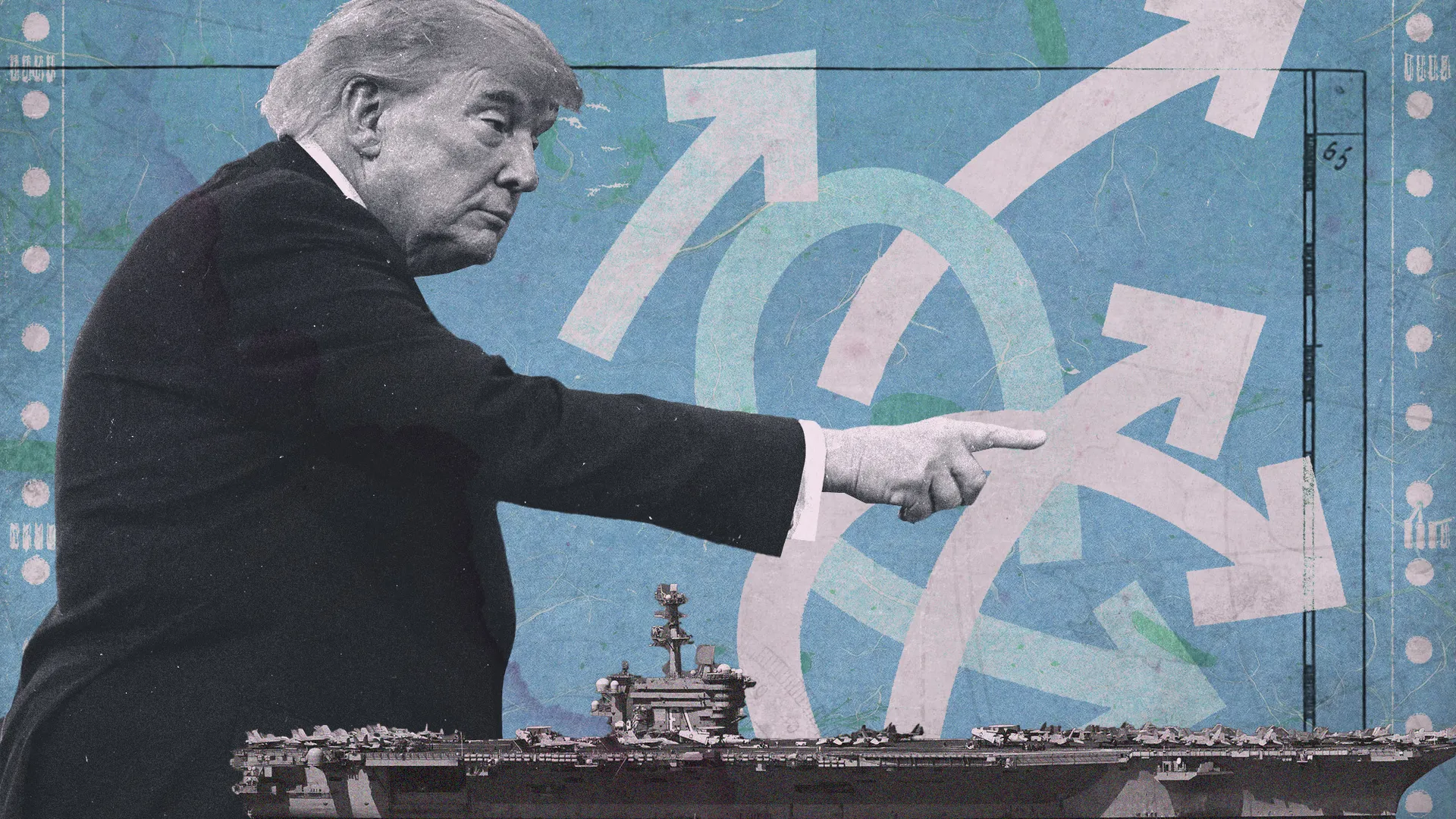
    U.S. allies in Asia have long depended on the American military for their defense. But President Donald Trump in recent days has curtailed U.S. participation in joint exercises with South Korea and at the same time ordered the lone American aircraft carrier to depart for the Middle East. The question now is whether the U.S. remains dedicated to Asian security.

    No more ‘pivot to Asia’
    The Trump administration “promised a pivot from the Middle East to East Asia,” said Matthew Petti at Reason. The opposite is now happening, with the U.S. commitment in the Pacific “taking a back seat” to the Middle East. The war with Iran is “dominating” foreign policy. 

    Trump’s decision to pull back from the South Korean drills “does not mean the U.S. alliance system in Asia is collapsing,” said retired Lt. Gen. Chun In-bum at The Korea Times. The abruptness of Trump’s decision — and his linking it to his friendly relationship with North Korean dictator Kim Jong Un — does, however, mean that Asian allies will “begin asking how much they can rely on U.S. commitments during a future crisis.” As China becomes “increasingly assertive” and North Korea begins “cooperating more closely” with Russia, South Korea’s “survival and security are at stake.”

    Reliance on ‘American commitments’
    Trump’s pullback may impact the U.S., too, said Sheila A. Smith at the Council on Foreign Relations. A reduction in American fidelity to the Pacific could cause South Korea and Japan to seek nuclear weapons while also ceding ground to U.S. rivals China and Russia. Reported shortages of U.S. munitions in Iran have also raised questions about whether the U.S. is even capable of “offering protection to its allies.”

    The president’s unpredictability has forced U.S. allies to begin “assuming greater responsibility for their own security,” said Craig Singleton at The Washington Post. Japan has begun its “largest postwar defense buildup” by signing agreements with Australia and the Philippines, and Taiwan is spending heavily to “harden its military, civil defense and critical infrastructure” against a Chinese invasion. But the region still relies on “predictable American commitments and clear crisis planning.”


    Statistic of the day

    39: The number of public appearances made so far by first lady Melania Trump during her husband’s second administration — half as many as were made at the same point in his first term, according to NBC News. This summer, she was MIA for about a month. And since Trump’s return, she has given 29 speeches. Michelle Obama gave 130 over an equivalent timeframe.


    IN THE SPOTLIGHT

    The impact of war on Iranian people 

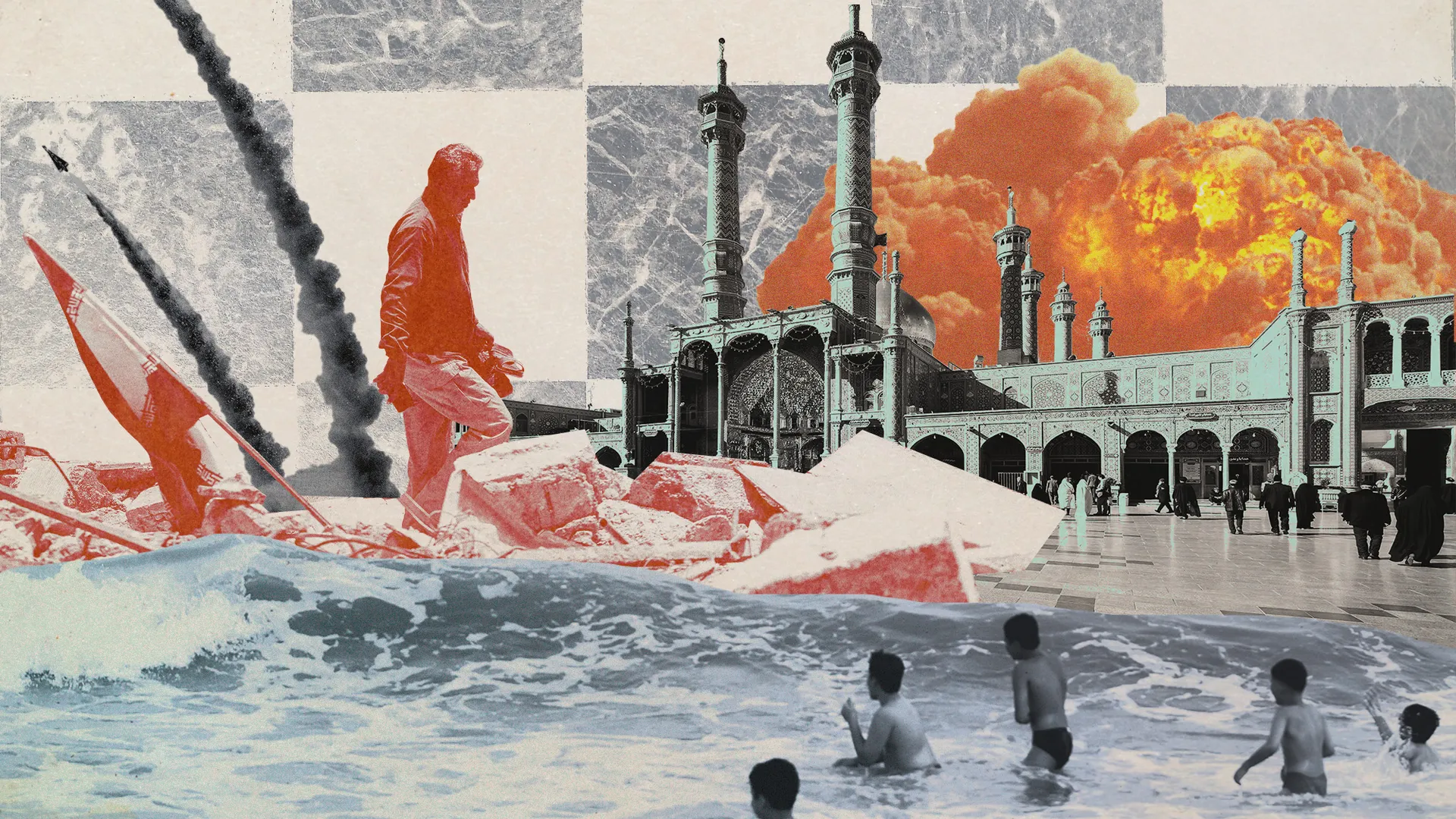
    With inflation on the rise, fuel rationing and continued threats of air strikes, the vast majority of the Iranian population continue to be pawns in a war with no end in sight. And speaking openly about politics in Iran still “carries obvious risks,” said Nawal Al-Maghafi at The Guardian. But there’s “no single narrative of the war,” with some believing it has “strengthened national unity” and others saying it has only “deepened repression.”

    ‘Abandoned by the West’
    Iran has sustained billions of dollars’ worth of damage from U.S. attacks, said Maziar Motamedi at Al Jazeera. And this adds to “decades-old economic structural issues,” continually “strained by years of Western sanctions, and local mismanagement.” Inflation has risen to “nearly 90%” in the last month, with food inflation “hitting 134%”.

    Many Iranians feel “abandoned” by the West, said Roxana Saberi and Fatemeh Jamalpour at The Times. They believe the U.S. and others have “largely stood by during the recent executions and the January massacre.” 

    The “inaction” of the international community hits hard, said the head of a survivor charity to The Times. “If these Western countries have democracy, how come they don’t care to see that the Iranian people are suffering?” The regime’s brutal crackdown since January has left Iranians with “widespread trauma” that “spans generations and classes.” 

    ‘Fervor’ and ‘fear’
    There’s still a “fervor” among those who support the regime, said Krishnan Guru-Murthy on Britain’s Channel 4. Many are still eager to “express their love of country and their hatred of the enemy.”

    For others, the “greatest fear” is that the war will “end with the Islamic Republic still in power,” said Kelly J. Shannon at the Atlantic Council. However the conflict ends, the “remnants of the regime” will probably become “further entrenched and even more oppressive.”

    Both Washington and Tehran invoke the interests of the Iranian people, said Mahmoud Rasouli at the European Consortium for Political Research, but they never allow these interests to “directly determine the direction of the conflict.” And there’s the paradox: The Iranian people are “central” to the language used around the war but “peripheral” in the “decision-making processes that shape their future.”


    QUOTE OF THE DAY

    ‘Even at 117, I have had many firsts this year, from stroking a llama to holding hands with the king.’

    Ethel Caterham, the oldest living person in the world, reflecting on the past year as she celebrates her 117th birthday from her home in the U.K. Her secret to a long life is “never arguing with anyone; I listen, and I do what I want,” she added.


    THE EXPLAINER

    DEI clash leads to cuts for Alzheimer’s research

    With the Trump administration pushing back against a swath of DEI-related federal grants, some research on major diseases, including Alzheimer’s, is caught in the crossfire. The most recent round of grant axing has resulted in two major universities losing millions in funding related to studying brain disease.

    What research is being impacted?
    In 2025, the U.S. awarded 52% fewer grants related to Alzheimer’s research than in 2024, according to the National Institutes of Health, with the number of grants falling from 369 to 177. That figure appears to be on track through 2026, as well, especially given recent cuts. 

    The newest DEI-related funding slashes involve grant cancellations for “brain health and Alzheimer’s disease research at two leading research institutions, Emory University and the University of Pittsburgh,” said The Guardian. At least “three grants were canceled between the two institutions,” representing $15 million in funds that would have been used to study “how discrimination” or racism “affects long-term brain health.”

    Black people are two times more likely to develop dementia, according to the Alzheimer’s Association. The topics “we are measuring are scientifically valid concepts,” said Andrea Rosso, an associate professor of epidemiology at the University of Pittsburgh, to The Guardian. While these studies “don’t actually measure structural racism,” they do “use that as a framing for why one population is at such high risk.”

    What does this mean for Alzheimer’s patients?
    Many are worried that cutting Alzheimer’s research under the guise of the anti-DEI movement could negatively impact patients, specifically those who are Black. One canceled grant at the University of Pittsburgh “studied how Alzheimer’s disease risk was affected in people who live in divested, predominantly African American neighborhoods,” said The Guardian. Another grant at Emory University that was slashed “studied the impact of racial discrimination on the white matter of the brain.”

    The Trump administration has also been “open about wanting a smaller NIH” and originally “proposed cutting the agency’s budget for 2026 by 40%,” said Vox. And some researchers are considering taking their studies offshore if things do not change. 


    Good day 🚀

    … for one-upping a space company. Artificial intelligence firm Anthropic expects to “match or beat the size of SpaceX’s record-setting initial public offering,” according to people familiar with the matter, said Bloomberg. Elon Musk’s rocket company raised “$75 billion at the outset,” making it the “biggest first-time share sale ever.”


    Bad day 🔭

    … for saving a space telescope. NASA’s attempt to save the Swift space telescope before it falls out of orbit has failed. Plans to use a rescue spacecraft to push the Neil Gehrels Swift Observatory into a higher orbit have been canceled. The telescope is expected to “burn up in the atmosphere later this year,” said The New York Times. 


    Picture of the day

    Message of defiance

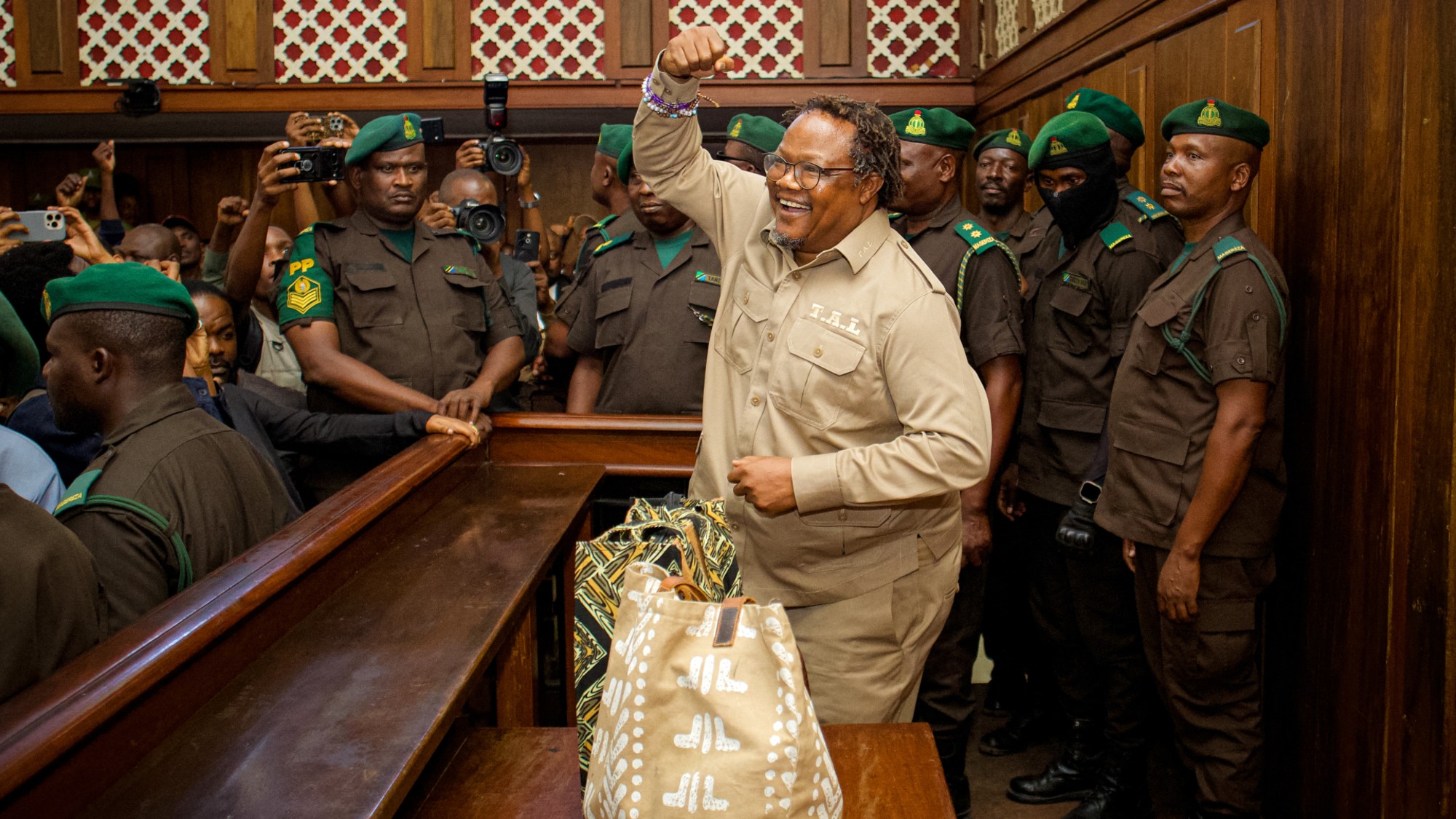
    Tanzania’s opposition leader Tundu Lissu gestures to supporters as he arrives at the High Court in Dar es Salaam for a pretrial hearing. The Chadema Party chair was charged last year with treason, which carries a potential death penalty, over his campaign for electoral reform.
    AFP / Getty Images


    Puzzles

    Daily sudoku

    Challenge yourself with The Week’s daily sudoku, part of our puzzles section, which also includes guess the number

    Play here


    The Week recommends

    The best Western movies of all time

    Westerns are often thought to glorify the violence and vigilantism of the 19th-century towns on the expanding American border. But the best films of the genre, including these superb entries, generally interrogate rather than reinforce that mythology.

    ‘High Noon’ (1952)
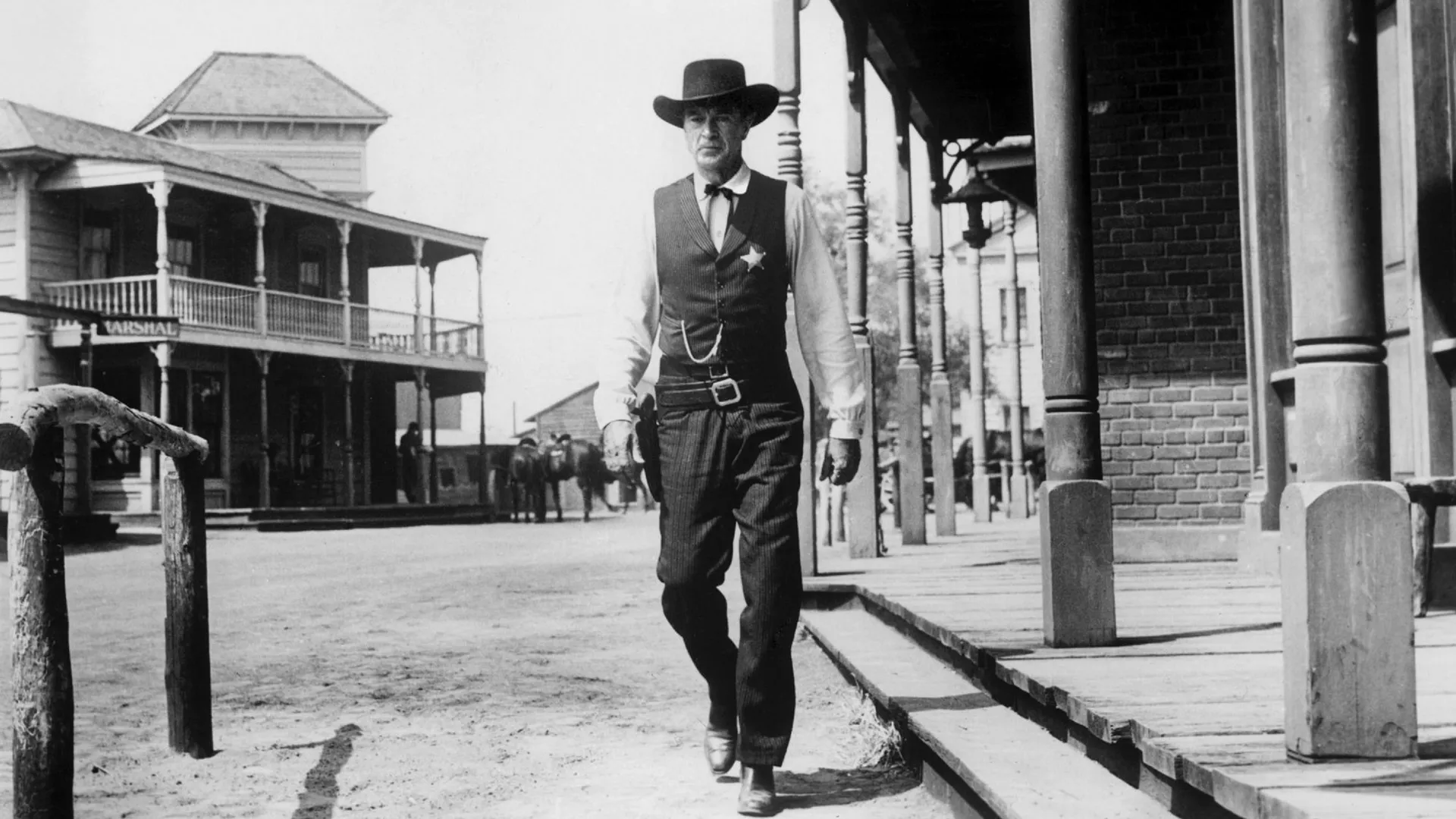
    Gary Cooper is Marshal Will Kane, who tries to rally support from the town’s citizens when he discovers an outlaw he banished to prison is coming back on the noon train with his gang. Director Fred Zinnemann’s “unusually circumspect and politically loaded” film (pictured above) “stands out as the proto anti-Western, questioning the conventions of a genre long before doing so was in vogue,” said Scott Tobias at The Guardian. (MGM+)

    ‘Unforgiven’ (1992)
    Clint Eastwood directed 40 films, but it’s this riveting Western that will be remembered as his masterpiece. A film that explores a “range of moral ambiguities and profound historical questions,” it also challenges the “history of the American West and furthermore Eastwood’s own role in defining the West in cinema,” said Brian Eggert at Deep Focus Review. (Prime Video)

    ‘True Grit’ (2010)
    Once upon a time, the Hollywood landscape was littered with Westerns of varying quality, but today they are somewhat scarce, making gems like directors Joel and Ethan Coen’s remake of the 1969 original all the more notable. The movie “adheres to many of the familiar touchstones of the Western genre while remaining unmistakably Coen-esque,” full of “all kinds of wonderful exchanges, unforgettable scenes and moments of weirdness,” said Ryan Lambie at Den of Geek. (Paramount+)

    Read more


    Poll watch

    More than half of Americans (54%) still drink alcohol, matching last year’s record low for the second consecutive year, according to a Gallup survey of 1,200 U.S. adults. As drinking has declined, the percentage of Americans who sometimes drink too much has also fallen, reaching a new low of 13%. 


    WORD OF THE DAY

    khat

    A reddish-green shrub used for its “amphetamine-like effects,” typically grown in East Africa and the Arabian Peninsula, said The New York Times. U.S. Customs and Border Protection officials have just recovered approximately 1,200 pounds of khat from duffle bags at Baltimore/Washington International Thurgood Marshall Airport in Maryland. 


    INSTANT OPINION

    Today’s best commentary

    ‘Five years on, Washington is failing Afghanistan again’
    Priyali Sur and Hardin Lang at Foreign Policy
    “Five years ago this month, Kabul fell to the Taliban,” and the “images from that week still define how many Americans think about Afghanistan,” say Priyali Sur and Hardin Lang. In the “following years, Washington has found new, quieter ways to fail Afghans,” and “this time, the failure has a body count that the Trump administration has so far refused to acknowledge.” Examining the “impact of the aid cuts on the ground” paints a “disturbing picture of a collapsing system.”

    ‘Flock camera resistance is just the beginning. Let’s avoid a “1984” scenario.’
    Farrah Hassen at The Atlanta Journal-Constitution
    Government surveillance “isn’t new, but new wide-ranging technologies that can detect our faces and track our movements are making it ubiquitous,” says Farrah Hassen. While the “tools have changed, the purpose remains the same: to chill independent thought, free speech and dissent, bringing our country closer to the events in George Orwell’s dystopian novel ‘1984.’” Tech like Flock cameras has “brought the issue into communities across the country” and “led to wrongful arrests, profiling and countless other abuses.”

    ‘Baseball labor talks may look like a battle among millionaires, but it’s really about billionaires vs. peons’
    Michael Hiltzik at the Los Angeles Times
    “Is any labor dispute today caricatured more than the contract negotiations between Major League Baseball owners and their players?” says Michael Hiltzik. The “idea that the fans are clamoring to cancel” the 2027 season for a “rule change that would put more money in billionaires’ pockets doesn’t strike me as remotely plausible.” The “trope that the parties contesting the contract renewal are all millionaires battling over the same pie and sticking the fans with the cost” should be “put in context.”


    Evening Review was written and edited by Will Barker, Theara Coleman, Nadia Croes, David Faris, Scott Hocker, Anya Jaremko-Greenwold, Justin Klawans, Joel Mathis, with illustrations by Julia Wytrazek.

    Image credits, from top:  Illustration by Julia Wytrazek / Getty Images; Illustration by Julia Wytrazek / Getty Images; Pat Greenhouse / The Boston Globe / Getty Images; Silver Screen Collection / Getty Images
     

    Recent editions

    • Morning Report

      Trump deportations reach new frontiers

    • Evening Review

      Rising bond yields

    • Morning Report

      U.S. national debt hits ‘ominous’ new milestone

    VIEW ALL
    TheWeek
    • About Us
    • Contact Future's experts
    • Terms and Conditions
    • Privacy Policy
    • Cookie Policy
    • Advertise With Us
    • FAQ
    Add as a preferred source on Google Add as a preferred source on Google

    The Week is part of Future US Inc, an international media group and leading digital publisher. Visit our corporate site.

    © Future US, Inc. Full 7th Floor, 130 West 42nd Street, New York, NY 10036.