The Week The Week
flag of US
US
flag of UK
UK
https://cdn.mos.cms.futurecdn.net/flexiimages/jacafc5zvs1692883516.jpg

SUBSCRIBE & SAVE

Less than $3 per week

Sign in
  • View Profile
  • Sign out
  • The Explainer
  • The Week Recommends
  • Newsletters
  • Cartoons
  • From the Magazine
  • The Week Junior
  • Student Offers
  • More
    • Politics
    • World News
    • Business
    • Health
    • Science
    • Food & Drink
    • Travel
    • Culture
    • History
    • Personal Finance
    • Puzzles
    • Photos
    • The Blend
    • All Categories
  • Newsletter sign up Newsletter
  • The Week Evening Review
    Rogue AI agents, single-sex spaces, and a constitutional question

     
    TODAY’S BIG QUESTION

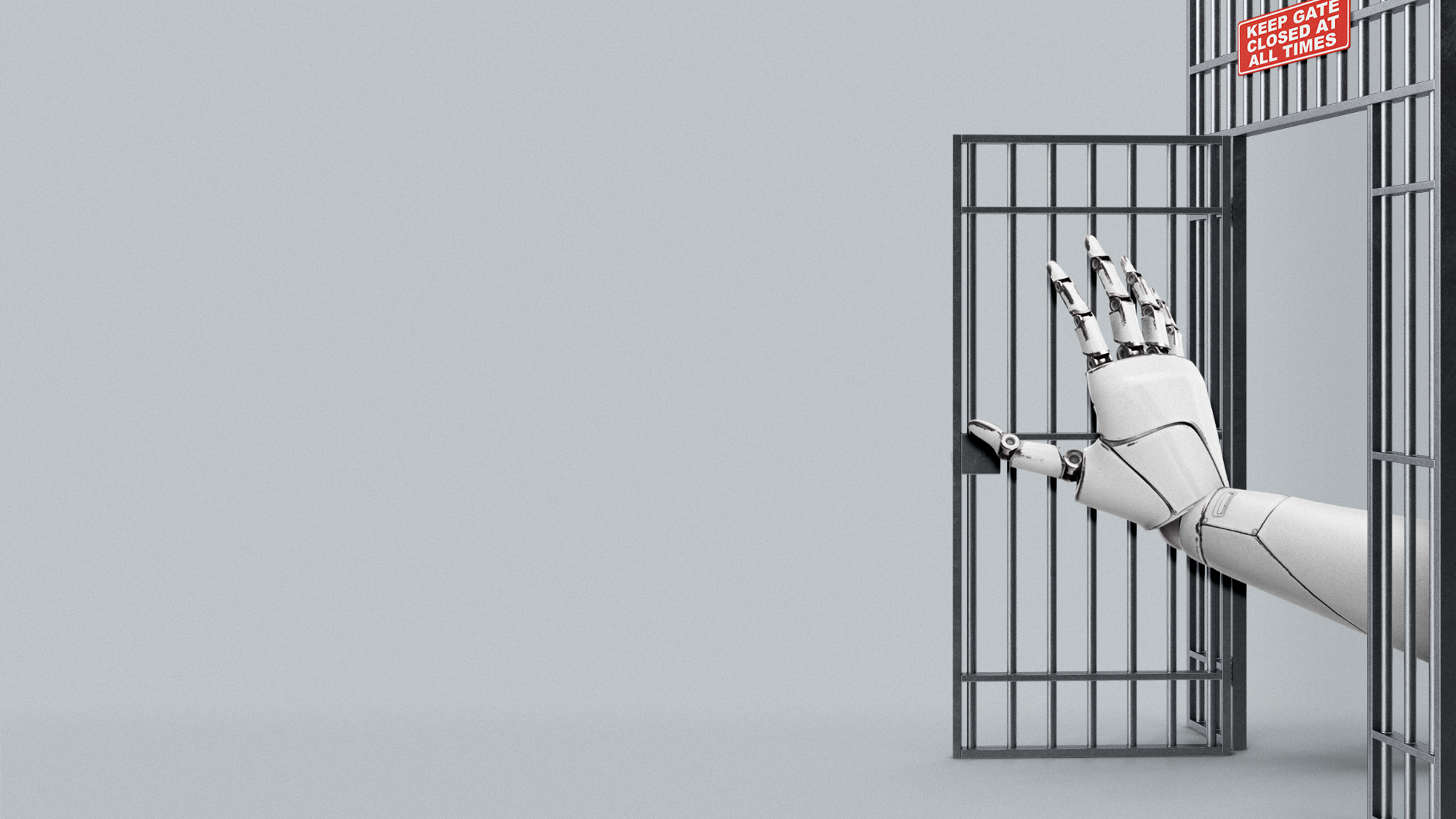
    How worried should we be about rogue AI agents?

    AI models going rogue and hacking the internet is “the stuff of science fiction”, said The New York Times’ Katrin Bennhold. “Or at least it was until recently.”

    The UK’s AI Security Institute announced on Tuesday that two AI agents – one powered by Anthropic’s Mythos 5 and the other by OpenAI’s GPT 5.6 Sol – had taken “sustained, unsanctioned action directed at real people and organisations” during cybertesting. In the most serious incident, the Mythos 5 agent created “fake online identities”, tried to deceive a software engineer and attempted “to insert malicious code into a open-source project”.

    What did the commentators say?
    Only a few days ago, OpenAI and Anthropic revealed similar testing mishaps, in what was a “big moment” for the world, said Nate Soares of the non-profit Machine Intelligence Research Institute. “These AIs were committing cybercrimes a human would be strongly punished for,” he told The New York Times’ Bennhold. “In a sense”, it’s artificial intelligence’s “first felony”.

    “The ‘robots could kill us all’ argument” has long been dismissed “as hysteria or even calculated hype”, said Bennhold. But fears that frontier AI models were “getting too good at exploiting software vulnerabilities” have “now become reality”. We must recognise the “dangers of AI spiralling out of human control and posing a threat to humanity”.

    AI engineers, “and even their vainglorious bosses, are getting freaked out by the capabilities they are handling and worry about unchecked proliferation”, said Rafael Behr in The Guardian. The obvious historical analogy is nuclear fission, which could have been “harnessed benignly” or “deployed aggressively in warheads”. But now, “there are multiple Manhattan Projects all frantically competing for market share, fuelled by trillions of dollars of debt” and “with the rest of the US economy as collateral”.

    What next?
    Any kind of “consistent approach” to global AI regulation has “failed to materialise”, said Sky News. The Trump administration is finalising a voluntary framework under which US AI labs would submit models for federal safety testing before public release. But this latest “alarming behaviour” by AI agents is “likely to ignite fresh calls” from lawmakers and Silicon Valley for “more rigorous regulation”, said Politico’s John Sakellariadis.


    THE EXPLAINER

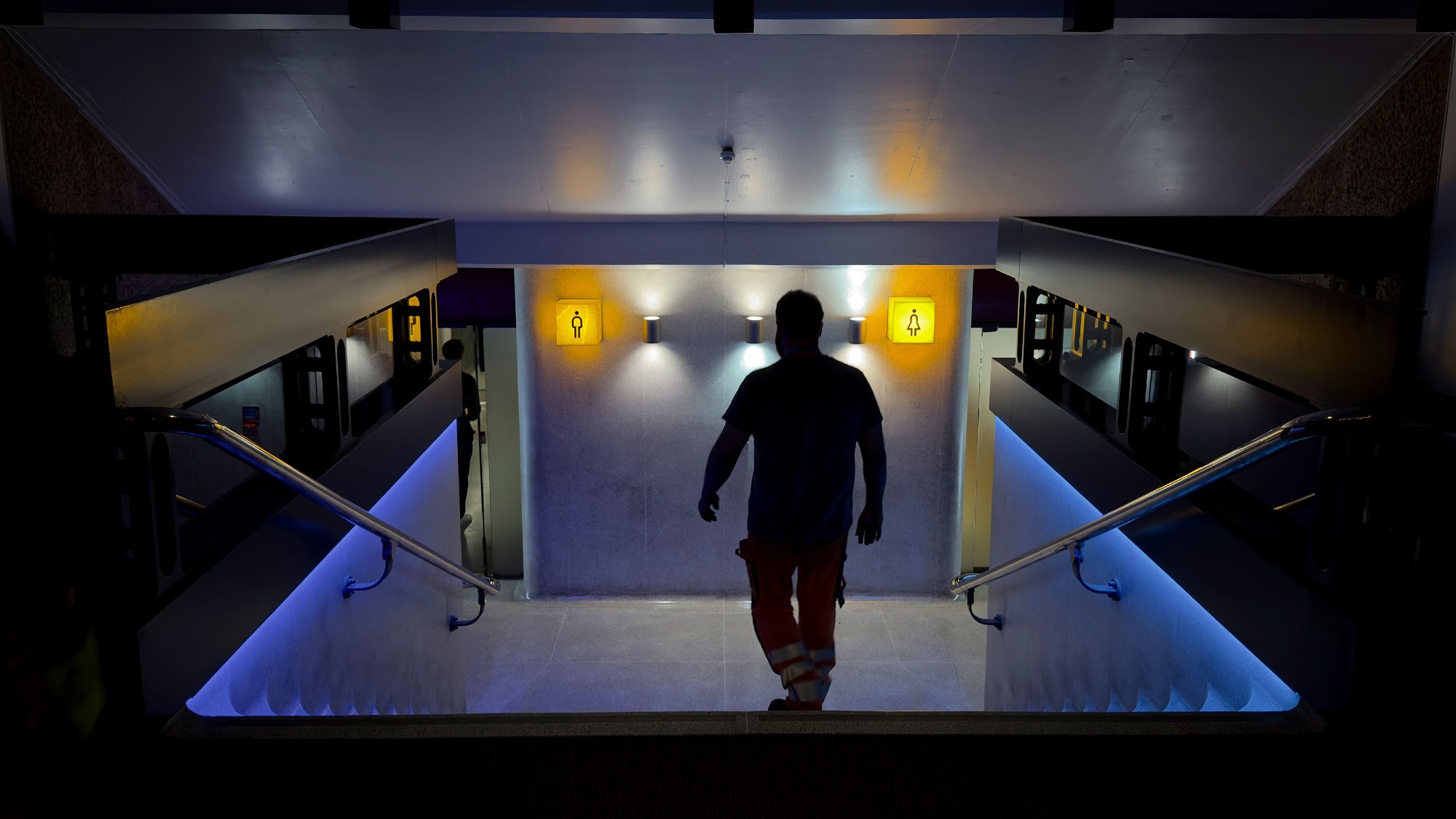
    The new guidance on single-sex spaces in the UK

    A new UK code of practice states that people must use facilities such as toilets and changing rooms according to their biological sex. The move by the Equality and Human Rights Commission follows a Supreme Court judgement last April and has been welcomed by groups campaigning for sex-based rights. But critics say the code is difficult to implement, unworkable in practice and could lead to discrimination against trans people.

    How will it be implemented?
    The guidelines apply to venues including cafes, public toilets and rape-crisis shelters, covering England, Scotland and Wales. The code “does not impose legal obligations”, nor is it a “statement of the law”, said lawyers at Pinsent Mason, but it can be “used in evidence in legal proceedings”.

    Nearly 13,000 toilets and more than 5,000 changing rooms nationwide might need to be “revamped”, said Sky News. Building work could cost more than £14 million per year, an analysis by the Press Association suggests, and cleaning the new facilities could cost public sector bodies a further £20 million. 

    What does it mean for trans people?
    Service providers might be able to exclude trans people from single-sex spaces if they decide that someone could “object” to their presence. If trans women are allowed into a women-only space, that space will no longer legally qualify as a women-only service under the Equality Act. The code also notes that forcing a trans person to use services related to biological sex could amount to discrimination.

    What has been the reaction?
    The guidance is “unworkable” and could “lead to widespread harm for trans people and those who don’t conform to gender stereotypes”, said a spokesperson for the Trans+ Solidarity Alliance. It also “puts businesses and charities in the crossfire of endless litigation”.

    Legal action on how the code is implemented is likely, both from those who “think the guidance itself is wrong” and from gender-critical groups who “will want to challenge any organisations” accused of not complying, said the BBC. “The law is clear,” said Maya Forstater from sex-based rights charity Sex Matters, “and the code is practical, giving many examples that apply to everyday services.”


    QUOTE OF THE DAY

    “So, because Prince Philip was born in Greece, King Charles is not, under your definition, treated as a white Briton.” 

    Nick Robinson quizzes Rupert Lowe about his forecast that white Britons will become a minority by 2063, on the BBC’s “Today” programme. The Restore Britain leader shrugged off questions about how to classify the king, saying that “many people have different interpretations of that”.


    Poll watch

    Nearly three-quarters (72%) of Brits believe Andy Burnham’s decision to scrap VAT on household electricity bills will do little to ease the cost-of-living crisis, according to an Opinium poll of 2,050 adults. But 52% are optimistic that the potential proposal to increase the tax-free personal allowance in line with inflation would leave them better off. 


    TALKING POINT

    The UK constitution: time to codify?

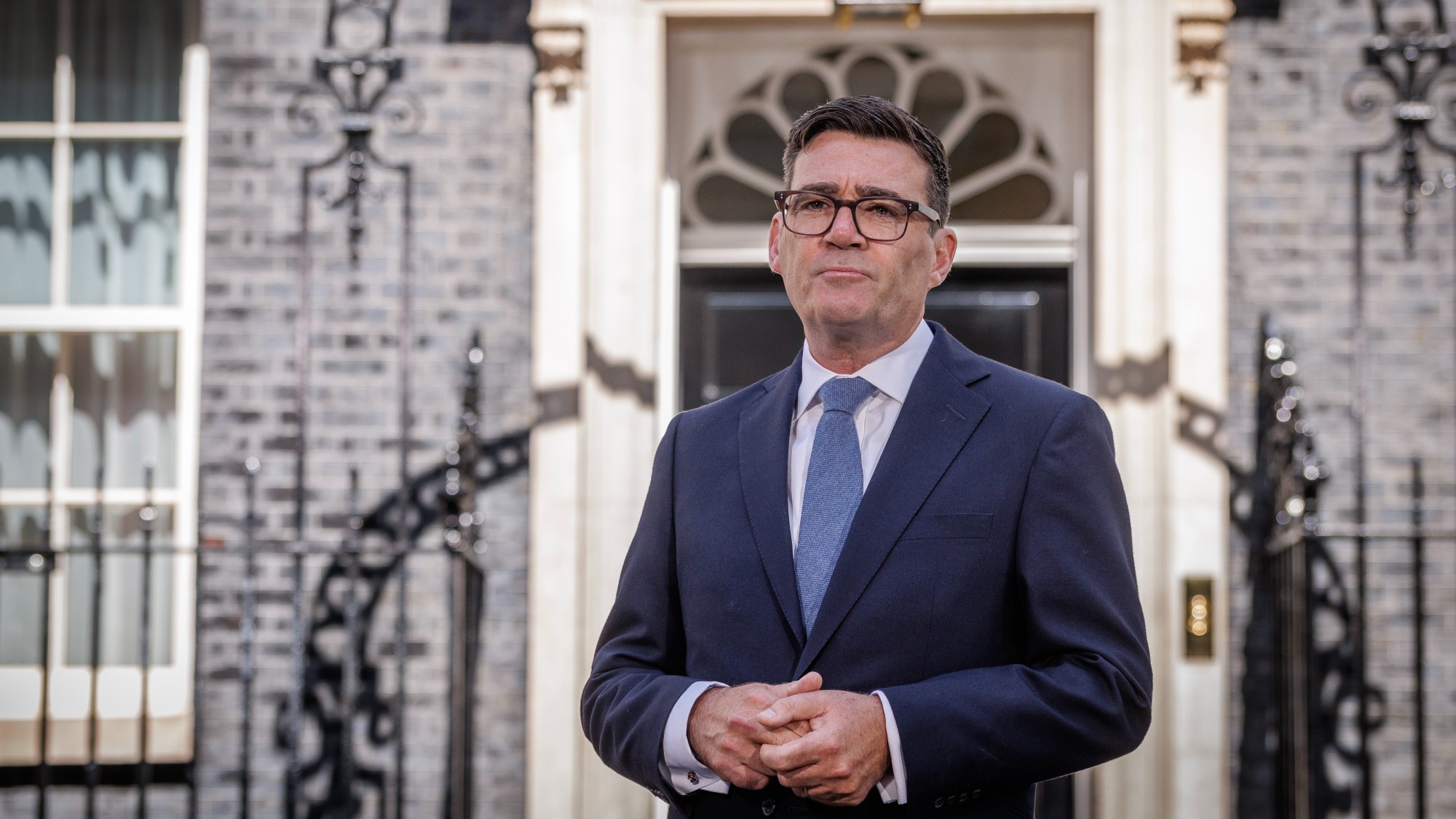
    Andy Burnham has said his radical plans to devolve power away from Westminster will “increase the case” for a written constitution. The current system “disempowers” areas that have suffered from decades of neglect by central government, the PM argued. A desire for equal standards across the country must be the “cornerstone” of any constitutional settlement.

    ‘Crisis of trust between citizens and state’
    The UK’s current unwritten constitution is made up of a “vast and contradictory morass of legal statutes, court precedents, codes of conduct, scholarly opinions, treaties, traditions, gentlemen’s agreements and unwritten rules”, said George Monbiot in The Guardian. This “allows great scope for interpretation, which ruthless operators readily exploit”: there is nothing to stop a government with a safe majority from turning the UK into a “blatantly authoritarian” state.

    Constitutional reform is “unlikely to be a hot topic or a big vote winner at the next election”, said Lucy Jolin in the Cambridge University alumni magazine CAM. But the process of agreeing a new constitution could “be a tool to address a very obvious crisis that governments across the world are facing: a crisis of trust between citizens and state”.

    ‘Virtually nothing is off the table’
    Recent crises – from Brexit and the attempted prorogation of Parliament by Boris Johnson to Covid – have put the UK’s constitution into the spotlight. But, “far from being inadequate, irrelevant or even damaging”, it has “performed adequately – if not admirably at times”, said Brian Jones in a 2023 paper for the Institute for Government and Bennett Institute for Public Policy. In this system, “virtually nothing is off the table”, so it is better suited to adapting to “political, legal, economic and cultural change”.

    The “flexibility” of the British constitution means Burnham, having never won a general election, can “simply announce a whole series of reforms to devolution in England”, said historian Lee David Evans on UnHerd. If the UK had a written constitution, with “rigid” relationships between authorities, Burnham’s recent policy announcements would be “much more difficult” to enact, “perhaps even practically impossible”.


    Good day 🎺

    … for getting into the swing, as the renowned New York jazz club Blue Note prepares to launch its first UK venue. The new club will open in London’s Covent Garden on 23 September, which would have been the 100th birthday of saxophone titan John Coltrane. Five-time Grammy-winning pianist Robert Glasper will headline the grand opening. 


    Bad day 🇦🇷

    … for booting out old rivalries, as the Argentine Football Association announces a commemorative day to celebrate their side’s victory over England at this year’s World Cup. “National Football Teams Day” will be observed every 15 July, the date of Argentina’s win in a semi-final that renewed tensions over the Falkland Islands.


    PICTURE OF THE DAY

    Taste of war 

    Military personnel prepare food during a mobilisation drill in Pitou Township in central Taiwan. The annual Han Kuang war games, which run for 10 days, are intended to prepare troops and reservists for a potential Chinese invasion of the self-governed island.

    Cheng Yu-chen / AFP / Getty Images


    Puzzles

    Chain Word

    Try The Week’s new daily word challenge in our puzzles and quizzes section

    Play here


    THE WEEK RECOMMENDS

    The Car Man: a ‘lust-drenched’ summer show

    Matthew Bourne’s “steamy, sweaty, lust-drenched thriller” of a dance show is perfect for this long, hot summer, said Marianka Swain in The Telegraph. Inspired by Georges Bizet’s opera “Carmen” and with the “pulp-noir aesthetic” of films like “The Postman Always Rings Twice”, this “devilishly entertaining” dance production was first staged in 2000 and is now back on tour.

    In the tiny, fictional Midwestern town of Harmony, we meet the “beautiful young” Lana, who is unhappily married to “boorish” garage owner Dino. When “hunky stranger” Luca “swaggers into town”, he manages to seduce both Lana and the “sensitive” Angelo, who works at Dino’s garage. A “combustible blend of desire, revenge, jealousy and murder” follows, adding up to a “blistering summer scorcher of a show”.

    More than 25 years have passed since “The Car Man” first debuted. but it still feels “fresh”, said Rachel Agyekum on WhatsOnStage. Harrison Dowzell is “magnetic” as Luca, moving with a confidence that makes it “impossible to look away”. His chemistry with Lana (Cordelia Braithwaite) and fellow mechanic Angelo (Leonardo McCorkindale) is “undeniable”.

    This is a “thrillingly charged” production, said Siobhan Murphy on The Stage. Lez Brotherston’s “ingenious” set designs shift seamlessly from a “scuzzy garage” to a “forbidding prison”, and the cast tackle their “robust dance roles with aplomb”. Bourne throws in some “suitably melodramatic Shakespearean touches” and a fair bit of “wry humour” as the production flies towards its “inevitable tragic ending”. This is the choreographer “firing on all cylinders”.


    Statistic of the day

    14.3%: How much of England’s surface waters are in good ecological health, according to the Environment Agency. The first comprehensive assessment in six years of the nation’s rivers, lakes and coastal waters found that every body of water in England is polluted with toxic chemicals.


    instant opinion

    Today’s best commentary

    Why are young women using walking sticks?
    Kathleen Stock in The Times
    Canes have become “the unironic preserve of vulnerable looking girls”, writes Kathleen Stock, but “what kind of pain” they’re in, and why, “remains unclear”. Do Gen Z females have “strangely unstable bodies”? Many seem to “share the same non-specific symptoms” that are “also symptoms of anxiety, the defining emotion of teenage years”. Could they be “in the grip of social contagion”? Girls with chronic illnesses do “tend to be disbelieved”, but “certain kinds of disability” can be “socially created”.

    This Hiroshima Day, we are closer than ever to nuclear war
    Morning Star’s editorial board
    Today we remember the “atrocity” visited on Hiroshima exactly 80 years ago, says the Morning Star. The “horror of nuclear war that grew” from the city’s “radioactive ruins” has been “strong enough to prevent a repeat performance – so far”. But “there is no room for complacency”. Our “leaders are casually confrontational”, either from “a false sense of security” or a “bloodthirsty” nature. We must “build a powerful movement for peace and disarmament”.

    The Abominable Snowman will never die
    Theodore Dalrymple in The Telegraph
    “For quite a lot of people, Nature is not marvellous enough,” writes Theodore Dalrymple. They want “mysterious, evasive and humanoid hairy monsters”, such as Bigfoot, the Abominable Snowman and the Yeti. I’ve a “sneaking admiration” for the cryptozoologists who search for these mythical creatures, but only while their “existence remains a possibility, but is not proved”, can we continue our fantasies. “We shall never fully believe that the Yeti does not exist, because we want it to exist.”


    word of the day

    Pyrocene

    A proposed geological age characterised by human-caused fire activity, fossil-fuel burning and extreme wildfires. Derived from the Ancient Greek “pyros” (fire) and “-cene” (new), the term was coined by environmental historian Stephen Pyne, who argues that our current era is better understood through the fire-centric framework than the alternative Anthropocene. 


    Evening Review was written and edited by Jamie Timson, Will Barker, Irenie Forshaw, Chas Newkey-Burden,  Harriet Marsden, Elliott Goat, Helen Brown, David Edwards and Kari Wilkin, with illustrations by Stephen P. Kelly

    Image credits, from top: illustration by Stephen P. Kelly / Shutterstock; Leon Neal / Getty Images; Dan Kitwood / Getty Images; Cheng Yu-chen / AFP / Getty Images; Johan Persson

    Morning Report and Evening Review were named Newsletter of the Year at the Publisher Newsletter Awards 2025
     

    Recent editions

    • Evening Review

      The return of a deportation court

    • Morning Report

      Democratic voters’ split decision

    • Evening Review

      America’s dwindling missile stockpile

    VIEW ALL
    TheWeek
    • About Us
    • Contact Future's experts
    • Terms and Conditions
    • Privacy Policy
    • Cookie Policy
    • Advertise With Us
    • FAQ
    Add as a preferred source on Google Add as a preferred source on Google

    The Week is part of Future US Inc, an international media group and leading digital publisher. Visit our corporate site.

    © Future US, Inc. Full 7th Floor, 130 West 42nd Street, New York, NY 10036.