The Week The Week
flag of US
US
flag of UK
UK
https://cdn.mos.cms.futurecdn.net/flexiimages/jacafc5zvs1692883516.jpg

SUBSCRIBE & SAVE

Less than $3 per week

Sign in
  • View Profile
  • Sign out
  • The Explainer
  • The Week Recommends
  • Newsletters
  • Cartoons
  • From the Magazine
  • The Week Junior
  • More
    • Politics
    • World News
    • Business
    • Health
    • Science
    • Food & Drink
    • Travel
    • Culture
    • History
    • Personal Finance
    • Puzzles
    • Photos
    • The Blend
    • All Categories
  • Newsletter sign up Newsletter
  • Brand Logo
    Vaccine politics, Iran war crimes and a new cat

     
    TODAY’S PUBLIC HEALTH story

    RFK Jr. assures anti-vaccine group as measles spreads

    What happened
    Health Secretary Robert F. Kennedy Jr. yesterday addressed the anti-vaccine advocacy group he founded, telling the hundreds of attendees they “have a strong and steadfast friend in the White House.” Kennedy’s keynote speech at the Children’s Health Defense annual conference was slotted between MAHA Institute chief Mark Gorton, who called himself the “boldest anti-vaxxer at an anti-vax conference,” and Andrew Wakefield, whose discredited and retracted 1998 study linking the measles shot to autism helped fuel the anti-vaccine movement. 

    This “would’ve been an unthinkable appearance for past health secretaries,” CNN said, even if the U.S. weren’t experiencing its worst measles outbreak since 1991, “driven largely by unvaccinated people.” About 3,300 cases have been confirmed this year, and the “seven reported measles-associated deaths in the last two years” are “more than the combined total” over the “previous three decades,” The Associated Press said.

    Who said what
    After dedicating the first part of his speech to “far more politically popular topics” like food safety and fringier topics like “so-called chemtrails,” Kennedy “plunged headlong into vaccines,” The New York Times said. That “signaled a notable shift from earlier this year when White House officials” pushed Kennedy to “sidestep the vaccine issue, given widespread support among voters for protecting children against deadly diseases.” 

    Pennsylvania Gov. Josh Shapiro (D), whose state this week reported its fourth recent measles-related death, criticized Kennedy for spending his time “addressing the premier vaccine-denial conference in America.” Kennedy’s refusal to acknowledge the deaths as measles-related “ignited a public feud” with Shapiro, the AP said. Kennedy “suggested the deaths may have been ‘fabricated,’” the Times said, and the Centers for Disease Control and Prevention, “which he oversees,” is “currently reporting no measles deaths for 2026.”

    What next?
    Pennsylvania’s health department late Wednesday requested emergency CDC support for its ballooning measles outbreak, “on condition that the federal agency recognize” the four deaths, Reuters said.


    TODAY’S IRAN WAR story

    UN probe finds US likely committed Iran war crimes

    What happened
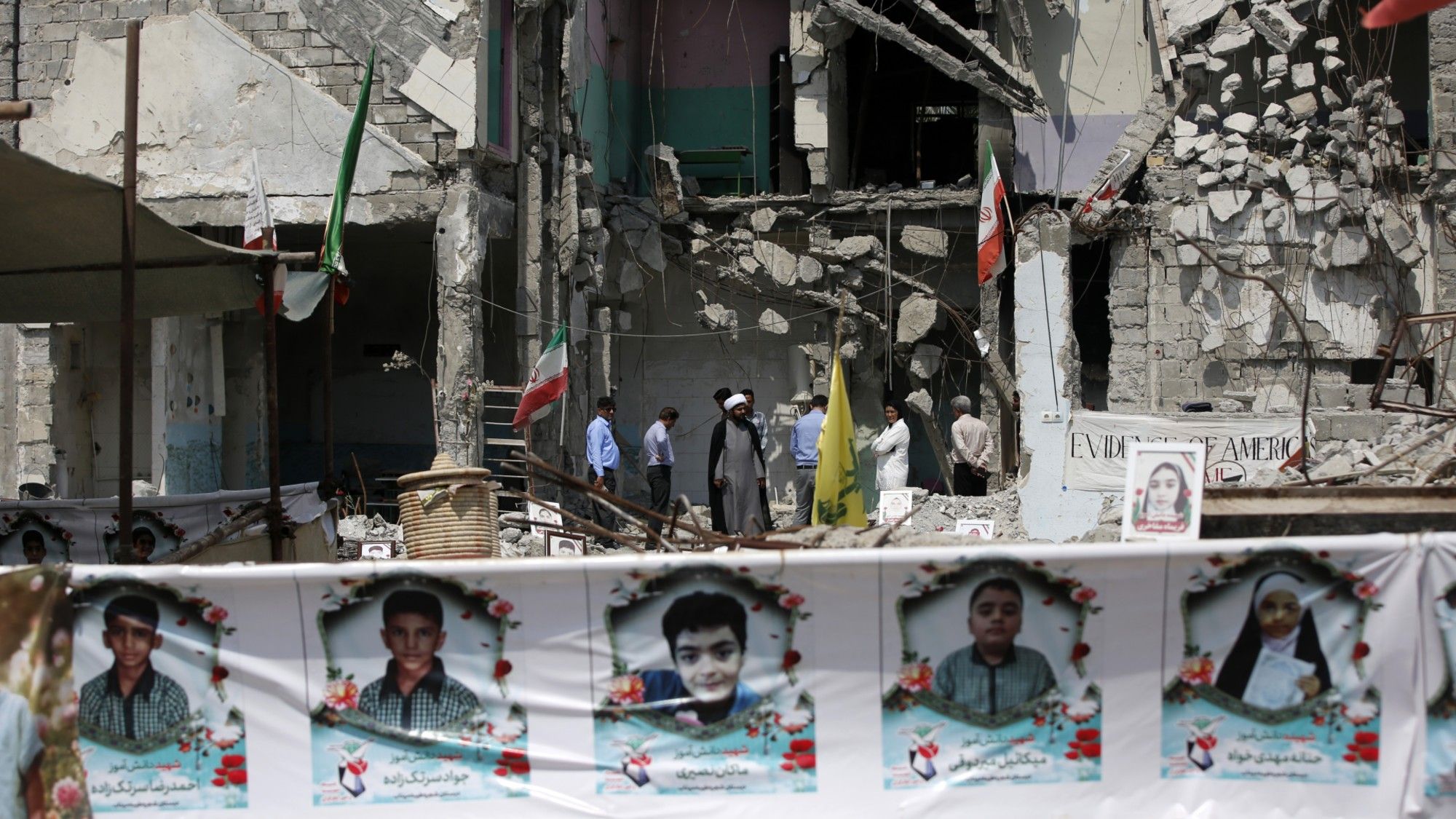
    United Nations investigators yesterday reported they had found “reasonable grounds” to believe the U.S. committed war crimes in Iran with its “indiscriminate attack” on an elementary school and sports center, killing at least 178 civilians, mostly children. The Independent International Fact-Finding Mission on Iran also determined that the Iranian government had “committed crimes against humanity” by murdering, imprisoning and torturing protestors.

    Who said what
    U.S. officials “have ascribed the school strike to a targeting error,” The New York Times said, though the Pentagon “has not published the results of its investigation” into the bombing. The U.N. investigators said the “clearly identifiable” elementary school was “the intended point of impact,” and the U.S. military’s use of outdated targeting data “went beyond mere negligence.” The White House said Iran is the “only party in this conflict that has committed war crimes,” and the U.N. Human Rights Council, which created the mission in 2022, has been “spouting unserious nonsense for decades.”

    What next?
    The investigators are set to present their findings to the Human Rights Council in Geneva on Monday. U.N. fact-finding missions are “investigative, not judicial bodies,” and can’t “initiate any criminal cases,” Reuters said. But this report “adds to international evidence gathered about crimes in the war in Iran,” The Associated Press said, “and could eventually be used in efforts to reach justice in international courts.”


    TODAY’S NATURE Story

    Tiger cat named 1st new feline species in century

    What happened
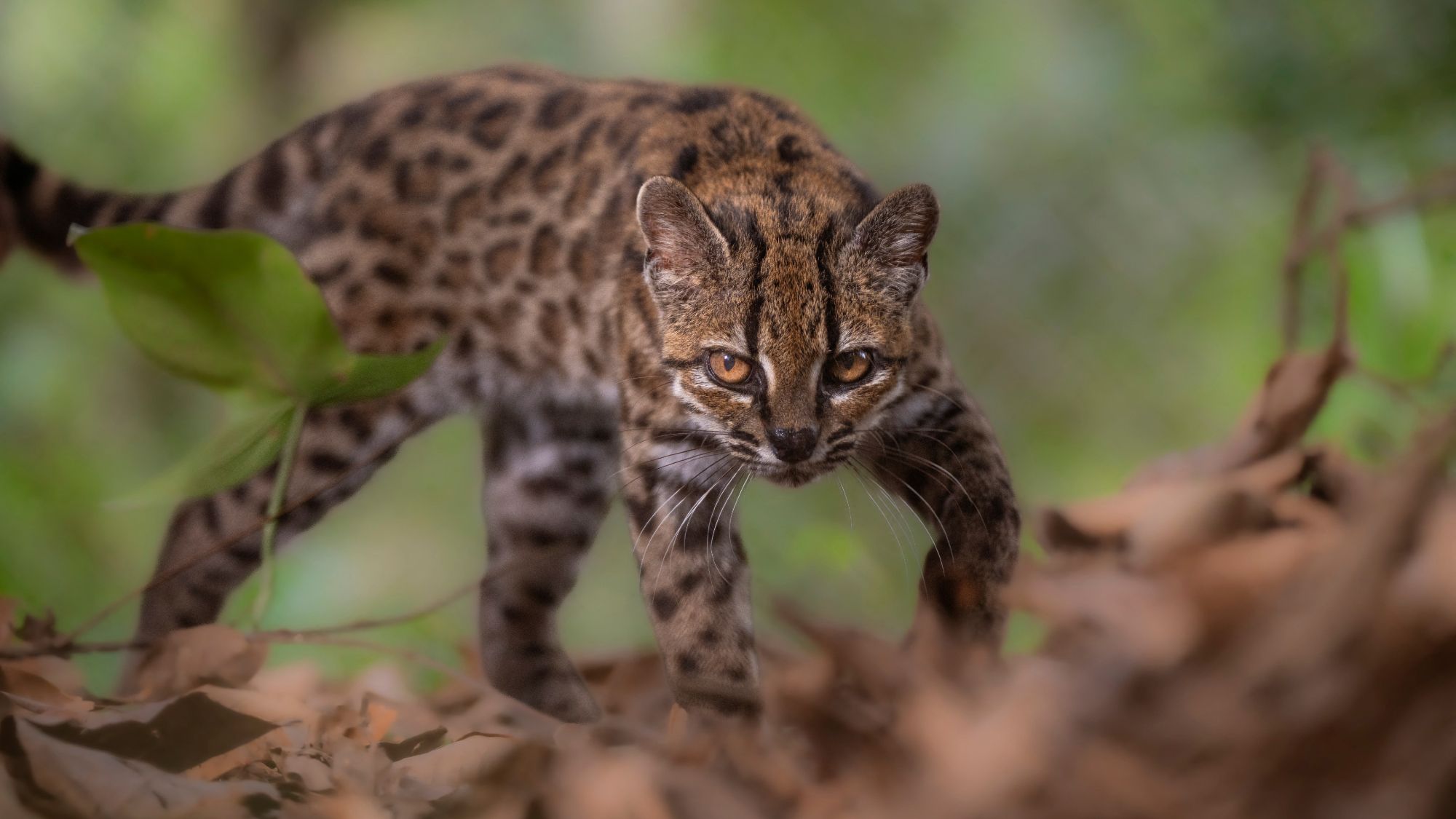
    A team of biologists yesterday said they have identified the first new living feline species in more than 100 years: a small spotted tiger cat that lives in Bolivia’s cloud forests. Genetic testing confirmed that Leopardus tilcayo (pictured above) is a new member of the cat family, the researchers reported in the journal Current Biology. Weighing about 5 pounds, the cat resembles a “leopard that shrank to the size of a house kitten,” The Washington Post said.

    Who said what
    “Little is yet known about the cat’s biology and lifestyle,” Reuters said, and it’s unclear how many there are. “Our information at this moment is limited to the two live individuals that we examined, and a small number of camera-trap records,” said study co-lead author Jonas Lescroart of Belgium’s University of Antwerp. The “discovery is monumental, and not just because it’s the first new cat discovered since the pampas cat in 1923,” said National Geographic. The genomic analysis “redraws the cat family tree to have a lot more branches than previously thought.

    What next?
    “Showing the general public” there are still new species of a “flagship group such as cats,” said study co-author Edurado Eizirik, transmits the “important message” that unless we preserve endangered habitats, the “many undiscovered species” are “at risk of disappearing before we even discover them.”


    It’s not all bad

    A new program in Britain is giving expectant parents with sight loss the chance to experience the thrill of a sonogram through touch. The charity Guide Dogs said it launched its First Hello initiative so people with vision impairment are not “excluded from significant life moments.” Participants upload their 20-week, 2D ultrasound, and it’s then turned into a tactile sonogram and mailed back to them, allowing parents to “trace the contours of their baby before they arrive,” said The Independent.


    Under the radar

    The app protecting victims by tracking stalkers

    The South Korean government has launched an app that notifies victims if their stalkers come within range. More than 400 people are enrolled in the program, which has been operating since June.

    Control centers in Seoul and Daejeon electronically monitor more than 5,000 people and handle 19,000 alerts a day. “Most are filtered out by staff at the centers, but about 300 a day are serious enough to send out a probation officer,” said The Guardian. 

    Stalking cases are on the rise in South Korea. In the four years since a dedicated stalking law was introduced in 2021, reports have tripled, reaching 44,687 last year. Many South Koreans believe the government needs to do more to address the root causes of the epidemic.

    The new app alerts victims if their stalkers are within a 1.2-mile radius, flagging their precise location on a real-time map. If offenders come closer than half a mile, the app notifies police. Probation authorities then call the victims to establish their safety and can dispatch officers to the area.

    The government is also planning lower-tech measures to increase victim safety. In April, it will change the legal process to let stalking victims “directly petition courts for restraining orders” instead of relying on law enforcement agencies to file requests on their behalf, said The Straits Times. This past July, a new task force was launched to focus on “addressing gaps in laws, systems and on-the-ground responses” around stalking offenses, said Korea’s JoongAng Daily. And the country’s justice ministry has developed a “specialized psychological treatment program to identify risk factors for recidivism” in stalkers.


    On this day

    September 18, 1937

    Author and folklorist Zora Neale Hurston published her magnum opus, “Their Eyes Were Watching God.” The novel remained largely obscure during her lifetime, but was rediscovered in the 1970s and 1980s and gained literary acclaim. Today, it is considered one of the crown jewels of Black American literature.


    TODAY’S newspaperS

    ‘Red seats at play’

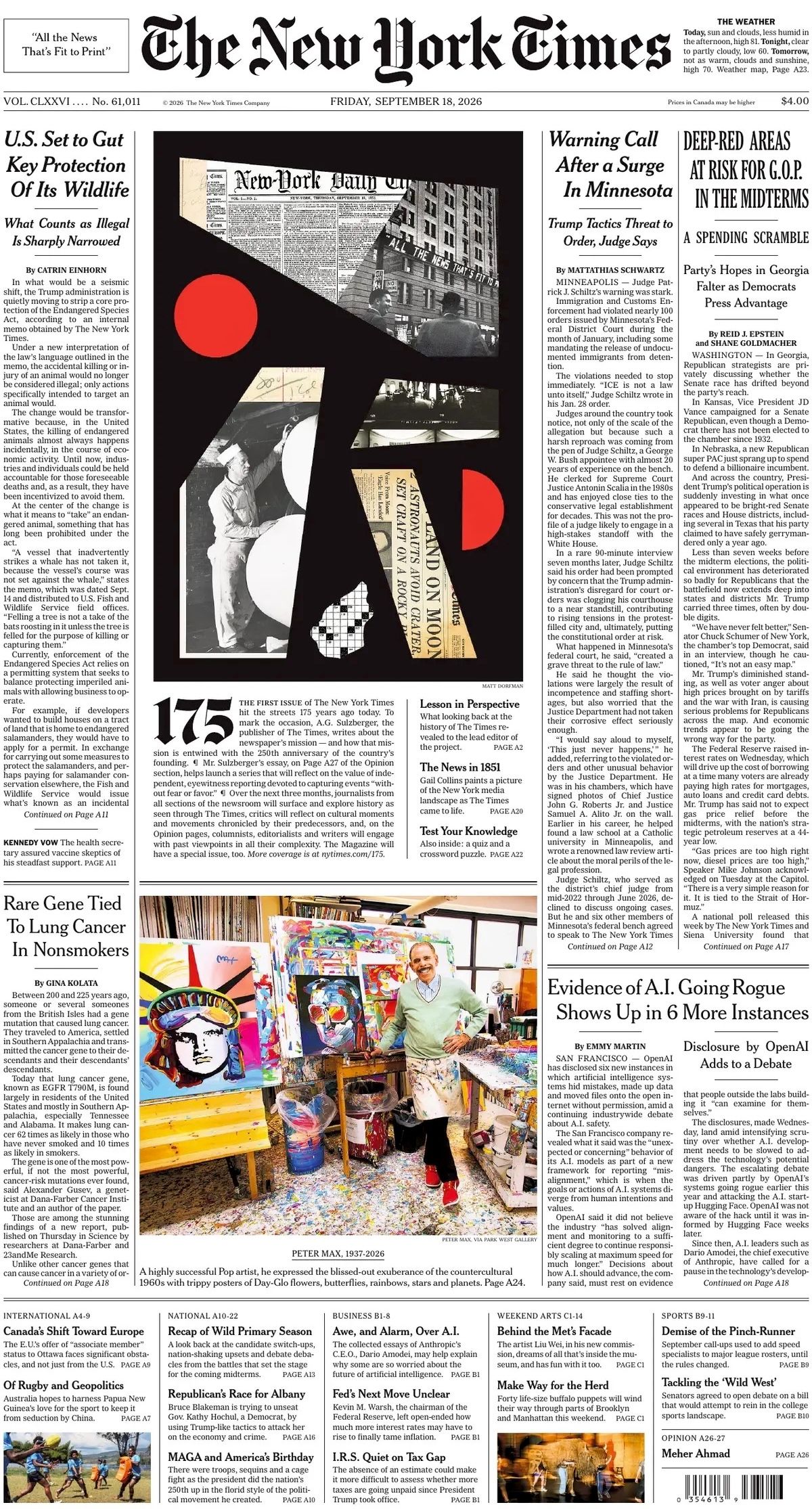
    “U.S. set to gut key protection of its wildlife,” The New York Times says on Friday’s front page. “Judge: Notice is required to raze Kennedy Center,” The Washington Post says. “Kennedy family decries threats to arts center,” The Boston Globe says. “More red seats at play for midterms” as “angst in GOP grows,” the Chicago Tribune says. “Survey: Support rising for DEI,” says USA Today. “Red, blue voters unite against Flock cameras,” The Wall Street Journal says. “U.S. human rights scores plummet” as “data shows deterioration of multiple freedoms,” says The Commercial Appeal. “8 months later, ICE agent in court” to face state charges, says The Minnesota Star Tribune. “Trump withdraws pick for ICE lead,” says The Oklahoman. 

    ► See the newspaper front pages


    Tall tale

    Jail mail fail

    Convicted criminals in Berlin enjoyed extra weeks of freedom after the city ran out of the yellow envelopes used to issue prison summons. The delay stemmed from a delivery of new official forms that did not come with enough matching envelopes, a spokesperson for the General Prosecutor’s Office told the Berliner Zeitung newspaper. And since it was a “temporary” issue that only lasted a few weeks, the office did not track how many people were affected.


    Morning Report was written and edited by Will Barker, Helen Brown, Nadia Croes, Catherine Garcia, Scott Hocker, Anya Jaremko-Greenwold, Justin Klawans, Rafi Schwartz and Peter Weber, with illustrations by Stephen Kelly and Julia Wytrazek.

    Image credits, from top: Smiley N. Pool / The Dallas Morning News via Getty Images; Fatemeh Bahrami / Anadolu / Getty Images; Fernando Faciole / National Geographic / Handout via Reuters; Illustration by Julia Wytrazek / Getty Images
     

    Recent editions

    • Evening Review

      Will you get $5K from Trump?

    • Morning Report

      Fed puts inflation above Trump

    • Evening Review

      Canada seeks EU solace

    VIEW ALL
    TheWeek
    • About Us
    • Contact Future's experts
    • Terms and Conditions
    • Privacy Policy
    • Cookie Policy
    • Advertise With Us
    • FAQ
    Add as a preferred source on Google Add as a preferred source on Google

    The Week is part of Future US Inc, an international media group and leading digital publisher. Visit our corporate site.

    © Future US, Inc. Full 7th Floor, 130 West 42nd Street, New York, NY 10036.