The Week US
flag of US
US
flag of UK
UK
https://cdn.mos.cms.futurecdn.net/flexiimages/jacafc5zvs1692883516.jpg

SUBSCRIBE & SAVE

Less than $3 per week

Sign in
  • View Profile
  • Sign out
  • The Explainer
  • The Week Recommends
  • Newsletters
  • Cartoons
  • From the Magazine
  • The Week Junior
  • More
    • Politics
    • World News
    • Business
    • Health
    • Science
    • Food & Drink
    • Travel
    • Culture
    • History
    • Personal Finance
    • Puzzles
    • Photos
    • The Blend
    • All Categories
  • Newsletter sign up Newsletter
  • The Week’s Saturday Wrap
    White House infighting, a new family separation policy, and Musk’s GOP donations

     
    controversy of the week

    Trump: Are the wheels coming off his administration?

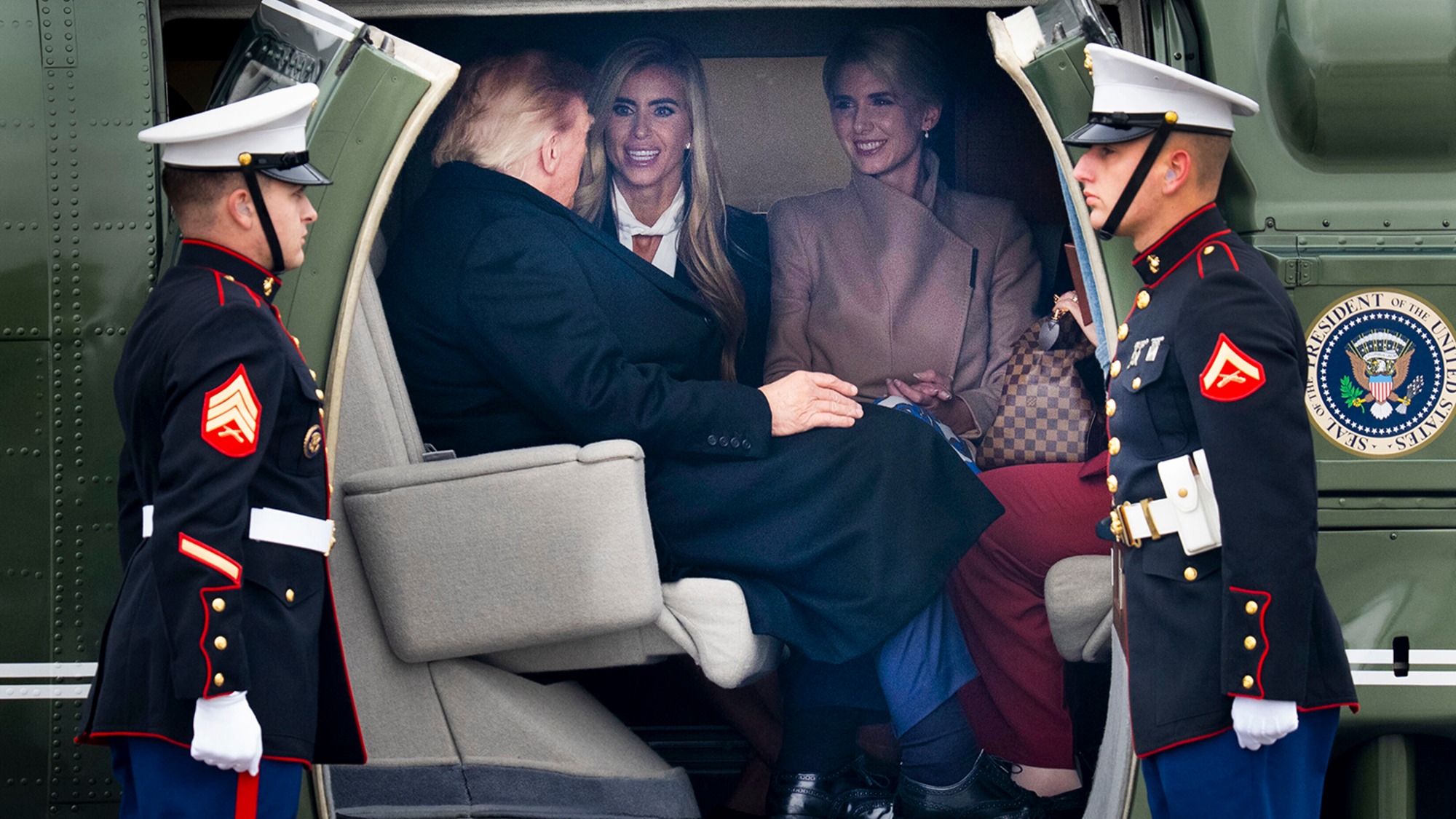
    Less than two weeks before the midterms, President Trump’s administration is in “utter shambles,” said Jemima Kelly in the Financial Times. And there’s no more perfect symbol of that chaos than Katie Zacharia, who lasted only five days as White House press secretary—beating the 11-day record set by Trump’s first-term press secretary, Anthony Scaramucci— before being fired by the boss. Zacharia will be remembered for a single, 14-minute press briefing that sounded like “her first encounter with punctuation,” and a subsequent disastrous interview with Fox News’ Sean Hannity, in which the self-described “attorney” admitted she hadn’t passed the bar exam. Zacharia’s implosion only added to the “multicar pileup” in the administration, said Jonathan Chait in The Atlantic. In a span of days, Trump cheered and then overruled Defense Secretary Pete Hegseth’s plans to livestream an execution; fired Kimberly Guilfoyle, his ambassador to Greece, for such blatant corruption it embarrassed “the most corrupt administration in history”; and, Politico reported, began asking friends what they think of Susie Wiles, his White House chief of staff. Such talk “is historically the prelude” to a firing. More than anyone, Wiles brought a “comparative efficiency” to Trump’s second term. But Trump is now reverting to the mayhem of his first term, when his White House ran with all the focus and discipline of an “exploding fireworks factory.” 

    This is a more pathetic kind of chaos, said Maureen Dowd in The New York Times. With his approval rating at record low of 31% in a new Reuters/Ipsos poll, Trump’s “dwindling fan base” can no longer deliver adulation in the doses he needs. In desperation, he’s sinking deeper into the “bubble” of his fawning inner circle, where he expected Zacharia to join Natalie Harp—Trump’s “special assistant for floofing”—in forming a “blond Praetorian guard” around his ego. But the guards are “turning on one another.” Zacharia’s ambush on Fox was reportedly orchestrated by Wiles, while Harp is feeding Trump negative coverage of Wiles and other aides. 

    The infighting is driven by fear, said Adam Cancryn and Kristen Holmes in CNN.com. If the midterms go as badly for Republicans as polls suggest, Trump aides and Cabinet members know he’ll “find someone to blame—and it won’t be him.” Bracing for a postelection firing spree, they’re consumed with “preemptive finger-pointing” to ensure the axe falls elsewhere. They are also scared of Democrats, said Michael Wilner in the Los Angeles Times. If Republicans lose the House, there’ll be two years of “relentless congressional probes” into Trump world’s rampant sleaze and self-dealing. White House lawyers have plans to fight subpoenas, but with polls showing that even 34% of Republican voters believe Trump has used the presidency to enrich himself, the political damage could be catastrophic. 

    For Trump, a lifelong “agent of chaos,” this has got to be disorienting, said Kate Andrews in The Washington Post. Since 2016, he’s deployed scandal and turmoil as a “potent political weapon,” keeping the media distracted and wrong-footing enemies. Within his own team, he’s encouraged backstabbing and infighting, making staffers compete to remain in his good graces. But “the disorder the president thought he owned has spun out of his control,” in Iran, on the economy, and within his inner circle. Indeed, Zacharia— flustered, incoherent, and dubiously credentialed—may have been the ideal spokesperson for this flailing administration. “Because it isn’t clear who, exactly, is steering this ship or where it’s going.”


    VIEWPOINT

    The West’s ideas

    “What truly distinguishes Western civilization is not its military power or national pride, but its intellectual and political traditions. From Greek philosophy and Roman law through Christianity to the Enlightenment, the West developed a set of ideas that challenged the arbitrary exercise of power. Reason, scientific inquiry, individual liberty, democracy, the rule of law, and universal human rights became central to Western civilization. The most radical feature of these tenets— inspired in part by Christianity—was that they were universal. The West conquered much of the world through force. But it changed the world through ideas.” 

    Fareed Zakaria in The Washington Post 


    briefing

    Breaking up families

    President Trump’s immigration crackdown is separating parents from their children.

    What is the administration doing? 
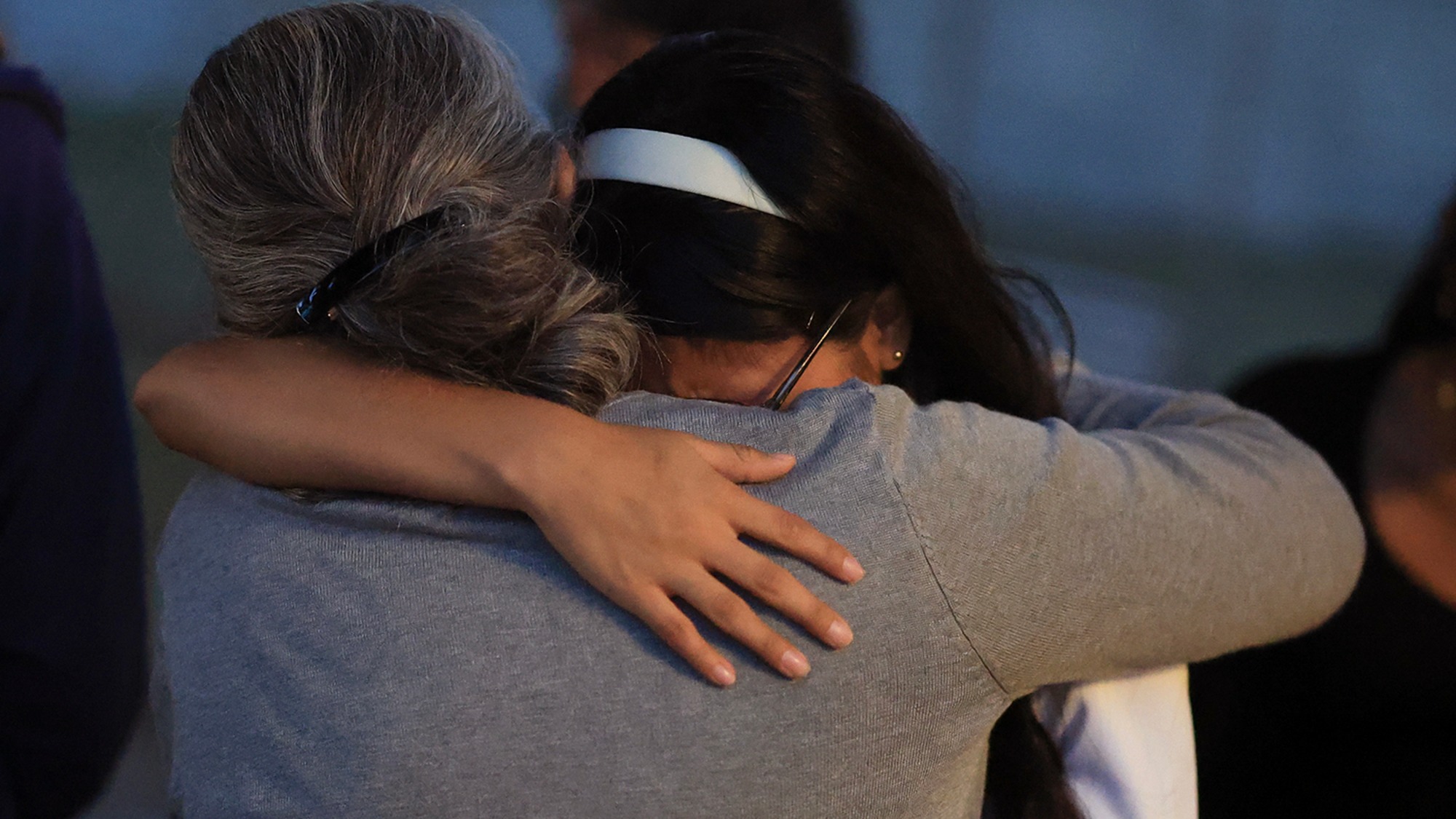
    In a first in U.S. history, the government has separated tens of thousands of children from parents who were arrested on immigration violations, often deporting them without their kids. Many such parents entered the U.S. legally as asylum seekers and have been working and raising families while pursuing citizenship. In April, the Brookings Institution counted more than 146,000 children who are U.S. citizens and have had a parent deported; more than 22,000 have had both parents deported. Sometimes deportees are given the option to take their children with them—but not always. When Physicians for Human Rights interviewed women deported to Honduras this year, they found that many had not been asked if they had children, while others simply had their kids taken. One was parted from her 2-month-old breastfeeding baby. Migrant advocates say the crisis mirrors 2018, when the first Trump administration’s policy of separating families at the southern border sparked an uproar. “It’s leading to all the same forms of trauma,” said Kelly Kribs, an attorney for immigrant children. “But the speed and the scale of the separations now is at a level we’ve never seen before.” 

    What happens to children left in the U.S.? 
    Many go to relatives or friends, but because deportees have little or no time to arrange for care, some end up in foster care. When Marlyn, a Venezuelan with a pending asylum application, landed in ICE detention after a traffic stop in Alabama, her two young children, including a 2-year-old just weaned, were left with her co-worker. When she chose to accept deportation rather than endure prolonged detention in a case likely to fail, she said she begged to have her children sent with her. “I told them, ‘I have no one to take care of them.’ But they never did anything.” Nearly a year later, Marlyn has been unable to arrange extradition for her toddler, who doesn’t recognize her in video calls. Some parents choose to leave their kids behind because they are returning to countries roiled by violence. One Haitian woman, identified by The Guardian only as L.T., made the wrenching decision to leave her sick baby with a grandmother, knowing that there wouldn’t be medical care in gangplagued Haiti. Now she’s racked by fear that her daughter could wind up with strangers. “I’m terrified of losing my baby,” she said. 

    What does the law say? 
    The law allows for parents to be deported without their children, but until last year there were protections. ICE policy held that federal agents should avoid separating families and either deport them together or confirm a caregiver is in place. The Trump administration revised the policy to say agents should do that “when operationally feasible,” which advocates say gives ICE leeway to ignore it. The administration insists it doesn’t intentionally separate families, and that this only occurs when parents make the choice to self-deport. But critics say otherwise. ICE is intent on meeting its deportation quotas, said Sen. Ron Wyden (D-Ore.), even “if that means tearing families apart and traumatizing children.” Migrant advocates also cite a growing trend of children being taken from parents and put into federal custody. 

    Why is that happening? 
    Children of detainees are being reclassified as unaccompanied minors and sent to the Office of Refugee Resettlement. When Luis, a construction worker from Venezuela, was detained with his 11-year-old son, Andrés, after being arrested in El Paso, he said agents removed Andrés and transferred him to ORR instead of sending him to his grandfather. Case workers said Andrés couldn’t sleep in foster care and screamed for his parents at night. It’s not clear how common such reclassifications are, but Mother Jones spoke to a dozen lawyers who confirmed the trend. “They’re kidnapping people’s kids and keeping them in government custody,” said Jen Smyers, who was a Biden-era ORR official. There’s a process for applying to get them out, but the administration has made it arduous—to protect children from predators, it says—and ICE has arrested undocumented people who apply. 

    Are minors ever deported alone? 
    Frequently. An analysis by Pro Publica found that judges have issued over 10,000 removal and voluntary departure orders for unaccompanied minors every month, a rate four times higher than in Trump’s first term. Most of these children came from Central American countries riven by violence and economic upheaval, have no criminal record, and are pursuing legal residence. Minors with Special Immigrant Juvenile Status, granted to those who’ve suffered parental abuse or neglect, used to be protected from deportation, but the Trump administration ended that policy. It also ended $200 million in annual funding for the Acacia Center for Justice, a nonprofit that provides legal services to migrant children. 

    Has there been pushback? 
    Not much. Migrant advocates say there’s been a notable shift from 2018, when blowback over family separations led to legal challenges, bipartisan opposition, and an eventual climbdown. This time, there’s no explicit policy to challenge in court, and the separations are happening outside public view—no media images of children in cages. Advocates also cite less resistance within the administration, as staffers who might have objected have left or been laid off. The fallout in human trauma will be vast, experts say, especially for the youngest children. “They are left with a sense of abandonment that’s kind of imprinted,” said Michele Heisler, a doctor with Physicians for Human Rights. Her organization also documented signs of trauma among separated mothers, including panic attacks and uncontrollable crying. The “gratuitous level of cruelty,” she said, “is hard for all of us to understand.



    Only in America

    Five Charlotte, N.C., police officers have resigned over a group chat that allegedly showed them competing to pull over the most Black drivers. The text messages surfaced during a probe of another now ex-officer, who allegedly tipped off a drug dealer that an undercover cop had infiltrated his inner circle, and reportedly feature liberal use of the N-word as the officers compare their tallies of Black traffic stops. At one point, an officer allegedly quipped that “our texts sound like a clan rally.”


    It wasn’t all bad

    A sloth bear made famous by Julia Roberts is said to be flourishing after he was rescued from a dancing-bear show in India. Odum, who was named by Roberts while she was filming the 2009 movie Eat Pray Love, was forced to perform for audiences with a rope tied through a nose ring until he was saved by the Bannerghatta Bear Rescue Center in Bangalore. Now at age 26, he’s a poster child for “the beautiful outcome that rescue operations can achieve,” said International Animal Rescue president Alan Knight. 


    talking points

    Musk: Will his riches save the GOP?

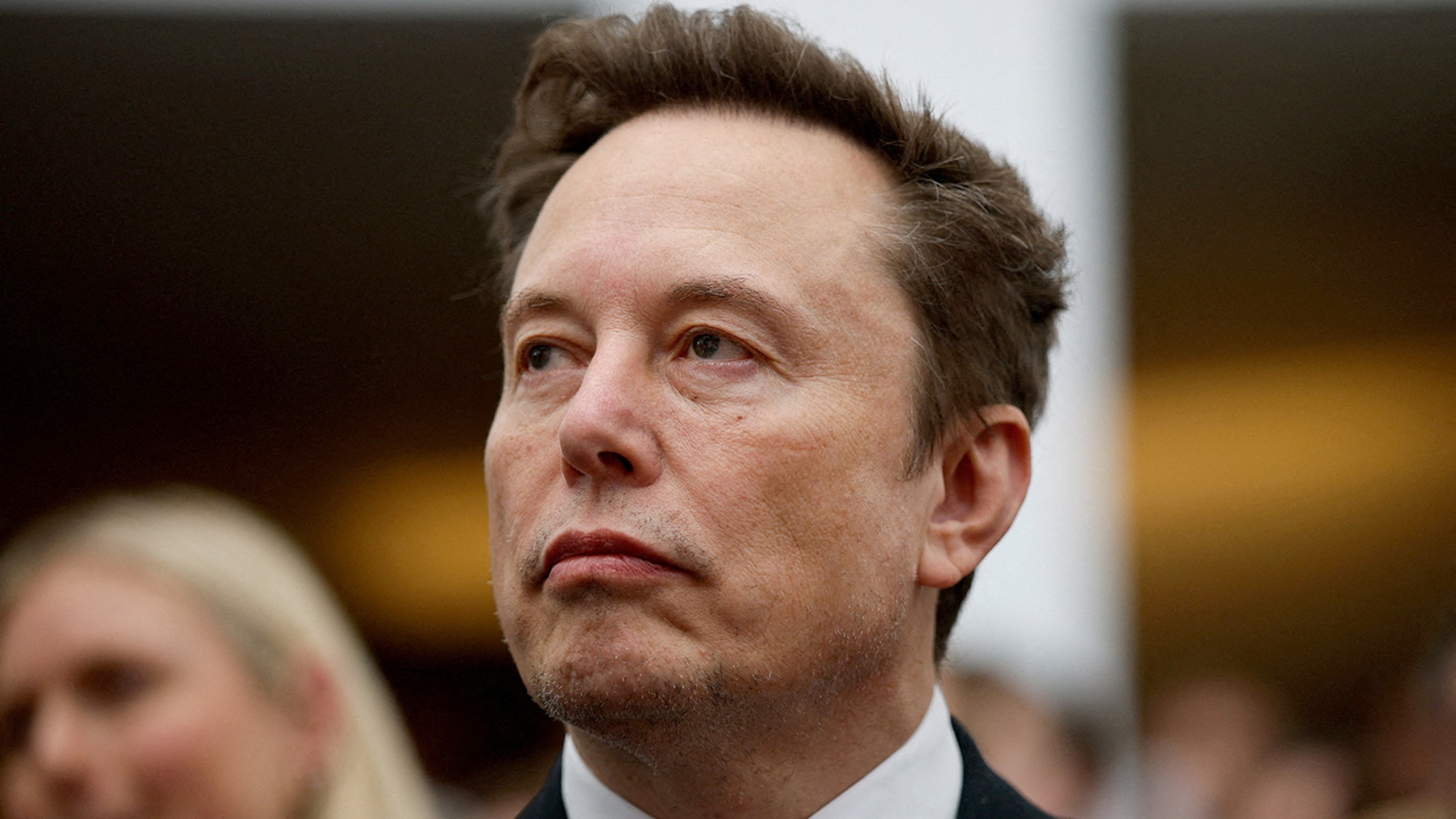
    Elon Musk has “learned to love political spending again,” said Chad de Guzman in Time. After splashing at least $250 million on getting President Trump back in the White House, the world’s richest man announced last year that he’d spend “a lot less” on future campaigns because “I’ve done enough.” Instead, he’s become the biggest single donor this midterm cycle. Since July, Musk has given at least $276 million to various Republican groups—158 million of which went to the GOP’s main Senate super PAC, “one of the largest known political donations in history.” That infusion of cash allowed the super PAC to launch a $149 million ad campaign for Ken Paxton, the GOP’s struggling candidate in the Texas U.S. Senate race. Musk’s huge spend “isn’t surprising, given what’s at stake for him if Republicans lose.” Democrats have vowed to investigate the multibillion-dollar government contracts held by SpaceX, Tesla, and other Musk companies if they win the House—and to subpoena Musk over his role leading DOGE, which slashed hundreds of thousands of federal jobs and gutted foreign aid. 

    Musk has learned that candidates “want his money but not him,” said Jim Newell in Slate. Back in 2024 and 2025, he was everywhere: “prancing about onstage with Trump,” living at Mar-a-Lago, and handing out million-dollar checks to Wisconsin voters. This time, he’s confined himself to insulting Democrats on his social media platform X and making donations that, while eye-poppingly large, are “effectively less than couch change” for a man worth about $1 trillion. “That’s some intimidating profligacy,” said Noah Rothman in The Boston Globe. But Musk’s money will make a difference on Election Day only if his beneficiaries can pair it with a compelling message. As voters keep telling pollsters, “that’s the missing part of the GOP’s 2026 strategy.” 

    As “a prominent and powerful white supremacist,” Musk has his own message, said Jamelle Bouie in The New York Times. On X, he traffics in extremist conspiracy theories about brown and Black “invaders” destroying “‘Western,’ meaning white, civilization.” He “heavily promoted” the movie Citizen Vigilante, in which the hero kills Arab and African immigrants. He supports “remigration,” the forced deportation of nonwhite citizens to their supposed countries of origin. Yet Republicans are allowed to pretend such rhetoric from the party’s “most important donor” is irrelevant to them, even while Democrats are often asked to denounce Hasan Piker, a popular but niche far-left streamer. “I think Republicans should have to answer” for Musk’s ugly views. And if Democrats win Congress this November, they should work to ensure that no one man will ever again “have all this power.”


    people

    Rodrigo’s very public private life

    Olivia Rodrigo has lived much of her life in the public eye, said Ethan Millman in The Hollywood Reporter. A Disney Channel star at age 13, she saw her little remaining anonymity disappear in 2021, when the then-17-year-old became an international pop sensation with her first single, “Drivers License.” Now 23, Rodrigo can’t even step outside her home without photos ending up online. She recognizes her privileged position but says it’s “hard and kind of sad” that she can’t keep her private life private. This summer, fans accused her of betraying her progressive values after she was spotted out on a few casual dates with a young private-equity associate. “I understand that that’s sort of part of the…” She pauses. “You know what? No. It actually really sucks. To be stalked and then these pictures are being used as evidence that you’re a bad person, it’s just the craziest thing. I wish that I could be 23 years old and experience life normally.” Rodrigo is trying to redirect the spotlight on her toward good causes: She organized August’s women-led Daisy Chain Fields music festival in Irvine, Calif., which raised some $20 ­million for women’s rights organizations. “I’ve had all this attention on me since I was 17, and I’ve only ever looked at it like an albatross around my neck. But it can also be used for such positive, beautiful things.” 


    Saturday Wrap was written and edited by Theunis Bates, Susan Caskie, Chris Erikson, Bill Falk, Allan Kew, Bruno Maddox, Rebecca Nathanson, and Hallie Stiller.

    Image credits, from top:  Doug Mills/The New York Times/Redux; Getty; Reuters; Getty
     

    Recent editions

    • Evening Review

      What changes if Netanyahu loses?

    • Morning Report

      Ohio ad splits White House, GOP

    • Evening Review

      A Trump-Putin-Xi confab

    VIEW ALL
    TheWeek
    • About Us
    • Contact Future's experts
    • Terms and Conditions
    • Privacy Policy
    • Cookie Policy
    • Advertise With Us
    • FAQ
    Add as a preferred source on Google Add as a preferred source on Google

    The Week US is part of Future US Inc, an international media group and leading digital publisher. Visit our corporate site.

    © Future US, Inc. Full 7th Floor, 130 West 42nd Street, New York, NY 10036.