The Week The Week
flag of US
US
flag of UK
UK
https://cdn.mos.cms.futurecdn.net/flexiimages/jacafc5zvs1692883516.jpg

SUBSCRIBE & SAVE

Less than $3 per week

Sign in
  • View Profile
  • Sign out
  • The Explainer
  • The Week Recommends
  • Newsletters
  • Cartoons
  • From the Magazine
  • The Week Junior
  • Student Offers
  • More
    • Politics
    • World News
    • Business
    • Health
    • Science
    • Food & Drink
    • Travel
    • Culture
    • History
    • Personal Finance
    • Puzzles
    • Photos
    • The Blend
    • All Categories
  • Newsletter sign up Newsletter
  • The Week Evening Review
    Trump punishes Seoul, the NHS in a heatwave, and break point for tennis

     
    TODAY’S BIG QUESTION

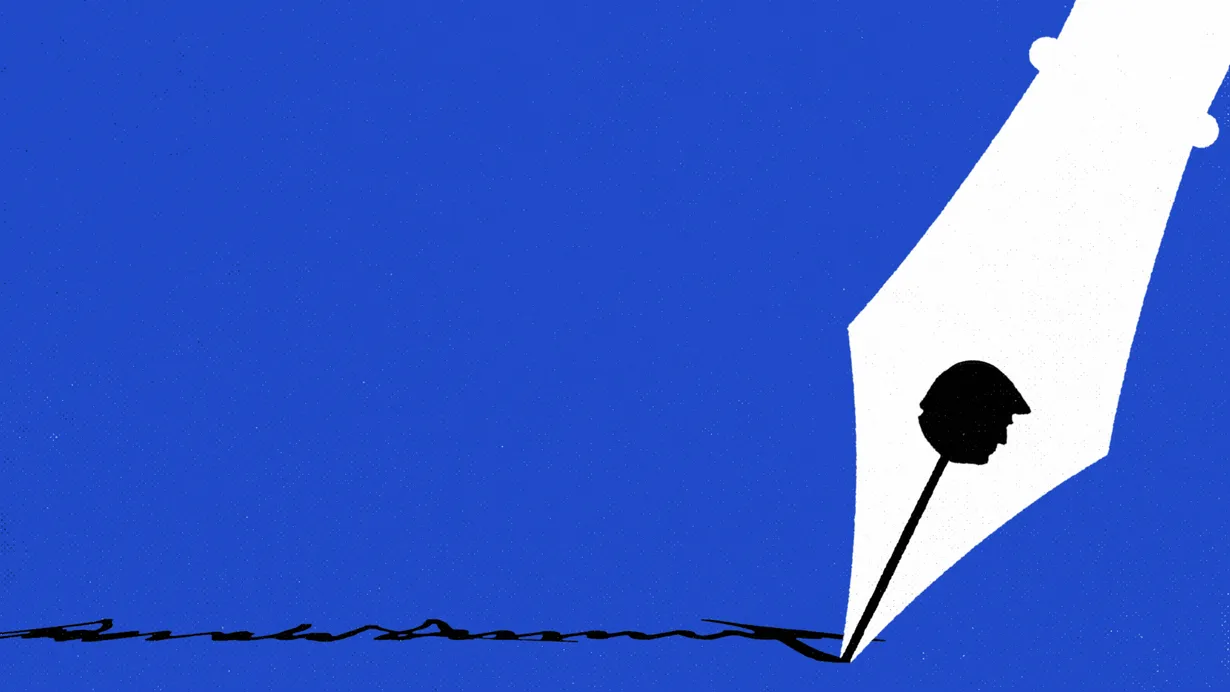
    Why is Donald Trump punishing South Korea?

    Donald Trump has ordered the Pentagon to scale back annual joint military exercises with South Korea for reasons that apparently include Seoul’s decision to stay out of the US war with Iran.

    Writing on Truth Social, the US president said the exercises “send a signal that is totally inappropriate and hostile” to North Korea, which “has been unthreatening and respectful” during both his presidencies. He added: “I recently asked the President of South Korea if they would like to join us in the Denuclearization of the Islamic Republic of Iran, and they said, ‘No thanks!’”

    What did the commentators say?
    The US is losing the Iran conflict, so Trump has “taken the logical next step” of “punishing” a “loyal American friend”, said Tom Nichols on The Atlantic. “Scaling back the exercise” is an “insane” decision but, in “Trump’s world, every loss, every defeat, is a personal insult”. The world is “witnessing a public exhibition of narcissistic rage” because Trump “embarked on a war for personal glory” but “what he got instead was ongoing humiliation”.

    It is the “latest example” of Trump “appearing to turn against an ally in favour of a leader that previous administrations have cast as an adversary”, said The Associated Press’ Konstantin Toropin and Alanna Durkin Richer. It’s a particularly “sharp turnaround” from how his administration has viewed South Korea recently. And “the scaling down of joint exercises could affect the allies’ deterrence” against North Korea, whose “recalcitrant regime has been doubling down on its nuclear and ballistic missile programs”.

    The “sudden” announcement “risks renewing concerns” that “US forces are too stretched to support crucial Western allies or maintain deterrence against autocracies that threaten them”, said Brad Lendon on CNN. It’s also a “gift” to North Korea’s Kim Jong Un at a time when he has “ramped up his own nation’s threat to global stability and offered no concessions in return”.

    What next?
    The “walking back” of these joint military exercises could “carry a high cost with relatively little benefit”, said the BBC. They are “essential for military forces to be ready and capable of doing their jobs”, Leif-Eric Easley, a professor at Ewha University in Seoul, told the broadcaster.


    THE EXPLAINER

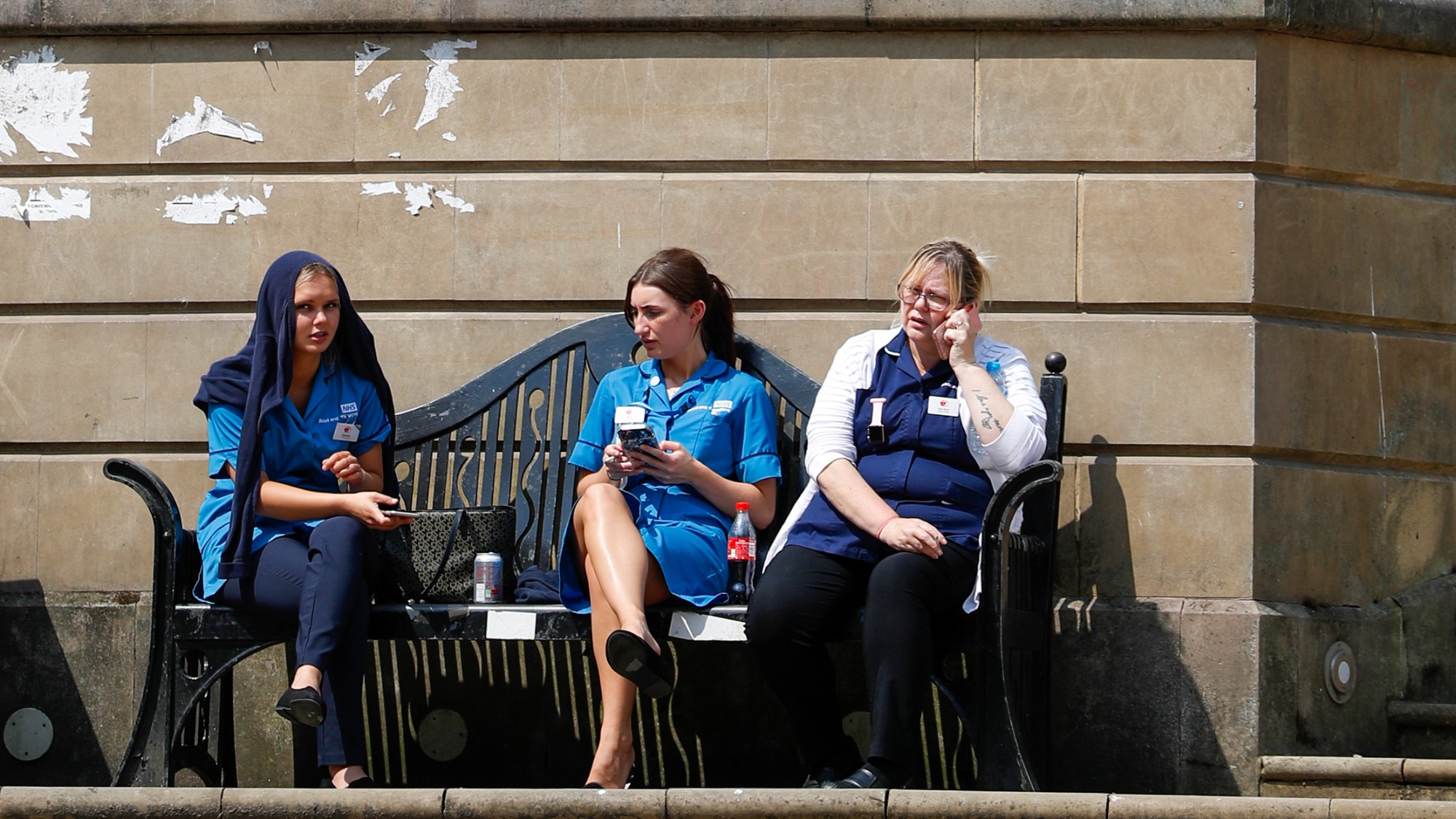
    The NHS in the age of heatwaves

    At the height of this summer’s scorching weather, some NHS hospital wards were reaching temperatures of up to 41.8C. That’s “unbelievably dangerous” and “putting vulnerable patients at risk”, said Helen Morgan, the Lib Dems’ health spokesperson.

    “Almost all” hospitals have seen temperatures exceed the recommended NHS maximum of 28C during the recent heatwaves, said The Times, citing figures obtained by the Lib Dems under a Freedom of Information request. The average maximum temperature recorded in hospitals in July was 31.9C.

    How are staff coping?
    Put bluntly, they’re not. Nursing staff are “collapsing” on shift in the extreme heat and watching patients “suffering” in facilities “not fit for humans”, said the Royal College of Nursing. Staff say they are “dripping with sweat from head to toe”, and are left exhausted and dehydrated after working long shifts on wards with no ventilation.

    Ambulance workers have described the difficult and “vile” conditions they have had to work in during heatwaves, said Unison. One ambulance worker told the union they “have one uniform, whether it’s minus 10 or 30 degrees” and, during heatwaves, “you’re sweating even when you’re just driving”. Doing CPR in the heat is “ten times harder”; “I could have cried during my last shift”.

    What about the patients?
    The extreme heat of course brings a “surge” of patients into hospitals with “heat-related conditions”, said the BBC. July was the busiest ever month for A&E units in England, and the number of patients enduring 12-hour waits in the sweltering conditions of hospital A&E departments was a third higher than this time last year. GP and doctor appointments and 999 calls in England were both up by around 10% compared with last summer.

    What’s up with NHS buildings?
    Very few hospitals or GP surgeries are equipped with either air conditioning or adequate ventilation. Air conditioning is prioritised for critical spaces such as operating theatres, “due to capital and running costs”, said The Times. Several hospitals have declared critical incidents this summer because their buildings, many of which were built in the Victorian era, are “not equipped to cope”. 

    “Across the NHS, surgical teams are struggling to deliver high-quality care in ageing hospital buildings” and in “an infrastructure struggling to cope with continuing heatwaves”, said Tim Lane, president of the Royal College of Surgeons of England. 


    QUOTE OF THE DAY

    “If it means English sparkling wine gets better and better, fantastic. That means we can take on the French. Let’s celebrate some of these things, rather than just be sort of doom and gloom.”

    Reform UK deputy leader Richard Tice looks on the sunny side of the heatwaves affecting Britain this summer.


    Poll watch

    More than half (56%) of British parents admit they don’t let their children play unsupervised at the same age they were allowed to as a child. Parents now allow independent outdoor play from 10.8 years, on average, compared with an average of 9.7 years when they were young, according to a poll of nearly 2,000 parents and caregivers of primary-school-aged children for the British Children’s Play Survey. 


    IN THE SPOTLIGHT

    Break point: why tennis needs to change

    “It’s pretty worrying, the state of men’s tennis, especially right now,” said British star Jack Draper earlier this summer as he announced his withdrawal from Wimbledon due to a long-running injury. “The amount of injuries, especially young players.” As he struggles now to play through the pain, Draper thinks “the tour and the calendar have to adapt if any of us are gonna achieve some sort of longevity”.

    Players on both the men’s ATP and women’s WTA tours have long complained of the hectic playing schedule and the toll it takes on their bodies, calling for reforms to ease their workload. 

    Stars ‘regularly missing events’
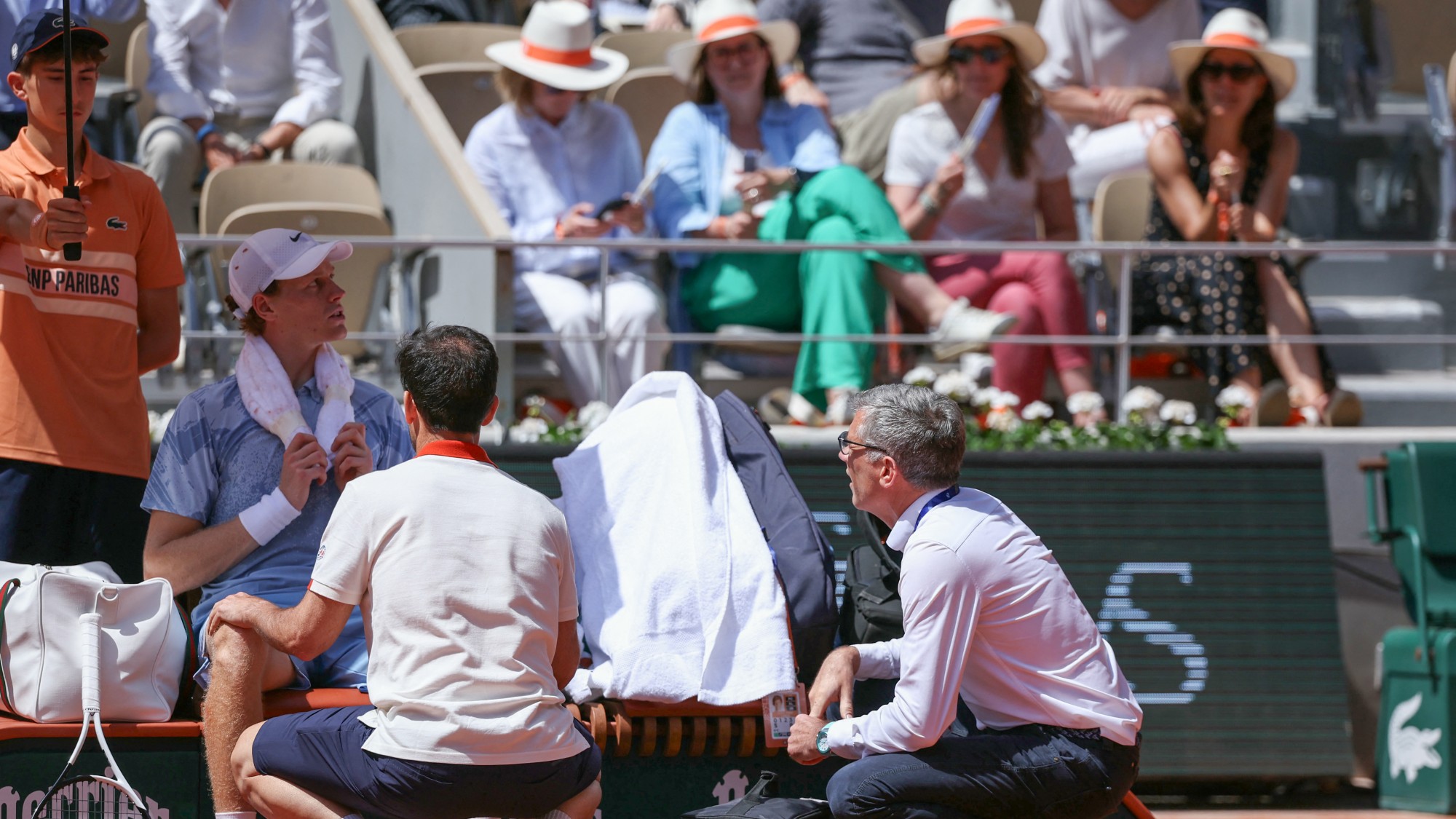
    “It is difficult to remember a time when each tournament’s build-up was not punctuated” with withdrawals of big-name players, said The Telegraph. Former world men’s No.1 Carlos Alcaraz has been out for four months with a wrist injury and current No. 1 Jannik Sinner (pictured above) has been sidelined by an injured knee for weeks. On Saturday, Novak Djokovic lost in the first round of the Cincinnati Open, after vomiting in a towel on court.

    Counterintuitively, players’ improved athleticism is causing issues, said El Pais. In both men’s and women’s competitions, the physicality has “evolved exponentially compared with two or three decades ago”, meaning players can hit the ball harder, and have better equipment with which to do so. This places even greater strain when on the receiving end, and the rules are not adapting to accommodate this.

    And then there’s the punishing calendar of tournaments. Of the nine Masters 1000 events – one step below Grand Slams in prestige and traditionally lasting seven days – seven have “expanded to a 12-day format”. True, top players’ absences give opportunities to younger and lower-ranked players, but fans have started to “raise concerns” about their favourites “regularly missing events”. Clearly, the ATP Tour has “its own interests at heart”, attempting to “squeeze out every revenue source possible”.

    ‘Seven governing bodies’
    Environmental changes are also overlooked, said the Financial Times. “Extreme heat is affecting tennis tournaments globally” – and was particularly apparent in the number of heat-related incidents at the French Open in May – but different organisations follow different rules to combat it. Until this year, the decision to suspend ATP matches due to weather conditions was “at the discretion of tournament supervisors”. 

    Like in other sports, change in tennis “takes time”, said The Independent. But unlike other sports, tennis essentially has “seven governing bodies”, with the ATP, the WTA, World Tennis and the four historic Grand Slam events all claiming certain jurisdictions. “Getting everyone around the same table is challenging enough”, let alone getting them to agree on reforms to the game.


    Good day 🚆

    … for cross-Channel competition, as Britain’s rail regulator grants approval for Virgin Trains to operate up to 20 daily return services between London and Paris, Brussels or Amsterdam from 2030. Eurostar has had a monopoly on passenger services through the Channel Tunnel since it opened in 1994. 


    Bad day 🤖

    … for tasting the difference, as Sainsbury’s suspends use of live facial recognition technology at one of its London branches after a customer was wrongly flagged as a shoplifter. The supermarket has blamed “human error” and apologised, but calls are mounting to have the AI technology scrapped across all its shops.


    PICTURE OF THE DAY

    Eclipse of the heart

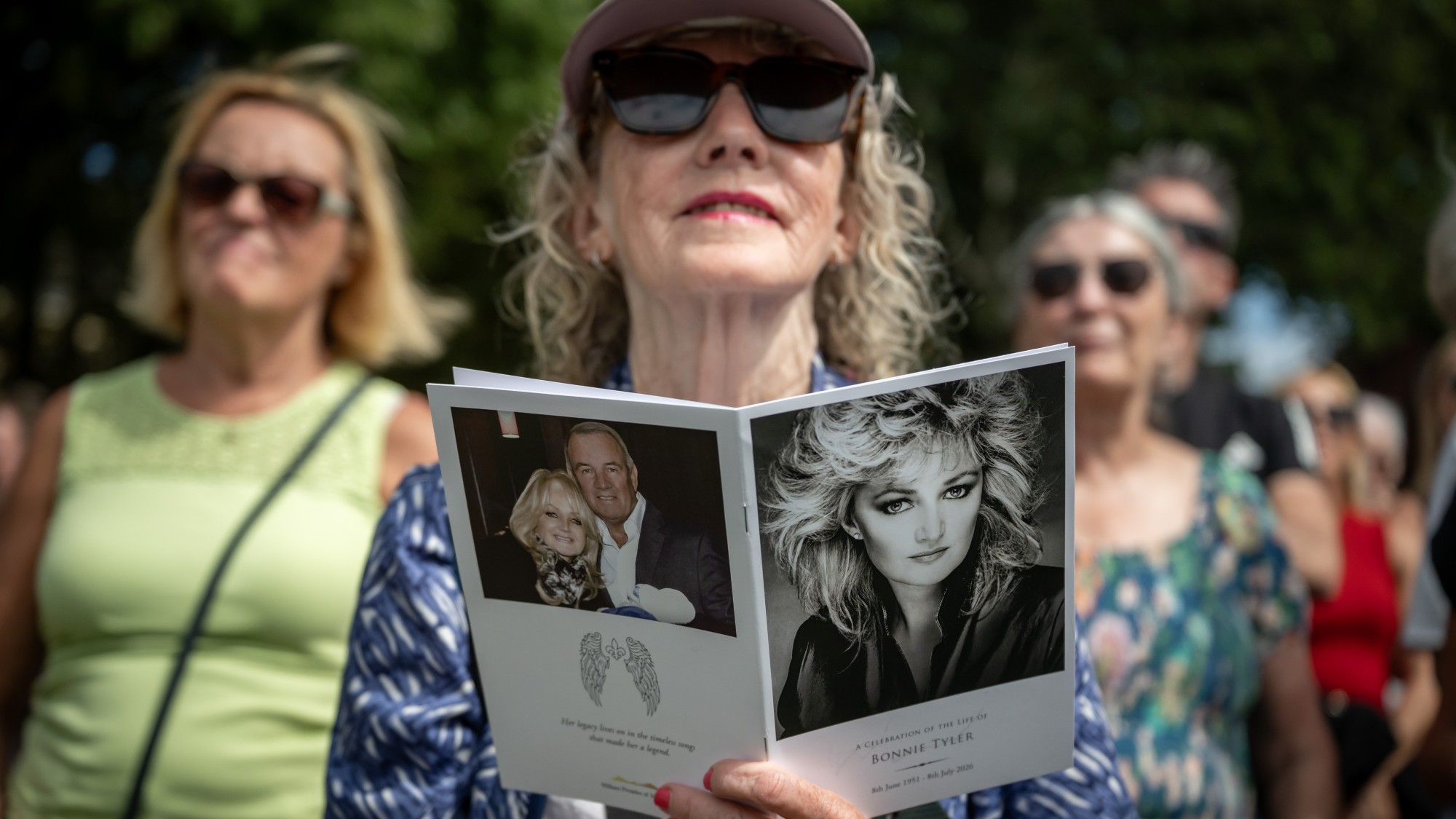
    A mourner watches Bonnie Tyler’s funeral service on a big screen in St David’s Square, Swansea. Thousands of fans from across the globe gathered on the streets outside Swansea Minster to pay their respects to the Welsh singer, who died unexpectedly last month.

    Matthew Horwood / Getty Images


    Puzzles

    Chain Word

    Try The Week’s new daily word challenge in our puzzles and quizzes section

    Play here


    THE WEEK RECOMMENDS

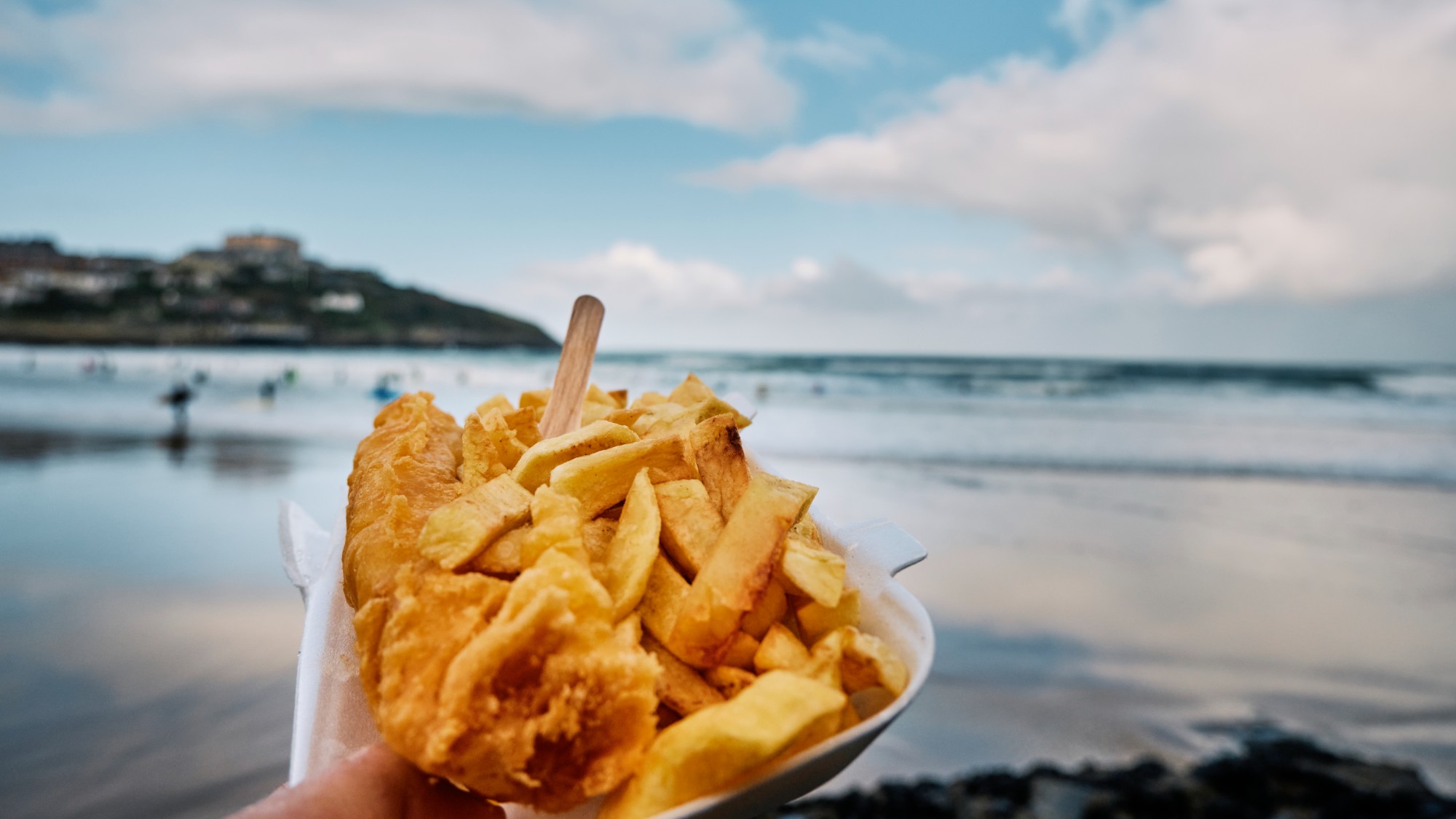
    Best seaside fish and chip shops around the UK

    The beach and the chippie are the perfect British summertime pairing, whether you’re watching the waves as you eat in or braving the sands and spray with your paper-wrapped battered fish. Here are some of the country’s best chippies by the sea.

    Anstruther Fish Bar – Fife, Scotland
    “My heart belongs to Anstruther Fish Bar,” said The Telegraph. Edinburgh has “salt and sauce” (a “piquant brown-sauce-and-vinegar combo”) and, in Glasgow, the “mighty ‘fish supper’ reigns”, but fish on the east coast of Scotland is something else. Once you’ve navigated the queue under the “watchful eye of the mannequin fisherman”, you settle down into an “old-school caff table”.

    Aldeburgh Fish & Chips – Aldeburgh, Suffolk
    “The Cooney family and their faithful tribe of fryers have been frying in beef dripping on Aldeburgh High Street since 1967,” said The Times. They actually have two spots on the high street where you can pick up your supper, and you’ll get the “same shatteringly crispy battered fish” at both.

    Whelan’s Fish and Chips – Lytham St Annes, Lancashire
    Whelan’s has been visited by some esteemed figures in the culinary world – from Gordon Ramsay to Rick Stein – and yet it primarily “remains a favourite with the locals”, said Delicious. It was established in 1937 and, “since it started, not much has changed and for all the right reasons”. They source fish from “sustainable stocks, they use local produce (wherever possible)” and you are always looked after by “welcoming” staff.

    The Rockfish – Dartmouth, Devon
    This place overlooks such the “bucolic River Dart with its fishing boats meandering up and down with the ebb and flow of the tide”, so “you can almost taste how good The Rockfish’s wares are going to be before they arrive”, said Food and Travel Magazine. In winter, the restaurant’s log burner is the perfect antidote to “long yomps across the moors”.


    Statistic of the day

    £65.4 million: The amount Barcelona are paying Manchester City to sign  the Spanish football captain Rodri. The World Cup and Ballon D’Or winner was thought to be moving to Real Madrid this summer before the Catalan club stole a march on their La Liga rivals. 


    instant opinion

    Today’s best commentary

    Italy’s mythic ‘month off’ in August was hard won. It would be good for us all
    Jamie Mackay in The Guardian
    Fewer and fewer Italians can afford the villeggiatura, a “month-long summer break” fought for by “once-powerful” trade unions in the 1960s, writes Jamie MacKay. But “when workers across Europe are exhausted, isolated and struggling with the high cost of living”, it remains a “quietly inspiring” idea, rooted in “a defiant belief in the necessity of rest”. “A slower, healthier way of life” shouldn’t be “an elite privilege, but a fundamental right” – something to reclaim from “the totalising logic of the market”.

    I’m a Jewish mother, and this is the heartbreaking reality of raising my kids in Britain
    Elisa Bray in The Telegraph
    My children live “in an alternate reality to their non-Jewish peers”, writes Elisa Bray. At their primary school, there are “men in stab-proof vests guarding the gate” and “regular lockdown drills”, including one where my son hid in a toilet and “was told to hold in his sneeze”. Parents field “questions that should be on no children’s mind”, like: “Are police at our school” because “people don’t like Jews?” It’s “unacceptable” that this is what “Jewish schoolchildren in modern Britain” experience.

    Kissing in public is disgusting – and utterly inconsiderate

    Polly Hudson in The i Paper
    Studies suggest that pawing and “smooching” in public lead “to greater relationship satisfaction”, writes Polly Hudson. I’m ignoring that evidence because “public displays of affection turn my stomach”. They are “forgivable in the first flush of love” but, after that, “they indicate a massive lack of consideration” for others. There you “awkwardly” are, “an unconsenting voyeur”, not sure if you should up and leave or “grin and bear it, perhaps leaving a Yelp review for the show afterwards”.


    word of the day

    Hyperstition

    A fictional or speculative idea that makes itself real through its circulation, belief and positive feedback loops. The concept was presaged by Warwick University’s Cybernetic Culture Research Unit in the 1990s but has taken on a whole new significance in the world of celebrity, said the Financial Times. “Since reality is socially constructed, if enough people say ‘this celebrity is popular’”, that celebrity “will indeed become popular”. 


    Evening Review was written and edited by Jamie Timson, Chas Newkey-Burden, Will Barker, Adrienne Wyper, David Edwards and Helen Brown, with illustrations by Stephen P. Kelly.

    Image credits, from top: illustration by Stephen P. Kelly / Getty Images / AP Photo; Darren Staples / Bloomberg / Getty Images; Alain Jocard / AFP / Getty Images; Matthew Horwood / Getty Images; Creacart / Getty Images.

    Morning Report and Evening Review were named Newsletter of the Year at the Publisher Newsletter Awards 2025
     

    Recent editions

    • Sunday Shortlist

      Big screen Bourdain

    • Saturday Wrap

      Out of ammo

    • Evening Review

      One year of the National Guard in DC

    VIEW ALL
    TheWeek
    • About Us
    • Contact Future's experts
    • Terms and Conditions
    • Privacy Policy
    • Cookie Policy
    • Advertise With Us
    • FAQ
    Add as a preferred source on Google Add as a preferred source on Google

    The Week is part of Future US Inc, an international media group and leading digital publisher. Visit our corporate site.

    © Future US, Inc. Full 7th Floor, 130 West 42nd Street, New York, NY 10036.