The Week The Week
flag of US
US
flag of UK
UK
https://cdn.mos.cms.futurecdn.net/flexiimages/jacafc5zvs1692883516.jpg

SUBSCRIBE & SAVE

Less than $3 per week

Sign in
  • View Profile
  • Sign out
  • The Explainer
  • The Week Recommends
  • Newsletters
  • Cartoons
  • From the Magazine
  • The Week Junior
  • Student Offers
  • More
    • Politics
    • World News
    • Business
    • Health
    • Science
    • Food & Drink
    • Travel
    • Culture
    • History
    • Personal Finance
    • Puzzles
    • Photos
    • The Blend
    • All Categories
  • Newsletter sign up Newsletter
  • The Week Evening Review
    The Russian threat to the UK, dangerous driving TikToks, and deliberate arson

     
    TODAY’S BIG QUESTION

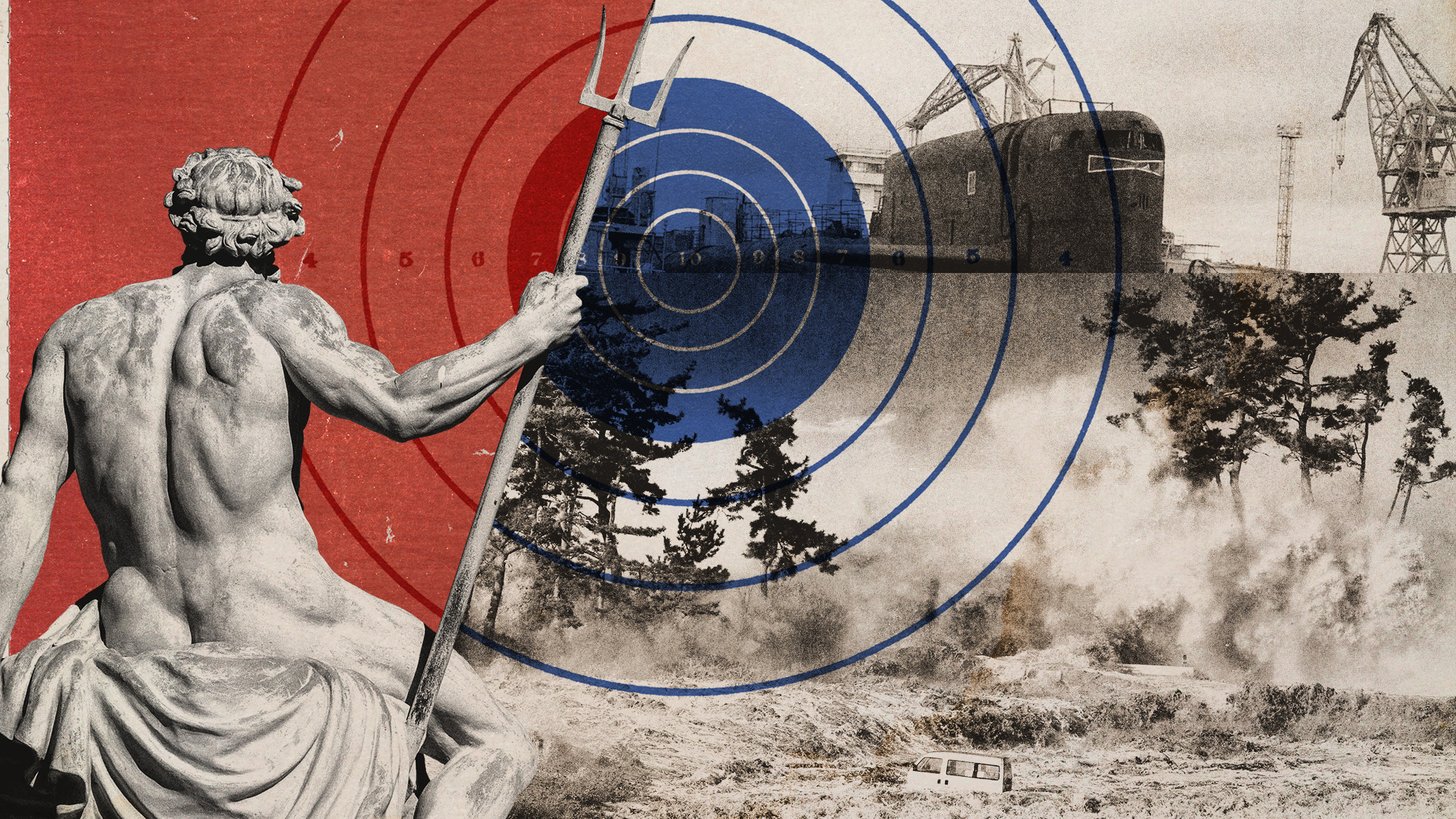
    What does Russian threat to UK look like?

    The UK will continue to support Ukraine despite the “outrageous threats” made by Russia, Andy Burnham said in Kyiv today as the nation marks 35 years of independence.

    “Blustering” threats have been directed at the UK before, said Owen Matthews in The Independent. But with Russia growing “restless” amid a fast-evolving geopolitical landscape, the UK is antagonising Vladimir Putin more obviously than ever before.

    What did the commentators say?
    “Most Britons have little grasp of just how much their country is hated in Moscow,” said former diplomat Andy Pryce on the Centre for European Policy Analysis website. In “Kremlin demonology”, it is “Britain that wears the Devil’s face”.

    Britain has long been on the receiving end of “regular, blood-curdling warnings” from Russia, said Matthews in The Independent. Supplying Storm Shadow missiles and “BAE-made Nyan drones” to Ukraine is the latest provocation for the “Kremlin’s attack dogs”. Arson attacks in 2024 in Leyton and Birmingham were thought to have been orchestrated by Moscow. A thwarted attempt by a “gang of dim-bulb Eastern European crooks” to assassinate journalists and activists, and the arson attacks on Keir Starmer’s former home, have also been linked to Russia. The success of this “aggravated hooliganism” has been limited, but one thing is clear: Britain is becoming “extremely vulnerable and unprepared for attack”, whatever form it takes next.

    Now is “as good an opportunity as any for the Kremlin to make a political point”, said Dan Sabbagh in The Guardian. Any effort to “undermine public confidence” in the UK, with Parliament in recess and “less domestic political news to crowd out the embassy’s remarks”, is vital for Putin’s agenda. 

    What next?
    Russia is unlikely to launch direct missile or armed drone strikes on the UK, said David Blair and Roland Oliphant in The Telegraph. The first likely step would be to “intensify the existing campaign of sabotage, drone incursions and cyberattacks”. 

    But, more broadly, Nato has a “deterrence problem”, said Katia Glod in Prospect. The alliance has “formidable mechanisms” to prevent a full-scale armed attack on its member states. But Russia can “operate precisely where those mechanisms become less automatic”, effectively in a “grey zone” where it knows there won’t be a response.


    THE EXPLAINER

    The dangerous driving videos flooding TikTok

    A government minister has urged social media companies to “step up” and remove “content that celebrates dangerous driving”, following recent fatal collisions involving young motorists on the wrong side of the road.

    How big a problem is it?
    Seven people died in the early hours of Saturday morning when a Volkswagen Passat, containing five young men, sped the wrong way down the A66 near Middlesbrough and crashed into a police armed response vehicle. The previous weekend, five teenagers were killed when their BMW, heading the wrong way down the M9 near Dublin, hit another car head-on, seriously injuring three women and a child.

    One of the men killed in the Passat had previously been involved in other police pursuits, videos on his TikTok account suggest. Hundreds of videos “shot in the UK” are being “posted online to encourage young drivers to act recklessly for kudos”, according to The Times’ social media analysis.

    Why are they doing it?
    For excitement and for admiration from their peers, suggested Mary Aiken, a professor of forensic cyberpsychology at the University of East London. Showing off with risk-taking behaviour is nothing new, but social media “is psychologically immersive and could amplify a predisposition to taking risks and ignoring consequences”, she told The Guardian. While driving, they’re “simultaneously filming and capturing content for posting later or live streaming. They have one foot in the real world and one foot in cyberspace. They’re thinking about the likes; they’re thinking about kudos.”

    Is TikTok to blame?
    Defence Minister Luke Pollard this morning warned that social media companies have a decision to make. “They’ve argued against regulations, saying they can police themselves,” he told BBC Radio 5 Live. “This is the perfect opportunity to demonstrate it.” The government can use powers in the Online Safety Act to compel them to take this content down, but if they took steps not to allow “their algorithm to share this type of content” to begin with, “I think we’d be in a better place”.

    Ireland’s media regulator said it has asked TikTok for a “full account” of the measures it has taken to address risky and reckless driving content on its platform. TikTok has said it monitors content and removes videos and accounts that break its rules.


    QUOTE OF THE DAY

    “At dawn begins an economic D-Day – the single greatest financial offensive ever marshalled against an adversary.”

    US Treasury Secretary Scott Bessent vows to “sever every economic lifeline that sustains the tyrannical regime” of Iran, in an article for the Financial Times. He is due to announce new US sanctions against Tehran at a press conference later today


    Poll watch

    More than half of Brits (51%) wouldn’t want Prince Harry and Meghan Markle to return as full-time working royals, according to a YouGov survey for The Sunday Times. Of 1,677 adults polled, more than a third (34%) thought the couple’s move back to the UK would be damaging to the monarchy. 


    IN THE SPOTLIGHT

    Why so many wildfires are started deliberately

    Almost 500 people have been arrested on suspicion of starting wildfires in France this summer as countries across Europe continue to “tackle ferocious blazes” amid the recent heatwaves, said The Guardian.

    Fire and rescue services in England and Wales had been called to 1,132 wildfires so far this year as of 16 August, data from the National Fire Chiefs Council shows – more than the record-breaking 1,017 for the whole of last year.

    ‘No common picture’
    Almost all UK wildfires are started by people, according a 2024 report by the Parliamentary Office of Science and Technology. A 2023 report by the Forestry Commission found that 97% of all wildfires are “related to some form of human action”, whether “deliberate” or “accidental”.

    Nearly nine in every 10 forest fires in France are started by humans and some people “do so deliberately”, with the perpetrators “often difficult to identify”, said Le Monde. Although climate change “fuels the droughts, heatwaves and winds that turn forests into tinderboxes, it is humans who set them alight”, said Euractiv.

    Europe has “built advanced systems to detect wildfires and coordinate emergency response”, said Euronews, but there’s “no common picture of who starts deliberate fires or why”, because arson “remains a fragmented national matter”.

    ‘Fire is powerful, beautiful’
    A US man charged earlier this month with starting a wildfire in Spokane, Washington, had planned the crime for weeks and even researched when the weather would be best for igniting it, according to police. The suspect said “fire is powerful, beautiful, and that things that go through fire experience a kind of rebirth”, detectives reported in a court filing.

    In California, a suspect “spent days obsessing about arson” before heading to a clearing in Pacific Palisades late on New Year’s Eve and allegedly starting a fire with a lighter, said the Los Angeles Times. Although firefighters “quickly put out” the flames, investigators believe the “embers continued to smoulder underground” and reignited to become one of California’s “most devastating” wildfires. It “consumed more than 6,500 structures”, caused billions of dollars’ worth of damage and left 12 people dead.


    Good day 🦅

    … for letting love take flight, as the UK’s rarest bird of prey gets a population boost thanks to one polyamorous male. According to the RSPB, the amorous Montagu’s harrier is “single-handedly propping up” the species, having fathered six chicks with two females this summer, and a further four chicks last year.


    Bad day 🔌

    … for form over functionality, after more than four million electric vehicles were recalled in China over fears about minimalistic door handles. The move by nine automakers including Telsa, which operates a factory in Shanghai, follows warnings that the handles are difficult to locate and open in emergency situations. The recall remedies range from software updates to clearer labelling on doors. 


    PICTURE OF THE DAY

    Panda party

    Giant panda Katyusha celebrates her third birthday with a bamboo cake at Moscow Zoo. The first of her species ever born in Russia, she is among about 800 giant pandas in captivity worldwide, while around 1,800 remain in the wild.

    Emre Aytekin / Anadolu / Getty Images


    Puzzles

    Chain Word

    Try The Week’s new daily word challenge in our puzzles and quizzes section

    Play here


    THE WEEK RECOMMENDS

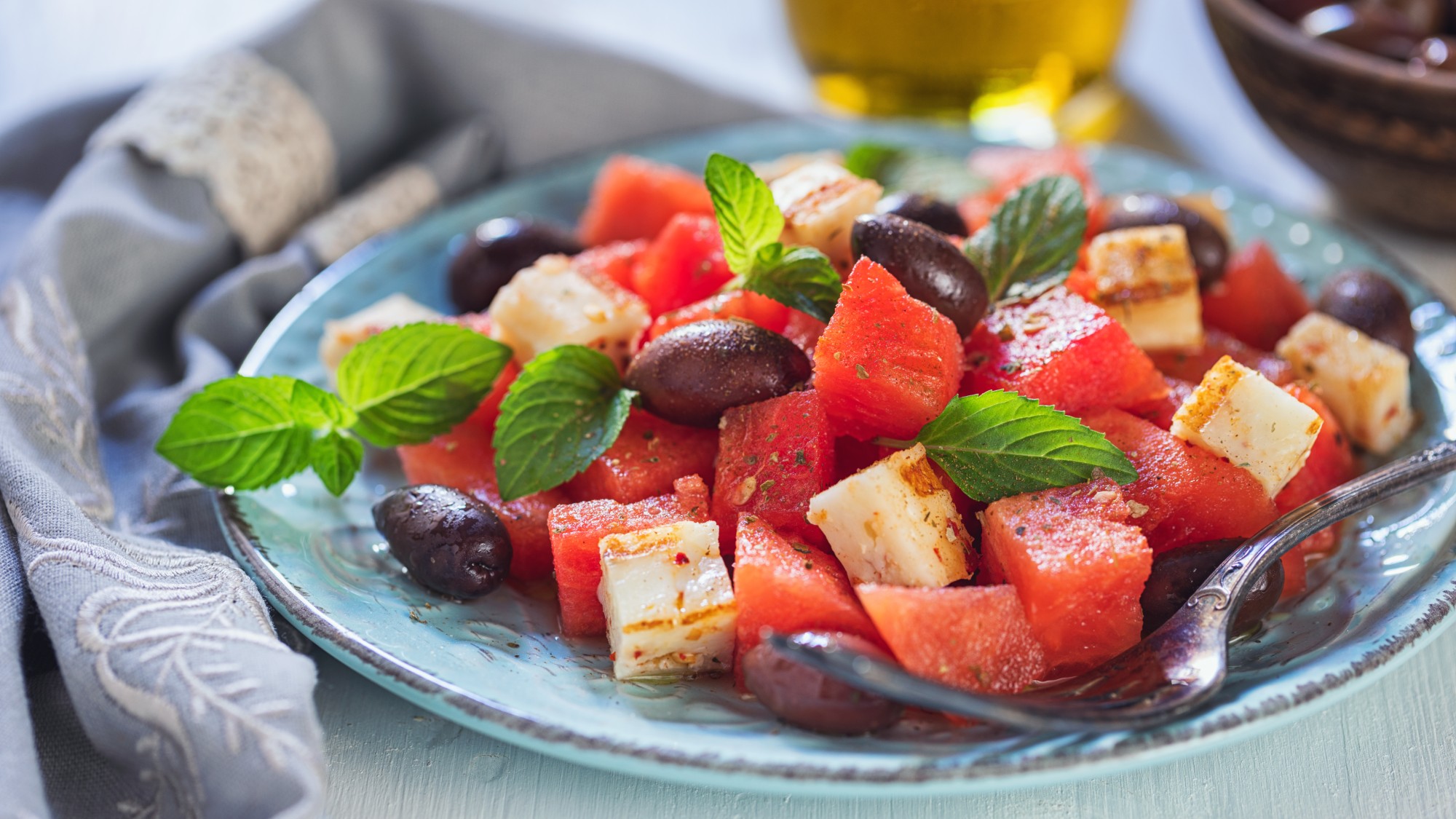
    Inventive ways to cook with watermelon

    Puréeing watermelons with sugar syrup to freeze as granita has long been popular, as has plugging their “emerald-rinded posteriors” with “an upturned bottle of vodka” for a boozy treat, said Ravinder Bhogal in the Financial Times. But more and more people are now pairing watermelon’s “refreshing flesh” with salty, herby or even spicy flavours, to unlock vibrant new levels in savoury dishes. Here are some of our favourite deliciously unusual watermelon combos.

    Peanut and Watermelon Chaat
    Chaats are crunchy, spicy fried snacks that are often served as appetizers in South Asia. “Every chaat has a little bit of sweetness, a little bit of tartness, a little heat and a little crunch,” said chef Vishwesh Bhatt in Food & Wine. He flavours his peanut-based chaat with chilli, cayenne, chaat masala, thinly sliced cucumber, red onion, radishes, mint, basil, coriander, lime juice and “the fleeting succulent sweetness of watermelon”.

    Sour watermelon and monkfish curry
    For a “bold, new” take, said Bhogal in the FT, I combine watermelon with “dashes of umami fish sauce, blistering chillies and mouth-puckering tamarind”. In a monkfish curry, watermelon chunks bring “bright, pleasing bursts of sweetness” to temper the spiciness of the sauce. “Serve with sticky rice, topped with plenty of fresh Thai basil.”

    Spiced pork belly with quick-pickled watermelon
    Watermelon pickled with grapefruit, lime, chilli and fish sauce makes a “chunky salsa” that’s so tempting, you’ll want to eat it “straight out of the bowl”, said Diana Henry in The Telegraph. Or paired with “punchy” pork belly marinaded in chillies, lime, ginger and garlic, it makes a “delicious sweet-meets-savoury main”.


    Statistic of the day

    £2.5m: The price paid for Diego Maradona’s “Hand of God” football at an auction on Saturday. It’s “arguably the most significant soccer item that exists”, Dallas-based auctioneer Mike Porvenzale told Reuters ahead of the sale of the ball, which Maradona famously punched past goalkeeper Peter Shilton in Argentina’s 1986 World Cup quarter-final win over England. 


    instant opinion

    Today’s best commentary

    Playboy’s comeback is not sexy. It’s depressing
    Lucy Mangan in The i Paper
    My chief response to the “Playboy” relaunch is simply “weary resignation”, says Lucy Mangan. I’ve “given up on the very concept of good news” for “women and their rights”. In this “pornified climate”, we have so “normalised the servicing of men’s not-needs-but-wants” that women have become “servants of desire, not autonomous beings”. The men who have the power to stop it “don’t have the collective will”, and the women “who have the will” don’t have the power.

    You don’t always have to agree with Harry to welcome him home
    Mike Tapp in The Telegraph
    We should be “more generous” about Prince Harry, writes Labour MP and former army officer Mike Tapp. He isn’t “beyond criticism”, but he’s “done a great deal” for Britain. Harry “served in Afghanistan”, created the Invictus Games, and used his experience of losing a parent as a child to “help others facing the same kind of grief”. He’s continued “his mother’s humanitarian legacy” and “built a family with the woman he loves”. Our message should be: “good to have you back”.

    I’m already missing the best summer ever. Goodbye work shorts

    Robert Crampton in The Times
    That’s it “for super-hot weather then”, writes Robert Crampton. I’ll miss the “Blitz spirit on the bus”: “jammed together in the barely mobile greenhouse of a double-decker”, we “actually started conversations with each other”. I’ll miss stepping into the office in shorts, “knees naked to the world”. I’ll even miss the “scare stories” about sharks “getting ever closer”, and all the “mozzies”, because “we Brits need a bit of a jolt” to remind us “that the world can be a hostile place”.


    word of the day

    Moquette

    A thick pile fabric used for carpets and upholstery. A “Mastermind” contestant has gone viral with her, extremely niche, specialist subject: Transport for London moquette. Emily Medhurst even wore a knitted tank top featuring a Tube seat fabric design for her appearance on the BBC show last week, when she came third but won widespread praise online. “Most iconic specialist subject ever,” said TfL on X. 


    Evening Review was written and edited by Jamie Timson, Chas Newkey-Burden, Will Barker, David Edwards, Helen Brown and Kari Wilkin, with illustrations by Stephen P. Kelly.

    Image credits, from top: illustration by Julia Wytrazek / Photo by Russian Defense Ministry / Anadolu / Getty Images; Samuel Boivin / NurPhoto / Getty Images; illustration by Julia Wytrazek / Getty Images; Emre Aytekin / Anadolu / Getty Images; kajakiki / Getty Images.

    Morning Report and Evening Review were named Newsletter of the Year at the Publisher Newsletter Awards 2025
     

    Recent editions

    • Sunday Shortlist

      An 80s family fights dinosaurs

    • Saturday Wrap

      The WNBA’s culture wars

    • Evening Review

      Pivot from Asia?

    VIEW ALL
    TheWeek
    • About Us
    • Contact Future's experts
    • Terms and Conditions
    • Privacy Policy
    • Cookie Policy
    • Advertise With Us
    • FAQ
    Add as a preferred source on Google Add as a preferred source on Google

    The Week is part of Future US Inc, an international media group and leading digital publisher. Visit our corporate site.

    © Future US, Inc. Full 7th Floor, 130 West 42nd Street, New York, NY 10036.