The Week The Week
flag of US
US
flag of UK
UK
https://cdn.mos.cms.futurecdn.net/flexiimages/jacafc5zvs1692883516.jpg

SUBSCRIBE & SAVE

Less than $3 per week

Sign in
  • View Profile
  • Sign out
  • The Explainer
  • The Week Recommends
  • Newsletters
  • Cartoons
  • From the Magazine
  • The Week Junior
  • More
    • Politics
    • World News
    • Business
    • Health
    • Science
    • Food & Drink
    • Travel
    • Culture
    • History
    • Personal Finance
    • Puzzles
    • Photos
    • The Blend
    • All Categories
  • Newsletter sign up Newsletter
  • The Week Evening Review
    AI maths row, the legacy of 9/11, and Sweden’s Brexit crackdown

     
    TALKING POINT

    The controversy over OpenAI’s maths miracle

    This year has been one of “unthinkable” progress for maths, said The Wall Street Journal. OpenAI’s proof of the Navier-Stokes problem – one of the “deepest and most difficult unresolved questions” in mathematics – “represents the most significant advance yet”. But there has been a “dispute” about how the solution was reached, amid conflicting claims about the data integral to the milestone.

    ‘Potentially historic breakthrough’
    The “Navier-Stokes existence and smoothness problem” is about equations around the movement of liquids and gases and whether the laws of physics “would break down under certain extreme conditions”, said The New York Times. OpenAI says it solved the problem in less than four days, using an advanced internal model and around 10,000 AI agents.

    But the “potentially historic breakthrough” has been “shadowed by questions over unpublished research by outside mathematicians”, said Axios. Hours before OpenAI’s announcement, New York University mathematician Tristan Buckmaster and Anthropic researcher Levent Alpöge published their own findings for the Navier-Stokes problem. The pair had been using large language models, including OpenAI’s Codex, where information was stored privately. OpenAI denies having seen this work, but the controversy “strikes at a core trust question for AI-assisted science”: whether researchers can “safely use frontier labs’ tools to work on unpublished discoveries”.

    ‘Reshaping mathematics’
    This latest breakthrough follows a “string of shocking mathematical discoveries led by AI in recent months”, said New Scientist. In May, an OpenAI model “cracked a decades-old conjecture by Paul Erdős”. In July, a Claude Fable 5 AI found a “counter-example to the Jacobian conjecture, which had stood for nearly a century”. And just last week, an AI model “formalised Fermat’s last theorem in just 11 days”.

    For mathematicians, these developments are “sobering”, said the MIT Technology Review. If major tech companies keep “striving for more and more impressive mathematical accolades, there might not be any open problems left” for humans, which would “dramatically change the field of mathematics”. OpenAI’s “brute-forced” approach is “indisputably impressive”, but if this is the “future we are headed for, it is unclear how human mathematicians will fit into it”.


    TODAY’S BIG QUESTION

    25 years on from 9/11: did Osama bin Laden win?

    A quarter of a century into the War on Terror, after the most deadly terrorist attack in history, “the world is a less safe place despite our actions”, said Iraq veteran Joslin Joseph on The Hill. Most Americans agree, said The American Conservative’s David Brady. A majority now “believe that the post-9/11 wars in the Middle East were a mistake”.

    What did the commentators say?
    “Hasn’t Osama bin Laden gotten everything he wished for?” asked The American Conservative’s Brady. The financial costs “have taken an undeniable economic toll” on the US, while the “human costs have soured many Americans” not just on these conflicts “but on the elites who got us into them”.

    But while “there is much to criticise in the war on terrorism”, said Douglas J. Feith in The Washington Post, it’s been a “remarkable” success in achieving the main objective: there has been no second 9/11. “Terrorists have not exploded skyscrapers, stadiums and power plants across the country” and “they have not transformed America into a police state”.

    Al-Qaida as a brand is “visibly fading”, counterterrorism analyst Behnam Heidenreuter-Said told Deutsche Welle. Some experts have calculated the numbers of militias with “very loose, historic links to al-Qaida”, said The Guardian’s Jason Burke, “and warn that their total membership is higher than those loyal to bin Laden in 2001”. But “these few thousand young men with AK-47s have little in common with the organisation bin Laden led 25 years ago, both in aims and capabilities”.

    What next?
    A key lesson of 9/11 is that “perils grow when enemies conclude that America lacks the will, capability or staying power to defend itself”, said The Washington Post’s Feith. After 9/11, Russia watched the US and its allies “waste lakes of blood and trillions in treasure enfeebling themselves”, said The Independent’s world affairs editor Sam Kiley. If the West now finds itself “spiritually and politically impoverished, deeply indebted and unable to meet new defence needs, and therefore vulnerable”, Vladimir Putin “has bin Laden to thank for that”.


    Poll watch

    The majority of Americans aged over 35 say 9/11 was among the most important historical events of their lifetime. An Ipsos poll of 1,013 adults found that those aged 35 to 49 were the most likely to cite the attacks (56%), compared with only a third of those under 35, for whom the Covid pandemic loomed larger.


    Statistic of the day

    £458,000: The unpaid bill racked up by a Qatari sheikh at Park Lane’s Dorchester Hotel. Nasser bin Abdullah al-Thani, a member of the emirate’s sprawling royal family, has been ordered to pay up by the Central London County Court. His lawyer said he plans to dispute the sum being demanded by the five-star institution, whose room rates start at £1,000 a night.


    THE EXPLAINER

    Why Sweden is deporting vulnerable Brits

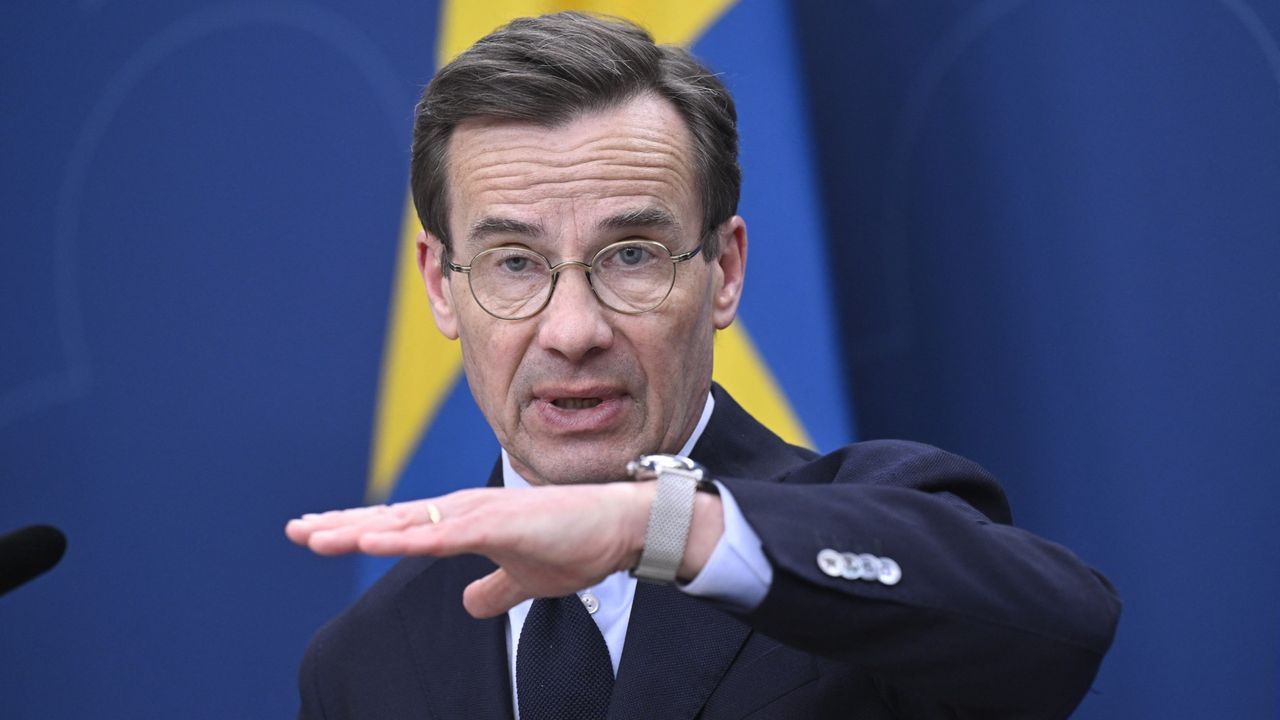
    A “deportation war” being waged by Sweden is “tearing British families apart”, said The Telegraph. Criticism is mounting over the country’s policies affecting Britons who made Sweden their home before Brexit.

    Why are Brits being deported?
    When the UK left the European Union in 2020, British citizens lost automatic right of residence status in Sweden. A temporary post-Brexit period when British citizens could apply for residence status ended on 31 December 2021.

    The last available data shows that as of 2024, there were 14,233 applications for post-Brexit residency in Sweden, of which just under 4,000 have been rejected. According to the Swedish government’s migration agency, 458 Britons have been deported or forcibly removed from Sweden so far. Many other cases remain in limbo.

    Who has been deported?
    The rejections include “disturbing cases” involving “vulnerable Britons”, said The Telegraph. Horace Mason, 74, who has lived in Sweden for 25 years and has dementia, was given 10 days to leave. According to reports, he applied for residency in time, but Swedish authorities say he did not supply all the necessary documentation.

    Joyce Thomas, a 78-year-old British widow who has been resident in Sweden for 22 years, was initially ordered to leave by September. She has since won a temporary reprieve pending an appeal, but “her plight remains the same with the threat of a deportation merely in abeyance”, said The Guardian.

    Is Sweden particularly harsh?
    Sweden’s refusal rate for residency applications from British citizens is three times higher than any other EU state and considerably higher than the bloc’s average of between 3% and 4%, according to the Foreign, Commonwealth and Development Office.

    A broader political backdrop is at play: Sweden’s government has adopted a tough immigration policy, largely due to the influence of the far-right Sweden Democrats, which is “outside the government but backs it in parliament”, said Reuters. Prime Minister Ulf Kristersson has said that increasing rates of re-migration is “high on my government’s agenda”.

    A UK Foreign Office spokesperson told The Telegraph that the British government “regularly raise concerns regarding Sweden’s protection of citizens’ rights” with Swedish authorities and the European Commission.


    Good day 🎸

    … for Oasis fans, after the Britpop legends appeared to confirm rumours of a 2027 tour, via a drone light show over Manchester. Following a week of teaser videos on social media, the illuminations over the city’s Joie Stadium last night displayed the band’s logo and the date and time of the expected tour announcement – 4pm on Monday.


    Bad day🥐

    … for overachieving, as experimental bakery Bread Ahead claims it’s being booted out of its original home for being “too successful”. Announcing a #SaveBreadAhead campaign, founder Matthew Jones said bosses at London’s Borough Market had told him his lease would not be renewed because the expanding brand has become too big.


    picture of the day

    Best foot forward

    A worker in Hyderabad adds a fresh coat of paint to the foot of a statue of the Hindu deity Ganesha, ahead of the Ganesh Chaturthi festival. The ten-day celebration, which begins on Monday, commemorates the birth of the elephant-headed god.

    Noah Seelam / AFP / Getty Images


    PUZZLES AND QUIZZES

    Quiz of The Week

    Have you been paying attention to The Week’s news? Try our weekly quiz, part of our puzzles section, which also includes sudoku and crosswords 

    Play here


    THE WEEK RECOMMENDS

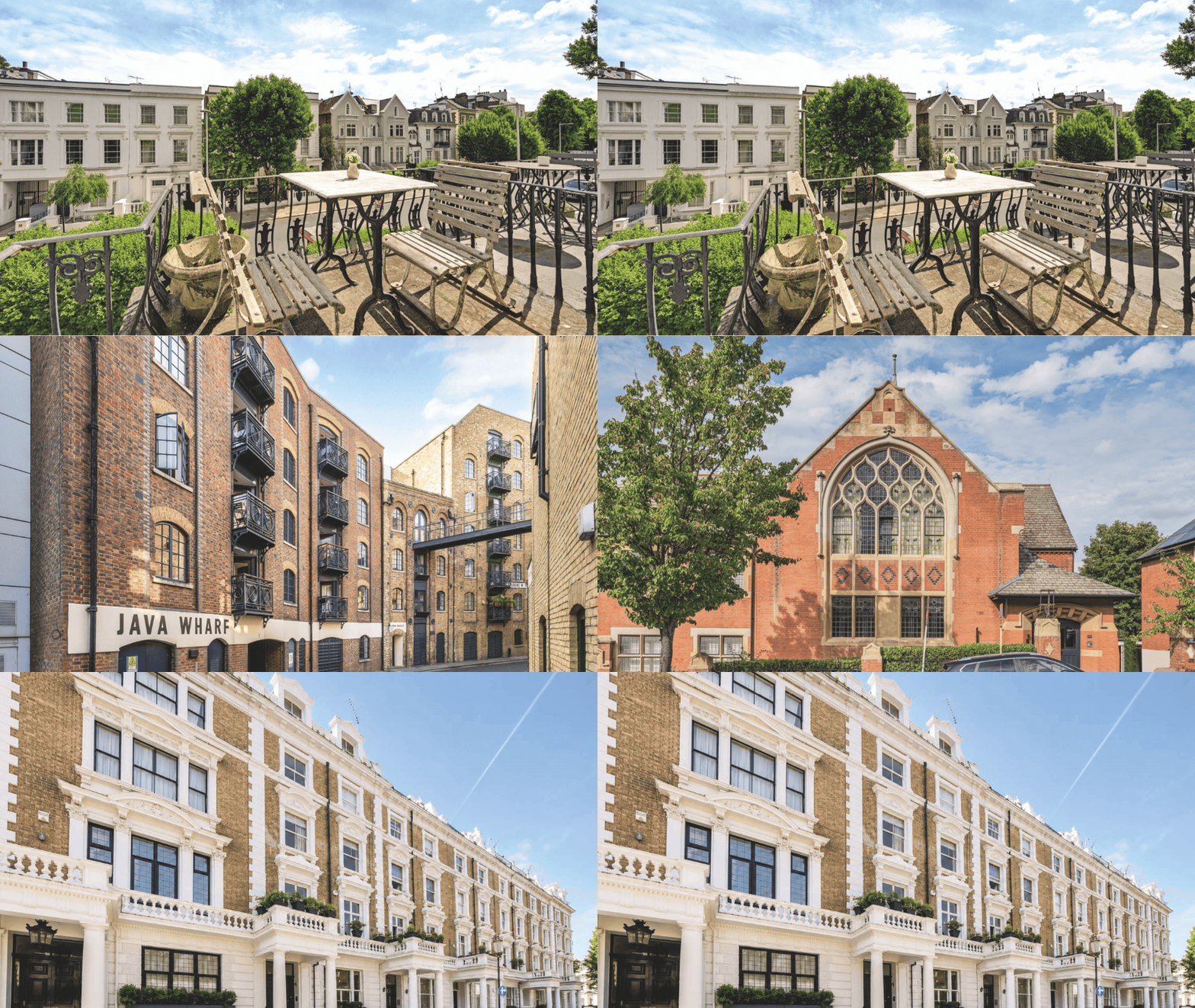
    Properties of the week: pieds-à-terre in London


    Alexandra Park: The Chantry, N22
    Charming split-level apartment within a church conversion of unique character, which retains the large original windows. The property is close to Muswell Hill Broadway and all the amenities at Alexandra Palace and park. Main suite, 1 further bed, family bath, semi-open-plan kitchen/recep. £375,000; Martyn Gerrard.

    Wapping: St Katharine’s Way, E1
    An impressive Grade II fourth-floor riverside apartment within a warehouse conversion, with lift, balcony, secure parking, concierge and well-maintained communal areas. Principal bed with en-suite and excellent storage, 1 further bed, shower room, recep, kitchen, parking space. £1.195 million; Knight Frank.

    Notting Hill: Pembridge Villas, W11
    First-floor apartment set within an elegant period conversion designed by Patrick Williams of Berdoulat, one of House & Garden’s Top 100 Interior Designers. The world-famous Portobello Road is a stone’s throw away, as is Westbourne Grove. 2 beds, family bath, open-plan kitchen and recep, balconies. £1.395 million; Savills.

    Bermondsey: Bermondsey Street, SE1
    Characterful Grade II house built in the early 1800s. The property is tucked within the Conservation Area and directly overlooks the green open expanse of Tanner Street Park. Believed to have been a watchmaker’s, the original shopfront remains intact. 2 beds, 2 baths, 2 receps, kitchen, courtyard and terrace. £1.35 million; Knight Frank.

    See more


    QUOTE OF THE DAY

    “A terrible death or an assisted death is not a choice. It’s a threat.”

    Labour MP Ashley Dalton, who has terminal cancer, addresses Parliament during today’s debate on the assisted dying bill, which was rejected by 286 votes to 270. Dalton opposed the bill, arguing that the focus should be on providing better end-of-life care.


    instant opinion

    Today’s best commentary

    Britain is turning on people who look like me, but white allies are silent
    Yasmin Alibhai-Brown in The i Paper
    “So many” Britons “now want their country to become dazzlingly white again”, writes Yasmin Alibhai-Brown. “Neo-Nazis and career racists have generated seemingly unstoppable momentum”, fuelling an “increase in abusive and racist behaviour” and a “normalisation of race, religion and ethnicity-based racisms”. Black and brown Britons “need our white allies to speak up against these trends” because “otherwise, I dread to think what this country will become”. Germany has already “taken the first step to neofascism” – “is that what you want for the UK”?

    How I got my mojo back and learnt to be hopeful
    Caitlin Moran in The Times
    “The past 15 or so years feel like a shock to the system,” writes Caitlin Moran. As life got increasingly crazy, I planned to flee, but then I realised it’s “really expensive to found your own remote civilisation, from scratch”. But once you delete the “AI slop, fake news, Russian propaganda bots, and red-faced billionaires screaming, ‘Traitor!’” from your phone, you realise that “you can’t change the world – but you can change your world”. Then, “you start to feel, well … hopeful”.
     
    9/11 25 years on
    The Morning Star’s editorial board
    “Twenty-five years ago the al-Qaida attacks on the US marked the start of the disastrous ‘war on terror’,” says the Morning Star. The wars in Afghanistan, Iraq, Libya, Syria and Yemen brought an “unbroken litany of mass murder, epic destruction, human misery and, for the US and British aggressors, ultimate defeat”. On this “sombre anniversary” of the 9/11 tragedies, “one lesson stands out clear above all – the anti-war movement and the millions who have supported it have been proved right”.


    word of the day

    Mackerel

    The contents in name only of some tinned “mackerel”, according to the Financial Times. Amid sustainability concerns, leading supplier Princes and a growing list of UK supermarkets have switched to “jack mackerel” – an oily fish that, despite its name, does not belong to the true mackerel family (Scombridae).


     Evening Review was written and edited by Rebecca Messina, Jamie Timson, Will Barker, Irenie Forshaw, Chas Newkey-Burden, Adrienne Wyper, David Edwards and Kari Wilkin.

    Image credits, from top: illustration by Stephen P. Kelly / Getty Images; Mauricio Lima / AFP / Getty Images; Jessica Gow / TT / TT News Agency / AFP / Getty Images; Noah Seelam / AFP / Getty Images; Savills / Anderson Rose / Martyn Gerrard/ Landstones
     

    Recent editions

    • Evening Review

      Trump stumps for data centers

    • Morning Report

      Trump dangles cash to voters

    • Evening Review

      Will the Fed defy Trump?

    VIEW ALL
    TheWeek
    • About Us
    • Contact Future's experts
    • Terms and Conditions
    • Privacy Policy
    • Cookie Policy
    • Advertise With Us
    • FAQ
    Add as a preferred source on Google Add as a preferred source on Google

    The Week is part of Future US Inc, an international media group and leading digital publisher. Visit our corporate site.

    © Future US, Inc. Full 7th Floor, 130 West 42nd Street, New York, NY 10036.