The Week The Week
flag of US
US
flag of UK
UK
https://cdn.mos.cms.futurecdn.net/flexiimages/jacafc5zvs1692883516.jpg

SUBSCRIBE & SAVE

Less than $3 per week

Sign in
  • View Profile
  • Sign out
  • The Explainer
  • The Week Recommends
  • Newsletters
  • Cartoons
  • From the Magazine
  • The Week Junior
  • More
    • Politics
    • World News
    • Business
    • Health
    • Science
    • Food & Drink
    • Travel
    • Culture
    • History
    • Personal Finance
    • Puzzles
    • Photos
    • The Blend
    • All Categories
  • Newsletter sign up Newsletter
  • The Week Evening Review
    A childless city, China’s oil victory and Erin Brockovich’s new crusade

     
    THE EXPLAINER

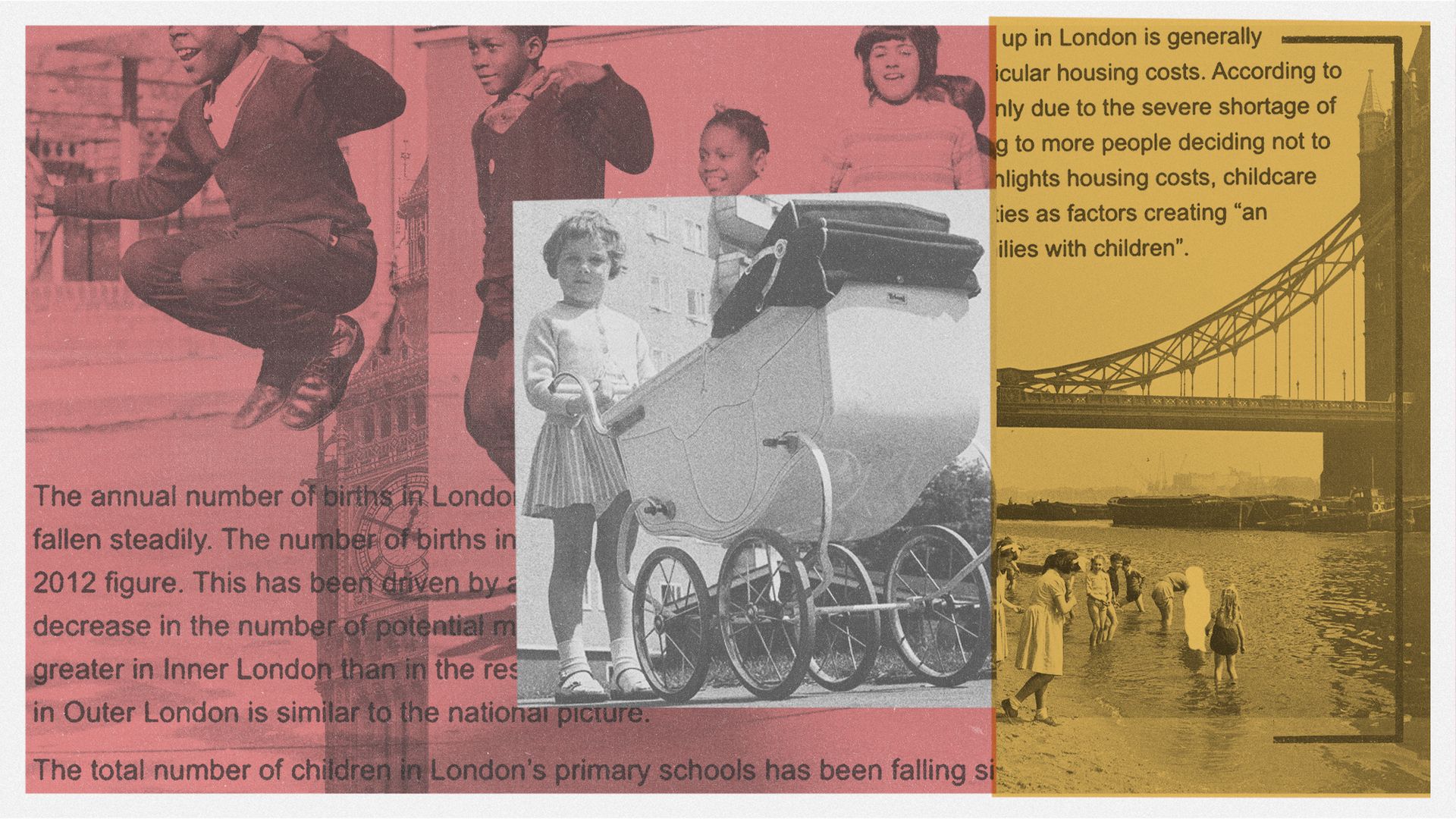
    London’s disappearing children

    “Nobody goes into politics, whatever party, to close a school,” said Islington Council leader Una O’Halloran. “There’s a generation that are not going to be having children, or maybe just having one child, and that’s really sad. You need children in the city.”

    As London’s birth rates decline while the costs of housing and childcare increase, the capital could become a “childless city”, a new report by London Councils has warned.

    How bad is it?
    Around 90 London schools have either closed or merged over the past five years due to falling numbers. In Hackney, primary school numbers are down by 15% since the pandemic and were projected to dip by another 14% in the five years up to 2029-30. Islington is set for the “sharpest decline in the country”, at 22%, said the report.

    In the decade up to 2023, London’s total population increased by more than 500,000, but the number of residents aged under 10 fell by 99,100, according to London Assembly Economy, Culture and Skills Committee data quoted in Bloomberg.

    Why is this happening?
    Many experts point to unaffordable housing and childcare as the principal causes of this decline. The London Assembly committee’s data showed that the typical London home costs 11.1 times the average annual salary, compared with 7.7 times across England. Rents are also 60% higher than for England as a whole, and nursery costs for a child under two in inner London are 34% higher than the national average.

    What about the wider picture?
    The London decline is “mirrored across cities in Europe and the US”, said Hugo Cox in the Financial Times. Primary school enrolment in Paris has fallen by a quarter in the last 10 years, and by 20% in New York.

    London councils are still hedging their bets and holding onto empty buildings in case of a revival, said Chris Smyth in the same paper. Hackney “planned for a pupil boom more than a decade ago”, only to face a decline. “It does not want to make the opposite mistake now.”


    TODAY’S BIG QUESTION

    Is China the winner of the Iran oil crisis?

    China is being quietly credited with keeping energy prices down during Donald Trump’s war with Iran, helping to prop up the global economy while cementing its own power on the world stage.

    By tapping into its huge reserves of oil, “China kind of saved the day” and helped avert a “doomsday scenario” when the Strait of Hormuz closure choked off 20% of global energy supply, said S&P Global Ratings economist Paul Gruenwald.

    What did the commentators say?
    China long depended heavily on imported crude to meet its ever-growing energy needs. But under President Xi Jinping, the country has spent billions of dollars amassing the world’s biggest stockpile of oil, as well as making huge investments in renewable energy.

    The Iran conflict has highlighted China’s success in transforming what was once a major weakness “into a surprising source of geopolitical power”, said The New York Times. This success has “big implications for the global energy industry, where oil producers like Saudi Arabia and the United States – not importers like China – have traditionally held most of the cards”.

    The Strait of Hormuz crisis has not only vindicated China’s “muscular energy policy” but could also prove a “major tool” in any future war over Taiwan, giving Beijing a buffer if Western powers block its fuel imports, said The Wall Street Journal. “Oil is not the Achilles’ heel we thought it was,” Michal Meidan, head of China energy research at the Oxford Institute for Energy Studies, told the paper. “I think a lot of people thought China was very, very vulnerable to oil supply disruptions. It’s not.”

    What next?
     China’s oil stockpile has helped the world avoid a far deeper energy crisis, “but that buffer may face a test as Beijing shows signs of resuming purchases”, said CNBC. Analysts warn that the drag on global growth from elevated oil prices could then deepen well beyond current estimates.


    QUOTE OF THE DAY

    “A rainbow coalition would be a disaster for this country.”

    Shadow work and pensions secretary Helen Whately reacts to new polling that suggests no party would win a majority if a general election were held now. The current Labour government is “bad enough” without coalition partners, the Tory MP said to Sky News.


    Poll watch

    Almost four in five Brits (79%) would support new taxes on private jet travel to help fill the Budget black hole. A More in Common poll of 3,039 people found that 56% think the wealthy aren’t contributing their fair share to the economy.


    IN THE SPOTLIGHT

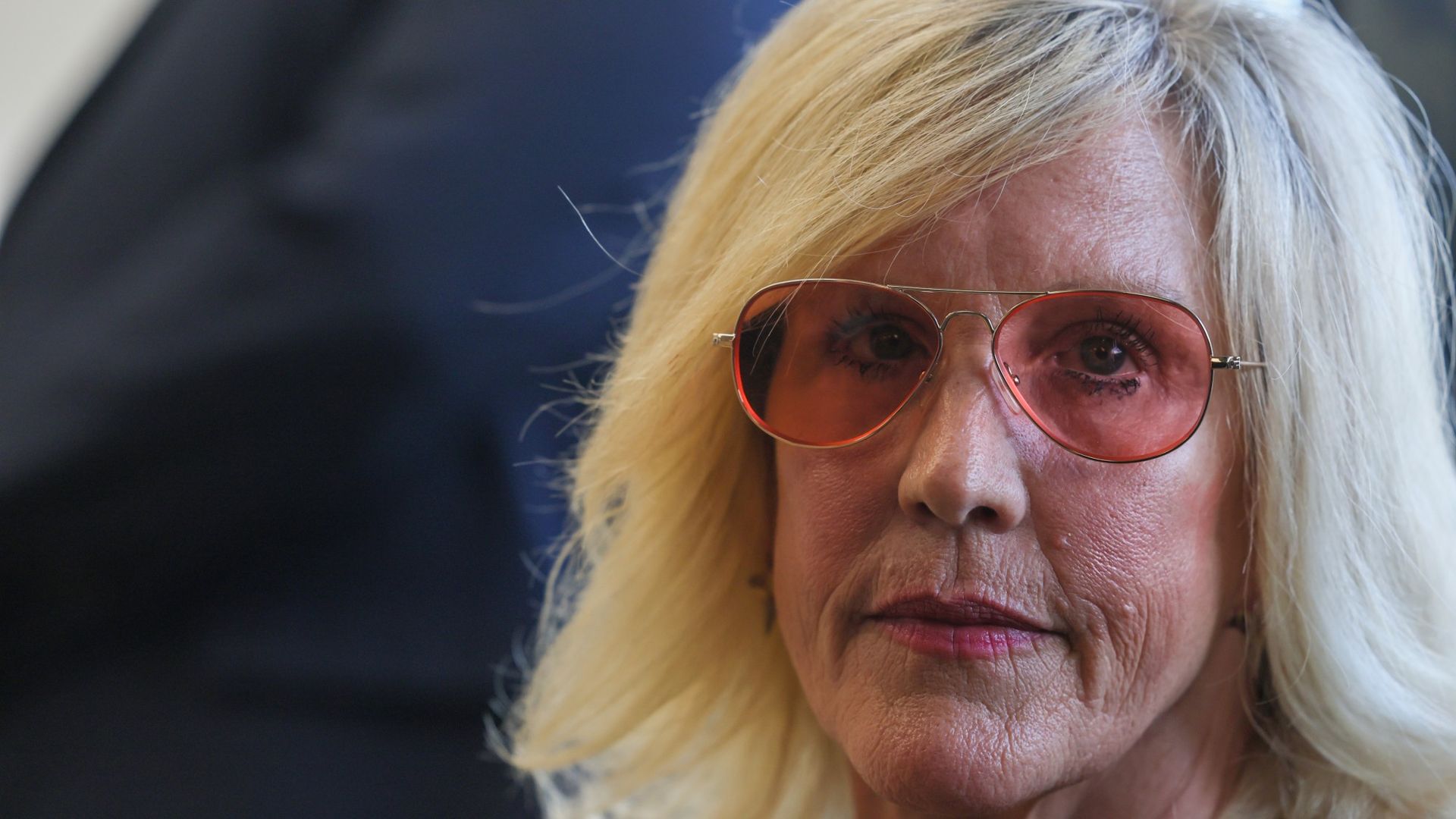
    Erin Brockovich’s second act as a data centre crusader

    More than a quarter of a century ago, her heroic struggle against a utility giant became an Oscar-winning Hollywood movie. Now, Erin Brockovich has turned her attention to the “rapid and opaque” expansion of artificial intelligence data centres across the United States, said El País.

    ‘Weapons against her’
    Brockovich was working as a file clerk at a Los Angeles law firm in 1992 when she uncovered evidence linking a rash of illnesses in the California town of Hinkley to high levels of hexavalent chromium in its drinking water. Her work ultimately led to utility giant Pacific Gas & Electric paying $333 million to the town’s residents, in what was then the largest settlement of a class-action lawsuit in US history.

    Dismissed as an “environmentalist with cleavage”, Brockovich “frequently saw her blonde hair and striking looks turned into weapons against her”, said El País. But even after becoming the subject of a Hollywood movie, she was determined not to be “absorbed into the machinery of pop culture”. This year she’s “turned her attention to a new target”, said Time: the AI data centres being built by tech giants including Meta, Google and Microsoft.

    ‘Hinkley on steroids’
    In April, Brockovich issued an online callout for anyone with concerns about data centres in their area to get in touch, said The Guardian. Within a month, 3,862 people had responded. She has since built a “chilling” map of AI data centres across the US: as of June, 33 were already operational, 68 were under construction, and 41 were proposed. In May, Utah gave approval for a centre twice the size of Manhattan.

    “This feels like Hinkley on steroids,” Brockovich told the paper. She alleges that data centres are being built without proper environmental assessments or community input, and have significant impacts on local resources, particularly water usage. She is seeking a case-by-case moratorium on the approval of new data centres until their impacts can be properly assessed and addressed.

    “You’re up against forces that have all the money and all the intelligence and all the bandwidth in the world,” she said. But Brockovich, said The Guardian, “won’t walk away until it’s over”.


    Good day 💸

    … for socialism, which is winning favour with a record number of Americans. Latest Gallup polling suggests that 43% of US adults view the concept positively – the first time approval has exceeded 40% since the tracking began in 2010. Approval of big business has hit a record low of 35%.


    Bad day🏡

    … for renters in the Wirral, home to the UK’s most cut-throat rental market, according to Rightmove. New rental listings in Wallasey and Birkenhead attracted an average of 30 enquiries each in July and August, almost three times the national average.


    PICTURE OF THE DAY

    Pomp and circumstance

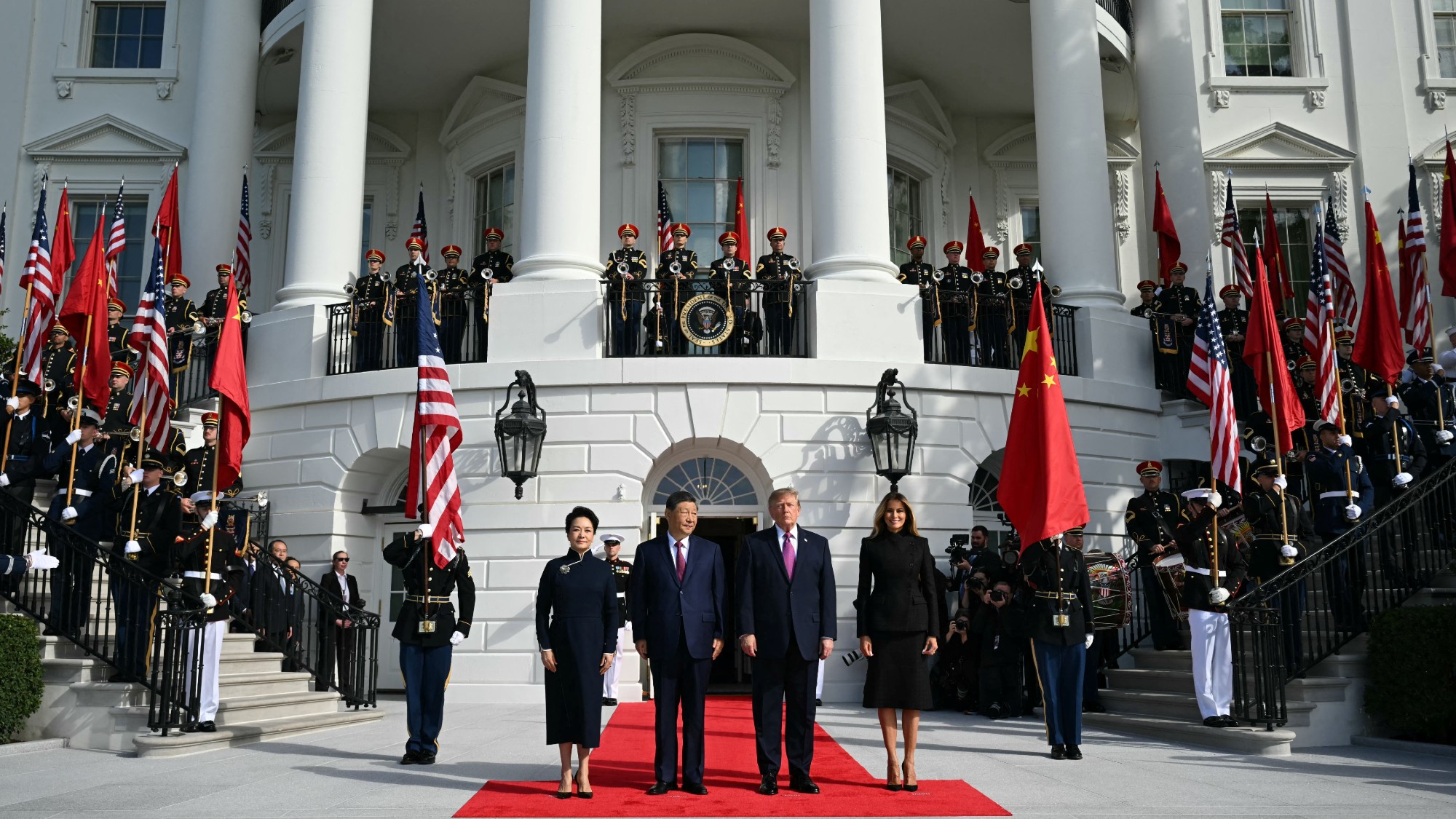
    Donald and Melania Trump pose alongside Xi Jinping and his wife Peng Liyuan on the South Portico of the White House as the Chinese president begins a three-day state visit to the US.

    Saul Loeb / AFP / Getty Images


    Puzzles

    Chain Word

    Try The Week’s daily word challenge in our puzzles and quizzes section, which also includes sudoku and Guess the Number

    Play here


    THE WEEK RECOMMENDS

    The best woodland walks around the UK

    Now is the time to experience the UK countryside “at its most colourful” as woodlands turn “gold, russet and crimson”, said Country Living. Here are some favourite spots to do just that.

    Cannock Chase, Staffordshire
    This “former medieval royal hunting forest” is mainland England’s smallest Area of Outstanding Natural Beauty and is also home to endangered species such as the nightjar and woodcock, said Daniel Graham on BBC Countryfile. In October, you might spot muntjac and red deer searching for the rare Chase berry, a “blueberry-cowberry hybrid”.

    Abinger Roughs and Shere Woodlands, Surrey
    The 300-year-old “ancient, gnarly oak trees” on Abinger Roughs are the perfect antidote to an “existential crisis”, said Alexandra Sims and Rhian Daly in Time Out. Fifteen minutes’ drive away, the equally tranquil Shere wood “feels like it should be much further away from a capital city than it is”.

    Castle Ward, County Down
    The “leafy deciduous woodland and historic follies” of this 800-acre estate on the shores of Strangford Lough hold many moments of excitement for autumn walkers, said Jen and Sim Benson in The Times. Look out for “light-bellied brent geese arriving from the Arctic in autumn and grey seal pups, born in November”.

    Allen Banks, Northumberland
    Allen Banks is “awesome in autumn”, said Sarah Baxter in The Telegraph. Cutting through “deepest Northumberland”, this riverside gorge is “flanked by the most extensive area of ancient woodland in the county”. Keep an eye out for “scampering red squirrels” amid the “fiery beech and oak spilling down the valley”.


    Statistic of the day

    30 million: How many lettuces will have to be binned due to an aphid outbreak on UK farms – around 30% of the total harvest, according to the British Leafy Salads Association. The trade body said a mild winter followed by a hot, dry summer had produced “ideal conditions” for the bugs.


    instant opinion

    Today’s best commentary

    Why your holiday is good news for the UK
    Chris Giles in the Financial Times
    Britain is “far less useless than it appeared” in Office for National Statistics data that left economists struggling to explain the country’s lack of productivity since 2009, writes Chris Giles. It turns out the financial crisis didn’t “wreak far more damage” here than in the rest of Europe, the US and Japan; the statisticians just failed to account for factors such as annual leave. The figures have now been revised, but the “accuracy of the economic picture still falls far short of what an advanced nation should expect”.

    I’m a lifelong surfer, the waves don’t scare me, travelling as a Jew does
    Rabbi Hayim Leiter in The Jerusalem Post
    As a keen surfer “who often works abroad”, I’ve had “the opportunity to search out beaches with great waves to ride”, writes Rabbi Hayim Leiter. But “I can no longer go to these places as myself”. Since October 7, “currents” of antisemitism have been “gaining momentum in Europe and beyond”. Now, when I’m in foreign lands and seas, I’m “hiding something beneath the surface: my Jewish identity”.

    The real shock in the Lindsay Clancy case is that the child-killer isn’t a man
    Deborah Frances-White on The Nerve
    “About 90% of homicides worldwide are committed by men”, so Lindsay Clancy’s case has provoked intense scrutiny, writes Deborah Frances-White. Mothers who kill infants are often affected by “severe postpartum psychiatric disorders”, which “is why women have come out in numbers to campaign” for Clancy. She was said to have been “begging for help” before killing her three young children, but she “was not heard”. To reduce violence by both sexes, “mental health and anger management” must be our “collective priorities”.


    word of the day

    Schaamlippen

    The Dutch word for labia, literally translating as “shame lips”. Women’s rights groups argue that the term reinforces historical stigma around the female body and are campaigning for officials, medical professionals and the media to adopt the more neutral “vulvalippen”. Leading Dutch dictionary Dikke van Dale has already agreed to add the more anatomical alternative. 


    Evening Review was written and edited by Rebecca Messina, Jamie Timson, Will Barker, Elliott Goat, Irenie Forshaw, Chas Newkey-Burden, Steph Jones, Natalie Holmes, Erica Jones and Kari Wilkin, with illustrations from Stephen P. Kelly.

    Image credits, from top: illustration by Stephen P. Kelly / Getty Images; Getty Images; Robert Gauthier / Los Angeles Times / Getty Images; Saul Loeb / AFP / Getty Images; birdsonline / Getty Images
     

    Recent editions

    • Evening Review

      The US-China AI feud

    • Morning Report

      Trump’s Iran indecision lands at UN

    • Evening Review

      Trump’s Greenland deal

    VIEW ALL
    TheWeek
    • About Us
    • Contact Future's experts
    • Terms and Conditions
    • Privacy Policy
    • Cookie Policy
    • Advertise With Us
    • FAQ
    Add as a preferred source on Google Add as a preferred source on Google

    The Week is part of Future US Inc, an international media group and leading digital publisher. Visit our corporate site.

    © Future US, Inc. Full 7th Floor, 130 West 42nd Street, New York, NY 10036.