The Week US The Week US
flag of US
US
flag of UK
UK
https://cdn.mos.cms.futurecdn.net/flexiimages/jacafc5zvs1692883516.jpg

SUBSCRIBE & SAVE

Less than $3 per week

Sign in
  • View Profile
  • Sign out
  • The Explainer
  • The Week Recommends
  • Newsletters
  • Cartoons
  • From the Magazine
  • The Week Junior
  • More
    • Politics
    • World News
    • Business
    • Health
    • Science
    • Food & Drink
    • Travel
    • Culture
    • History
    • Personal Finance
    • Puzzles
    • Photos
    • The Blend
    • All Categories
  • Newsletter sign up Newsletter
  • The Week Evening Review
    Leap seconds, Narendra Modi under pressure, and zoo safety

     
    THE EXPLAINER

    Calling time on the ‘leap second’

    The world’s timekeeping body had a gentle phase-out plan for the leap second “but now there is a spanner – or spinner – in the works”, said the Financial Times.

    The Earth has been rotating unusually rapidly for the past decade, meaning there’s a chance that, before the phase-out in 2035, we’d actually need a negative leap second – deleting a second, rather than adding one. This has never been attempted before and could “create mayhem in the digital time-stamped continuum”. So, the governing body of the International Bureau of Weights and Measures is this week urgently considering condemning the leap second “to an earlier grave”.

    What are leap seconds?
    “For millennia, a day has been defined as one full rotation of the Earth,” said physics and astronomy professor Vahe Peroomian on The Conversation. Ancient Egyptians were the first known civilisation to divide day and night into 12 parts each, establishing the 24-hour day. Astronomers then built the system of minutes and seconds that, centuries later, devices such as pendulum clocks and quartz watches were able to measure.

    But because the speed of the Earth’s rotation can fluctuate, defining a second as a fraction of a solar day is imprecise. In 1967, the General Conference on Weights and Measures adopted a new definition of a second based on the steady oscillations of the cesium-133 atom. To keep this new Coordinated Universal Time (UTC) in sync with Earth’s rotation, timekeepers then invented the leap second in 1972. Once the lag between astronomical time and UTC reaches a certain point, a leap second is inserted to realign them. This has happened 27 times since 1972, with the most recent leap second inserted in 2016.

    Why are they being phased out?
    Leap seconds have become “increasingly difficult to deal with in the computer age”, said ABC News. They can disrupt computer operating systems, which assume a day is always 86,400 seconds long, resulting in glitches and outages. But the prospect of the first negative leap second poses an even greater risk. “Many computer programmes assume all leap seconds are positive,” Setnam Shemar, the UK’s principal timekeeping scientist, told the FT. Removing a second could “result in a major technology failure in telecommunications or electricity grid networks or satellite navigation systems”.

    If they do decide to ditch the leap second, the world’s timekeepers will vote on introducing a “leap hour” instead. This could take “a millennium or more” to accumulate and, by then, life may be so different, there may be no need to adjust the lag at all.


    TODAY’S BIG QUESTION

    Cockroach Janta party: is Modi feeling the heat?

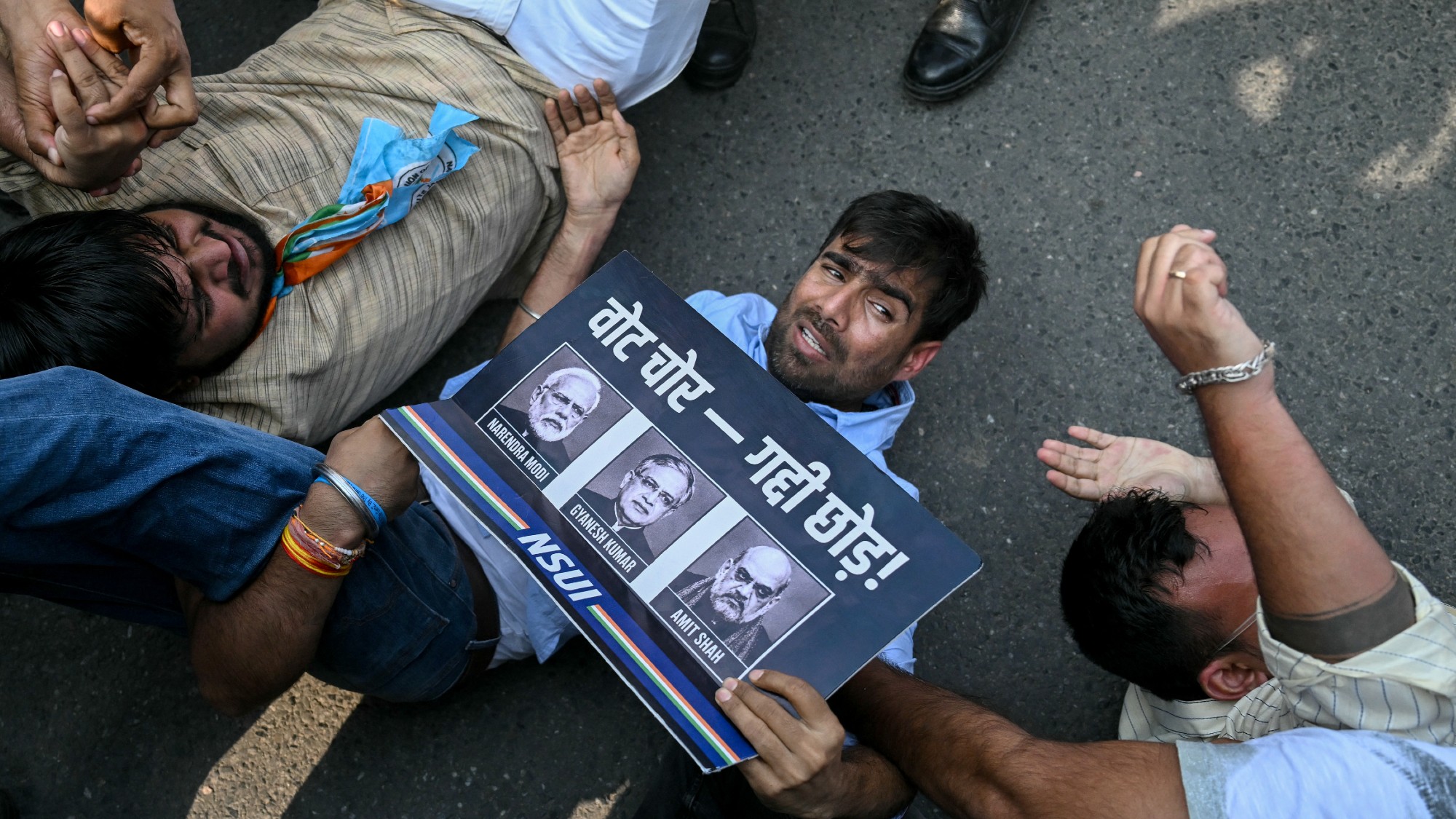
    Leaders of India’s Cockroach Janta Party have been detained after breaching a security cordon to demand the resignation of the country’s election chief over a controversial revision of electoral rolls. 

    The activists claim the deletion of 130 million names from voters’ lists was designed to benefit Narendra Modi’s ruling Bharatiya Janata Party, which he denies. The Election Commission of India insists the aim was to remove voters who have died, moved or cannot otherwise be verified, and that people can apply to be re-enrolled. Thousands of people, including prominent lawyers and journalists, were detained over the weekend during protests that show no signs of slowing.

    What did the commentators say?
    It will be “difficult” for Modi to “quell the turmoil”, said Andres Schipani and Jyotsna Singh in the Financial Times. The Cockroach Janta Party emerged as a student-led movement focusing on alleged examination irregularities but it’s now targeting the institution that “oversees elections in the world’s largest democracy”, making it harder for the prime minister to “find the right response”.

    If he concedes to the demands for Chief Election Commissioner Gyanesh Kumar’s resignation, Modi could open the door to wider questions about the legitimacy of his government, Ruchi Gupta, executive director of the Future of India Foundation, told the newspaper. This “government has a trust deficit that it needs to address”.

    “If you pluck a chicken one feather at a time, nobody notices,” said Vidya Krishnan on Al Jazeera, but Indian democracy has now been “stripped of its plumage”. Denying tens of millions of Indians their right to vote is an “exercise in bureaucratic fascism”.

    Even so, Modi “remains popular” among large swathes of the population, said Faisal Mahmud on Asia Times. His “cult-like charisma, organisational strength and electoral record cannot simply be wished away”, and allegations of electoral manipulation cannot “substitute for evidence”. But “the government’s handling of dissent has become an issue in its own right”.

    What next?
     “The youth will keep coming out,” Uday Bhanu Chib, president of the Indian Youth Congress wing of the opposition Indian National Congress party, told the FT. They’re “no longer afraid of this government”.


    QUOTE OF THE DAY

    “It suddenly became a little easier to breathe on many social media platforms.”

    Volodymyr Zelenskyy claims Ukrainian strikes on three data centres operated by Russian tech giant Yandex have resulted in a dramatic decline in bot activity. “A lot of people noticed” that “there was less hate, less division and fewer provocations”, he told the Warsaw Security Forum.


    Poll watch

    Three in five Americans oppose using prediction markets to bet on US elections, according to a Reuters/Ipsos survey of 4,506 adults. Only 13% approve of these wagers, amid legislative and judicial battles over how the growing prediction markets industry should be governed.


    IN THE SPOTLIGHT

    Zoo safety under microscope after fatal tiger attack

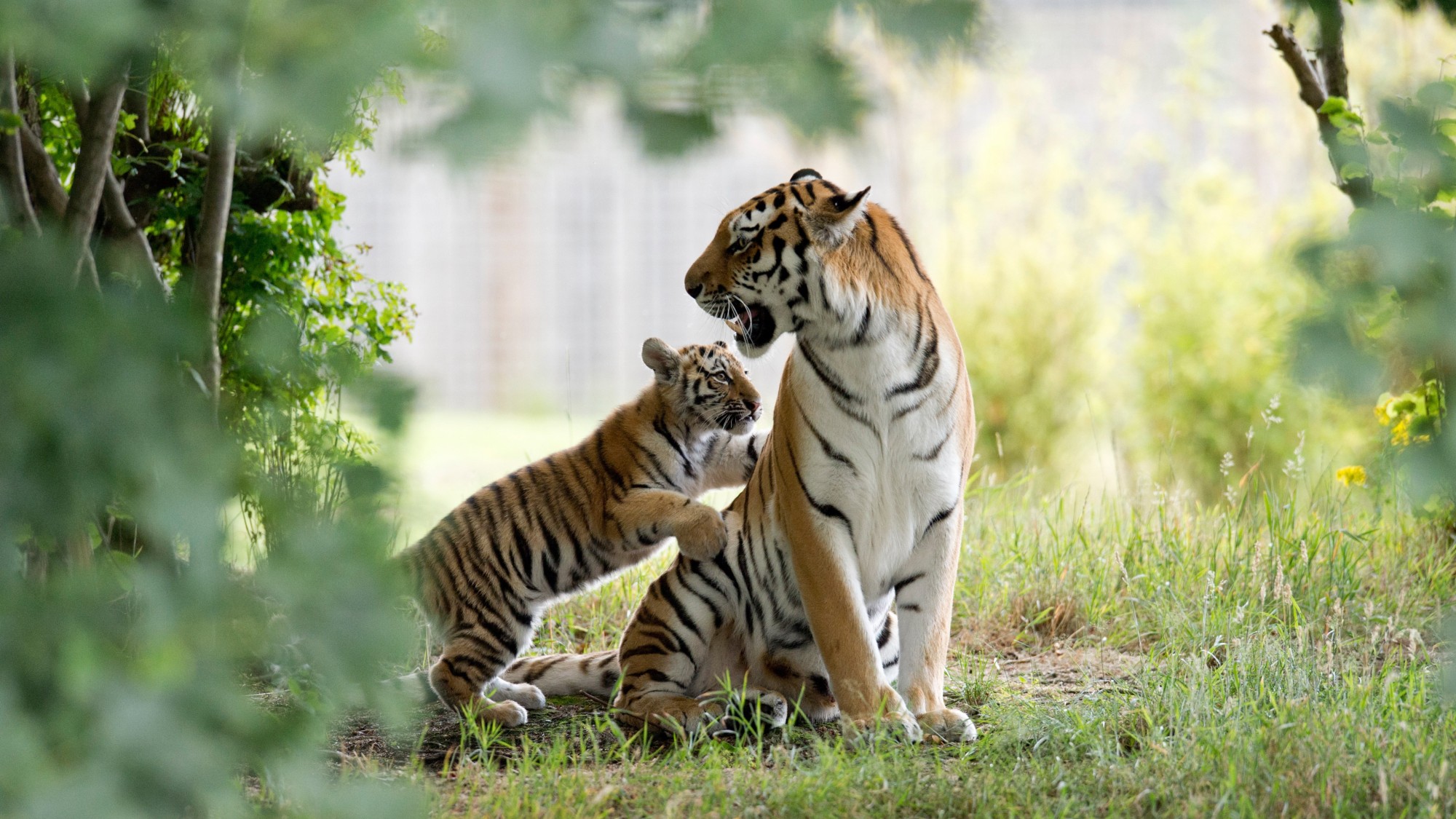
    The death of a man in Yorkshire Wildlife Park’s big cat enclosure has prompted a health and safety investigation by the City of Doncaster Council. William Chapman was killed by a Siberian tiger after he reportedly climbed over the barrier on Saturday.

    Some are calling for tighter security measures at wildlife parks, given similar high-profile incidents, but others argue that it is the changing behaviour of human visitors that poses a threat to their safety.

    ‘Deeply tragic’
    This is the “second serious incident at a UK zoo in just a few months”, said The Guardian. In June, a three-year-old boy was seriously injured in Cambridgeshire, after allegedly being thrown into a crocodile enclosure by a stranger. Police arrested a man in his 30s, but he was released after being “assessed as not being fit for interview”.

    Although Chapman’s death is “deeply tragic”, there are “millions” of visits to wildlife parks every year and such incidents are “vanishingly rare”, said Amy Dickman, professor of wildlife conservation at the University of Oxford. The “harsh reality”, however, is that it is “virtually impossible for zoos to stop people who are very determined to breach safety measures”.

    “Zoos are actually one of the safest places you can visit,” Jo Judge, chief executive of the British and Irish Association of Zoos and Aquariums, told the BBC. They undergo a “huge number” of risk assessments, as well as “full inspections every six years and periodic inspections every three”.

    ‘Props’ for content
    Zoo safety has not worsened, nor are the animals “somehow more dangerous”; “human behaviour itself has instead become a problem”, said The Telegraph. In the face of this human-led change, “zoos may now have to reflect not just on how they are run, but what they are even for”.

    It is “unarguable” that phones and social media have altered the relationship between animals and zoo visitors. Where people would once have been “happy to see a photograph” of a famous animal, now they are “desperate to put their own interactions with endangered species” online. Dangerous animals have become “props” for content and, all too often, individuals “endanger their lives” for clicks.


    Good day 👰‍♀️

    … for amicable break-ups, after Tobey Maguire officiated his ex-wife’s wedding in Hawaii at the weekend, just a month after their divorce was finalised. The Spider-Man star separated from Jennifer Meyer in 2016 after nine years of marriage, but they remain close. And Maguire and her new partner, music executive Geoff Ogunlesi, also “love each other so much”, Meyer told “The Inside Edit” podcast last year. 


    Bad day 🌡️

    … for French supermarkets, after hundreds were hit by hackers who raised temperatures in their fridges and freezers to up to 50C, spoiling food and sparking fires. Coopérative U and Carrefour are among the chains targeted by the cyberattackers, who appear to have hijacked software from Danish engineering firm Danfoss to remotely control the cold units. 


    PICTURE OF THE DAY

    Blast off

    A SpaceX Falcon 9 rocket launches an unpiloted Dragon spacecraft from Cape Canaveral Space Force Station in Florida. The cargo ship is loaded with research materials, spare parts and crew supplies for the International Space Station, and is due to arrive on Thursday.

    Cristobal Herrera-Ulashkevich / EPA / Shutterstock


    Puzzles

    Chain Word

    Try The Week’s daily word challenge in our puzzles and quizzes section, which also includes sudoku and Guess the Number

    Play here


    THE WEEK RECOMMENDS

    All aboard! The best railway station pubs

    “As Brits battle the country’s often-dire rail network”, said Time Out, railway pubs are sometimes the only thing keeping us “sane amid countless delays, cancellations and strikes”. For travellers at a loose end or in need of refreshment, here are some of Britain’s best places for a railway pint.

    Tap on the Line, London
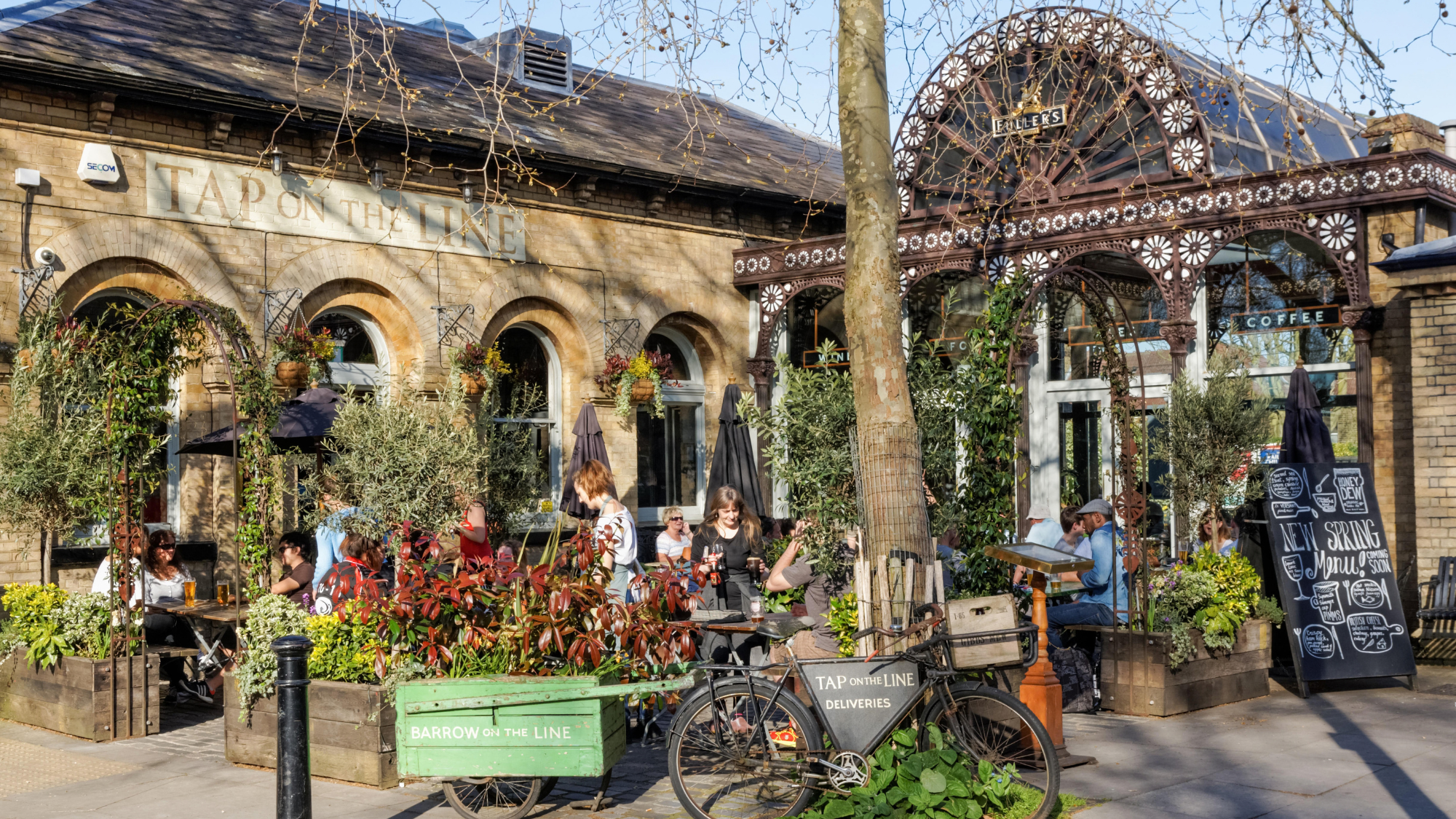
    “Perched right on the platform at Kew Gardens station is a charming little boozer,” said Secret London. London is known for its quirky pubs, but the Tap on the Line (pictured above) is “one of the very few places in the city where you can see your train coming, sink your pint, and still be on board by the time the train is ready to depart”. It also has regular live music, pub quizzes and a “wonderful atmosphere”.

    The Sheffield Tap, Sheffield
    This “Edwardian treasure” has been carved out of the station’s former “Refreshment Rooms”, said The Telegraph. It had been derelict since the mid-1970s, but after being given a second lease of life, it now oozes class, with a “mahogany bar, ornate barrel-plaster ceiling and terrazzo floor”. There’s even a brewery in the “magnificent inner room”, which used to be the first-class dining room.

    Bank of Conwy, North Wales
    This welcoming pub is opposite Conwy station at the “heart of this beautiful seaside town”, said The i Paper, and has “warmly embraced modern craft beer”, serving local favourites from Wild Horse Brewing down the coast at Llandudno. There are plenty of good cask ales on the pumps too, and the building itself is a “nicely restored Grade II-listed former bank”.


    Statistic of the day

    £478: How much an average family spends on sending one child to state school every year, according to research by the savings app Spring. Parents are generally asked to cough up more than 20 times a year for school events, activities and classroom resources.


    instant opinion

    Today’s best commentary

    Burnham says exactly what he thinks. It’s starting to cost him
    Kitty Donaldson in The i Paper
    Andy Burnham’s “loose-lipped pronouncements” on everything from the Man City scandal to Russian interference in Brexit have left his ministers scrambling to “clean up the mess” in subsequent media rounds, writes Kitty Donaldson. But is this just a case of a “leader who shoots from the hip” or is “what looks like indiscipline actually” a “premier trying to soften up the public to his way of thinking”? Either way, those forced to do the “verbal hokey-cokey” amid the fallout could start “taking pot shots”.

    Finally, positive discrimination done well
    Celia Walden in The Telegraph
    Met Commissioner Mark Rowley is right to say that recruiting from under-represented communities is an “operational necessity”, not an ideological box-ticking exercise, writes Celia Walden. Almost half of Londoners have an ethnic minority background, compared with 18% of Met officers, and Rowley argues that a more representative force will make “us better at protecting victims, catching criminals and preventing crime”. Many institutions have pushed DEI without being “entirely clear that it does anything useful”, but Rowley’s case is “strong enough to thaw cynicism and erode contempt”.

    Posing with books can lead to better things
    James Marriott in The Times
    “Performative readers” are advertising their “intelligence, sensitivity and moral superiority”, writes James Marriott. So many people “have given up reading for pleasure” that books are now “exotic objects” to “flaunt” for “social prestige”. Reading requires more “graft” than “passively scrolling” TikTok, and these posers want “not only to be seen as better people but also to be better people”. That’s “cause for hope”. Some who start out “wanting to look sexy or be improved” will end up “realising that reading” is “much richer than that”.


    word of the day

    Cat-flap

    Are we heading for a “cat-flap Brexit”, asked Gideon Rachman in the Financial Times. “Our feline friends have a habit of screaming to get out of the house – before demanding, with equal fervour, to come back in again.” While the “door to the EU is rather better fortified”, the push for re-entry is “gathering strength and momentum”. 


    Evening Review was written and edited by Hollie Clemence, Rebecca Messina, Irenie Forshaw, Harriet Marsden, Chas Newkey-Burden, Will Barker, Adrienne Wyper, Helen Brown, Natalie Holmes and Kari Wilkin, with illustrations from Stephen P. Kelly.

    Image credits, from top: illustration by Stephen P. Kelly / Getty Images / Shutterstock; Arun Sankar / AFP / Getty Images; Oli Scarff / AFP / Getty Images; Cristobal Herrera-Ulashkevich / EPA / Shutterstock; Marcin Rogozinski Zwei / Alamy
     

    Recent editions

    • Sunday Shortlist

      A damning Musk documentary

    • Saturday Wrap

      Justice at Cornell?

    • Evening Review

      The growing trade deficit

    VIEW ALL
    TheWeek
    • About Us
    • Contact Future's experts
    • Terms and Conditions
    • Privacy Policy
    • Cookie Policy
    • Advertise With Us
    • FAQ
    Add as a preferred source on Google Add as a preferred source on Google

    The Week US is part of Future US Inc, an international media group and leading digital publisher. Visit our corporate site.

    © Future US, Inc. Full 7th Floor, 130 West 42nd Street, New York, NY 10036.