The Week US
flag of US
US
flag of UK
UK
https://cdn.mos.cms.futurecdn.net/flexiimages/jacafc5zvs1692883516.jpg

SUBSCRIBE & SAVE

Less than $3 per week

Sign in
  • View Profile
  • Sign out
  • The Explainer
  • The Week Recommends
  • Newsletters
  • Cartoons
  • From the Magazine
  • The Week Junior
  • More
    • Politics
    • World News
    • Business
    • Health
    • Science
    • Food & Drink
    • Travel
    • Culture
    • History
    • Personal Finance
    • Puzzles
    • Photos
    • The Blend
    • All Categories
  • Newsletter sign up Newsletter
  • The Week’s Sunday Shortlist
    A poignant black comedy, a lavish Tolkien prequel, and a history of the California Gold Rush

     
    FILM REVIEW

    Wild Horse Nine

    Two CIA pals attempt an island getaway

    John Malkovich “has made a career out of blending fragility and menace,” and, at 72, he’s landed “the role of his career,” said Bilge Ebiri in NYMag.com. Martin McDonagh’s latest comedy drama casts Malkovich as Chris Carlisle, a dying CIA assassin who in 1973 is visiting Chile’s Easter Island with a protégé, played by Sam Rockwell, who just may kill his mentor before their getaway is over. “A melancholy hangout drama masquerading as a hitman comedy,” Wild Horse Nine is a film built around its lead’s “queasy charisma,” and Malkovich, playing an at once insouciant and rueful agent of U.S. imperialism, “has never been better.” Rockwell’s Lee Chesterfield “isn’t granted the same depth by McDonagh’s script,” said Nick Schager in The Daily Beast. But the younger actor, who won an Oscar for his work in an earlier McDonagh film, is “highly attuned to the rhythms of the filmmaker’s prose,” and “his chemistry with Malkovich is fantastic.” Unfortunately, Wild Horse Nine fails in its attempts to make a meaningful political point. Both Chris and Lee are operatives sent to Chile to help stage the coup that will topple socialist president Salvador Allende, yet the potential gravity of that storyline is “undercut by the material’s increasingly cartoonish tone.” Still, “the fiendish ingenuity” of the writer-director’s plotting allows it to finish with “a bloody yet strangely moving climax in which McDonagh continually subverts expectations,” said David Rooney in The Hollywood Reporter. Once again, he’s displayed “a masterful ability to offset corrosive dark comedy with searing poignancy.”


    tv review

    The Lord of the Rings: The Rings of Power

    It’s Sauron’s time. The lavish prequel to J.R.R. Tolkien’s The Lord of the Rings returns for a third season to a Middle Earth at war. Following the fall of the elven realm of Eregion, and in the wake of a scorched-earth campaign by his army of orcs, Tolkien’s Dark Lord is firmly entrenched in his tower at Mordor, where he works tirelessly to forge the One Ring and achieve the consummate power he craves. In disarray, Middle Earth’s remaining free people—dwarves, men, elves, and wizards—must band together in a fight to stop him. Wednesday, Nov. 11, Prime 


    FOOD & DRINK

    Wine: Revamping Zinfandel

    “Don’t blame the grape for what people used to do with it,” said Ray Isle in Food & Wine. The California Zinfandels of old were big, lush, and boozy, but these days, producers are using the grape for “exciting” reds that “manage to be both luscious and balanced, full of berry fruit and spice.” 

    2023 Monte Rio Cellars Old Vines Lodi Zinfandel ($25)
    This “lightly herbal, berry-rich” Zin features “light tannins and buoyant flavors,” with a complex, “gentle tobacco note on the finish.”

    2022 Hobo Wine Co. Dry Creek Valley Zinfandel ($26)
    “Minimal new oak” allows this wine’s “bright strawberry and cherry fruit flavors” to really shine through. 

    2025 Scar of the Sea Old Vine Lopez Vineyard Zinfandel ($36)
    At a relatively light 13% alcohol, this organic offering is “dark, juicy, and full of spicy strawberry and boysenberry flavors.”


    BOOK OF THE WEEK

    The Rush: California Gold, the Civil War, and the Making of the Modern World

    by Nathaniel Philbrick

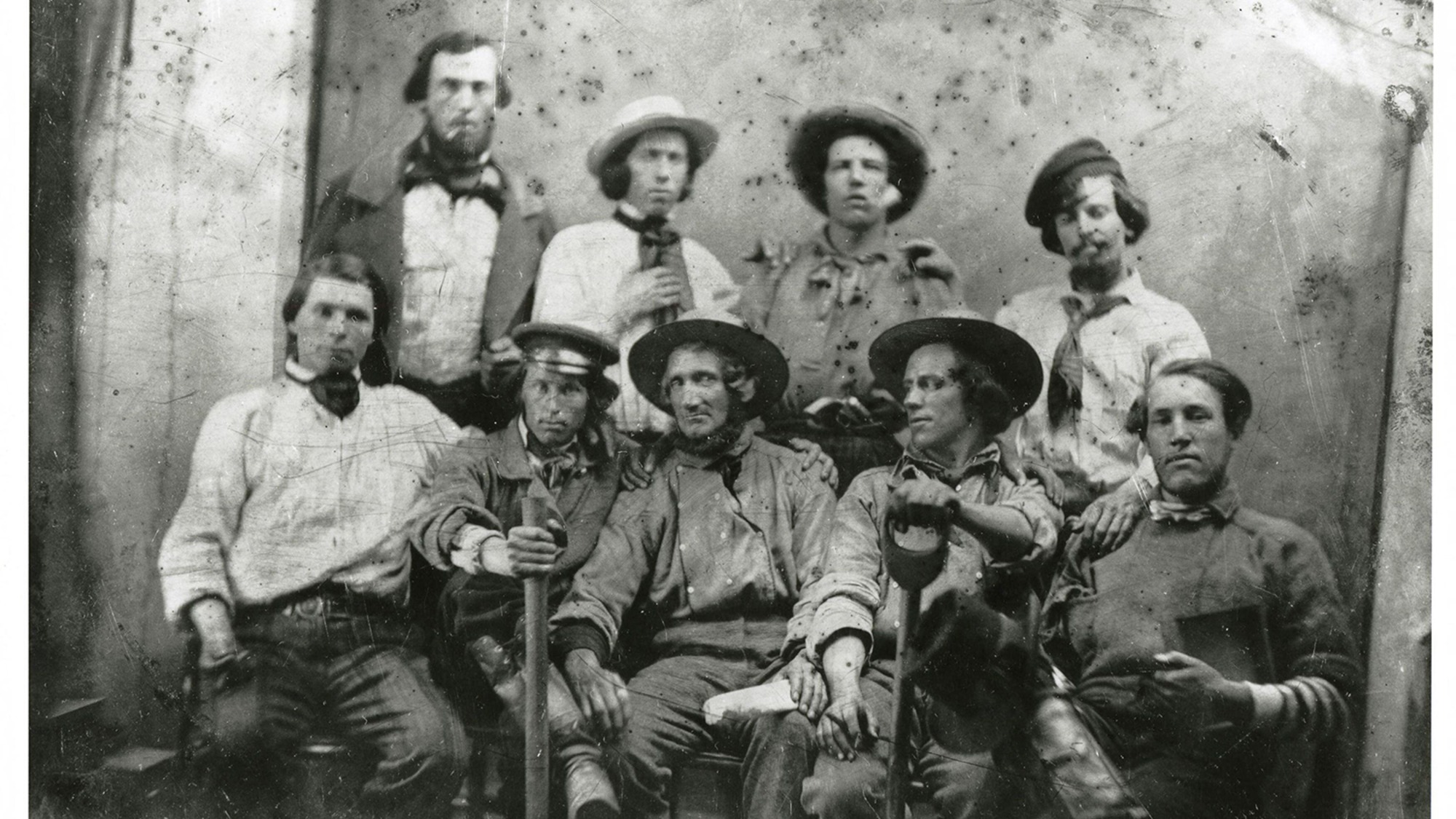
    “The Gold Rush is a fascinating saga, especially in the hands of so capable a chronicler as Nathaniel Philbrick,” said Richard Snow in The Wall Street Journal. The bestselling author of In the Heart of the Sea and three George Washington books turns his gaze to the prospecting dash—second only to the Civil War as the defining event of 19th-century America. It all began in 1848, when carpenter James Marshall noticed something sparkly in the channel below the California sawmill he was building. By the following year, more than 50,000 fortune seekers from every continent had arrived, hunting the flakes, nuggets, and veins of gold spread along 150 miles of the Sierra Nevada. Philbrick chooses “as our inaugural guide to gold country” one Vicente Rosales, a highhearted Chilean who kept observant diaries of the madness he witnessed as he sought his own fortune, if unsuccessfully. 

    Philbrick’s “engrossing” tale recounts “the birth of California, and the way gold and greed remade the nation,” said Hamilton Cain in The Boston Globe. The influx of prospectors and those profiting off them spawned cities including San Francisco and Sacramento, and, by 1850, California, newly taken from Mexico, had joined the union. The battle for the heart of the new state is reflected in its two maiden senators. Staunch slavery opponent John Frémont duked it out with William Gwin, a former plantation owner who sought to cleave off Southern California as its own slave state. Conjuring “time and place in lush detail,” Philbrick “grounds California’s fractious debates in human stories,” including those of Samuel Brannan, the con man who co-founded Sacramento; the murderous judge David Terry; and Native women victimized within their own homeland. And the author “spins his tale with aplomb, hitting his notes just so.” 

    The Rush is “a sprawling book, characters and stories spilling out everywhere, as dense with claims as the goldfields it describes,” said Kathryn Schulz in The New Yorker. Woven throughout are two dominant ideas: The scramble for wealth, labor, land, and power contributed to the onset of the Civil War, and the rush birthed a new, distinctly American taste for novelty and transformation that still informs our character. Sadly, Philbrick is “not particularly convincing about either of these claims,” which are “a little rickety” and “too different to comfortably coexist in a single book.” The Rush is “at its best when it simply shows us this mayhem as it unfolded in a specific place and period,” not when using it to illuminate the present. After all, “the past is its own kind of gold— abundant, difficult to access, inordinately valuable—and sometimes it is enough to let it shine.”


    OBITUARY

    Patrick Stewart

    The Shakespearean actor who brought gravitas to Star Trek

    For generations of fans, Patrick Stewart was the voice of authority. Over more than 60 years on stage and screen, Stewart took command as Shakespeare’s Macbeth, Claudius, Prospero, and even Othello, and embodied intelligence and compassion as Captain JeanLuc Picard on Star Trek: The Next Generation and as Charles Xavier, aka Professor X, leader of Marvel’s X-Men. He delighted in subverting that stately image by playing against type, including as a vicious neo-Nazi in 2015’s Green Room and the poop emoji in 2017’s The Emoji Movie, and by goofing off on red carpets and talk shows with his lifelong friend Ian McKellen. Widely regarded as one of the most accomplished British actors of his era, Stewart escaped a tormented childhood to attend the prestigious Bristol Old Vic Theatre School at age 17 and spent the rest of his life as a performer. “Acting was my only means of self-expression,” Stewart said in 2003. “The first time someone put me on a proper stage, I experienced the safest environment I had ever been in.” 

    Despite his regal bearing, Stewart “was born into poverty,” said The Times (U.K.). Raised in a West Yorkshire household without an indoor toilet or hot water, he had an “emotionally distant” father, an alcoholic who often violently assaulted Stewart’s mother. Stewart did poorly at school until age 12, when his teacher Cecil Dormand had the class read The Merchant of Venice aloud; Stewart was Shylock. “I barely understood a word,” Stewart said later, “but I loved the feel of the words and sounds in my mouth.” Dormand began casting him in plays, secretly paid for him to take an Easter-break drama course, and encouraged him to pursue acting as a career. In 2021, Stewart called him “the most significant person in my life,” saying, “he saved me.” 

    Stewart soon “shed his Yorkshire dialect” and developed a “commanding baritone voice,” said The New York Times. Already bald Farmworkers called Dolores Huerta “la Pasionaria”—the “passionate one.” The co-founder, alongside Cesar Chavez, of the United Farm Workers union was fearless in her work to win labor rights for the immigrants who endured dangerous, demeaning conditions harvesting the nation’s crops. Just 5-foot2, Huerta faced down police and strikebreakers; she had her tires slashed and her home broken into and was arrested 22 times. Police beat her severely during a peaceful protest in 1988, sending her to the hospital with a ruptured spleen. Yet not all the threats to her safety came from outside the movement. Earlier this year, when several women alleged that Chavez had sexually abused them, Huerta said that she too had been raped by him in the late 1960s. She stayed silent because she “didn’t want to hurt the movement,” she said. “Building the movement was my life’s work.” Huerta was born in New Mexico to Mexican American parents who “both played a major role in her views on justice,” said Time. Her father was a coal miner and union organizer, and after her parents’ divorce, her mother opened a cheap hotel for farmworkers in Stockton, Calif. Dolores, a star student, trained as a teacher but decided, she later said, that she “could do more by organizing farmworkers than by trying to teach their hungry children.” She by age 19 from hereditary alopecia, he sometimes donned wigs onstage but was also able to play roles older than his years. Joining the Royal Shakespeare Company at age 25, he appeared in Hamlet, King Lear, and The Taming of the Shrew, and by the 1970s, he was also moonlighting with “substantial roles” in British TV series such as Fall of Eagles and I, Claudius. In 1979, he won an Olivier Award for his performance as Enobarbus in an RSC production of Antony and Cleopatra. 

    Despite steady work in the U.K., Stewart “was unfamiliar in America when he was given command of the USS Enterprise,” said The Hollywood Reporter. The Los Angeles Times described him at the time as an “unknown British Shakespearean actor,” and even Star Trek creator Gene Roddenberry had doubts that fans would accept a middle-aged Brit playing the French captain. But Stewart imbued Picard with such moral power that the role ended up having global resonance. The Next Generation ran for seven seasons, from 1987 to 1994, earning 58 Emmy nominations and winning 19. Leadership courses now use Picard as a model to aspire to. 

    “It is hard to emphasize enough how dramatically Stewart’s life changed” after Star Trek, said Variety. He became a major Hollywood star, playing Professor X in eight Marvel blockbusters and reprising Picard in four feature films. Still, “his best dramatic performances” in this later period came “on the stage,” said The Guardian. He played Macbeth on Broadway, won another Olivier Award for playing Claudius in a 2008 RSC production of Hamlet, and starred with McKellen in a touring production of Waiting for Godot. Though his final stage performance was in 2016, he will appear as Professor X in next month’s Avengers: Doomsday. “I can’t imagine ever officially retiring,” Stewart said earlier this year. “I’ll always and forever be an actor.”




    Sunday Shortlist was written and edited by Susan Caskie, Ryan Devlin, Chris Erikson, Matt Prigge, and Scott Meslow.

    Image credits, from top: Searchlight Pictures; Amazon MGM Studios; Alamy; Getty
     

    Recent editions

    • Saturday Wrap

      Curtains for Trumpism?

    • Evening Review

      What the midterms mean for Israel

    • Morning Report

      Newsom empties death row

    VIEW ALL
    TheWeek
    • About Us
    • Contact Future's experts
    • Terms and Conditions
    • Privacy Policy
    • Cookie Policy
    • Advertise With Us
    • FAQ
    Add as a preferred source on Google Add as a preferred source on Google

    The Week US is part of Future US Inc, an international media group and leading digital publisher. Visit our corporate site.

    © Future US, Inc. Full 7th Floor, 130 West 42nd Street, New York, NY 10036.