The Week US The Week US
flag of US
US
flag of UK
UK
https://cdn.mos.cms.futurecdn.net/flexiimages/jacafc5zvs1692883516.jpg

SUBSCRIBE & SAVE

Less than $3 per week

Sign in
  • View Profile
  • Sign out
  • The Explainer
  • The Week Recommends
  • Newsletters
  • Cartoons
  • From the Magazine
  • The Week Junior
  • More
    • Politics
    • World News
    • Business
    • Health
    • Science
    • Food & Drink
    • Travel
    • Culture
    • History
    • Personal Finance
    • Puzzles
    • Photos
    • The Blend
    • All Categories
  • Newsletter sign up Newsletter
  • The Week Evening Review
    Trump pressures Ukraine, Netanyahu on the defence, and F1 heads to Rwanda

     
    TODAY’S BIG QUESTION

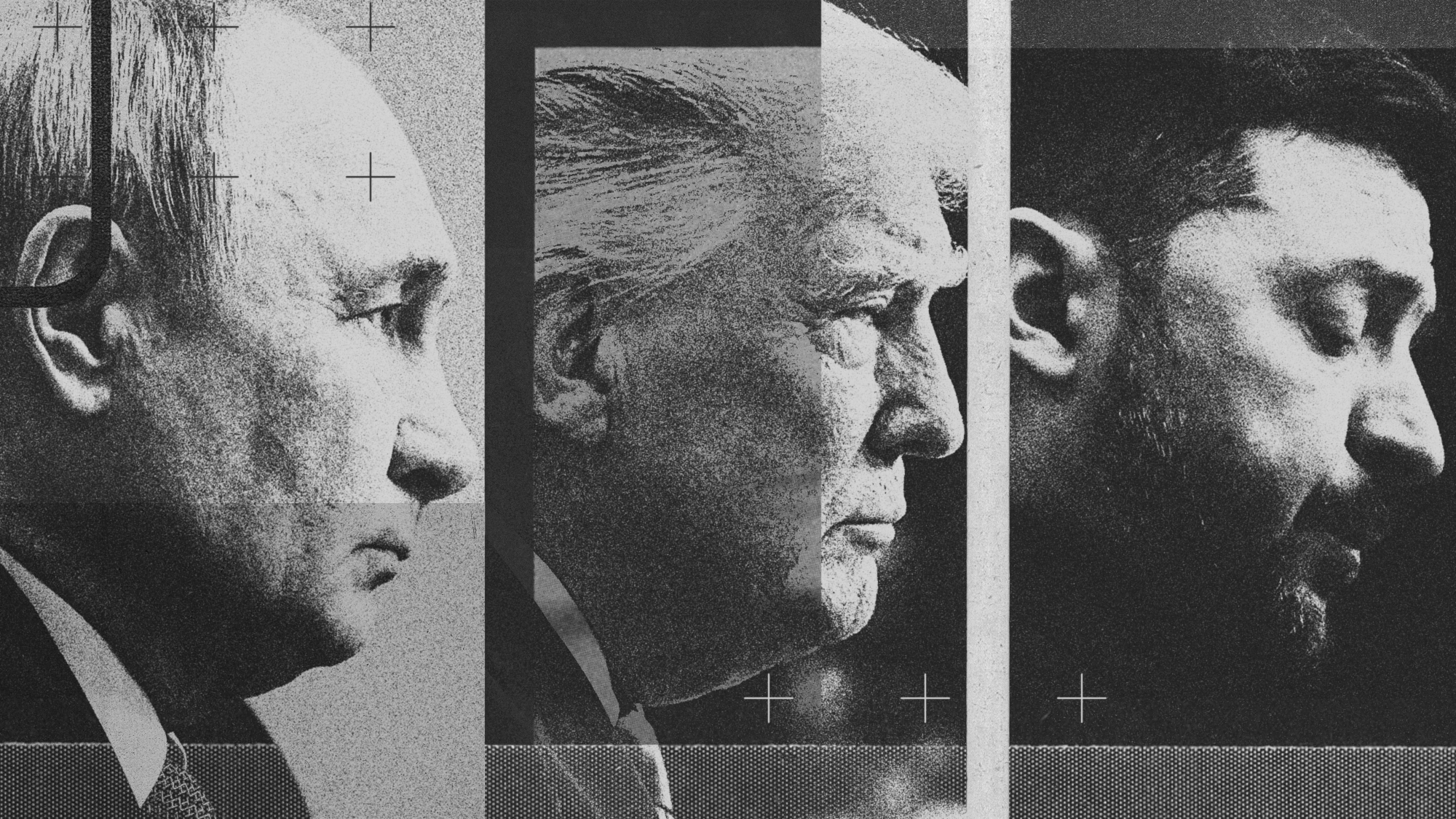
    Can Ukraine survive without Trump’s support?

    Donald Trump’s proposed “energy ceasefire” between Russia and Ukraine has been criticised as unfair, with the US leaving Kyiv significantly weakened as winter draws near.

    What did the commentators say?
    Trump is “pressuring Ukraine to give up the best tool it has for fighting back”, said The New York Times – its attacks on Russian oil refineries. Ukraine “effectively has no operational oil refineries”, so “this ceasefire, such as it is, would really only tie the hands of one party”. The deal “comes at a particularly bad time” for Kyiv, which is “facing a critical shortage of air defences” as Russia steps up efforts to target Ukraine’s civilian infrastructure, “including, crucially, its energy infrastructure”.

    A Ukrainian government source said American officials warned that unless Kyiv stopped its drone assaults on Russian oil refineries, the US would block weapons shipments provided through the Prioritised Ukraine Requirements List. Under the scheme, Ukraine has received “about $10 billion worth of American weapons” paid for by Nato allies and partners, said The Economist. This is “a dangerous moment for Ukraine”.

    Trump’s past behaviour shows his threats are “far from hypothetical”, said Sasha Vakulina on Euronews. He has “demonstrated how quickly Washington could use security cooperation as a source of political leverage” and “how dependent Ukraine remained on American capabilities”. US intelligence is “crucial to Ukraine’s ability to anticipate Russian attacks” and it’s “unclear how far European allies could compensate should another American suspension come into force”.

    Yet this “broader shift” by Trump “away from pursuing an elusive comprehensive peace agreement” in favour of a mutual energy ceasefire might “ultimately be beneficial to Kyiv”, said Eric Ciaramella on Foreign Affairs. The US president has “revealed a potential way forward” in which Ukraine can do whatever it wants to Russia as long as it avoids hitting its refineries.

    What next?
    Volodymyr Zelenskyy has said “repeatedly” that Ukraine would halt its strikes on Russian oil refineries and other energy facilities if Moscow “did the same”, said the BBC. But Moscow said Ukraine does not deserve the “respite” brought by a ceasefire, which would allow Europe to “pump” more weaponry into Kyiv’s arsenal.


    THE EXPLAINER

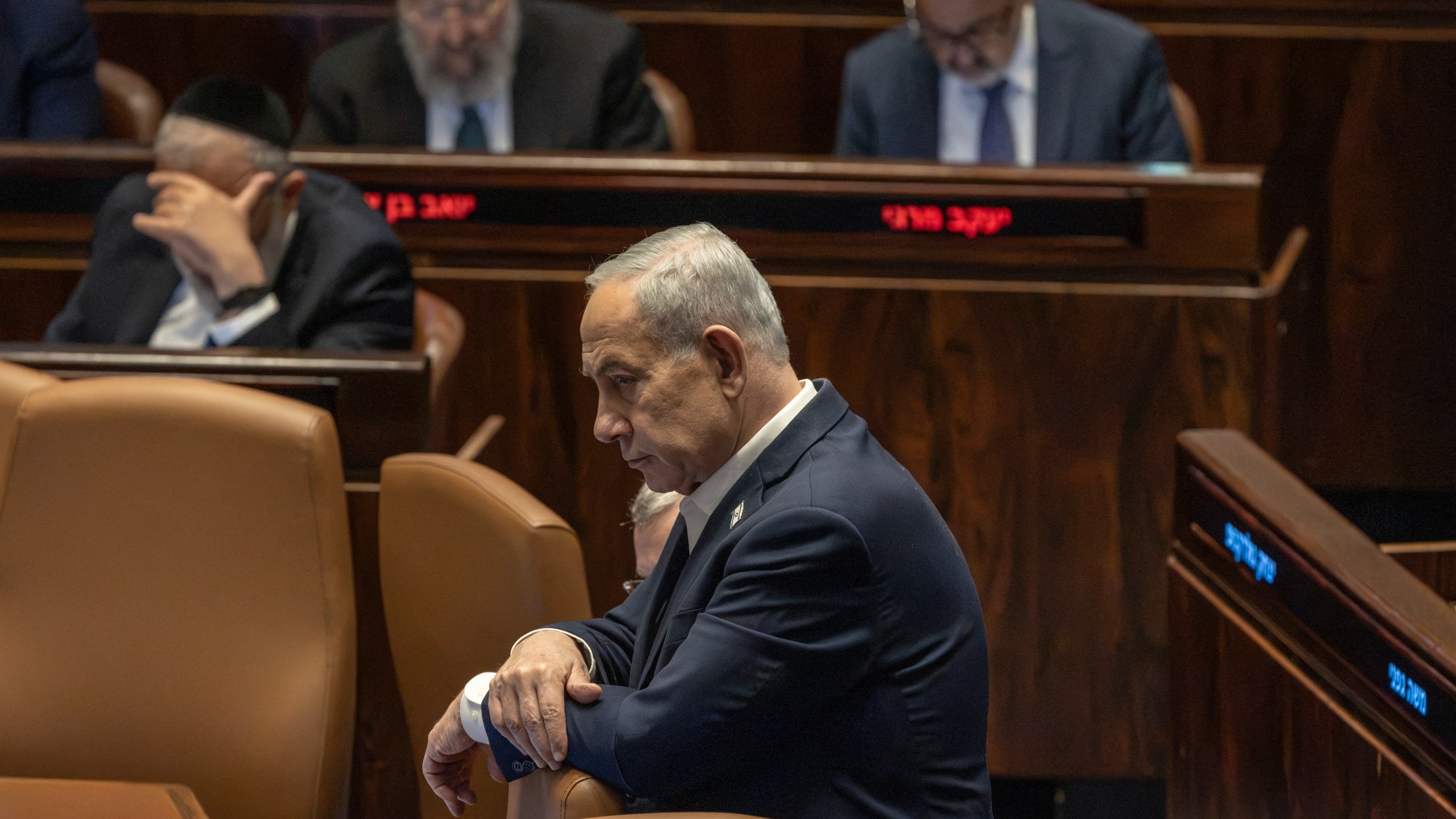
    The 7 October claims dogging Netanyahu

    “Netanyahu knew.” That was the verdict of Israeli newspaper Haaretz on allegations that Benjamin Netanyahu was warned about the 7 October attacks. The longtime prime minister is on the defensive less than 30 days before crucial elections, amid a string of claims that Arab officials told him a violent assault was being plotted. Netanyahu has dismissed the reports as an “absolute lie” and threatened to sue the paper.

    What are the claims?
    The allegations “began to trickle out” last month, when Haaretz published an excerpt from a book called “Hostages: 843 Days of Abandonment”, said The Washington Post. Written by two Israeli journalists, the book details an encrypted call reportedly made by the Emirati president, Mohamed bin Zayed Al Nahyan, also known as MBZ, less than two weeks before 7 October 2023 to warn Netanyahu about a planned attack. Netanyahu did not pass on the warnings to his security aides, according to the journalists, Shlomi Eldar and Ruth Yuval.

    The PM also got an attack warning from Egypt’s intelligence chief, Abbas Kamel, according to The Wall Street Journal. Kamel is said to have flown to Israel to inform security officials in person that Hamas was planning a major assault and then allegedly phoned Netanyahu just days before 7 October.

    What does Netanyahu say?
    Netanyahu has strongly denied ever receiving any warning of an attack. The Israeli leader said the report that he was warned by MBZ was an “absolute lie” and denies having spoken to the Emirati leader at that time.

    Netanyahu has tried to “shift the blame” for not being alerted of the attacks to the former head of Israel’s internal security service, Ronen Bar, said Al Jazeera. Bar announced last month that he would sue the PM, a “longtime political nemesis”, for defamation over the claims.

    How might they affect the election?
    Polling suggests the events surrounding the attacks, and “questions over responsibility for security failures that preceded them”, are “important issues” for voters ahead of this month’s parliamentary elections, said Al Jazeera. Many of Netanyahu’s electoral rivals have promised to immediately establish an independent commission of inquiry if elected. 


    QUOTE OF THE DAY

    “You don’t get to take a man from his family. You don’t get to take his very life, his whole future from him, and just walk away from it. Especially when that man is Tupac Shakur.” 

    Judge Carli Kierny addresses Duane “Keffe D” Davis before sentencing him to at least 40 years in prison for orchestrating the 1996 drive-by shooting of Tupac Shakur. The 63-year-old said he would appeal the Las Vegas court’s guilty verdict.


    Poll watch

    Almost half (48%) of Brits would not fight for their country under any circumstances, according to an Ipsos poll of 1,090 adults. Just over a third (35%) said they would, while the rest were unsure. 


    IN THE SPOTLIGHT

    F1 comes to Rwanda

    Formula 1 will race in Africa for the first time since 1993, as Rwanda lands a 10-year deal to stage the African Grand Prix from the early 2030s. Both Morocco and South Africa also harboured ambitions to host a Grand Prix on the continent, but Rwanda was the first to produce a coherent and viable plan. Yet the country is a “political hot potato”, with “question marks” over its human rights record, said The Telegraph. Some critics of the “landmark deal” are accusing F1 organisers of being “morally tone-deaf”.

    ‘Expanding markets’
    Over the past decade, F1 has “dramatically changed its approach” to its racing calendar and started “to focus on expanding markets” amid a “boom in popularity”, said The Athletic. Three races are now run in the US, and this year’s Bahrain Grand Prix was hosted in Malaysia. With more than 100 million fans across Africa, a return to the continent has been on the organisation’s radar “for a number of years”.

    “There is little doubt that courting international sport is central to promoting Rwanda’s regional and global aspirations,” said The Telegraph. The country has already spent more than £190 million on international standard facilities that include a national sports stadium, a basketball arena, a golf course and a cricket stadium. And the investment has already paid “dividends”. Rwanda has hosted the NBA’s Basketball Africa League since 2021 and was the stage for the annual Fifa Congress in 2023. Last year, it became the first African nation to host cycling’s Road World Championships.

    ‘Accusations of sportswashing’
    “Of more relevance” is “Rwanda’s human rights record and long-held accusations of sportswashing”, said The Independent. It’s “far from the only country on the F1 calendar” with questions over its human rights record, said The Telegraph. The sport has also “come under fire” for racing in China, Qatar, Bahrain and Saudi Arabia.

    Other major sports that have done deals with Rwanda include football. Arsenal only recently ended a partnership deal with Visit Rwanda “following intense pressure”, not least from fans, over the country’s support of the M23 militia in conflicts in the Democratic Republic of Congo. But Aston Villa, Paris Saint-Germain, Atlético Madrid and Bayern Munich all have ongoing deals, as do US basketball team the LA Clippers and American football’s LA Rams.


    Good day 🍽️

    … for the National Trust, which can add London’s oldest restaurant to its menu of attractions. The conservation charity has been gifted the £11 million freehold of Rules in Covent Garden, which opened in 1798 and has welcomed famous guests ranging from Charles Dickens to Madonna.


    Bad day 💪

    … for Mr England, after the beauty pageant’s grand final was postponed amid chaos when some contestants quit at the last minute. The organisers of the competition, which has struggled to attract entrants, now hope to crown the winner next month alongside the new Miss England. 


    PICTURE OF THE DAY

    ‘The Meeting Place’

    A young bull elephant sprays zebras at a waterhole in the Kenyan Chyulu Hills, in a photograph by the UK’s James Lewin. The image topped the Animals in their Environment category of the Wildlife Photographer of the Year and will be displayed alongside the other winners at London’s Natural History Museum from Friday.

    James Lewin / Wildlife Photographer of the Year


    Puzzles

    Chain Word

    Try The Week’s daily word challenge in our puzzles and quizzes section, which also includes sudoku and Guess the Number

    Play here


    THE WEEK RECOMMENDS

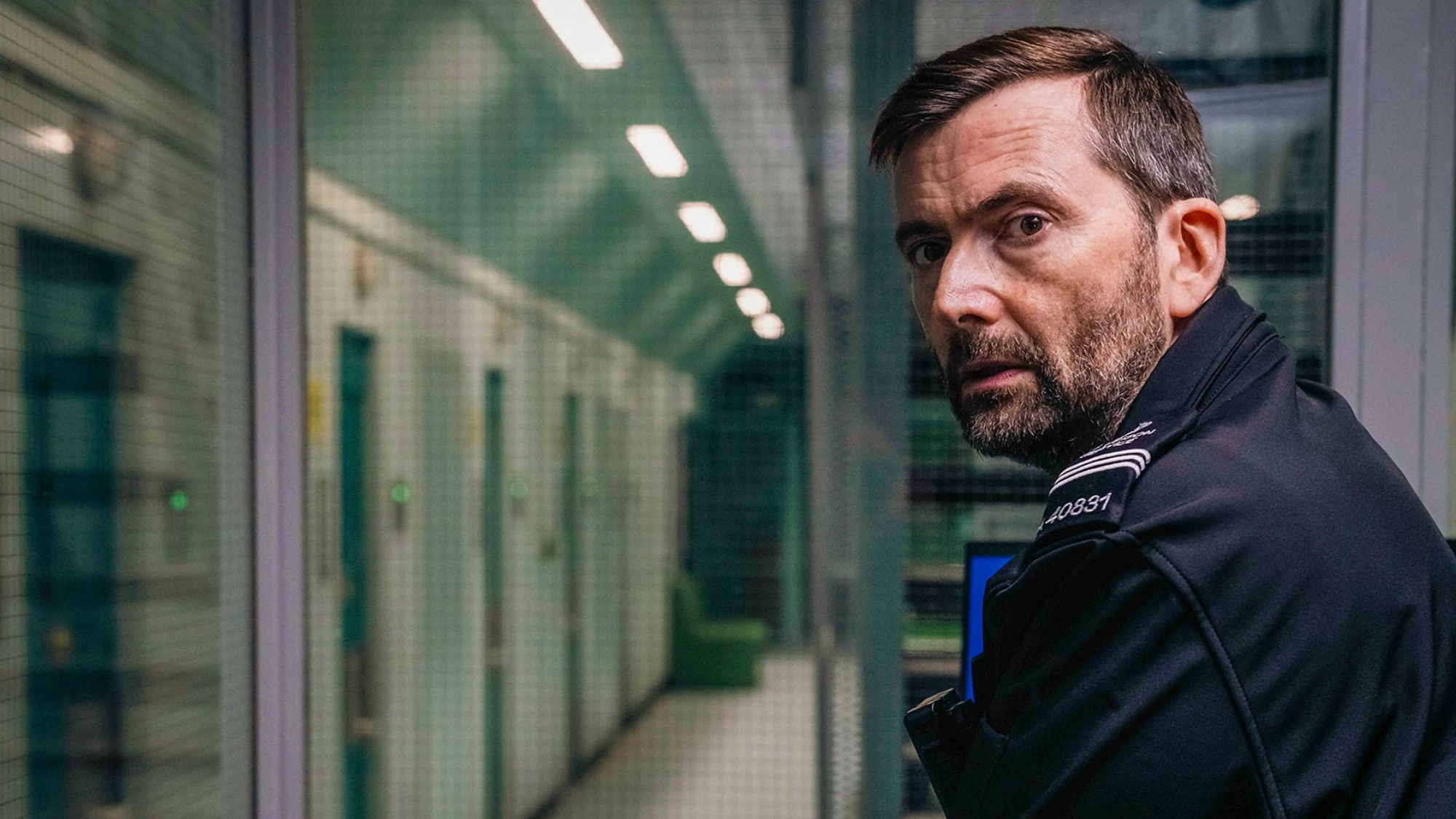
    Time: ‘riveting’ prison drama returns

    Jimmy McGovern’s prison dramas are always a “difficult watch”, said Anita Singh in The Telegraph, but his third and final instalment of “Time” is a “horror story”.  The new series is set in the “roiling hell” of a young offenders’ institution, where the inmates are routinely locked up for 23 hours a day to stop them from attacking each other. The only returning character is Marie-Louise (Siobhan Finneran), the “non-judgemental” prison chaplain who brings a “stillness and kindness which act as much-needed respite from the chaos”.

    David Tennant gives “one of his best-ever performances” as corrections officer Bobby Bailey, said Lucy Mangan in The Guardian. Although “wearied by the job” and returning home each day to an unhappy marriage, he is “not entirely devoid of compassion for the lads in his care”. Many of the young actors are making their TV debut, but the quality of their performances is “astonishing”. This portrait of masculinity “probably won’t garner the attention that Jack Thorne’s ‘Adolescence’ did. But it should.”

    The series is “not entirely without fault”, said Abby Robinson in Radio Times. Some of the dialogue in the closing scenes feels “at odds with the more grounded style” of the rest of the show, and there is one “unforeseen moment that feels unnecessarily cruel and designed to provoke a reaction, rather than further” the key themes. In all, though, “Time” is a “moving, tense and riveting watch”. This latest “urgent” instalment “cements its place as one of the most important shows on British television”.


    Statistic of the day

    94%: The proportion of football clubs in England’s top five leagues that made a financial loss in the 2025-26 season, according to a new Independent Football Regulator report. Two-thirds said they couldn’t survive for more than 90 days if their owners backed out, while nearly a third wouldn’t last a month. 


    instant opinion

    Today’s best commentary

    Trump turns to the politics of fear as GOP hopes darken
    Stephen Collinson on CNN
    The US midterms are “getting ugly”, writes Stephen Collinson. As Republicans’ prospects wither, they’re singling out Democratic candidates “as weird” or “threatening”. Donald Trump keeps claiming a Texan nominee is a vegan, which is “incompatible with the carnivorous Lone Star State”. And in “searing racially derogatory rhetoric”, he’s called Michigan’s Abdul El-Sayed “a jihadist”, in a bid “to frighten voters into thinking” the Democrat is “a security threat”. It’s “an intellectually low form of politics”, but “Republicans lack a better story to tell”.

    In a dismal job market for young people, parental anxiety isn’t helping
    Philippa Perry on The Nerve
    Parents “don’t understand” how sharply graduate hiring has fallen, writes psychotherapist Philippa Perry. Some “assume their kids can’t be trying hard enough”, but the “old advice” to “get your foot in the door” and work up is pointless when the ladder has no bottom rung. So cheer your child on, but resist the urge to rescue: the last thing “someone whose confidence is already being knocked about by rejection” needs is “evidence that their parents can manage adult life better than they can”.

    So, perhaps I was a little too generous to Jeffrey Archer
    Matthew Parris in The Times
    “Crikey! I had no idea what a tsunami of indignation I was inviting” when I said the late Jeffrey Archer was “devoid of malice”, writes Matthew Parris. I’ve been inundated with stories of his “vindictiveness” towards those “who got on the wrong side of him”. Clearly, he could “be very nasty indeed”, and “he behaved like a cad” in lying about “the sex worker he consorted with”. But I still think we often “have a soft spot” for “rascals who radiate cheerfulness”.


    word of the day

    Scaramucci 

    The former White House communications director whose name has become synonymous with his super-short tenure. Anthony Scaramucci lasted just 11 days before being fired by Donald Trump in 2017 and has now suggested the president’s new press secretary, Katie Zacharia, could face a similar fate. “The clock is running,” he wrote on X yesterday following her disastrous debut briefing. “Thus far 1/11th of a Scaramucci.” 


    Evening Review was written and edited by Hollie Clemence, Jamie Timson, Chas Newkey-Burden, Will Barker, Irenie Forshaw, Adrienne Wyper, Helen Brown and Kari Wilkin, with illustrations from Stephen P. Kelly.

    Image credits, from top: illustration by Stephen P. Kelly / Getty Images; Ilia Yefimovich / AFP / Getty Images; Katie Garner / Formula 1 / Getty Images; James Lewin / Wildlife Photographer of the Year; BBC / BBC Studios / Peter Marley
     

    Recent editions

    • Evening Review

      Young men ditch MAGA

    • Morning Report

      Trump’s Russian diesel firestorm

    • Sunday Shortlist

      A damning Musk documentary

    VIEW ALL
    TheWeek
    • About Us
    • Contact Future's experts
    • Terms and Conditions
    • Privacy Policy
    • Cookie Policy
    • Advertise With Us
    • FAQ
    Add as a preferred source on Google Add as a preferred source on Google

    The Week US is part of Future US Inc, an international media group and leading digital publisher. Visit our corporate site.

    © Future US, Inc. Full 7th Floor, 130 West 42nd Street, New York, NY 10036.