The Week US
https://cdn.mos.cms.futurecdn.net/flexiimages/jacafc5zvs1692883516.jpg

SUBSCRIBE & SAVE

Less than $2.50 per week

flag of US
US
flag of UK
UK
Sign in
  • View Profile
  • Sign out
  • Newsletter sign up Newsletter
    • The Explainer
    • The Week Recommends
    • Newsletters
    • Cartoons
    • From the Magazine
    • The Week Junior
    • More
      • Politics
      • World News
      • Business
      • Health
      • Science
      • Food & Drink
      • Travel
      • Culture
      • History
      • Personal Finance
      • Puzzles
      • Photos
      • The Blend
      • All Categories
    The Week Evening Review
    The disability benefits debate, tech multibillionaires, and tradwifery in retreat

     
    TODAY’S BIG QUESTION

    Why is it so hard to get disability benefits right?

    The long-awaited Timms Review outlines plans to overhaul the personal independence payment, the main benefit for disabled adults in England and Wales. The proposals include a new “fast-track” route for people with the most severe conditions; an end to the reassessment of those whose conditions are unlikely to improve; and an improved assessment of the “real-life additional costs” faced by claimants.

    Annual spending on Pip, which is not means-tested and is currently claimed by around four million people, is projected to jump from £26 billion in 2024-25 to £45 billion by 2030-31, according to the Office for Budget Responsibility.

    What did the commentators say?
    Having seen Keir Starmer’s “authority shredded” by welfare rebellions within his party, Andy Burnham is taking a different approach, said the BBC’s Iain Watson. Welfare reform is “not being presented as primarily a cost-cutting exercise with pre-determined savings” but rather as “upfront investment” that will bring savings a decade down the tracks: “gradualism, not a short, sharp shock”.

    Yet problems are already on the horizon. While the Timms Review doesn’t recommend scrapping Pip for anyone, last week’s Milburn Report into youth unemployment recommended tightening eligibility criteria for some under-25s with anxiety, depression and ADHD. That sets up Burnham “for a clash”, said City A.M. economics reporter Mauricio Alencar.

    Simplifying and fast-tracking the Pip application process “to reduce the burden on applicants” is “laudable”, but without also tightening eligibility criteria, it will make more people apply and so drive up costs, said the Institute for Fiscal Studies think tank.

    “This is the third time in 16 months that the government has trailed ‘landmark’ reforms” to Pip, said The Guardian’s Frances Ryan. “It feels as if the nation is doomed to ride a perpetual cycle of ideas.”

    What next?
    Ministers are likely to “accept many of the Timms Review’s short-term recommendations”, according to The Times. Decisions on the longer-term recommendations will be paused until the “government publishes a policy paper on welfare next year”. That will be a key moment and “a test, not just for Burnham but also for his backbenchers”, said Politico’s London Playbook.


    THE EXPLAINER

    The Anthropic multibillionaires

    Anthropic’s record-breaking stock market flotation last week pushed the combined wealth of its seven co-founders to up to $166 billion, according to Forbes, after shares in the five-year-old AI company soared.

    Dario Amodei, CEO
    Amodei is Anthropic’s “leader and figurehead”, said CNN. Raised in San Francisco, he studied physics at Princeton but switched to biology and biomedical sciences following his father’s death from hepatitis C in 2006. He worked as VP of research for OpenAI but left amid disagreements over how to safely develop AI. He set up Anthropic with his sister, Daniela, in 2021.

    Daniela Amodei, president
    A classically-trained flautist who studied English literature, Daniela Amodei (pictured above with Dario) had a brief career in politics before transitioning to the tech sector. She was a risk manager at financial services company Stripe and later joined OpenAI, rising to become VP of safety and policy, before jumping ship to co-found Anthropic.

    Jack Clark, head of public benefit
    Clark was born and raised in Brighton and started his career as a technology journalist. He worked in communications for OpenAI and went on to become its policy director. He’s now Anthropic’s head of public benefit and also leads its AI think tank, the Anthropic Institute.

    Tom Brown, chief compute office
    Brown started his career with Google’s DeepMind project before joining OpenAI as part of the team that developed one of the large language models that paved the way for ChatGPT. Responsible for overseeing Anthropic’s crucial computing resources, Brown has backed Donald Trump’s push to expand data centre infrastructure in the US.

    Jared Kaplan, chief science officer
    Heading scientific research and technical development, Kaplan is “best known for his work on AI scaling laws”, the “mathematical principles which help explain how AI systems tend to improve as they are trained using larger models and greater amounts of data”, said Euronews.

    Chris Olah, interpretability research lead
    At just 34, Canadian Olah is the youngest Anthropic founder. He is “boyish”, with “the zeal of an effective evangelist”, said The New York Times, and has spent much of the last year meeting with faith leaders to explore the relationship between morality and AI.

    Sam McCandlish, chief architect
    McCandlish is responsible for the technical design of Anthropic’s AI systems and for the policies intended to reduce the risks posed by the technology. The 36-year-old has a physics PhD from Stanford.


    QUOTE OF THE DAY

    “Today I find myself once again humiliated, exposed and hurt. As if the ordeal of the trial had not been enough.”

    Gisèle Pelicot reacts after nude photos of her taken by her ex-husband were sent to the media to promote a new book about coercive control. The 73-year-old told French broadcaster BFM that she would take legal action against the author and publisher.


    Poll watch

    Almost half (49%) of Britain’s professionals think people should have to pass a civic responsibility test before being permitted to vote, according to research for the Policy Exchange think tank. The Focaldata poll of 1,093 academics, lawyers and other members of the so-called new establishment found that 61% believe judges should be able to overrule politicians.


    IN THE SPOTLIGHT

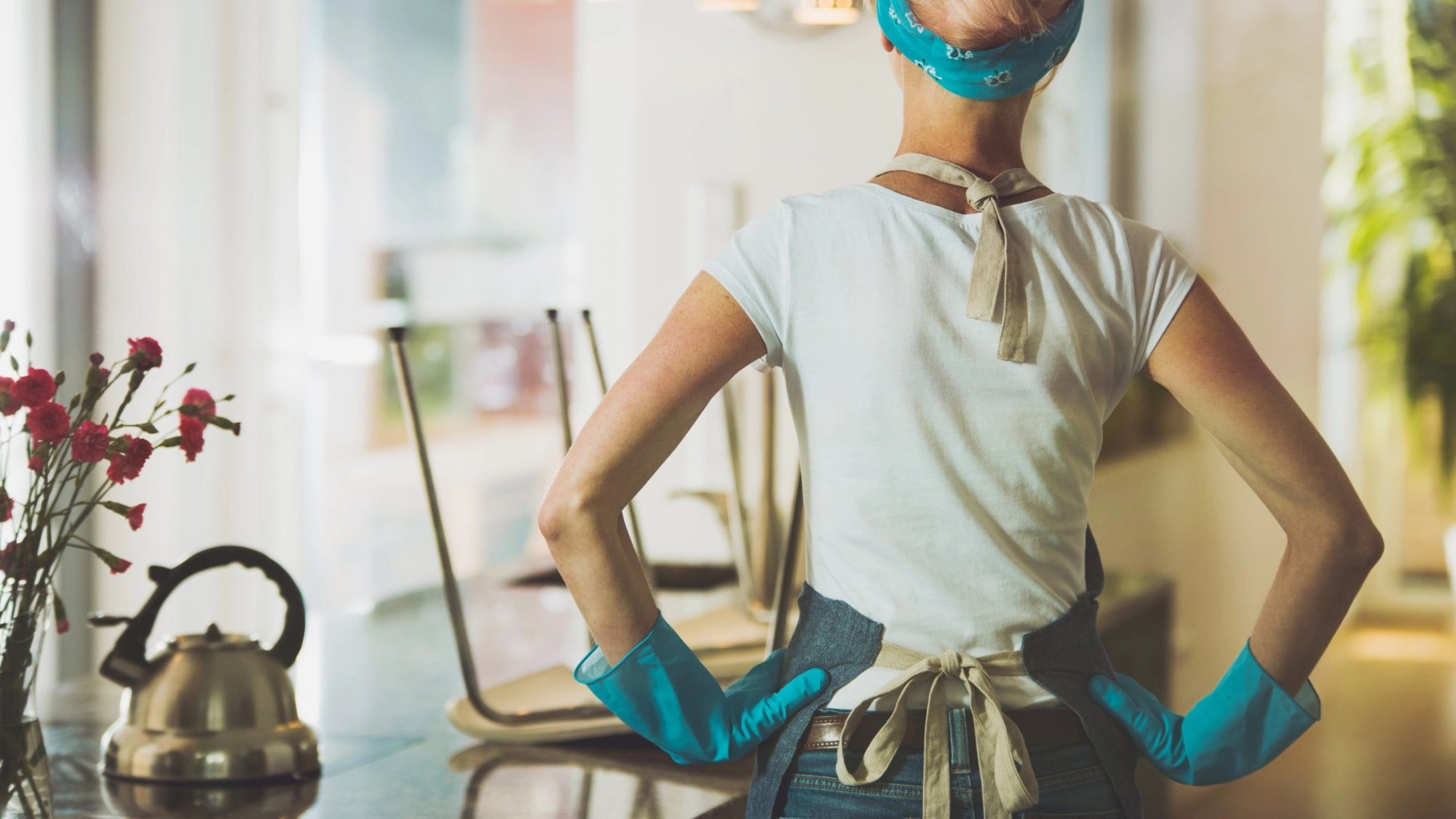
    The tradwife revolt 

    “Something is rotten in the state of tradwives,” said The Observer. These “fundamentalist homemakers” have been the “smiling face of the internet”, advocating “a life of soft femininity and the lure of submission while making, say, jam”. But women who embraced traditional gender roles are now “untying their aprons”, amid an emerging counterculture.

    ‘Sudden and seismic shift’
    The idea that women are not cut out for paid work or leadership is “outdated and wrong” but “now hard to avoid”, said Lean In, a non-profit that aims to advance women’s leadership. Polling by the organisation earlier this year found that nine in 10 Americans have viewed tradwife or manosphere content online.

    But recently, there has been a “sudden and seismic shift”, said The Guardian. “Some of the most vocal tradwives have left their husbands, renounced their religious faith and promoted financial independence.”
    One of the most high-profile was anti-feminist influencer Bernadine Bluntly. In April, she caused uproar among her followers by posting a video titled: “What I got wrong about the trad movement.” In one clip, Bluntly says that she no longer believes in “extreme gender roles, especially when they’re wrapped in spiritual language and used to justify control, silence or harm”.

    ‘Not cute anymore’
    Many see a link between this growing band of ex-tradwife influencers and the increasingly toxic Maga movement. “It’s no longer considered cool, even in an edgelord kind of way, to be tacitly embracing the Trumpian vision,” said Jessica Grose in The New York Times. 

    Although some “teen tradwives” have stepped in to fill the void, research into the views of Gen Z “paints a more nuanced picture”, said a report by King’s College London’s Global Institute for Women’s Leadership. A survey of 1,000 women aged between 18 and 34 found that while 79% were attracted to the apparently calm, relaxed lifestyles of tradwives, only one in five had a positive view of tradwife content. Less than 8% said they would definitely adopt a tradwife lifestyle. “Both young women and men continue to hold largely progressive views on gender roles”, the report concluded, but that does not mean the tradwife movement “poses no risk to gender equality”.


    Good day 📚

    … for children’s authors, as the shortlist for the inaugural Children’s Booker Prize is announced. Shaun Tan, Eoin Colfer and Liz Hyder are among the eight writers competing for the £50,000 award for the best contemporary fiction for kids aged eight to 12. Four children chosen from more than 4,000 applicants will join the judging panel to help pick the winner.


    Bad day 🏓

    … for pickleballers, as the popular paddle sport is linked to a spate of eye injuries. Doctors are warning of a pattern of “pickleball-related ocular traumas”, including retinal tears and angle-recession glaucoma, according to a study published in the medical journal BMJ Case Reports.


    PICTURE OF THE DAY

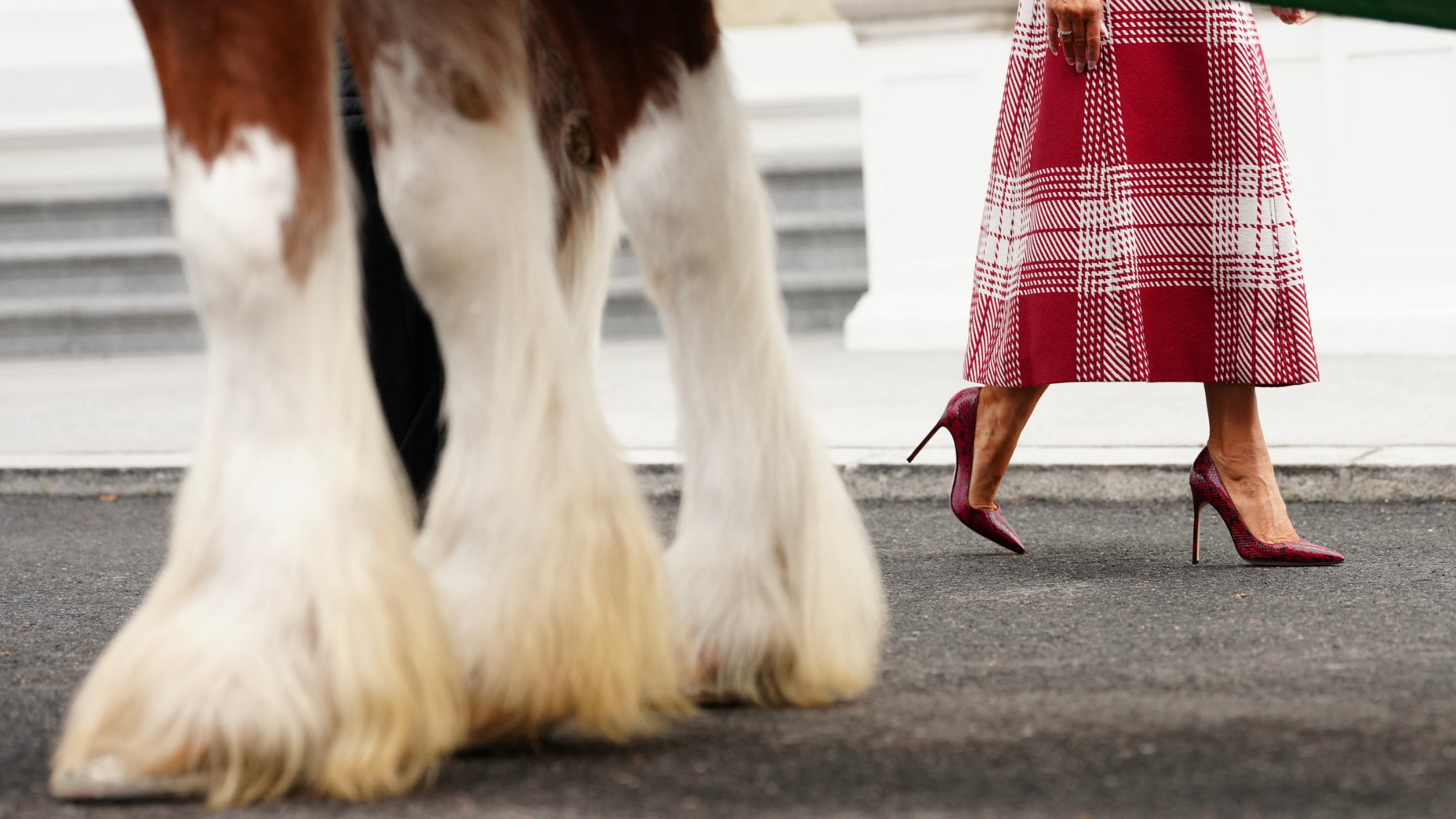
    Best feet forward 

    Melania Trump steps up to welcome a horse-drawn cart delivering this year’s White House Christmas tree. The arrival of the 18ft-tall concolor fir from Wisconsin, which will be displayed in the Blue Room, officially kicks off the holiday season at the presidential residence.

    Aaron Schwartz / AFP / Getty Images


    Puzzles

    Chain Word

    Try The Week’s daily word challenge in our puzzles and quizzes section, which also includes sudoku and Guess the Number

    Play here


    THE WEEK RECOMMENDS

    Cosy restaurants-with-rooms for an autumn escape

    If good grub tops your list of priorities when booking a weekend away, look no further than these restaurants-with-rooms. Each promises delicious food and a comfortable bed upstairs, plus beautiful walks right from the doorstep.

    The Woodcote, West Sussex
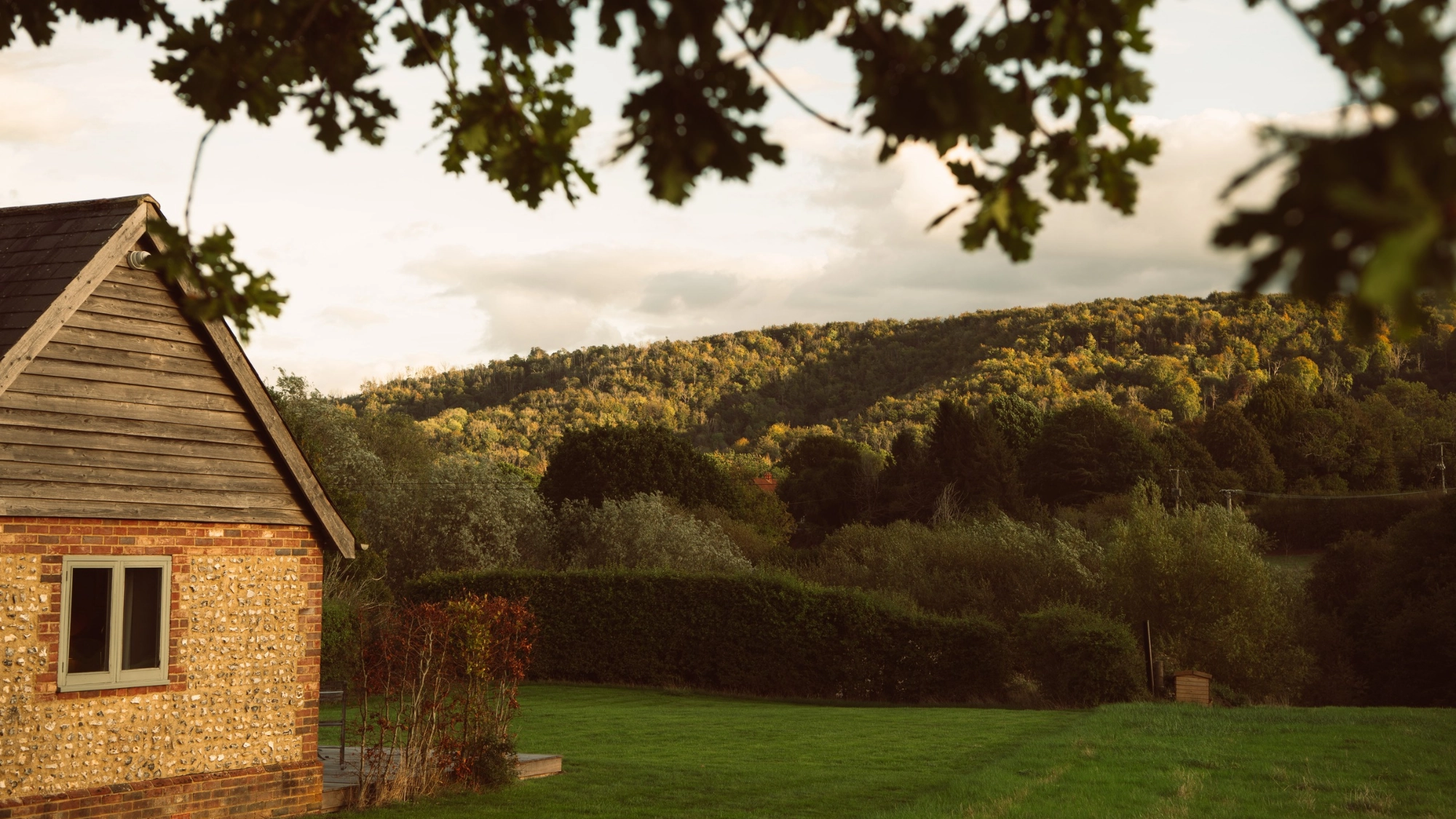
    It’s the little things, like the freshly baked cookies in your room, and the manager remembering your name, that make a stay at The Woodcote (pictured above) feel special. The ever-changing seasonal menu at the restaurant is brimming with locally sourced produce: highlights include delicate fresh trout from nearby Duncton Mill, and tender venison, perfectly paired with pickled elderberries and beetroot. 

    Glebe House, Devon
    This “chic, family-run and food-focused” guest house sits on a hilltop in the “bucolic patchwork that makes up the East Devon Area of Natural Beauty”, said Jade Conroy in The Telegraph. Expect “homely”, laid-back dishes Sunday through Wednesday, and cooking that “goes up a notch” from Thursday to Saturday, with plenty of ingredients grown in the kitchen garden. 

    Hampton Manor, Forest of Arden
    A stay at this West Midlands estate is “all about the glorious food”, said Sophie Knight in Condé Nast Traveller, so make sure you “arrive hungry” and ready “for a spell of indulgence”. Guests can stay in the “old English country pile”, a pretty nearby cottage or a “modern garden suite just a few steps from the well-kept walled garden”.

    The Old Bridge Inn, Cairngorms
    Set on the banks of the River Spey in Scotland’s “outdoorsy” Aviemore, you can “walk, cycle, swim or kayak straight from the door” of this “mellow gastropub” said Rhiannon Batten in The Guardian. Then refuel with hearty smoked haddock chowder, washed down with Cairngorm Brewery’s ales – and you might even “catch some live folk music”.


    Statistic of the day

    39: The number of private-jet flights taken by Gianni Infantino since his plan to sell off a stake in the World Cup was revealed at the end of July. The globetrotting Fifa president has flown once every three days, on average, as he campaigns to be re-elected next spring, according to research by BBC Sport.


    instant opinion

    Today’s best commentary

    The startling return of Jensen Huang
    The Financial Times’ editorial board
    Donald Trump “made little secret of his desire” for Jensen Huang’s reinstatement as Nvidia boss, says The Financial Times. But pushing the company’s board to restore Huang is an “extraordinary pre-emption” of investigations into “whether US national security was compromised” by his affair with a suspected Chinese spy. It demonstrates an “extremely unhealthy level of government influence” and may embolden “other tech barons” to think “they too can act with impunity”.

    Why are Gen Z dining out at the toddler hour?
    Julie Bindel in The Spectator
    “I hate eating late,” writes Julie Bindel. I want to be home by 9pm, “smugly imagining the terrible service and unbearable noise” in “the now-crowded restaurant I have just left”. Yet increasingly, those restaurants are “heaving by 6pm”, because young people prioritise “better digestion and early exercise regimes over late nights”. Granted, “snagging” an early slot is an easy way “to get into London’s most-sought-after joints”, but “eating at 6pm (or even 5pm)” is “too extreme”, even for me.

    The return of tinsel is worth celebrating
    Ysenda Maxtone Graham in The Telegraph
    The “minimalist Christmas” is “on the wane”, writes Ysenda Maxtone Graham, and “tinsel sales are on the rise”. I remember, as a child, being “dazzled” by the “mad, pointless, life-enhancing exuberance” of tinsel: it “epitomised the magic of the season”. We’d get “long lengths of the stuff and coiled them round our necks like tickly scarves”. This year, I’m buying tinsel “in a shameless variety of clashing colours” to wind “round the bannisters”, in a “rebuke to all varieties of puritanism”.


    word of the day

    Beaver

    A large semiaquatic rodent – and the nickname for November’s supermoon, which reaches peak illumination today, appearing up to 30% brighter and 14% larger than normal. The name is said to be a nod to beaver activity at this time of year, when the animals are building dams and storing food for winter.


    Evening Review was written and edited by Irenie Forshaw, Hollie Clemence, Chas Newkey-Burden, Elliott Goat, Helen Brown, David Edwards and Kari Wilkin, with illustrations from Stephen P. Kelly.
    Image credits, from top: Illustration by Stephen P Kelly / Shutterstock / Getty; Michael Nagle / Bloomberg / Getty;
    Aaron Schwartz / AFP / Getty; Katarzyna Bialasiewicz / Getty; The Woodcote
     

    Recent editions

    • Evening Review

      How Huang landed back on top

    • Morning Report

      North Carolina win boosts House Democrats to 34-year high

    • Sunday Shortlist

      The American dream vs. the Russian mob

    VIEW ALL
    TheWeek
    • About Us
    • Contact Future's experts
    • Terms and Conditions
    • Privacy Policy
    • Cookie Policy
    • Advertise With Us
    • FAQ
    Add as a preferred source on Google Add as a preferred source on Google

    The Week US is part of Future US Inc, an international media group and leading digital publisher. Visit our corporate site.

    © Future US, Inc. Full 7th Floor, 130 West 42nd Street, New York, NY 10036.