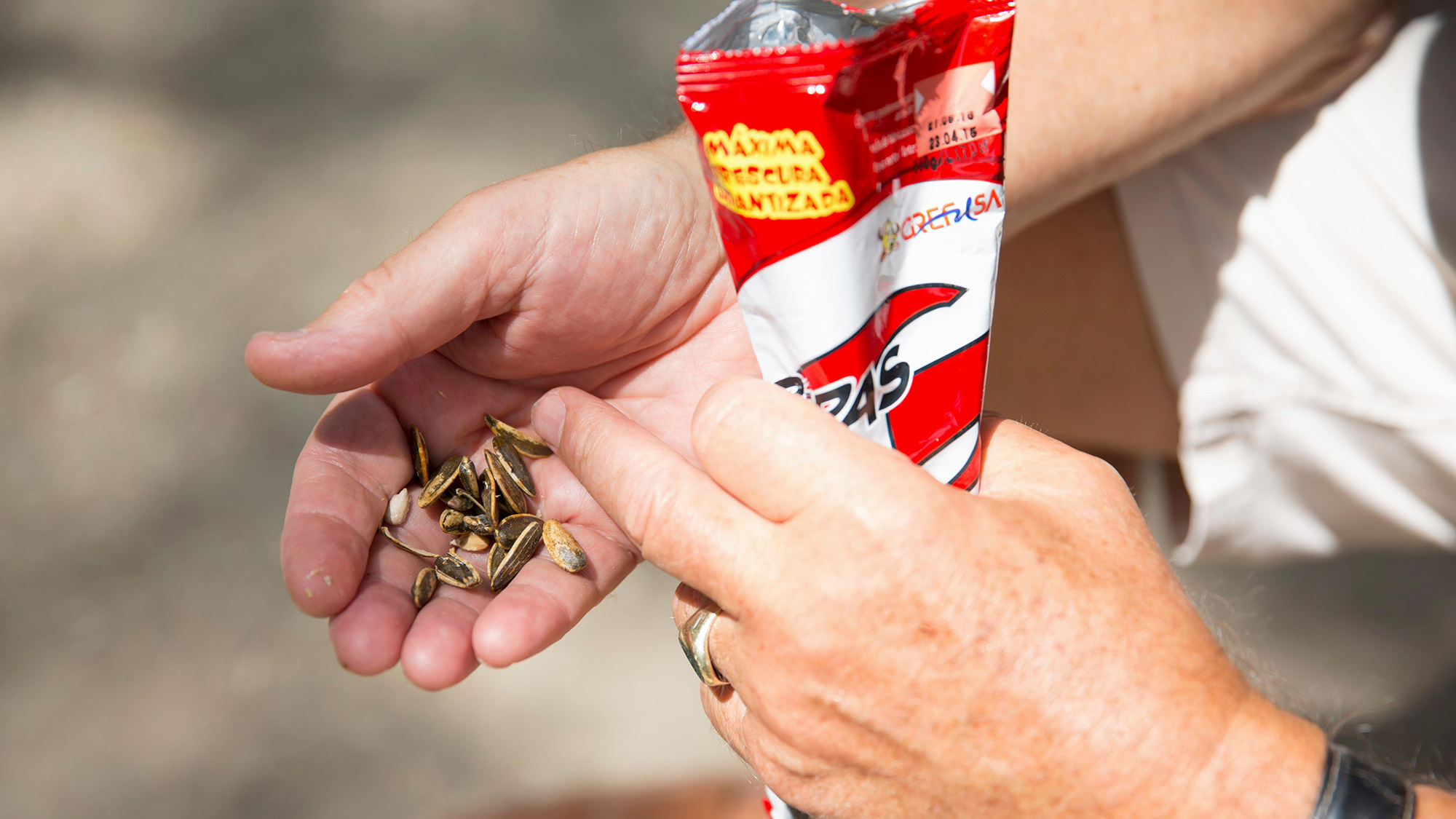
Snacking on sunflower seeds is Spain's "national vice", said The Times. To many they are "as Spanish as paella".
Eating pipas, which requires snackers to "deftly crack open the shells with their teeth and spit them out", is "associated with conviviality" – and occupying the hands of "those of a nervioso, or anxious, disposition".
But among football fans the passion is such that one club has been forced to ban the snack from its stadium. The discarded shells "clog drains and pipes", "deteriorate the seats" and contribute to the erosion of the concrete floor, said Spanish second division side Elche in a statement. They also "attract infestations of rats and pigeons".
Pipas are so popular in football stadiums that you might find yourself "wading through" discarded shells from previous games, said Feast magazine. Sometimes they're left there for weeks, until the floor is "literally covered in a grey carpet of salted shells that crunch under your foot like dead beetles".
"Despite the constant efforts of the club's cleaning teams, it is unfeasible to completely remove the waste after every match," added Elche.
In 2023, Valencia stopped selling seeds after its "iconic" Mestalla Stadium became infested with a "swarm of rats", said The Sun. "Aggrieved locals" had also complained to the club about the noise of the machines used to sweep shells out of the stands.
Elche's cleaners "faced shell-mageddon weekly", said Athlon Sports. The janitors were "one husk away from torching the pitch in protest". But pipas are "Spain's football foreplay"; the ban on these "salty sirens" has left traditionalists "spitting mad" and "cracked the fanbase wide open". "No pipas?" said one. "Might as well ban joy." |