The Week The Week
flag of US
US
flag of UK
UK
https://cdn.mos.cms.futurecdn.net/flexiimages/jacafc5zvs1692883516.jpg

SUBSCRIBE & SAVE

Less than $3 per week

Sign in
  • View Profile
  • Sign out
  • The Explainer
  • The Week Recommends
  • Newsletters
  • Cartoons
  • From the Magazine
  • The Week Junior
  • Student Offers
  • More
    • Politics
    • World News
    • Business
    • Health
    • Science
    • Food & Drink
    • Travel
    • Culture
    • History
    • Personal Finance
    • Puzzles
    • Photos
    • The Blend
    • All Categories
  • Newsletter sign up Newsletter
  • WeekDay AM: 10 Things you need to know this morning
    Extreme flu season, the future of Donbas, and the great global copper swindle

     
    today’s health story

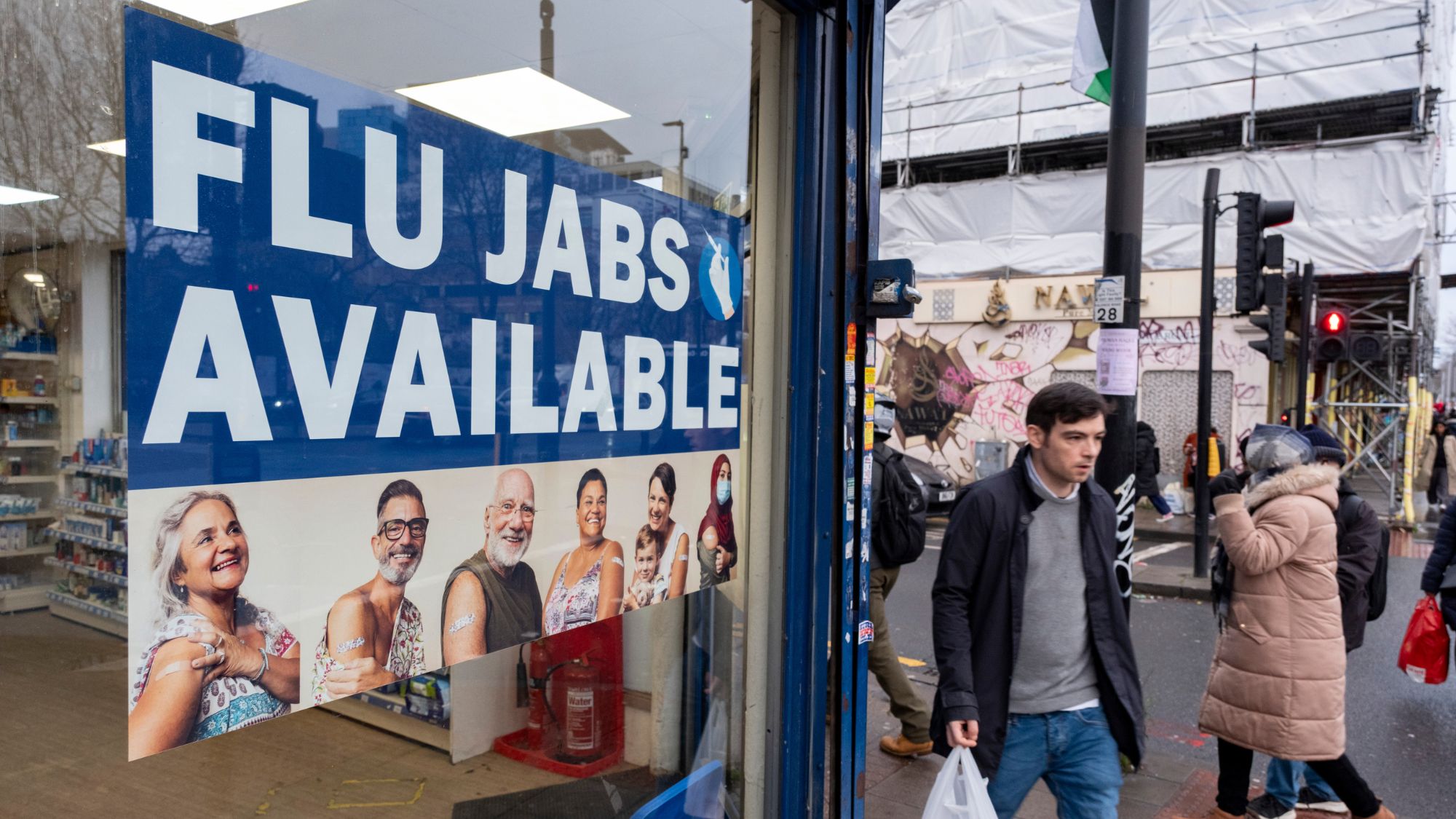
    NHS warns of tidal wave of flu cases

    What happened
    England is confronting its most intense flu season in more than a decade, with hospital admissions reaching unprecedented levels for early winter. NHS data shows an average of 1,700 to 1,717 flu patients were in hospital beds each day last week, more than 50% higher than this time last year and the highest figure ever recorded for early December. Rates among those aged over 85 have doubled in a week and health officials expect a steep rise over Christmas as an aggressive H3N2 strain drives infections.

    Who said what
    The pressures “in a lot of ways will be like the Covid period” and flu patients may soon occupy 5,000 to 8,000 beds, warned Jim Mackey, chief executive of NHS England. He described the upcoming five-day strike by resident doctors as “cruel and calculated to cause mayhem”.

    This year’s flu season “started earlier than usual and is yet to reach a peak”, said Rebecca Whittaker in The Independent. This means that the pressure on hospitals is only “likely to grow in the run-up to Christmas”. The NHS is “facing a tidal wave of flu”, cautioned Daniel Elkeles, the chief executive of NHS Providers.

    What next?
    Health officials are calling on all eligible people to get vaccinated urgently. Patients with minor ailments are being encouraged to use pharmacies, GPs or NHS 111 in order to help ease the pressure on hospitals.


    today’s international story

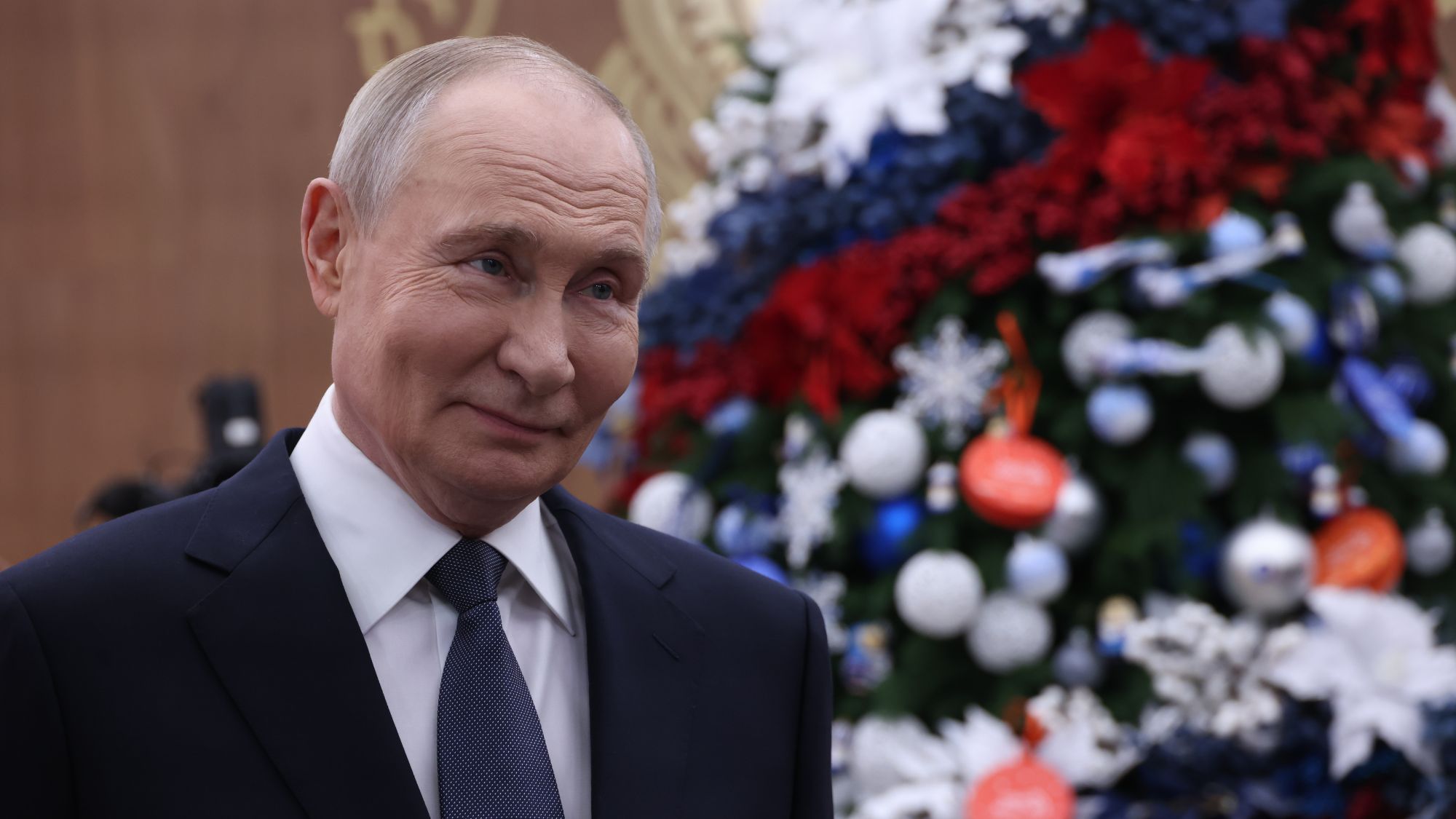
    Putin says Russia will take all of Donbas

    What happened
    Vladimir Putin has again insisted that Ukrainian forces must withdraw from the Donbas region or face its forced takeover, dismissing any negotiated territorial compromise. Russia holds roughly 85% of the region and says its recent battlefield gains have strengthened its hand.

    Who said what
    Speaking ahead of a meeting with Indian Prime Minister Narendra Modi, Putin told India Today that “either we liberate these territories by force, or Ukrainian troops will leave”, and said discussions with US envoys were taking time because he had not yet seen all of their revised proposals. Russia, he added, already “disagreed with parts” of the plan. Ukraine’s Foreign Minister Andrii Sybiha accused the Russian president of “wasting the world’s time”.

    Putin’s comments “reaffirm that he has no intention of backing down from his maximalist war goals”, said Ketrin Jochecová on Politico. In the face of his threats, “Europe can – and must – be bolder”, said Lisa Haseldine in The Telegraph. Without more financial aid from Europe, “the immediate future for Ukraine looks very bleak”.

    What next?
    US negotiator Steve Witkoff will host Ukraine’s diplomatic team in Florida next, with European officials closely watching for any possible concessions. Kyiv insists that any deal must include solid security guarantees as Russian forces continue to make incremental advances in the south-east of the country.


    Today’s business story

    AI firm Anthropic gearing up for massive IPO

    What happened
    AI start-up Anthropic – which runs Claude, a rival to ChatGPT – is reportedly preparing a huge IPO to take the company public, a move that would allow it to raise capital and leverage larger acquisitions more easily. Legal firm Wilson Sonsini has been appointed to advise on the potential transition.

    Who said what
    There are concerns from investors and central banks that valuations of US technology companies could be “fuelling a dotcom-style bubble” as they drive the AI revolution, said The Times. Anthropic is “projecting to more than double and potentially nearly triple its annualised revenue run rate”, resulting in about £20 billion next year.

    This move represents a “significant step” in the company’s preparations and illustrates the “appetite of public markets to back the massive, loss-making research labs at the heart of the AI boom”, said the Financial Times. Taking the company public first would “seize the initiative” from its “larger rival” OpenAI.

    What next?
    Both Anthropic and OpenAI, run by Sam Altman, may be “hampered” by the “astronomical costs” generated by their lightning-quick growth, meaning that difficulties may arise in calculating their financial performance, according to the FT.


    It’s not all bad

    A towering 11-foot-high bronze RoboCop statue has finally taken its place in Detroit after 15 years in the making – and locals are treating it as a symbol of hope. Crowdfunded by more than 2,700 backers and crafted by Detroit sculptor Giorgio Gikas, the cult hero tribute has sparked selfie mania since its unveiling. With the crime rate in the city down, fans say the nearly invincible cyborg offers a playful emblem of Detroit’s revival.


    under the radar

    The great global copper swindle

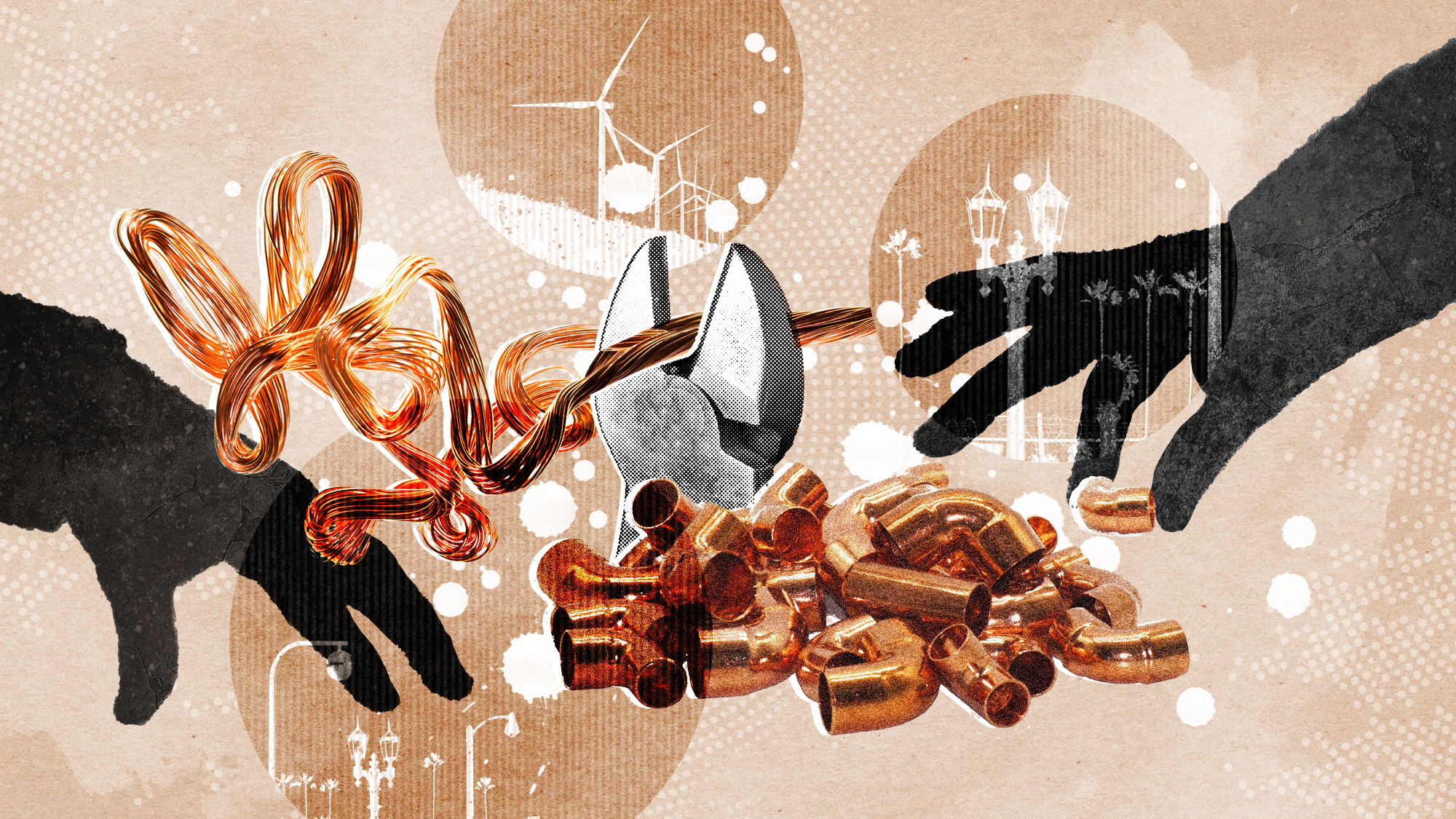
    Copper theft may not be the most glamorous crime in the world, but it is big business. It has grown to become a “multi-billion problem worldwide”, said Terry Goldsworthy, associate professor in criminal justice and criminology at Bond University, on The Conversation.

    Metal theft is nothing new, but it’s “on the rise, largely linked to soaring commodity prices”, said tech site Wired.  This is especially true for copper, “a crucial component in everything from solar panels to electric vehicles, and computer chips to plumbing parts”, said business site The Logic.

    Having crashed nearly a decade ago due to factors including a Chinese ban on scrap imports, its price has steadily risen since the pandemic and copper is now roughly 30% more expensive than it was five years ago. This makes it a “more attractive target for criminals looking for a quick profit”, according to Goldsworthy.

    A key target in recent years has been copper cabling, even if “the disruption caused is often totally disproportionate to the face value of the stolen material”, added Wired. These are the “conduits that keep people connected, the infrastructure that civilisation depends on” and “as the world electrifies”, this form of theft is getting “ever more serious”.

    The problem, according to The Logic, is that stopping copper theft “is a little like playing Whac-a-Mole”. That is why some forces have turned to predictive policing, using analytics to try to guess where metal thieves will strike next. Todd Foreman, director of law enforcement outreach at the Institute of Scrap Recycling Industries, uses data analysis to help criminologists anticipate future hot spots of metal-related crime.


    on this day

    5 December 1990

    British-Indian novelist Salman Rushdie appeared in public for the first time in two years after Iran called for his assassination. Last month Rushdie released his newest novel “The Eleventh Hour”, a collection of five stories that seems to be “intended as a kind of coda to his career”, said The Guardian, describing the tales as “death haunted”.


    Today’s newspapers

    ‘Blood on his hands’

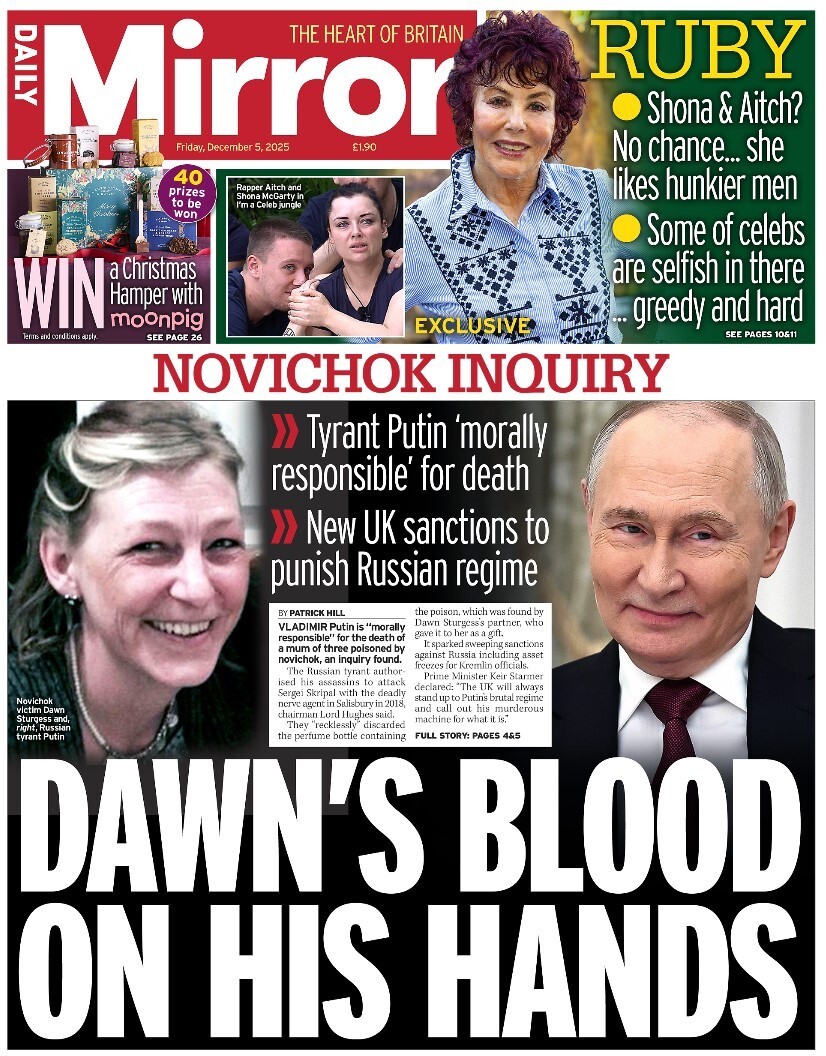
    Vladimir Putin “personally ordered” the “novichok attack on Salisbury”, says The Independent. “Dawn’s blood on his hands”, says The Mirror after an inquiry found the Russian president “morally responsible” for the death of Dawn Sturgess. David Lammy has broken “ranks” on Brexit, says The Telegraph, reporting that the deputy prime minister refused to rule out reversing the UK’s withdrawal from the EU seven times. Nigel Farage “turned on broadcasters” for questioning him about racist and antisemitic comments he is alleged to have made as a teenager, says The Guardian.

    See the newspaper front pages


    tall tale

    ‘Goose’ may lay golden egg

    A New Zealand man has been charged with theft after allegedly swallowing a diamond-studded Fabergé egg worth £14,600 that has not yet been recovered, according to the BBC. The egg contains 60 white diamonds and 15 blue sapphires, and “opens to reveal an 18-carat gold miniature octopus”, earning it the nickname “Octopussy”, after the Bond film. Police said the man had undergone a medical assessment and remained in custody.


    Morning Report was written and edited by Arion McNicoll, Jamie Timson, Will Barker, Ross Couzens and Chas Newkey-Burden, with illustrations by Marian Femenias-Moratinos.

    Image credits, from top: Mike Kemp / In Pictures / Getty Images; Contributor / Getty Images; Samuel Boivin / NurPhoto / Getty Images; Illustration by Marian Femenias-Moratinos / Getty Images.

    Morning Report and Evening Review were named Newsletter of the Year at the Publisher Newsletter Awards 2025
     

    Recent editions

    • Morning Report

      Trump’s confounding clemency spree

    • Evening Review

      War crime in the water?

    • Morning Report

      Hegseth hides in ‘fog of war’

    VIEW ALL
    TheWeek
    • About Us
    • Contact Future's experts
    • Terms and Conditions
    • Privacy Policy
    • Cookie Policy
    • Advertise With Us
    • FAQ
    Add as a preferred source on Google

    The Week is part of Future US Inc, an international media group and leading digital publisher. Visit our corporate site.

    © Future US, Inc. Full 7th Floor, 130 West 42nd Street, New York, NY 10036.